

Hormones are the primary drivers of your skin’s daily behavior, controlling oil production, barrier strength, collagen synthesis, and sensitivity. Simple skin care and hormones are inseparable because estrogen, progesterone, and cortisol each carry receptors in skin tissue, meaning your skin physically responds to every hormonal shift in your cycle. Skin is an endocrine target organ with receptors for estrogen, progesterone, and androgens that regulate its core functions. Florvahealth is built on exactly this science: that inside-out hormonal support produces better skin outcomes than any topical product used alone. Understanding which hormone does what, and when, is the foundation of every effective skin routine.
How do hormonal fluctuations affect your skin across the cycle?
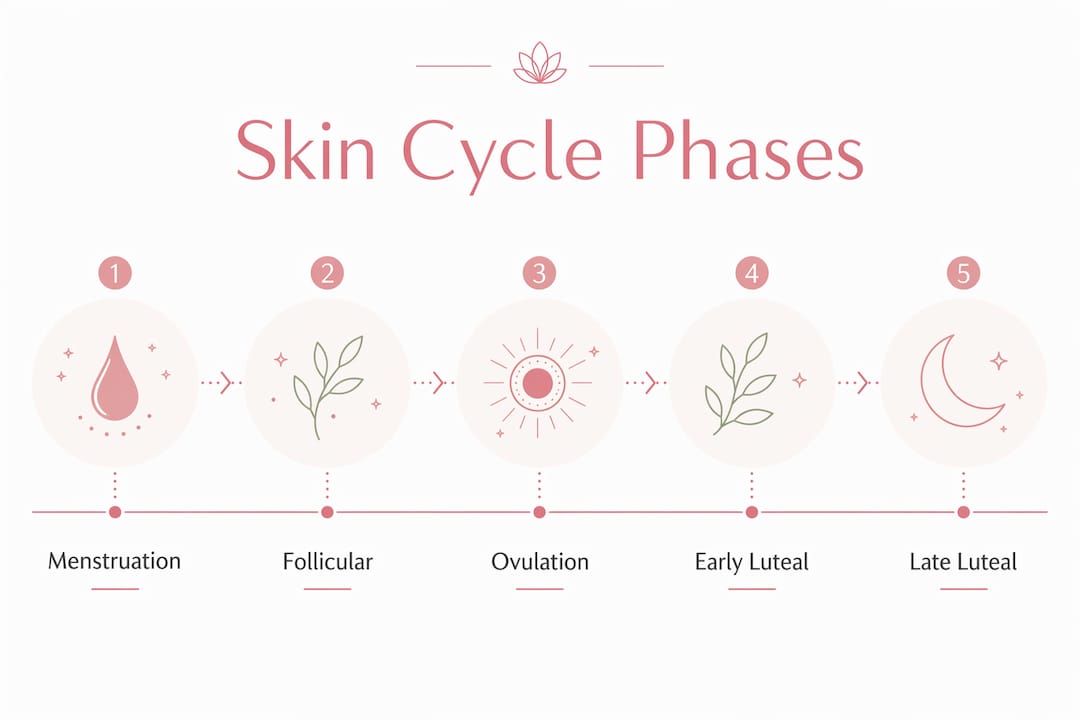
Your skin does not behave the same way every day. It follows a predictable pattern tied to the five phases of your menstrual cycle, each with a distinct hormonal profile that changes how your skin looks and feels.
During menstruation (days 1–5), estrogen and progesterone drop to their lowest points. Skin feels dry, sensitive, and dull. The barrier is at its weakest, making it more reactive to actives like retinoids and acids.

During the follicular phase (days 6–13), rising estrogen promotes collagen and hydration, giving skin a plumper, clearer appearance. This is the phase where skin tolerates potent treatments best.
Ovulation (around day 14) brings peak estrogen and a surge in luteinizing hormone. Skin often looks its best here, though the accompanying testosterone spike can trigger early oiliness.
The early luteal phase (days 15–21) sees progesterone climb. Progesterone stimulates sebaceous glands, increasing oil production and setting the stage for breakouts. Pores appear larger.
The late luteal phase (days 22–28) is when PMS symptoms peak. Both estrogen and progesterone fall, cortisol tends to rise with stress, and skin becomes inflamed, congested, and sensitive simultaneously.
| Cycle phase | Dominant hormones | Skin effect |
|---|---|---|
| Menstruation (days 1–5) | Low estrogen, low progesterone | Dry, sensitive, barrier-compromised |
| Follicular (days 6–13) | Rising estrogen | Hydrated, clear, high active tolerance |
| Ovulation (day 14) | Peak estrogen, testosterone surge | Glowing but increasingly oily |
| Early luteal (days 15–21) | Rising progesterone | Oily, enlarged pores, breakout-prone |
| Late luteal (days 22–28) | Falling estrogen and progesterone | Inflamed, congested, reactive |
Cortisol adds another layer of disruption at any phase. Stress-induced cortisol stimulates sebaceous glands and accelerates collagen breakdown, worsening whatever phase-specific skin issue you are already dealing with. This is why a stressful week before your period can turn a manageable breakout into a full flare.
What does research say about simple routines for hormonal skin?
Dermatologists consistently recommend the same foundational approach for women managing hormonal skin concerns. The answer is not more products. It is fewer, better-chosen ones used at the right time.
A simple three-step routine of a gentle cleanser, a moisturizer suited to your skin type, and daily SPF forms the non-negotiable base. These three steps protect the barrier, prevent moisture loss, and block UV-driven collagen damage regardless of where you are in your cycle.
Active ingredients like retinoids and vitamin C belong in a hormonal skin routine, but not every day. Evidence-based guidance points to a minimalist routine of cleanser, moisturizer, retinoid, and sunscreen as the most efficient structure for collagen support and barrier protection. The key is timing those actives, not applying them daily.
Cycle syncing skincare produces better long-term outcomes than using the same products every single day. The reason is simple: your skin’s tolerance to actives changes with estrogen levels. Applying a retinoid during a high-estrogen follicular phase repairs skin. Applying the same retinoid during menstruation damages the barrier instead.
The core principles from current expert guidance are:
- Gentle cleanser daily. Avoid sulfate-heavy formulas that strip the barrier, especially during low-hormone phases.
- Moisturizer every morning and night. Ceramide-based formulas support barrier repair when estrogen is low.
- SPF 30 or higher every morning. Hormonal fluctuations increase photosensitivity, making sun protection non-negotiable.
- Retinoids and AHAs during the follicular phase only. High estrogen makes skin resilient enough to benefit from these actives.
- Niacinamide and BHA around ovulation. These ingredients manage oil and pore congestion without over-drying.
- Scale back everything in the late luteal phase. Skin is reactive. Less is more.
Consistency with a simple routine outperforms high-intensity, reactive treatments for hormonal skin. Switching to barrier-supportive ingredients during low-hormone phases prevents the irritation that aggressive actives cause when skin is already compromised.
How can you apply cycle syncing to your skin routine?
Cycle syncing is the practice of adjusting your skin care products to match the hormonal phase you are in. It is not complicated. It requires knowing roughly where you are in your cycle and having two or three product variations ready.
-
Days 1–5 (menstruation): Repair and protect. Use your gentlest cleanser, a ceramide or hyaluronic acid moisturizer, and nothing else. Applying retinoids during low-estrogen phases damages the skin barrier and causes inflammation rather than repair. Skip all actives entirely.
-
Days 6–13 (follicular): Treat and brighten. This is your window for retinoids, vitamin C serums, and AHAs. Estrogen is rising, collagen production is up, and your barrier can handle the workload. Apply your retinoid two to three nights per week during this phase.
-
Day 14 (ovulation): Manage oil. Introduce niacinamide to regulate sebum and a salicylic acid (BHA) toner if pores are congesting. Keep your SPF consistent. Avoid adding new products during this short window.
-
Days 15–21 (early luteal): Maintain and monitor. Continue niacinamide. Reduce retinoid frequency to once per week as progesterone rises and skin becomes more reactive. Spot treat any emerging breakouts with a targeted salicylic acid product rather than treating the whole face.
-
Days 22–28 (late luteal): Simplify completely. Drop all actives. Return to your barrier basics: gentle cleanser, ceramide moisturizer, SPF. Most hormonal skin issues worsen with over-cleansing and attempts to dry out oily skin, which triggers compensatory sebum production. Resist the urge to scrub.
Pro Tip: Track your cycle in a simple app or calendar and set a weekly reminder to check your phase. Knowing you are on day 22 takes 10 seconds and tells you exactly which products to reach for.
The barrier-first mindset is the most important shift in cycle syncing. Skin that is well-supported during its vulnerable phases tolerates actives far better when the window opens again.
What lifestyle factors support hormonal skin health?
Topical skin care addresses symptoms. Internal balance addresses causes. Topical skincare alone often fails to resolve root hormonal drivers of breakouts and dryness, which is why lifestyle factors are not optional extras. They are the foundation.
Sleep is the most underrated hormonal skin tool. Sleep hygiene and blood sugar stability regulate sex hormones and androgen levels, which are the primary drivers of hormonal acne. Women who sleep fewer than seven hours consistently show higher androgen activity and more frequent breakouts.
Stress management directly affects cortisol, which directly affects your skin. Stress management is as important as topical care for hormonal skin health because cortisol worsens both collagen loss and oil production simultaneously. Practices like breathwork, walking, or even consistent meal timing reduce cortisol spikes.
Blood sugar control limits androgen spikes. A low-glycemic diet reduces the insulin response that triggers androgen production, which in turn reduces sebum output and inflammatory acne. This does not require a strict diet. It requires reducing refined sugar and processed carbohydrates on a consistent basis.
Pro Tip: Prioritize seven to nine hours of sleep, a low-glycemic diet, and one daily stress-reduction practice before adding any new skin care product. These three habits shift your hormonal baseline more than any serum can.
The inside-out principle is central to Florvahealth’s approach. Probiotic support, gut health, and internal cleansing work alongside topical care to address the systemic hormonal environment that your skin reflects every day.
Key Takeaways
Simple skin care routines timed to hormonal phases outperform complex daily regimens because estrogen, progesterone, and cortisol physically alter skin barrier strength, sebum output, and collagen production across the menstrual cycle.
| Point | Details |
|---|---|
| Hormones control skin behavior | Estrogen, progesterone, and cortisol directly regulate oil, barrier strength, and collagen at the receptor level. |
| Three steps form the base | A gentle cleanser, a ceramide moisturizer, and SPF 30 are non-negotiable at every cycle phase. |
| Actives belong in the follicular phase | Reserve retinoids and AHAs for days 6–13 when rising estrogen makes skin resilient enough to benefit. |
| Late luteal phase needs simplicity | Dropping all actives during days 22–28 prevents barrier damage and compensatory oil production. |
| Internal balance drives skin outcomes | Sleep, blood sugar control, and stress management regulate the androgen and cortisol levels that topical products cannot fix alone. |
Why I think most skin advice ignores the most important variable
Most skin care content treats your face as a static surface. Apply product A, get result B. That model ignores the fact that your skin is a different organ on day 5 of your cycle than it is on day 12. I have seen women spend hundreds of dollars on high-end actives that were genuinely making their skin worse, not because the products were bad, but because they were using them at the wrong time.
The cycle syncing approach feels like a revelation when you first encounter it, but it is really just basic biology applied to a daily habit. The frustrating part is that this information is not new. Dermatologists have understood the endocrine nature of skin for years. It just rarely makes it into mainstream skin care advice, which still defaults to one-size-fits-all routines.
What I find most powerful about the inside-out framework is that it removes the helplessness many women feel about hormonal acne. You are not stuck with breakouts because of your cycle. You have real tools: timing your actives, supporting your barrier, sleeping enough, and managing cortisol. None of these require expensive products or complicated routines.
The simplest advice I can give is this: stop fighting your hormones with your skin care. Work with them instead. A three-step routine used intelligently across your cycle will outperform a ten-step routine used the same way every day.
— Zamanee
Florvahealth’s approach to hormonal skin and inner balance
Hormonal skin care does not start and end with what you put on your face. Florvahealth was built on the principle that skin clarity follows internal balance, which is why its range covers both layers: gut and intimate care on the inside, gentle cleansing on the outside.
For the inside layer, women’s vaginal probiotic capsules and digestive enzyme capsules support gut and intimate health. For the outside layer, the turmeric and kojic acid foaming cleanser and tea tree hydrocolloid pimple patches help with the breakouts that flare before your period. Every product in the Florvahealth range is meant to be gentle and easy to use, because complexity is the enemy of consistency. See the full range at Florvahealth.
FAQ
What are the main hormones that affect skin health?
Estrogen, progesterone, cortisol, and androgens are the primary hormones that regulate skin barrier function, sebum production, and collagen synthesis. Each fluctuates across the menstrual cycle, producing predictable changes in skin behavior.
What is cycle syncing in skin care?
Cycle syncing means adjusting your skin care products to match your hormonal phase, using barrier-supportive ingredients during low-estrogen phases and potent actives like retinoids during the follicular phase when estrogen peaks.
Can a simple skin care routine really manage hormonal acne?
A consistent simple routine timed to hormonal phases outperforms complex daily regimens for hormonal acne. Gentle cleansing, ceramide moisturizing, and phase-appropriate actives address the root skin barrier issues that lead to breakouts.
Why does skin get worse before a period?
During the late luteal phase, both estrogen and progesterone drop while cortisol tends to rise. This combination weakens the skin barrier, increases oil production, and triggers inflammation, producing the congestion and sensitivity common in the week before menstruation.
Does diet affect hormonal skin?
A low-glycemic diet reduces insulin-driven androgen spikes that stimulate excess sebum production. Blood sugar stability is one of the most direct dietary levers for managing hormonal acne alongside a consistent topical routine.
Recommended
- Florva Health: probiotics, intimate care and skincare
- Ultrasonic Facial Cleansing Brush
- Women's Vaginal Probiotic Capsules
- Green Tomato Clay Facial Cleanser
This article is general health information, not medical advice. For persistent or severe symptoms, or any concern specific to your health history, consult a qualified clinician.
Sources
- Skin care basics — American Academy of Dermatology
- Sun protection — American Academy of Dermatology
- Hormonal Acne: Causes, Treatment & Prevention — Cleveland Clinic


