

Hormonal symptoms vary monthly because your body’s hormone signaling system is dynamic, not fixed. The same estrogen level that felt manageable last month can hit completely differently this month, depending on how your nervous system interprets the signal. Understanding why hormonal symptoms vary monthly requires looking beyond the hormones themselves and into the feedback loops, lifestyle inputs, and nervous system tone that shape how your body responds. The menstrual cycle is regulated by the HPO axis, a constant conversation between your brain and ovaries that adjusts hormone output based on what’s happening in your life.
Why do hormonal symptoms vary monthly?
The menstrual cycle is controlled by the hypothalamic-pituitary-ovarian (HPO) axis. This is the feedback loop between your hypothalamus, pituitary gland, and ovaries that governs when and how much estrogen, progesterone, luteinizing hormone (LH), and follicle-stimulating hormone (FSH) get released. The HPO axis does not run on a fixed clock. It responds to your environment, stress load, sleep, and nutrition in real time.

Estrogen rises during the follicular phase, peaks just before ovulation, then drops. Progesterone takes over in the luteal phase, peaks mid-luteal, then falls sharply before menstruation. That drop in both hormones in the days before your period is what triggers many of the physical and emotional symptoms women recognize as PMS. But the timing of those drops shifts month to month because ovulation timing can vary by several days based on stress, travel, illness, or disrupted sleep.
When ovulation shifts, the entire luteal phase shifts with it. That means the window when symptoms appear moves too. A cycle where you ovulate on day 12 will produce a different symptom timeline than one where ovulation happens on day 18. This is why tracking symptoms by calendar date rarely gives you a clear picture.
| Cycle Phase | Key Hormones | Typical Symptoms |
|---|---|---|
| Follicular (days 1–13) | Rising estrogen, low progesterone | Energy, clearer mood, reduced pain sensitivity |
| Ovulation (around day 14) | LH surge, estrogen peak | Mild cramping, increased libido, breast tenderness |
| Early luteal (days 15–21) | Rising progesterone | Bloating, fatigue, appetite changes |
| Late luteal (days 22–28) | Falling estrogen and progesterone | Mood shifts, irritability, cramps, headaches |
The table above shows typical patterns, but the word “typical” is doing a lot of work. Individual variation is the rule, not the exception.
How your nervous system shapes what you feel
Hormone levels alone do not determine symptom intensity. Symptom intensity depends on how your nervous system interprets the hormonal signals it receives. Two women with identical progesterone levels can have completely different experiences. One feels calm and sleepy. The other feels anxious and wired. The difference is nervous system sensitivity.
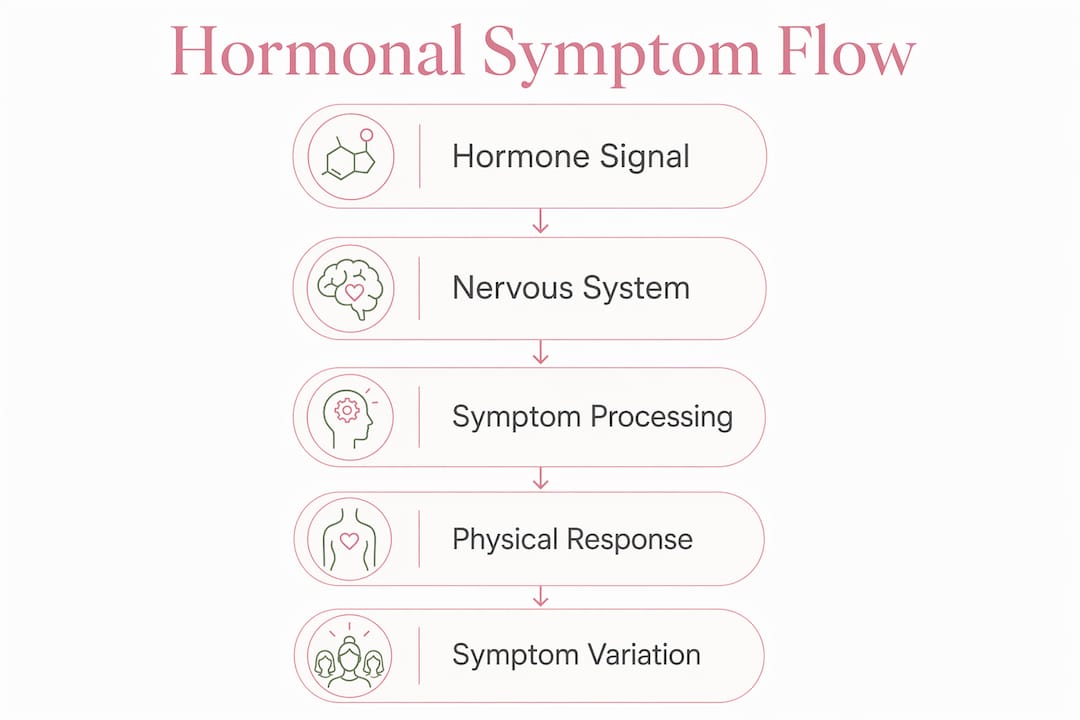
Your nervous system acts as the translator between hormone signals and physical experience. When your nervous system is in a calm, regulated state, it processes normal hormonal fluctuations without amplifying them. When it is chronically stressed or dysregulated, it treats those same fluctuations as threats and turns up the volume on every symptom. Chronic stress creates an over-reactive nervous system that amplifies perception of normal hormonal changes.
Genetics also play a role. Women vary in the sensitivity of their hormone receptors, meaning the same hormone concentration binds differently at the cellular level. This is why some women are highly sensitive to even small drops in estrogen while others barely notice the same shift.
Key factors that increase nervous system reactivity and worsen symptom perception:
- Chronic stress raises cortisol and disrupts brain-ovary communication, altering how hormone signals travel
- Poor sleep reduces the nervous system’s ability to regulate emotional responses to hormonal shifts
- Inflammation from diet or illness lowers the threshold at which symptoms become noticeable
- Unresolved emotional load keeps the nervous system in a heightened state, making hormonal dips feel more severe
Pro Tip: Practices like diaphragmatic breathing, yoga nidra, and consistent sleep schedules directly calm the nervous system. Done consistently in the week before your period, they can reduce how intensely you experience late-luteal symptoms.
What else drives monthly symptom variation?
Lifestyle and environmental factors create the conditions in which your hormones operate. They do not change your hormone levels dramatically, but they change how effectively your body processes and clears those hormones, and how sensitively your nervous system responds to them.
-
Sleep quality. Sleep affects estrogen and progesterone signaling directly. Poor sleep amplifies nervous system reactivity, which means the same hormonal drop that feels manageable after a well-rested week can feel destabilizing after five nights of broken sleep. Sleep is not passive recovery. It is active hormone processing.
-
Nutrition. Nutrient availability shapes how hormones are produced, transported, metabolized, and cleared from the body. Low magnesium, for example, is associated with worse PMS symptoms. A diet high in processed foods increases systemic inflammation, which raises symptom sensitivity. What you eat in the two weeks before your period directly influences how you feel during it.
-
Carry-over stress from the previous cycle. Your cycle does not reset each month. It carries forward cumulative effects from prior cycle stress, inflammation, and sleep quality. A high-stress month in october can make november’s symptoms worse, even if november itself is relatively calm. The body keeps a running account.
-
Life events and emotional load. Major life transitions, grief, work pressure, and relationship stress all imprint on the nervous system. A promotion, a move, or a loss does not stay in your head. It changes your cortisol patterns, disrupts sleep, and alters how your body communicates hormonally. Symptoms that feel “out of nowhere” often trace back to an emotional load from weeks earlier.
-
Local chemical messengers. Prostaglandins produced in the uterine lining contribute to cramping and bowel changes during menstruation. Their production varies month to month based on inflammation levels in the body, which explains why cramps can be severe one cycle and mild the next even when hormone levels look similar.
What are the most common monthly symptom patterns?
Premenstrual syndrome (PMS) and premenstrual dysphoric disorder (PMDD) are the most studied expressions of monthly hormonal symptom variation. Approximately 4–8% of menstruating individuals meet the clinical criteria for PMDD, with many more experiencing significant subclinical PMS. That percentage represents a real clinical condition, not just “bad periods,” and it sits at the severe end of a much wider spectrum.
The mid-to-late luteal phase is the documented window of greatest vulnerability. During this phase, falling estrogen and progesterone reduce serotonin availability, lower pain thresholds, and increase sensitivity to negative emotional stimuli. This is why mood shifts, irritability, and anxiety tend to cluster in the week before menstruation rather than being spread evenly across the cycle.
What makes this phase feel different month to month is the interaction between hormone withdrawal and nervous system state. When your nervous system is regulated, the estrogen and progesterone drop is uncomfortable but manageable. When it is dysregulated, the same drop can feel like an emotional crisis.
| Symptom | Primary Hormonal Trigger | Why It Varies Month to Month |
|---|---|---|
| Mood shifts and irritability | Estrogen and serotonin drop | Nervous system tone and stress load amplify or dampen the effect |
| Bloating and water retention | Progesterone fluctuation | Sodium intake and inflammation levels change the severity |
| Fatigue | Progesterone rise then fall | Sleep quality in the prior week directly affects energy levels |
| Cramps | Prostaglandin production | Inflammation levels in the body shift the intensity |
| Headaches | Estrogen withdrawal | Hydration, sleep, and magnesium status all modulate frequency |
| Breast tenderness | Estrogen and progesterone ratio | Caffeine intake and fluid balance influence severity |
Recognizing these patterns gives you a framework. It does not mean every cycle will follow the same script. The female cycle is a dynamic biological process with constant feedback loops that adjust hormone output based on environment and physiology. Expecting it to be identical every month is the first misunderstanding worth correcting.
Key Takeaways
Monthly hormonal symptoms vary because the nervous system’s interpretation of hormone signals, not hormone levels alone, determines how intensely you feel each phase of your cycle.
| Point | Details |
|---|---|
| HPO axis drives cycle timing | The hypothalamic-pituitary-ovarian axis adjusts hormone release based on stress, sleep, and environment each month. |
| Nervous system amplifies symptoms | A dysregulated nervous system turns normal hormonal fluctuations into intense physical and emotional symptoms. |
| Lifestyle carries forward | Sleep, nutrition, and stress from prior weeks directly shape how severe current cycle symptoms feel. |
| Luteal phase is the key window | The mid-to-late luteal phase is when estrogen and progesterone drop, making it the most symptom-dense period. |
| Prostaglandins add variability | Local chemical messengers like prostaglandins shift cramp and bowel symptom intensity independent of hormone levels. |
What I’ve learned from watching the same labs produce different symptoms
The most common frustration I hear is this: “My labs came back normal, so why do I feel terrible?” It took me a long time to fully appreciate that this question contains a flawed assumption. Normal hormone levels do not guarantee a normal symptom experience. The nervous system is the missing variable that most standard lab panels completely ignore.
What I’ve found is that women who track their symptoms alongside their sleep, stress, and nutrition data start to see patterns that blood work alone never reveals. A woman who slept poorly for two weeks before her period and was managing a major work deadline will almost always report worse PMS, regardless of what her estrogen and progesterone levels show. The body does not separate emotional experience from hormonal function. They run on the same system.
The other thing worth saying plainly: your cycle does not reset at day one. The stress you carried in the last cycle is still in your body. Inflammation does not clear overnight. Nervous system dysregulation built over weeks does not resolve because your period arrived. This is why a “good month” can follow a “terrible month” even when nothing obvious changed. The prior month’s recovery did the work.
Tracking symptoms with a simple app or journal, noting sleep quality, stress level, and major life events alongside physical symptoms, gives you data that is far more useful than a single hormone panel. It also gives you agency. When you can see that your worst symptoms follow your worst sleep weeks, you have something concrete to address. That is where real change starts.
— Zamanee
Florvahealth’s approach to monthly hormonal symptom support
Hormonal symptoms that shift month to month are not random. They reflect your body’s response to changing hormone signals, nervous system state, and lifestyle inputs. Addressing them means working with that system, not against it.

Florvahealth builds its products around the gut and hormone link described here. For bloating after meals, digestive enzyme capsules help your body break down food. Women’s vaginal probiotic capsules support gut and intimate health across the full cycle. If your skin also shifts with your cycle, the connection between hormones and skin is worth understanding as part of the same monthly pattern.
FAQ
Why do my PMS symptoms feel worse some months than others?
Symptom severity shifts because your nervous system state, sleep quality, and stress load from the prior weeks change how intensely your body responds to the same hormonal drop. Hormone levels may look similar, but the conditions around them vary.
Can stress actually change my hormone levels?
Stress alters brain-ovary communication and can shift ovulation timing by several days, which changes the entire luteal phase and when symptoms appear. It also raises cortisol, which disrupts the hormonal feedback loop managed by the HPO axis.
What is the luteal phase and why does it matter?
The luteal phase is the second half of your cycle, after ovulation, when progesterone rises and then falls before menstruation. The mid-to-late luteal phase is the documented window of highest symptom vulnerability, particularly for mood and stress-related changes.
Does PMDD affect many women?
Approximately 4–8% of menstruating individuals meet the clinical criteria for PMDD, with a much larger group experiencing significant but subclinical PMS symptoms that still affect daily functioning.
How can I tell if my symptoms are hormonal or something else?
Symptoms that consistently appear in the week before your period and resolve within a day or two of menstruation starting are strongly linked to the luteal phase hormonal pattern. Tracking symptoms alongside cycle day, sleep, and stress for two to three months creates a clear enough pattern to discuss with a healthcare provider.
Recommended
- Simple Skin Care and Hormones: Your Practical Guide
- Florva Health: probiotics, intimate care and skincare
- Top 3 shala.com Alternatives for Women’s Health 2026
- Digestive Enzyme Capsules
Sources
- Menstrual Cycle: Overview & Phases — Cleveland Clinic
- Your menstrual cycle — Office on Women's Health
- Premenstrual syndrome (PMS) — Office on Women's Health


