

If dairy leaves you doubled over an hour after lunch, the cause is almost always lactose malabsorption, not a mystery allergy — try these best dairy-free party food ideas for any gathering to keep social events tasty without discomfort. The NIDDK and Mayo Clinic both point to low lactase as the usual trigger. Take an over-the-counter lactase enzyme at your first bite of dairy, or run a 2 to 4 week elimination to confirm it. See a doctor if symptoms include severe pain, bleeding, or unexplained weight loss.
TL;DR:
- Most people with lactose malabsorption can manage dairy bloat effectively by taking lactase enzymes before consuming dairy products, not after, to ensure immediate enzyme activity.
- A1 casein and high-fat dairy products can worsen symptoms or cause bloating independently of lactose, requiring tailored dietary adjustments.
- Symptoms appearing within 30 minutes to two hours after eating dairy usually indicate lactose intolerance, whereas symptoms over longer periods may suggest other conditions like IBS or SIBO.
- Reintroducing dairy gradually after a 2 to 4-week elimination and tracking reactions helps determine personal tolerance thresholds, especially with aged cheeses or fermented products.
- Persistent or severe symptoms, bleeding, or unexplained weight loss warrant prompt medical consultation to rule out other digestive diseases.
Table of Contents
- Why Dairy Causes Bloating in the First Place
- Symptoms and Timing: Is Dairy Really the Trigger?
- What to Do Right Now for Fast Relief
- How to Prevent Dairy Bloat Before It Starts
- Which Dairy Is Safest, and How to Find Your Threshold
- When to See a Doctor and How to Protect Your Nutrition
- FlorvaHealth’s View on Bloating That Goes Beyond Dairy
- Where the Standard Advice Falls Short
- A Complementary Option for Ongoing, Hormone-Linked Bloating
- Sources
- FAQ
Why Dairy Causes Bloating in the First Place
Lactase is the enzyme your small intestine produces to split lactose, the sugar in milk, into digestible pieces. When you do not make enough of it, undigested lactose travels down to your colon, where resident bacteria ferment it, producing gases like hydrogen and pulling water into the intestine. That combination is what turns a glass of milk into a stomach that feels like it swallowed a balloon. The NIDDK notes that a significant portion of the global population has some degree of lactose malabsorption, which makes it far more common than most people assume.
Lactose is not the only possible culprit, though. A few other factors can mimic or worsen the same symptoms:
- A1 casein, a milk protein rather than a sugar triggers digestive discomfort in some people independent of lactose. Switching to A2 milk or goat milk sometimes helps when lactase alone does not.
- High-fat dairy, like ice cream or heavy cream, slows stomach emptying and can amplify bloating on its own.
- Underlying IBS or small intestinal bacterial overgrowth (SIBO) can make dairy feel like the enemy when it is actually one trigger among several.
Symptoms and Timing: Is Dairy Really the Trigger?
Classic dairy bloat shows up as bloating, gas, cramping, diarrhea, and sometimes nausea. Symptoms typically start 30 minutes to two hours after you eat or drink something dairy, and they usually clear within a few hours once your gut processes the load.
A few patterns suggest something other than lactose intolerance bloat:
- Symptoms that show up minutes after exposure, with hives, swelling, or trouble breathing, point toward a milk allergy, not malabsorption.
- Blood in the stool or unexplained weight loss suggests celiac disease or inflammatory bowel disease.
- Bloating that persists regardless of what you eat may signal IBS or SIBO rather than dairy intolerance symptoms specifically.
What to Do Right Now for Fast Relief
Once the bloating has already started, your options shift from prevention to damage control.
- Take simethicone. Products like Gas-X break up gas bubbles so they pass more easily. It will not touch the lactose that caused the problem, but it eases the pressure fast.
- Get moving. Staying upright and taking a gentle walk speeds up motility and helps trapped gas move along, often faster than lying down, according to Cleveland Clinic.
- Apply warmth. A warm compress on the abdomen relaxes cramping muscles.
- Sip peppermint or ginger tea. Both have a mild antispasmodic effect that can calm intestinal cramping.
Lactase taken after symptoms have already started will not do much. The enzyme needs to be in your small intestine while lactose is there, not after it has already fermented into gas further down the line.
Pro Tip: Keep a chewable lactase tablet in your bag or car. The five seconds it takes to chew one before a slice of pizza is the difference between a normal afternoon and an hour spent near a bathroom.
How to Prevent Dairy Bloat Before It Starts
The most reliable way to reduce dairy bloat is using lactase enzymes correctly, and most people who use them wrong simply take them at the wrong time.
- Time it right. Take the enzyme with your first bite or sip of dairy, not after the meal. The enzyme has to be present in your small intestine while digestion is happening, which is a narrow window.
- Set realistic expectations. Enzymes for dairy reduce symptoms for most people, but they rarely eliminate them completely, especially with larger portions. Timing errors reduce their effectiveness more than dosage errors do.
- Run a controlled trial. Test one known serving, a cup of milk or a single scoop of ice cream, with your enzyme, then log how you feel over the next 24 to 48 hours. Adjust the dose before giving up on the food entirely.
- Switch products when enzymes fall short. Lactose-free milk, or fermented dairy like yogurt and kefir, gives you the calcium without the same fermentation load.
This trial-and-adjust approach beats guessing, and it is the fastest way to relieve dairy bloat without cutting out entire food groups on a hunch.
Which Dairy Is Safest, and How to Find Your Threshold
Not all dairy carries the same lactose load, and that is good news if you are trying to prevent dairy bloat without giving up cheese altogether.
- Whole milk and ice cream sit at the high end of lactose content and cause the most reliable reactions.
- Yogurt and kefir contain live cultures that partially digest lactose during fermentation, which is why many lactose-intolerant people tolerate them better than milk, per Mayo Clinic.
- Aged hard cheeses, like cheddar or parmesan, lose most of their lactose during the aging process and are often the best-tolerated dairy option.
To find your personal threshold, cut all dairy for 2 to 4 weeks, then reintroduce one item at a time in small amounts. Eating dairy alongside other food, rather than on an empty stomach, also slows digestion enough to blunt symptoms for a lot of people.
When to See a Doctor and How to Protect Your Nutrition
If symptoms are unclear or severe, a doctor can confirm the diagnosis with a hydrogen breath test or a supervised elimination-rechallenge trial. Both are standard, low-risk ways to separate lactose intolerance from something else entirely.
Seek care right away for severe dehydration, visible blood, unexplained weight loss, or any sign of an allergic reaction like swelling or trouble breathing.
If you are cutting back on dairy, protect your calcium and vitamin D intake with fortified plant milks, leafy greens, tofu, and a supplement if your diet still falls short. A registered dietitian or gastroenterologist is worth involving if symptoms persist despite enzyme use and dietary changes.

FlorvaHealth’s View on Bloating That Goes Beyond Dairy
Dairy is one bloating trigger among several, and for many women it overlaps with hormonal swelling around the luteal phase. Some wellness approaches focus on the gut-hormone connection behind PMS bloating, and treat dairy-related strategies as one piece of a larger picture. Probiotic strains and turmeric-based support, used consistently over several weeks, are complementary measures, not diagnostic tools or substitutes for a lactase-focused plan.
Where the Standard Advice Falls Short
Most dairy bloat content treats it as binary: either you tolerate milk or you cut it out entirely. That framing wastes the actual finding buried in the research, which is that lactose tolerance sits on a spectrum, and most people can find a workable threshold rather than an all-or-nothing rule.
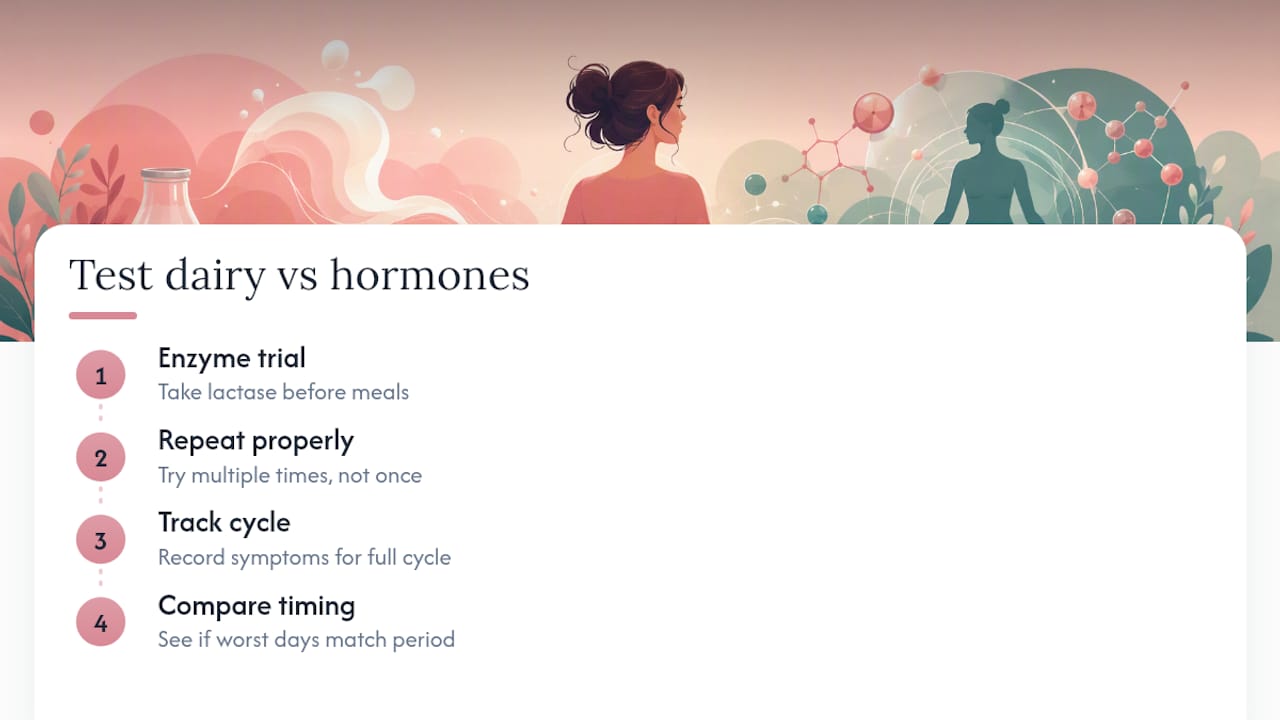
The bigger miss in conventional advice is timing. Plenty of people try a lactase supplement once, take it after eating instead of before, get no relief, and conclude enzymes for dairy do not work for them. That is a dosing error being mistaken for a treatment failure.
What deserves more attention than it gets: bloating that overlaps with your menstrual cycle can look identical to dairy bloat but stem from a completely different mechanism. If your worst dairy days cluster around a particular week of the month, the food might be a minor factor next to hormonal fluid retention. Sort that out before blaming the cheese plate entirely. Start with the enzyme trial, track your pattern for a full cycle, and let the data tell you what is actually driving the discomfort.
— Zamanee
A Complementary Option for Ongoing, Hormone-Linked Bloating
Lactase enzymes and smarter dairy choices handle the digestive side of bloating. When bloating tracks with your cycle instead of your meals, that is a different problem, and it is where Florvahealth’s PMS & Bloating Relief collection comes in.

These products are not a replacement for a hydrogen breath test or a lactase supplement; they aim to support the hormonal side of bloating that dairy strategies alone will not touch. Probiotic and turmeric-based options may work best when used consistently over several weeks, paired with dietary tracking. If you have already ruled out lactose as the sole cause and notice your bloating still clusters around certain weeks, browse the women’s wellness collection and give one routine a full cycle before judging results.
This article is general information, not a substitute for advice from a qualified doctor. Consult a qualified healthcare professional about your own circumstances before acting on anything here.
Sources
- Symptoms & causes of lactose intolerance - NIDDK
- Lactose intolerance - Merck Manual Consumer Version
FAQ
Why am I so bloated after eating dairy?
Your small intestine likely isn’t producing enough lactase, so undigested lactose ferments in your colon, producing gas and drawing in water, per the NIDDK.
How long does it take for dairy bloat to go away?
Symptoms typically start 30 minutes to two hours after eating dairy and resolve within a few hours as your gut clears the fermented lactose.
Will Gas-X help with lactose intolerance?
Simethicone products like Gas-X break up trapped gas bubbles and ease pressure, but they do not address the underlying lactose malabsorption, so pair them with a lactase enzyme for future meals.
How do I flush dairy out of my system fast?
There is no true “flush,” but staying upright, walking gently, sipping peppermint tea, and applying warmth to your abdomen speed up gas passage and cramp relief.
Do lactase supplements always work?
They reduce symptoms for most people when timed correctly, right at the first bite of dairy, but they rarely eliminate discomfort completely with large or high-fat servings.


