

Start with hydration, a short walk, and a warm drink with prunes or kiwi. If that’s not enough within a few hours, a small dose of psyllium or an osmotic stool softener usually works. Period constipation is almost always hormonal, driven by progesterone, and it typically resolves once your period starts. See a clinician if pain is severe, you notice blood in your stool, or symptoms last beyond two weeks.
TL;DR:
- Up to 73% of premenopausal women experience gastrointestinal symptoms like constipation related to hormonal shifts during their menstrual cycle.
- Progesterone during the luteal phase slows gut motility, causing constipation, which typically improves once menstruation begins due to prostaglandin effects.
- The most effective quick relief strategies include deliberate hydration, movement, consuming prunes or kiwi after meals, and adding soluble fiber like psyllium gradually.
- Preventive measures involve maintaining 25 to 30 grams of fiber daily, staying hydrated, and layering in cycle-specific tactics before symptoms peak.
- Severe, persistent, or atypical symptoms such as blood in stool, unintentional weight loss, or pain beyond regular cycles warrant medical evaluation.
Table of Contents
- Why does constipation happen around your period?
- What actually relieves period constipation fast?
- How can you prevent period-related constipation before it starts?
- When should you see a doctor about period constipation?
- The Florva approach: pairing habits with targeted support
- Why the standard advice on period constipation misses the point
- A simple next step: gut support from Florva
- Sources
Why does constipation happen around your period?
The hormone behind most of this is progesterone. Levels climb through the luteal phase, the second half of your cycle after ovulation, and progesterone relaxes smooth muscle throughout your body, including the muscle lining your intestines. Slower muscle contractions mean slower transit, and slower transit means harder, less frequent stools.
This isn’t a rare quirk. Up to 73% of premenopausal women report significant gastrointestinal symptoms tied to their cycle, whether that’s constipation, diarrhea, or cramping pain. The mechanism is well documented: progesterone’s effect on gut motility slows intestinal transit time specifically during the luteal phase.
Then things flip. Once your period actually starts, prostaglandins, the compounds that trigger uterine contractions, also stimulate the gut. That’s why the same women who felt backed up for a week can suddenly deal with loose stools once bleeding begins. This rebound between constipation before your period and looser stools during it is a distinct pattern, not two separate problems.
A few other factors tend to make cycle-linked constipation worse:
- Irritable bowel syndrome, which often flares in sync with hormonal shifts
- Undiagnosed thyroid issues, since low thyroid function independently slows digestion
- Iron supplements, a common but underrated constipation trigger
- Poor sleep and elevated stress, both of which slow gut function through the brain-gut connection
- Certain medications, including some antidepressants and opioid pain relievers
What actually relieves period constipation fast?
When you’re already uncomfortable, the goal is to unstick things without overcorrecting. Work through these in order rather than jumping straight to the strongest option.
- Hydrate deliberately, not passively. Plain water helps, but mineral water has shown stronger benefits for constipation in some studies, likely due to its magnesium and sulfate content. Aim for a full glass first thing in the morning and another with breakfast.
- Move for 15 to 20 minutes. A brisk walk after a meal stimulates peristalsis, the wave-like muscle contractions that push stool along. Regular movement measurably reduces constipation risk, and gentle yoga sequences can work just as well if walking isn’t appealing.
- Eat prunes or kiwi after breakfast, not on an empty stomach. Both contain sorbitol and fiber that draw water into the colon; timing them after a meal reduces the odds of cramping.
- Add a warm compress or abdominal massage. Circular clockwise strokes over the lower abdomen for five minutes can ease the physical tension that builds alongside slow transit.
- Try soluble fiber if food and movement aren’t enough. Psyllium is the standout here. A meta-analysis found that adding more than 10 grams of psyllium daily increased bowel movements by roughly three per week. Start with 5 grams mixed into water and build toward 25 to 30 grams a day over several days, never all at once.
- Move to an osmotic laxative if you’re still stuck after 24 hours. Magnesium citrate or a polyethylene glycol (PEG) product draws water into the bowel and works more predictably than fiber alone.
- Reserve stimulant laxatives, like senna, for short-term use only. They force contraction rather than softening stool, and repeated use can lead to dependence.
Pro Tip: Don’t reach for a stimulant laxative and an osmotic laxative on the same day. Combining them raises your risk of cramping and unpredictable diarrhea once your period starts and prostaglandins kick in on their own.
A few cautions matter here. If you’re managing cramps with NSAIDs like ibuprofen, be aware they can irritate the GI tract further; safer approaches to pain relief are worth reading if stomach discomfort is already part of the picture. If you’re pregnant, breastfeeding, or on medication that interacts with laxatives, check with a clinician before adding anything new. And gentle movement genuinely helps here; a few yoga poses aimed at digestion can be done from bed if cramping keeps you off your feet.

The sequence that works for most people: food and movement first, then soluble fiber or a stool softener, then an osmotic laxative if nothing has changed after a day. If you’ve gone through all three steps with no improvement, or if new symptoms show up, that’s your signal to check in with a doctor rather than escalate further on your own. If your doctor suggests an enema, ask how often is safe for you; our reusable silicone enema kit is one at-home option.
How can you prevent period-related constipation before it starts?
Waiting until you’re uncomfortable to act is the most common mistake. A cycle-timed routine, boosting supportive habits before symptoms peak, tends to outperform reactive fixes.
Build a daily baseline first:
- Target 25 to 30 grams of fiber a day, leaning on soluble sources like oats, psyllium, and cooked vegetables before adding rougher insoluble fiber
- Drink water consistently through the day rather than in one large dose
- Protect your sleep; poor sleep and chronic stress worsen constipation through the brain-gut connection, and this link is easy to underestimate
Then layer in luteal-phase tactics about three to seven days before your period usually starts. That’s when progesterone is climbing and transit is slowing, so front-loading fiber and movement here does more than starting once you’re already backed up. Add 20 to 30 minutes of daily movement and consider a short course of psyllium if you know constipation is coming.
Probiotics and magnesium can help some people, though the evidence for menstrual-specific symptoms is limited. Certain probiotic strains support constipation broadly, and a low-risk trial for a cycle or two is reasonable if you want to test what works for your body specifically. Magnesium and other cycle-support supplements are worth understanding before you try them.
Keep a short food and symptom diary. Note reactions to sorbitol-heavy foods, iron supplements, and heavy or fatty meals, since these are common personal triggers. And resist the urge to jump straight to a high-fiber diet overnight; a sudden increase in insoluble fiber specifically tends to cause bloating before it helps anything.
When should you see a doctor about period constipation?
Most cycle-linked constipation resolves within days and doesn’t need medical attention. But certain signs mean it’s time to get checked rather than push through with more remedies.
- Severe or worsening abdominal pain that doesn’t ease with the usual relief tactics
- Blood in your stool, whether bright red or dark and tarry
- Unintentional weight loss alongside changed bowel habits
- Constipation that persists outside your usual cycle window or lasts longer than two weeks
- New-onset constipation that shows up for the first time later in life
When you talk to a clinician, come prepared with specifics: where in your cycle symptoms hit, current medications and supplements (iron included), your typical stool pattern, recent diet changes, and your contraception or pregnancy status. Medical evaluation is the right move once symptoms are severe, persistent, or paired with red flags like these. From there, a clinician may run basic labs (thyroid function, a complete blood count), screen for IBS, or refer you for further GI evaluation if the pattern doesn’t fit typical hormonal constipation.
The Florva approach: pairing habits with targeted support
Self-care habits do most of the work, but some women want a system that removes the guesswork of putting one together. That’s the gap Florva’s product line is built around.
- Probiotic capsules are designed to be taken cycle-aware, supporting gut flora during the luteal-phase window when transit naturally slows
- Topical relief patches offer a non-oral option for symptomatic comfort, useful on days when cramping makes eating or supplements harder to manage
- Florva’s digestive enzyme and probiotic capsules support digestion, so you’re not assembling separate products mid-cycle
Someone who’s already doing the hydration, movement, and fiber basics might add a probiotic in the days before their luteal phase starts, or reach for a patch on the days cramping is worst. These are meant to complement the habits above, not replace them. Persistent or severe symptoms still call for a clinician, not a product substitution.
This overview draws on peer-reviewed gastroenterology research and was compiled by Zamanee, a contributor to Florva Health focused on evidence-based women’s wellness content.
Why the standard advice on period constipation misses the point
Most articles on this topic hand you a list of remedies and stop there. What they skip is timing, and timing is the actual lever. Progesterone doesn’t spike randomly; it climbs predictably in the luteal phase, which means you can act before constipation sets in rather than chasing it after the fact.
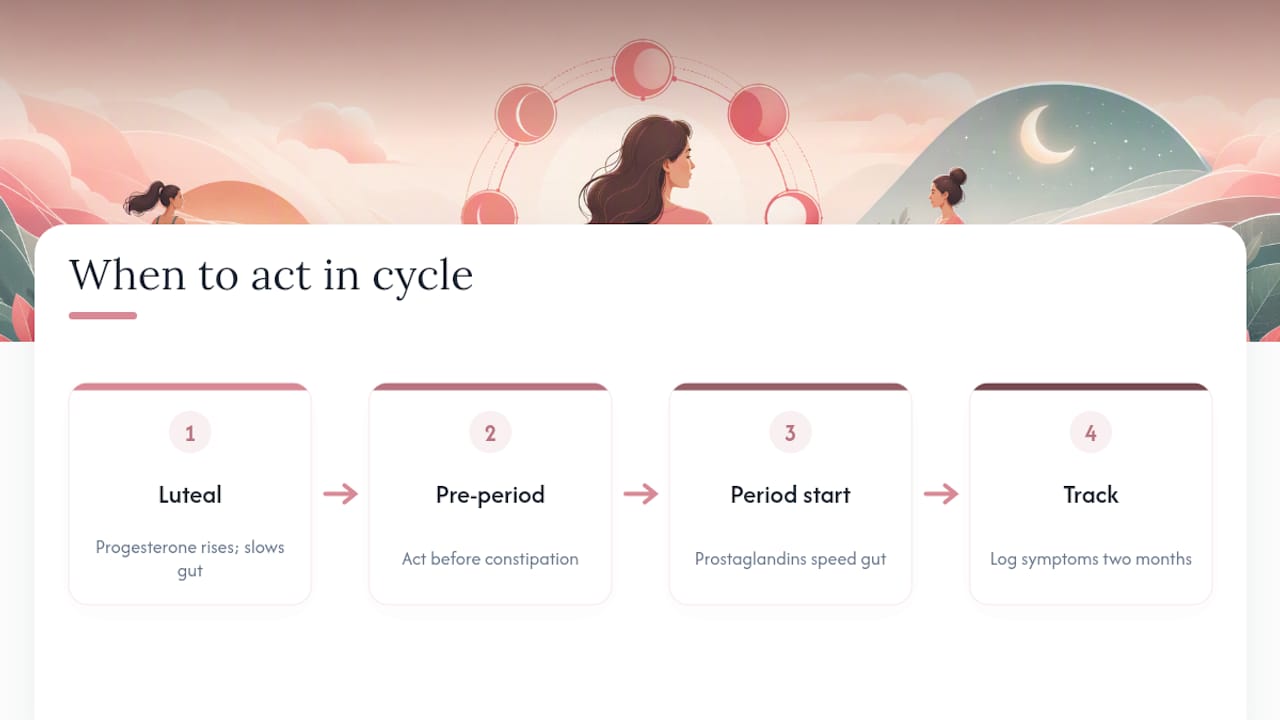
The bigger miss is treating this as one problem instead of two. Constipation before your period and looser stools once it starts are opposite ends of the same hormonal swing, progesterone slowing things down, then prostaglandins speeding them up. Reach for a stimulant laxative during the constipated phase without accounting for that rebound, and you can end up with cramping and diarrhea once bleeding starts, which feels like a new problem when it’s really just the second half of the same one.
If you take one thing from this: track your cycle for two months and note when symptoms start. That single habit turns generic advice into a routine that’s actually built for your body.
— Zamanee
A simple next step: gut support from Florva
If you’d rather not piece together separate supplements every month, Florva’s digestive enzyme capsules and probiotic capsules cover the gut side of this guide, for the week when bloating and constipation tend to overlap.
They suit women who want non-medicated, steady support rather than a reactive fix. They are meant to sit alongside the habits covered above, hydration, movement and timed fiber, not replace them. Visit Florva to see the full range.
This article is general information, not a substitute for advice from a qualified doctor. Consult a qualified healthcare professional about your own circumstances before acting on anything here.
Sources
- Gastrointestinal symptoms across the menstrual cycle (PMC article)
- Psyllium most effective fiber type for constipation relief (Healio report)


