

Herbal supplements for cycle balance are natural products that influence hormone levels and menstrual regularity through pharmacologically active compounds, including flavonoids, iridoid glycosides, and adaptogenic alkaloids. Herbs like Vitex agnus-castus, Ashwagandha, and Black Cohosh each target distinct points in the hormonal feedback loop, from the pituitary gland down to estrogen and progesterone production. These are not gentle teas with vague benefits. They are potent bioactive compounds that measurably affect neuroendocrine pathways. Women aged 20–40 dealing with irregular periods, PMS, or hormonal acne have real, evidence-backed options here, and Florvahealth exists to help you use them wisely.
Which herbal supplements have scientific evidence for cycle balance?
Vitex agnus-castus, also called chaste tree berry, is the most extensively studied herb for menstrual regularity. It acts on dopamine D2 receptors to suppress excess prolactin, a hormone that, when elevated, disrupts ovulation and shortens the luteal phase. Clinical trials using standardized Vitex extracts consistently outperform placebo in reducing PMS symptoms, including breast tenderness, mood swings, and cycle irregularity. That result matters because it means the herb works through a specific, measurable mechanism, not just anecdote.
Black Cohosh targets a different pathway. It modulates estrogen receptor activity, which makes it particularly relevant for women with estrogen-dominant symptoms like heavy periods or cramping. Dong Quai, a root used in traditional Chinese medicine for centuries, supports uterine blood flow and has mild phytoestrogenic properties. Neither herb is a hormone replacement, but both influence how your body processes and responds to its own estrogen.
Ashwagandha operates as an adaptogen, meaning it helps the body regulate its stress response. Chronic stress elevates cortisol, which directly suppresses progesterone production and throws off cycle timing. Ashwagandha lowers cortisol and supports thyroid function, two levers that sit upstream of menstrual regularity. Women with stress-driven cycle disruption often see the clearest results with this herb.
- Vitex agnus-castus: Reduces prolactin, supports luteal phase length, and relieves PMS.
- Black Cohosh: Modulates estrogen receptor activity, useful for heavy or painful periods.
- Dong Quai: Supports uterine circulation and mild estrogen balance.
- Ashwagandha: Lowers cortisol, supports thyroid, and protects progesterone production.
- Maca root: Adaptogenic support for energy and libido across cycle phases.
Pro Tip: Always look for standardized extracts when buying Vitex or Black Cohosh. A product labeled “chaste tree berry” without a stated percentage of iridoid glycosides or agnusides gives you no guarantee of therapeutic dose.
How do herbal supplements interact with menstrual cycle phases?
The menstrual cycle has four distinct phases: menstrual, follicular, ovulatory, and luteal. Each phase carries a different hormonal profile, and the herbs that help in one phase can be counterproductive in another. Understanding cycle phases and hormonal changes is the foundation for using herbal support effectively.
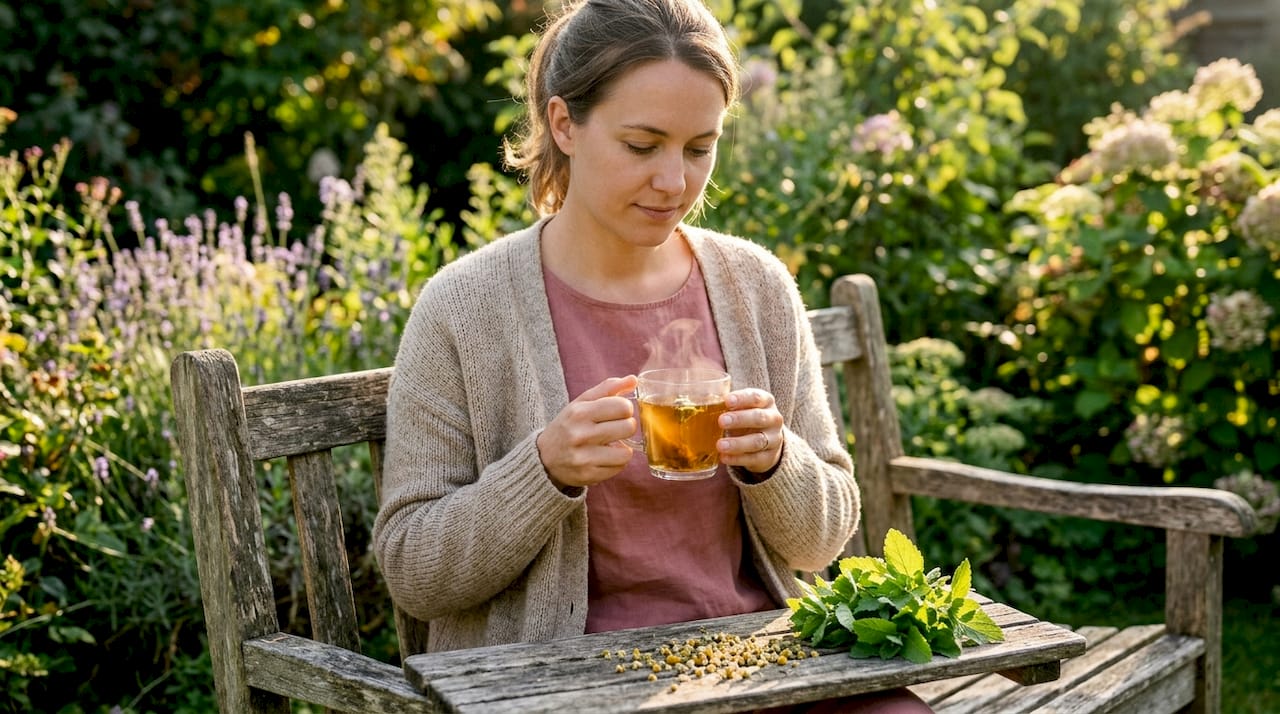
During the menstrual phase (days 1–5), estrogen and progesterone are at their lowest. Nervines like chamomile and lemon balm reduce cramping and support the nervous system without interfering with the natural hormone drop. Raspberry leaf tea supports uterine tone and is widely used during this phase.
The follicular phase (days 6–13) is when estrogen rises and the body prepares to ovulate. Liver-supporting herbs like dandelion root aid estrogen metabolism during this window, clearing excess estrogen before it accumulates. Nettle leaf adds iron and minerals lost during menstruation.
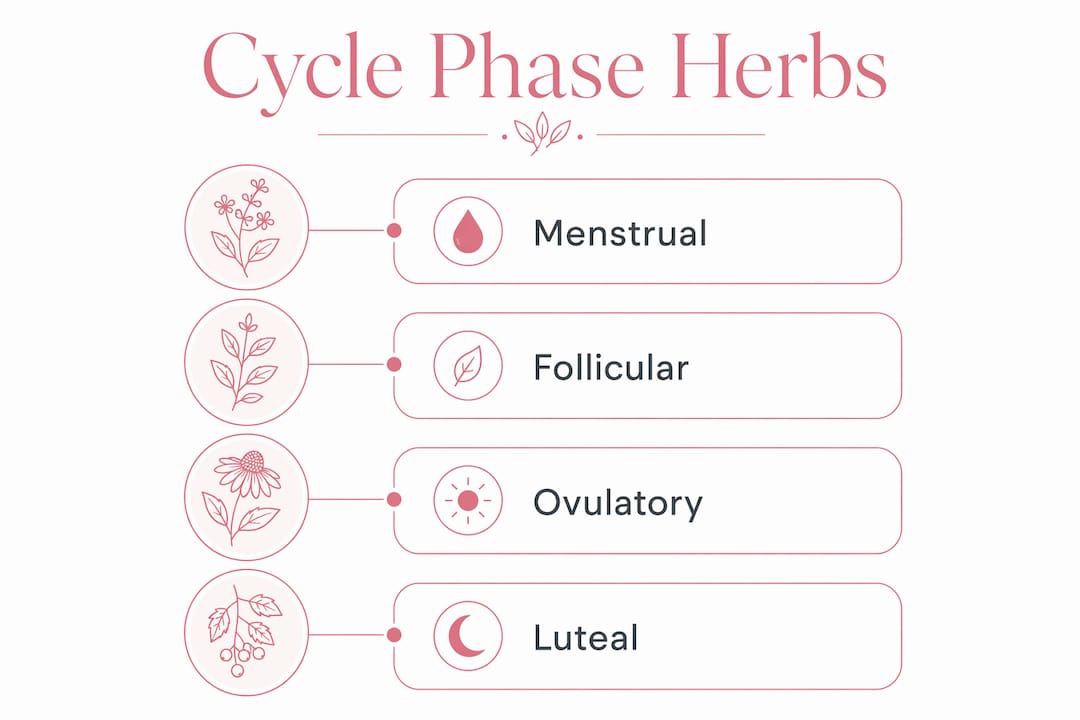
The ovulatory phase (around day 14) is brief but hormonally intense. Maca root and light adaptogens support energy and libido here without suppressing the LH surge that triggers ovulation.
The luteal phase (days 15–28) is where most PMS symptoms originate. Vitex is most effective when taken consistently through this phase. Magnesium glycinate and vitamin B6 are the nutritional anchors here, directly reducing mood instability and sleep disruption.
| Cycle phase | Recommended herbs and nutrients | Primary benefit |
|---|---|---|
| Menstrual | Chamomile, lemon balm, raspberry leaf | Cramp relief, nervous system calm |
| Follicular | Dandelion root, nettle leaf | Estrogen metabolism, mineral replenishment |
| Ovulatory | Maca root, light adaptogens | Energy, libido support |
| Luteal | Vitex, magnesium glycinate, B6 | PMS relief, mood and sleep stability |
Cycle syncing practitioners consistently recommend mapping nutritional and herbal support to these phases rather than taking a single supplement daily regardless of timing. That phase-aware approach produces better results because it works with your hormonal rhythm instead of against it.
Pro Tip: Track your cycle for at least two full months before adding phase-specific herbs. You need to know your actual phase lengths before you can time supplementation correctly.
What safety factors should women know before using cycle support herbs?
Herbal supplements are not automatically safe because they are natural. The compounds in Vitex, Black Cohosh, and Dong Quai significantly affect endocrine and nervous systems, and they can delay ovulation, change bleeding intensity, or cause spotting, especially in the first one to three cycles of use. That is not a sign the herb is failing. It is a sign your hormonal system is responding.
Standardized extracts are the single most important quality factor to check. A product with quantified active ingredients, such as a stated percentage of agnusides in Vitex or triterpene glycosides in Black Cohosh, delivers a consistent dose. Unquantified products introduce variability that makes it impossible to know whether you are getting a therapeutic amount or none at all.
Four safety priorities every woman should address before starting:
- Consult your doctor or a licensed herbalist if you take hormonal contraceptives, antidepressants, or thyroid medication. Several herbs interact with these drug classes.
- Start with one herb at a time. Adding multiple hormone-modulating herbs simultaneously makes it impossible to identify what is helping or causing side effects.
- Avoid potent herbs during pregnancy or while trying to conceive without direct clinical guidance. Vitex in particular affects the pituitary and should not be self-prescribed during conception attempts.
- Discontinue and seek advice if you experience significant cycle changes, worsening mood, or unusual bleeding after two to three months of use.
“Herbal medicines contain potent bioactive compounds that affect hormones, blood flow, and neurological health. They require the same respect and discernment as any medicine. Understanding their active components is key to harnessing benefits while avoiding adverse effects.” — NCIM, The Healing Power of Herbs
Women new to herbal cycle support should start with gentle nervines like lemon balm or chamomile, plus nutritional supports like nettle tea, before moving to stronger hormone modulators. This approach builds body awareness and reduces the risk of an outsized initial response. The benefits of hormone balancing supplements are real, but they require a measured, informed approach to access safely.
How can women practically build a herbal cycle support routine?
The most common mistake women make with herbal cycle support is expecting fast results. Consistent use over 3–6 months is the standard timeframe for cumulative hormonal changes. Herbs function as tonics, not pharmaceuticals. They shift the terrain gradually rather than overriding it acutely.
A practical starting routine looks like this:
- Month 1: Add one gentle herb, such as chamomile during menstruation or dandelion root during the follicular phase. Track symptoms in a cycle journal.
- Month 2: Introduce a standardized Vitex extract if PMS is the primary concern. Take it daily, not just during the luteal phase, for consistent prolactin regulation.
- Month 3: Assess changes. Note cycle length, PMS severity, energy, and mood. Adjust based on what you observe, not what you expect.
- Ongoing: Add magnesium glycinate (300–400 mg) and vitamin B6 during the luteal phase to complement herbal support with nutritional anchors.
Sourcing matters as much as timing. Look for products that list the standardized extract percentage on the label, carry third-party testing certification, and avoid proprietary blends that hide individual herb doses. Pairing herbal supplements with dietary choices for hormone stability amplifies results because nutrition and herbs work through overlapping pathways.
Pro Tip: Keep a simple symptom log using a notes app or a paper journal. Rate PMS severity, energy, and sleep on a 1–5 scale each day. After three months, patterns become visible that are impossible to detect by memory alone.
If a herb causes worsening symptoms after two full cycles, stop it. Individual biochemistry varies enough that trial and adjustment is a normal part of the process, not a failure. The goal is finding what works for your specific hormonal pattern, not following a generic protocol.
Key Takeaways
Herbal supplements for cycle balance work through specific hormonal mechanisms and require standardized extracts, phase-aware timing, and consistent use over 3–6 months to deliver measurable results.
| Point | Details |
|---|---|
| Vitex is the top evidence-backed herb | Standardized Vitex extracts reduce prolactin and relieve PMS in clinical trials. |
| Phase-specific timing improves results | Match herbs to your cycle phase: nervines during menstruation, Vitex during the luteal phase. |
| Standardized extracts are non-negotiable | Products with quantified active ingredients deliver consistent, therapeutic doses. |
| Expect a 3–6 month commitment | Herbs work as tonics; cumulative hormonal changes take multiple cycles to appear. |
| Start gentle, then build | Begin with chamomile or nettle before adding potent hormone modulators like Black Cohosh. |
What I’ve learned from years of watching women use herbal cycle support
The most persistent myth I encounter is that herbal supplements are a soft, low-stakes option compared to medication. They are not. Vitex genuinely shifts pituitary signaling. Black Cohosh genuinely modulates estrogen receptors. Women who treat these herbs casually, stacking three or four at once without tracking anything, often end up more confused about their cycles than when they started.
What actually works is slower and more deliberate than most people want to hear. One herb, tracked carefully, over three full cycles, tells you something real. Four herbs taken simultaneously tell you nothing except that something changed.
The other thing I’ve seen consistently is that quality separates results from disappointment. A low-dose, unstandardized Vitex product will do almost nothing. A standardized extract at a therapeutic dose, taken consistently, often produces noticeable changes in PMS severity within two to three cycles. The herb is not the variable. The product quality is.
Body literacy is the skill that makes all of this work. Women who track their cycles, notice their symptoms, and adjust based on real data get better outcomes than those following a fixed protocol. Herbal cycle support is not a prescription you fill once. It is a practice you refine over time, and that refinement is where the real benefit lives.
— Zamanee
Florvahealth’s natural system for hormone and PMS relief
Florvahealth built its range around the inside-out principles this article covers: gut support, gentle care and consistent routines.
Florvahealth does not sell the herbal blends discussed above. Its women’s probiotics and digestive enzymes are a separate, gut-focused option that can sit alongside them. Florvahealth puts ingredient quality and clear labels first, which matches the standardization principles covered here.
FAQ
What are herbal supplements for cycle balance?
Herbal supplements for cycle balance are plant-derived products containing bioactive compounds that influence hormone levels, menstrual regularity, and PMS symptoms. Common examples include Vitex agnus-castus, Ashwagandha, Black Cohosh, and Dong Quai.
How long does it take for herbal cycle supplements to work?
Most women need 3–6 months of consistent use before noticing measurable changes in cycle regularity or PMS severity. Herbs function as tonics that shift hormonal patterns gradually, not acutely.
Can herbal supplements change my period timing?
Yes. Herbs like Vitex, Ashwagandha, and Black Cohosh can alter cycle length and ovulation timing, sometimes causing spotting or changes in bleeding intensity, particularly in the first few cycles of use.
What should I look for in a quality herbal supplement?
Choose products with standardized extract percentages listed on the label, third-party testing certification, and no proprietary blends that hide individual herb doses.
Are herbal cycle supplements safe to take with birth control?
Several herbs, including Vitex and St. John’s Wort, interact with hormonal contraceptives and other medications. Consult a doctor or licensed herbalist before combining herbal supplements with any prescription drug.
Recommended
- Benefits of Hormone Balancing Supplements for Women
- Simple Skin Care and Hormones: Your Practical Guide
- Florva Health: probiotics, intimate care and skincare
- Hydration and Hormone Balance: What Women Need to Know
Sources
- Chasteberry: Usefulness and Safety — NIH National Center for Complementary and Integrative Health
- Evening Primrose Oil: Usefulness and Safety — NIH National Center for Complementary and Integrative Health
- Premenstrual Syndrome (PMS) — American College of Obstetricians and Gynecologists


