

Hydration is defined as the physiological state in which the body maintains sufficient fluid and mineral levels to support cellular function, and the role of hydration in hormone balance is more direct than most women realize. Water is the medium through which every hormone travels, signals, and gets cleared from the body. Without adequate fluid intake, the endocrine system operates under constant strain. Research now confirms that even mild, chronic dehydration triggers measurable hormonal disruption, including elevated cortisol, impaired estrogen clearance, and mineral deficits that blunt progesterone signaling. For women aged 20–40 managing symptoms like mood swings, bloating, fatigue, or irregular cycles, hydration is not a background habit. It is a front-line factor in hormonal health.
How does hydration influence stress hormone regulation and cortisol levels?
Dehydration directly raises cortisol, the body’s primary stress hormone, through a chain reaction in the endocrine system. When fluid levels drop, the brain releases vasopressin to conserve water. Vasopressin then activates the hypothalamic-pituitary-adrenal (HPA) axis, triggering adrenocorticotropic hormone (ACTH) release, which signals the adrenal glands to produce more cortisol. The result is a stress response that has nothing to do with emotional pressure.
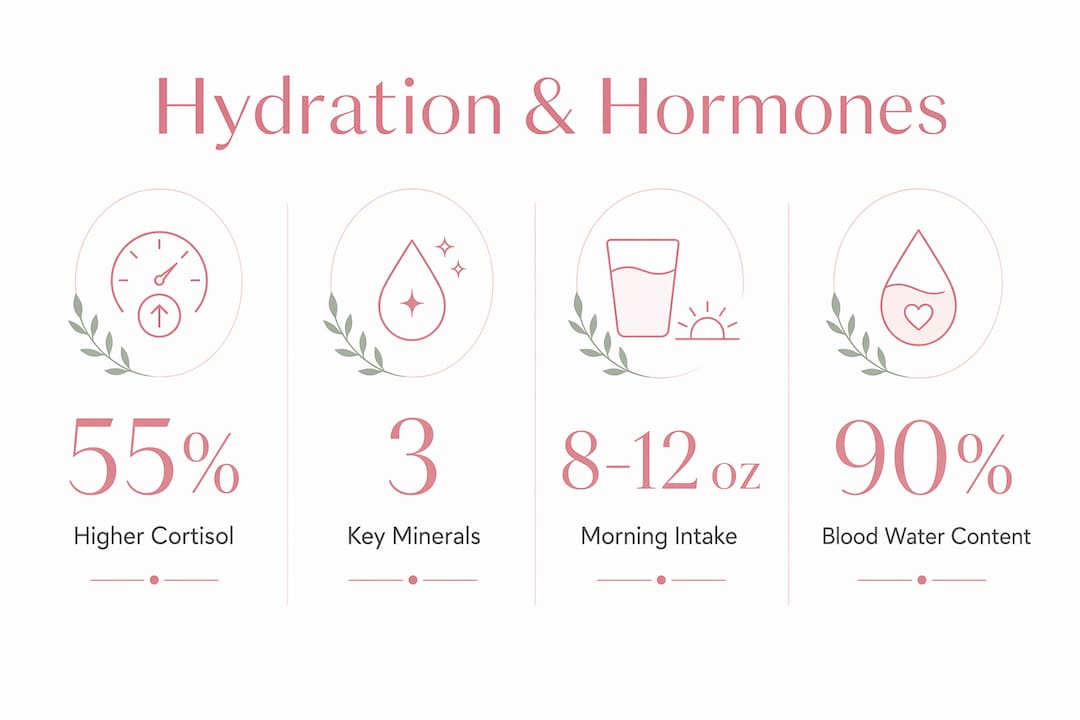
The scale of this effect is significant. Low daily fluid intake of roughly 1.3 liters per day produces a 55% higher cortisol response to stress compared to high intake of around 4.4 liters per day. That gap means a woman who drinks too little water wakes up with a cortisol system that is already primed to overreact before her day has even started.
Chronically elevated cortisol does real damage to hormonal balance:
- Reproductive hormones: High cortisol suppresses luteinizing hormone (LH) and follicle-stimulating hormone (FSH), which can delay or prevent ovulation.
- Thyroid function: Cortisol slows the conversion of inactive T4 to active T3, reducing metabolic efficiency.
- Progesterone: Cortisol competes with progesterone at receptor sites, effectively reducing progesterone’s functional impact.
- Insulin sensitivity: Elevated cortisol raises blood glucose and promotes insulin resistance over time.
Chronic mild dehydration primes the body for an exaggerated stress hormone reaction, which can override the metabolic benefits of other wellness practices like intermittent fasting or exercise. Hydration is the baseline that makes everything else work.
Pro Tip: Drink 8–12 oz of mineral-rich water within 10 minutes of waking. Morning cortisol naturally peaks between 6 AM and 8 AM, and morning hydration helps buffer that spike before it compounds into a prolonged stress response.
Why does mineral-rich hydration matter for hormonal signaling?
Plain water alone does not fully support hormone function. Minerals like magnesium, potassium, and sodium act as cofactors for hormone receptors, enzyme activity, and cellular signaling. Without them, hormones can be present in the bloodstream but unable to bind effectively to their target receptors.
The menstrual cycle makes this especially relevant. Progesterone blocks aldosterone during the luteal phase, which increases sodium and magnesium excretion through the kidneys. This mineral loss is a normal physiological process, but it creates a window of vulnerability. Women who drink large amounts of plain water during this phase can inadvertently flush out the minerals their hormones need most.
Key mineral roles in hormonal signaling include:
- Magnesium: Required for progesterone synthesis and cortisol regulation. Deficiency worsens PMS symptoms including cramps, anxiety, and poor sleep.
- Sodium: Regulates fluid balance and supports adrenal function. Low sodium amplifies aldosterone release, which disrupts fluid retention patterns.
- Potassium: Works with sodium to maintain cell membrane potential, which affects how efficiently hormone signals cross into cells.
Excessive plain water intake without mineral replenishment risks depleting magnesium, potassium, and sodium, potentially worsening hormonal imbalances during the luteal phase. The fix is not to drink less water. It is to drink smarter water.
Pro Tip: During the 10–14 days before your period, add a pinch of sea salt or a magnesium-containing electrolyte powder to at least one glass of water daily. This replaces what progesterone causes your kidneys to excrete.
In what ways does hydration affect hormone transport and clearance?
Water forms the transportation network for every hormone in the body. Blood is over 90% water, and blood plasma is the vehicle that carries hormones from the glands that produce them to the tissues that need them. When hydration drops, blood volume decreases and circulation slows. Hormones take longer to reach their targets, and the signals they carry arrive weakened or delayed.

This creates what researchers describe as hormonal traffic jams. Reduced blood volume does not just slow delivery. It also impairs clearance. Hormones that linger in circulation past their useful window can bind to receptors at the wrong time or in the wrong concentration, producing symptoms like estrogen dominance, mood instability, or irregular cycles.
| System | Role in hormone function | Dehydration effect |
|---|---|---|
| Blood plasma | Carries hormones to target tissues | Reduced volume slows delivery |
| Lymphatic system | Clears hormonal waste and metabolites | Sluggish flow causes metabolite buildup |
| Liver | Metabolizes and deactivates hormones | Reduced bile flow impairs estrogen clearance |
| Kidneys | Excretes hormone metabolites via urine | Concentrated urine retains metabolic waste |
There is also a clinical implication most women never hear about. Dehydration causes concentration effects in blood hormone testing, producing falsely elevated hormone readings that normalize once the person is properly hydrated. A woman who gets blood drawn while mildly dehydrated may receive results suggesting high estrogen or abnormal thyroid levels that do not reflect her true baseline. Drinking adequate water before lab work is not just good practice. It is medically necessary for accurate results.
Hydration maintains plasma volume and osmolar stability, enabling efficient hormone transport and reducing the physiological strain that forces compensatory hormone activation. In practical terms, staying hydrated keeps the endocrine system running on its own terms rather than in crisis mode.
How do hormonal cycles change a woman’s hydration needs?
Women’s hydration needs are not static. They shift across the four phases of the menstrual cycle because estrogen and progesterone directly alter how the body manages fluid and minerals. Understanding this dynamic is the difference between hydrating adequately and hydrating strategically.
Estrogen lowers the threshold for water conservation, causing the body to retain fluid earlier and more aggressively than it otherwise would. This is why bloating often peaks around ovulation and in the days before menstruation. Progesterone, meanwhile, blocks aldosterone and increases mineral excretion, which can cause fluid loss and the fatigue and mood dips that accompany it.
Practical hydration shifts across the cycle:
- Follicular phase (days 1–13): Estrogen rises. Thirst signals are more reliable. Standard hydration targets apply.
- Ovulation (around day 14): Estrogen peaks. Fluid retention increases. Reduce sodium intake and prioritize plain water.
- Luteal phase (days 15–28): Progesterone rises. Mineral loss accelerates. Increase electrolyte intake and prioritize magnesium-rich fluids.
- Menstruation (days 1–5): Fluid and mineral loss through blood. Increase total fluid intake and replenish iron alongside electrolytes.
Women’s hormonal fluctuations affect thirst and water retention thresholds, creating dynamic hydration needs across cycle phases that require a tailored approach. Treating every day the same ignores the biology that drives your symptoms.
What practical hydration strategies support hormone balance?
Effective hydration for hormone health follows a few clear principles. Volume, timing, mineral content, and cycle awareness all matter. Getting any one of these wrong reduces the benefit of the others.
-
Set a volume target based on body weight. A daily intake exceeding 40 mL per kg of body weight, with at least 1 liter of plain water included, correlates with better hormonal health markers. For a 140-pound (63 kg) woman, that means roughly 2.5 liters of total fluid daily.
-
Start with mineral water in the morning. Drinking 8–12 oz of mineral-rich water immediately after waking replenishes overnight fluid loss and buffers the natural morning cortisol surge. Coffee consumed before water amplifies cortisol further, so water comes first.
-
Adjust for your cycle phase. During the luteal phase, add electrolytes to at least one daily serving of water. Magnesium glycinate dissolved in water is particularly effective because it addresses both mineral loss and the sleep disruption that progesterone withdrawal causes.
-
Avoid overhydration. Drinking more than 4 liters of plain water daily without electrolyte replenishment dilutes sodium and magnesium. This can worsen the very symptoms you are trying to address, including bloating, fatigue, and mood instability.
-
Track symptoms alongside hydration. Keep a simple log for two full cycles. Note daily fluid intake, mineral additions, and symptoms like cramps, mood, energy, and bloating. Patterns emerge quickly and give you real data to act on.
Pro Tip: Set a phone reminder for 2 PM. Afternoon dehydration is the most common and most overlooked contributor to the 3 PM energy crash that many women attribute to blood sugar or poor sleep. Hydration solves it faster than caffeine and without the cortisol cost.
Key Takeaways
Adequate hydration is the single most underused tool for hormone regulation in women, because it directly controls cortisol output, hormone transport efficiency, mineral balance, and the accuracy of hormonal lab results.
| Point | Details |
|---|---|
| Dehydration raises cortisol | Low fluid intake produces a 55% higher cortisol response, disrupting reproductive and metabolic hormones. |
| Minerals matter as much as water | Plain water alone can deplete magnesium and sodium during the luteal phase, worsening PMS symptoms. |
| Hydration affects lab accuracy | Dehydration concentrates blood, producing falsely elevated hormone readings that normalize with proper hydration. |
| Cycle phase changes fluid needs | Estrogen and progesterone shift water retention and mineral excretion across the menstrual cycle, requiring adjusted intake. |
| Volume target is body-weight based | Aim for more than 40 mL per kg of body weight daily, with at least 1 liter of plain water included. |
Hydration is the foundation I kept underestimating
I spent years reading about hormone health and recommending supplements, cycle tracking, and dietary changes before I started paying serious attention to what women were actually drinking every day. The pattern I kept seeing was this: women doing everything “right” but still experiencing bloating, mood crashes, and fatigue. When I started asking about water intake and mineral consumption, the gaps were consistent and significant.
The insight that changed how I think about this is the cortisol connection. Most women understand that stress raises cortisol. Far fewer realize that not drinking enough water produces the same physiological outcome, through a completely different pathway, before a single stressful event occurs. You can meditate, sleep eight hours, and eat well, and still wake up with a cortisol system that is already dysregulated because you went to bed mildly dehydrated.
What I have observed consistently is that women who shift to mineral-rich water, especially during the luteal phase, report noticeable reductions in PMS severity within two cycles. That is not a supplement doing the work. That is the body’s existing hormonal machinery finally getting the raw materials it needs to function. Hydration does not replace targeted hormone support, but without it, nothing else works as well as it should. Start there. Track it. The results will tell you everything.
— Zamanee
Florvahealth’s approach to hormonal wellness
Hydration is the foundation, but it works best as part of a complete system. Florvahealth builds its products around exactly this principle: that hormone balance requires inside-out support, not a single fix.

Florvahealth’s women’s probiotics and digestive enzymes fit alongside the hydration habits in this guide. If bloating is part of your symptom picture, digestive enzyme capsules support digestion after meals, and women’s probiotic capsules support gut and intimate health. Read more on the role of probiotics, and pair these with the water and mineral habits above rather than using them in their place.
FAQ
Does dehydration directly cause hormonal imbalance?
Dehydration triggers cortisol release through the vasopressin-ACTH pathway, which suppresses reproductive hormones and disrupts thyroid function. Chronic mild dehydration is a direct and measurable cause of hormonal disruption.
How much water should women drink for hormone health?
A daily total fluid intake exceeding 40 mL per kg of body weight, with at least 1 liter of plain water, correlates with better hormonal health markers in adults.
Does plain water affect hormone levels differently than mineral water?
Plain water in excess can deplete magnesium, sodium, and potassium, which are required cofactors for hormone receptor function. Mineral-rich water or electrolyte-supplemented water better supports hormonal signaling, especially during the luteal phase.
Can dehydration cause inaccurate hormone test results?
Dehydration concentrates blood plasma, which produces falsely elevated hormone readings on lab tests. Drinking adequate water before blood draws is necessary for accurate endocrine assessment.
Why do women need more hydration support than men?
Estrogen and progesterone directly alter fluid retention thresholds and mineral excretion rates across the menstrual cycle. These hormonal shifts create dynamic hydration needs that change week to week, making women’s fluid requirements more variable and more sensitive to deficits.
Recommended
- Simple Skin Care and Hormones: Your Practical Guide
- Florva Health: probiotics, intimate care and skincare
- Top 3 shala.com Alternatives for Women’s Health 2026
- Digestive Enzyme Capsules
Sources
- Fluid and Electrolyte Balance — MedlinePlus, National Library of Medicine
- Dehydration — MedlinePlus, National Library of Medicine
- Healthy Eating — Office on Women's Health


