

Yes, certain probiotics can meaningfully support vaginal health — but only when the right strains, dose, and delivery route are matched to the right condition. Randomized controlled trials using Nugent score endpoints show that strains like Lactobacillus rhamnosus GR-1, L. reuteri RC-14, and L. crispatus can shift the vaginal microbiome toward lactobacilli dominance, reduce bacterial vaginosis (BV) recurrence, and support recovery after antibiotic treatment. A 14-expert consensus concluded that Lactobacillus probiotics can restore and maintain vaginal microbiota and support treatment and prevention of BV, vulvovaginal candidiasis (VVC), recurrent urinary tract infections (rUTIs), genitourinary syndrome of menopause (GSM), and PCOS-related outcomes when used appropriately.
Looking for a product? Our women's daily vaginal probiotic capsules are taken by mouth, and our probiotic feminine wash is for external use only. Talk to your doctor first if you are pregnant or have signs of an infection.
Three situations where the evidence is clearest:
- Adjunct to antibiotics for BV: Probiotics used alongside or after metronidazole reduce recurrence rates compared with antibiotics alone.
- Prevention of recurrent UTIs: Oral Lactobacillus strains show consistent signal across multiple trials for reducing UTI frequency in women with a history of recurrence.
- Supportive care for GSM: Combined with localized estrogen, probiotics can help restore vaginal pH and tissue comfort during and after menopause.
Pro Tip: Strain specificity is not a marketing claim — it is a clinical reality. A probiotic labeled “Lactobacillus” with no alphanumeric strain designation (like GR-1 or RC-14) gives you no way to know whether it has any trial evidence for vaginal health.
Key Takeaways
Specific Lactobacillus strains with verified clinical trial evidence, matched to the right condition and delivery route, offer meaningful support for vaginal microbiome health, BV recurrence prevention, and rUTI reduction.
| Point | Details |
|---|---|
| Strain identity is non-negotiable | Look for the full alphanumeric strain ID (e.g., GR-1, RC-14) — species name alone gives no trial evidence. |
| Both oral and vaginal routes work for BV | A 2024 double-blind trial found no significant difference in Nugent score improvement between oral and vaginal probiotics post-metronidazole. |
| Expect 4–8 weeks for microbiome shifts | Symptom relief may come sooner, but Nugent score and qRT-PCR changes typically take 4–8 weeks to measure. |
| Probiotics work best as adjuncts | For BV, VVC, and rUTI, probiotics complement antibiotic or antifungal treatment — they are not a standalone replacement. |
| Florvahealth offers strain-transparent options | Florvahealth selects probiotics with verified strain IDs, CFU guarantees through expiration, and clear storage guidance for women’s vaginal health support. |
Table of Contents
- What a healthy vaginal microbiome actually looks like
- How probiotics biologically support vaginal health
- Clinical trial evidence, condition by condition
- Which strains and delivery methods have the best evidence?
- How much to take and how long until you may see change
- How to use probiotics alongside antibiotics, antifungals, or estrogen therapy
- Safety, contraindications, and how probiotics are regulated in the U.S.
- Practical selection checklist: picking a probiotic for vaginal health
- What we still don’t know: heterogeneity, colonization, and research gaps
- Practical takeaways: when to try probiotics and when to seek care
- Why strain specificity matters more than most women realize
- Florvahealth’s approach to probiotic-supported vaginal health
- Sources
What a healthy vaginal microbiome actually looks like
The vaginal microbiome is a relatively simple ecosystem compared with the gut. In reproductive-age women, a healthy vaginal microbiome is typically dominated by one or two Lactobacillus species, which maintain an acidic environment (pH roughly 3.8–4.5) that suppresses the growth of pathogens. The NIH Human Microbiome Project confirmed that body-site microbiomes have distinct characteristic compositions, and the vagina is one of the most tightly regulated of all.
Clinicians and researchers use a few key markers to assess vaginal microbiome status:
- Nugent score: A microscopy-based scoring system (0–10) that grades the ratio of Lactobacillus morphotypes to anaerobic bacteria. A score of 0–3 is normal; 7–10 indicates BV.
- Vaginal pH: Values above 4.5 suggest reduced Lactobacillus activity and are associated with BV and other dysbioses.
- Lactobacilli abundance: Measured by culture or qRT-PCR in research settings; high abundance correlates with protection.
The composition shifts across life stages. During the menstrual cycle, pH rises briefly around menstruation as blood (pH ~7.4) temporarily disrupts the acid environment. Pregnancy tends to increase Lactobacillus dominance, which may be protective. Menopause brings a sharp drop in estrogen, reducing glycogen in vaginal epithelial cells — the fuel Lactobacillus species ferment to produce lactic acid — and the microbiome often becomes more diverse and less protective as a result.
Ethnic variation also matters. Research consistently shows that Black and Hispanic women have higher rates of non-Lactobacillus-dominant vaginal communities than white or Asian women, yet many of these women are asymptomatic. This complicates universal Nugent-score cutoffs and is an active area of research.
How probiotics biologically support vaginal health
The mechanisms behind probiotic benefits for vaginal flora are specific and well-characterized. Lactobacillus species protect the vaginal environment through several overlapping pathways, which is why not every strain works the same way:
- Lactic acid production: Lactobacillus species ferment glycogen into lactic acid, lowering vaginal pH below 4.5 and creating an environment hostile to BV-associated anaerobes and Candida species.
- Hydrogen peroxide (H₂O₂) production: Some strains, particularly L. crispatus, produce H₂O₂, which has direct antimicrobial activity against several vaginal pathogens.
- Bacteriocins and antimicrobial peptides: Certain strains secrete small proteins that selectively inhibit competing bacteria without disrupting the broader microbiome.
- Competitive exclusion: Lactobacillus species adhere to vaginal epithelial cells, physically blocking attachment sites that pathogens like Gardnerella vaginalis would otherwise colonize.
- Immune modulation: Some strains interact with vaginal mucosal immune cells to reduce pro-inflammatory cytokine signaling, which may help resolve chronic low-grade inflammation associated with BV.
A 2025 mechanistic review in Nature Communications underscores that these benefits are highly strain-specific — a strain that produces H₂O₂ robustly in one woman may produce little in another, depending on local oxygen tension and host factors.
There are two main theories about how oral probiotics reach the vagina. The gut-to-vagina translocation theory proposes that Lactobacillus strains ingested orally colonize the gut, migrate to the rectal reservoir, and ascend to the vaginal canal via the perineum. The alternative view is that oral probiotics primarily work through systemic immune modulation rather than direct vaginal colonization. Both pathways likely operate to some degree, and the relative contribution depends on the strain. Vaginal application bypasses this uncertainty entirely by delivering bacteria directly to the target site.

The simplified sequence looks like this: a viable strain is delivered (orally or vaginally) → it adheres to epithelial cells → it produces lactic acid, H₂O₂, and bacteriocins → competing pathogens lose adhesion sites and face an acidic, antimicrobial environment → the host immune response shifts toward tolerance rather than inflammation.
Clinical trial evidence, condition by condition
The role of probiotics in vaginal health varies considerably by condition. Here is what the human trial data actually shows:
| Condition | Typical trial endpoints | Direction of evidence | Evidence strength |
|---|---|---|---|
| Bacterial vaginosis (BV) | Nugent score, recurrence rate, symptom resolution | Positive; adjunct to antibiotics reduces recurrence | Multiple RCTs, meta-analyses |
| Vulvovaginal candidiasis (VVC) | Symptom scores, culture negativity, recurrence | Positive signal, especially for recurrent VVC | RCTs; some heterogeneity |
| Recurrent UTIs (rUTI) | UTI episode frequency, culture results | Consistent positive signal | RCTs, systematic reviews |
| GSM (menopause) | Vaginal pH, symptom scores, epithelial maturation | Positive, especially combined with estrogen | Limited RCTs |
| Pregnancy outcomes | Preterm birth risk, BV in pregnancy | Promising but inconclusive | Small RCTs, mixed results |
| PCOS-related outcomes | Hormonal markers, metabolic parameters | Early signal; very limited data | Small trials only |
Bacterial vaginosis has the strongest evidence base. A 2024 double-blind clinical trial found that both oral and vaginal probiotics produced significant Nugent score improvements after metronidazole treatment, with no statistically significant difference between the two routes. This matters practically: if you find vaginal application inconvenient, oral probiotics appear to offer comparable recurrence reduction when used post-antibiotic.
Vulvovaginal candidiasis trials show that L. rhamnosus GR-1 and L. reuteri RC-14 can reduce recurrence of yeast infections, particularly in women with four or more episodes per year. The mechanism is partly pH-mediated and partly through direct inhibition of Candida biofilm formation.
Recurrent UTIs respond to oral Lactobacillus supplementation across several trials, with the proposed mechanism being competitive exclusion of uropathogens like E. coli from the periurethral area. The expert consensus specifically names rUTI prevention as a supported indication.
GSM evidence is more limited but encouraging. Localized estrogen remains the first-line treatment, and probiotics appear to work best as an adjunct rather than a standalone therapy, helping to restore acidic pH and Lactobacillus counts in postmenopausal women.
Pregnancy and PCOS data are early-stage. Small trials suggest probiotics may reduce BV-associated preterm birth risk and improve some metabolic markers in PCOS, but these findings need larger, standardized RCTs before clinical recommendations can be made with confidence.
A small 6-week trial of oral Lactobacillus combinations in asymptomatic women with high Nugent scores found that 60% of women in the high-Nugent subgroup shifted to a low Nugent score, with qRT-PCR confirming vaginal Lactobacillus colonization in responders. Small sample size limits generalizability, but the colonization evidence is notable.
Which strains and delivery methods have the best evidence?
Strain identity is the single most important variable in probiotic selection for vaginal health. Here is what the clinical literature shows for each of the five most-studied strains:
L. crispatus deserves special attention. It is the dominant species in the healthiest vaginal microbiomes, and research highlights that vaginal-native strains like L. crispatus offer more durable protection than gut-adapted strains. The catch: it is harder to formulate stably and is less common in consumer products than GR-1/RC-14 combinations.
A randomized double-blind trial of oral Lacticaseibacillus rhamnosus CA15 (DSM 33960) at 1×10¹⁰ CFU daily for 10 days found increased vaginal Lactobacillus counts and symptom improvement versus placebo at 30-day follow-up, demonstrating that even a 10-day oral course can produce measurable vaginal changes.
Oral vs. vaginal delivery: the practical tradeoffs
- Oral capsules: Convenient, widely available, no local application required. Works via gut-vagina translocation and systemic immune effects. Evidence is strong for GR-1/RC-14 combinations. Slower to produce local vaginal changes.
- Vaginal capsules or suppositories: Deliver bacteria directly to the target site; faster local colonization; stronger evidence for L. crispatus strains. Less convenient; timing around menstruation matters.
- Synbiotic formulas (probiotic + prebiotic): Emerging evidence suggests pairing a clinically studied strain with a fermentable prebiotic substrate improves persistence by supplying the nutrients Lactobacillus needs to establish dominance in the vaginal niche.
The 2024 BMC Women’s Health trial found no significant difference in Nugent score improvement between oral and vaginal routes after metronidazole, which means route choice can reasonably follow patient preference when efficacy is comparable.
Pro Tip: When reading a product label, look for the full strain designation — genus, species, and alphanumeric strain ID (e.g., “Lactobacillus rhamnosus GR-1”). A label that says only “Lactobacillus rhamnosus” tells you nothing about whether the strain inside has any clinical trial data for vaginal health.
How much to take and how long until you may see change
CFU ranges in vaginal health trials cluster around 10⁸ to 10¹⁰ CFU per day for oral formulations. The L. rhamnosus CA15 trial used 1×10¹⁰ CFU daily; GR-1/RC-14 combination trials typically use 10⁸–10⁹ CFU per dose. Higher CFU does not automatically mean better outcomes — strain viability and the match between strain and indication matter more than raw count.
Typical course lengths from the trial literature:
- Intravaginal regimens: 7–14 days is common for acute treatment phases; some maintenance protocols extend to 3–6 months.
- Oral treatment courses: 10–30 days for active treatment; 4–8 weeks is the most common window for measuring microbiome outcomes in trials.
- Maintenance use: Many trials continue probiotics for 3–6 months post-treatment to assess recurrence prevention.
Timeline expectations matter. Symptom relief (reduced discharge, odor, discomfort) may be noticeable within 1–2 weeks of starting adjunct probiotics alongside antibiotic treatment. Microbiome-level changes, measured by Nugent score or qRT-PCR, are typically assessed at 4–8 weeks in trials and may take that long to become clinically meaningful. Do not expect a 3-day course to restore Lactobacillus dominance.
Pro Tip: Timing probiotic use immediately after menstruation may improve colonization success. The vaginal environment is less disrupted post-period, and glycogen availability in epithelial cells — the primary fuel for Lactobacillus fermentation — tends to be more favorable. If you are starting a vaginal probiotic course, the days immediately following your period are a reasonable window to begin.
Pair this with cyclical living practices that support overall hormonal balance across your cycle, since estrogen levels directly influence glycogen availability and, by extension, how well Lactobacillus can establish itself.
How to use probiotics alongside antibiotics, antifungals, or estrogen therapy
Probiotics work best as part of a coordinated strategy, not as a standalone replacement for standard treatment. Here is how to integrate them effectively:
- During antibiotic treatment for BV: Take probiotics at least 2 hours apart from the antibiotic dose to reduce the chance that the antibiotic kills the probiotic bacteria before they can colonize. Some clinicians recommend starting probiotics on day 1 of antibiotic treatment; others prefer beginning immediately after the antibiotic course ends. Both approaches have trial support.
- After completing antibiotics: The post-antibiotic window is when the vaginal microbiome is most vulnerable to recolonization by pathogens. Continuing probiotics for 4–8 weeks after finishing antibiotics is the most common protocol in recurrence-prevention trials.
- With antifungals for VVC: Probiotics are typically started alongside or immediately after antifungal treatment (fluconazole or topical azoles). The goal is to restore Lactobacillus dominance before Candida can re-establish.
- With localized estrogen for GSM: Estrogen therapy restores glycogen to vaginal epithelial cells, creating a more favorable environment for Lactobacillus to colonize. Adding a vaginal probiotic or oral GR-1/RC-14 combination to localized estrogen therapy may accelerate pH normalization and symptom improvement. This combination has the most evidence in postmenopausal women.
Key safety points before combining therapies:
- Always separate oral probiotics from antibiotics by at least 2 hours.
- If you are pregnant and experiencing BV or VVC symptoms, consult a clinician before starting any probiotic regimen — some intravaginal applications have not been adequately studied in pregnancy.
- Women who are severely immunocompromised (active chemotherapy, organ transplant, HIV with low CD4 count) should discuss probiotic use with their physician. Rare cases of Lactobacillus bacteremia have been reported in severely immunosuppressed patients.
- If using an intrauterine device (IUD) or intravaginal ring, check with your clinician before using intravaginal probiotic suppositories.
The expert consensus specifically supports adjunctive probiotic use for BV and rUTI prevention as evidence-based strategies when combined with appropriate medical treatment.
Safety, contraindications, and how probiotics are regulated in the U.S.
Probiotics are generally well tolerated in healthy women. Reported side effects are mild and transient, typically limited to bloating or mild gastrointestinal discomfort in the first few days of oral use. Serious adverse events are rare and almost exclusively reported in severely immunocompromised individuals.
In the United States, probiotics sold as dietary supplements fall under FDA oversight through the Dietary Supplement Health and Education Act (DSHEA). This means manufacturers do not need to prove safety or efficacy before bringing a product to market — a critical distinction from prescription drugs. The NIH Office of Dietary Supplements notes that label accuracy and CFU viability at the time of use (not just at manufacture) are common issues with commercial probiotic products.
What to look for on a label and in storage:
- CFU at time of use, not just at manufacture: Some products list CFU at manufacture, which may be significantly higher than what survives to expiration. Look for “CFU guaranteed through expiration” or “CFU at end of shelf life.”
- Refrigeration requirements: Many Lactobacillus strains lose viability at room temperature over time. If a product requires refrigeration, that requirement is real — a probiotic left on a warm shelf for weeks may deliver far fewer live bacteria than the label claims.
- Expiration date: Always check it. A probiotic past its expiration date may have substantially reduced viable bacteria.
- GMP certification: Good Manufacturing Practice certification from NSF International, USP, or a comparable third-party body indicates the manufacturer follows quality standards for potency and purity.
Pro Tip: Third-party testing by organizations like NSF International or USP is the closest thing to independent verification that a probiotic product contains what the label claims. Look for their seals before buying.
High-risk groups who should consult a clinician before starting probiotics: pregnant women (especially for intravaginal use), people with severe immunosuppression, anyone with a central venous catheter, and women with a history of recurrent Lactobacillus-related infections (extremely rare but documented).
Practical selection checklist: picking a probiotic for vaginal health
Not all probiotics marketed for women’s health have clinical support for vaginal applications. Use this checklist when evaluating a product:
- Verified strain ID: The label must list genus, species, and alphanumeric strain designation (e.g., L. rhamnosus GR-1, not just “Lactobacillus rhamnosus”).
- Clinical evidence for that strain and indication: Search the strain ID on PubMed or ask your pharmacist whether that specific strain has been tested in vaginal health trials.
- CFU at time of use: Look for a guarantee through the expiration date, not just at manufacture.
- Delivery route matched to your goal: Vaginal suppositories for faster local effect; oral capsules for convenience and gut-vagina axis benefits.
- Storage instructions followed: If refrigeration is required, verify the product was stored correctly at the point of sale.
- Third-party testing or GMP certification: NSF, USP, or equivalent.
- Clear manufacturer contact information: A reputable manufacturer lists a phone number or address and responds to questions about strain sourcing and testing.
Red flags on labels:
- “Proprietary blend” with no strain IDs listed
- CFU count listed only at manufacture with no expiration guarantee
- No storage instructions for a product that clearly requires refrigeration
- Claims like “clinically proven” with no citation or study reference
Questions worth asking your clinician or pharmacist:
- Does this strain have RCT evidence for my specific condition (BV, VVC, rUTI)?
- Should I use oral or vaginal delivery given my situation?
- How long should I continue after my antibiotic course ends?
Pro Tip: Prebiotic-rich foods like garlic, onions, and asparagus supply fermentable substrates that may support Lactobacillus growth in the gut, potentially enhancing the gut-to-vagina translocation pathway. Pairing dietary prebiotics with a clinically studied probiotic strain is a low-cost way to support colonization.
What we still don’t know: heterogeneity, colonization, and research gaps
The evidence for probiotics in vaginal health is real, but it has meaningful limits. Anyone reading this topic honestly has to acknowledge them.
The biggest problem is trial heterogeneity. Across published studies, strains, doses, delivery routes, treatment durations, and outcome measures vary so widely that pooling results is difficult. A meta-analysis that combines an intravaginal L. crispatus trial with an oral GR-1/RC-14 trial is comparing fundamentally different interventions. This is why the broad review of vaginal microbiota and probiotics concluded that study heterogeneity limits definitive conclusions despite a generally positive signal.
Other unresolved questions:
- Long-term colonization from oral probiotics: Whether orally ingested strains establish durable vaginal colonization or produce only transient effects remains unclear. The 6-week trial showed qRT-PCR evidence of vaginal colonization in responders, but what happens at 6 months is not well characterized.
- Inter-individual variation: Host genetics, diet, sexual behavior, contraceptive method, and baseline microbiome composition all influence how well a probiotic strain colonizes. Two women taking the same product may have entirely different outcomes.
- Ethnicity-related differences: The higher prevalence of non-Lactobacillus-dominant communities in Black and Hispanic women — often without symptoms — raises questions about whether current Nugent-score-based endpoints are the right measure of “success” for all populations.
- Synbiotic optimization: Which prebiotic substrates best support which Lactobacillus strains in the vaginal niche is largely unstudied in humans.
Research areas worth watching: vaginal microbiome transplantation (analogous to fecal transplant), strain consortia that combine multiple Lactobacillus species, and synbiotic formulations designed specifically for the vaginal niche rather than adapted from gut-health products.
Practical takeaways: when to try probiotics and when to seek care
Probiotics are a reasonable option in these situations:
- As an adjunct to antibiotics for BV, starting during or immediately after the antibiotic course and continuing for 4–8 weeks
- For prevention of recurrent UTIs in women with three or more episodes per year, using strains with rUTI trial evidence
- As supportive care alongside localized estrogen for GSM, to help restore vaginal pH and Lactobacillus counts
- For recurrent VVC (four or more episodes per year), using GR-1/RC-14 combinations as an adjunct to antifungal treatment
Seek clinician evaluation — do not rely on probiotics alone — if you experience:
- Fever above 101°F with vaginal symptoms (possible pelvic inflammatory disease)
- Severe pelvic or abdominal pain
- Unusual vaginal bleeding unrelated to your cycle
- Symptoms during pregnancy, especially if accompanied by discharge or odor
- No improvement after completing a full antibiotic course plus 4 weeks of adjunct probiotics
Suggested trial period and self-monitoring:
- Keep a brief symptom diary: note discharge character, odor, discomfort, and any UTI symptoms weekly.
- Schedule a follow-up with your clinician at 4–8 weeks if using probiotics for BV or rUTI prevention — Nugent score testing or a vaginal swab can confirm whether the microbiome has shifted.
- If no improvement is apparent at 8 weeks, the current strain or route may not be the right match for your microbiome. This is a reason to reassess with a clinician, not to increase the dose on your own.
For women managing broader hormonal symptoms alongside vaginal health concerns, holistic PMS management strategies can complement probiotic use as part of a more integrated approach.
Why strain specificity matters more than most women realize
The probiotic market is saturated with products that borrow credibility from clinical research without actually containing the strains that were studied. This is the gap that most articles on this topic gloss over, and it is worth being direct about.
When a trial shows that L. rhamnosus GR-1 reduces BV recurrence, that finding belongs to that strain. A product containing a different L. rhamnosus strain is not the same. The GR-1 designation is not a marketing badge; it is a specific biological identity with a documented mechanism and a clinical track record. Buying a product that says “Lactobacillus rhamnosus” without the GR-1 designation is a gamble, not a science-backed choice.
The same logic applies to delivery route. The 2024 BMC Women’s Health trial found oral and vaginal routes comparable for BV recurrence reduction after metronidazole — but that finding applies to the strains and doses used in that trial. It does not mean any oral probiotic is equivalent to any vaginal one.
What this means practically: the most useful thing a woman can do before buying a probiotic for vaginal health is look up the strain ID on PubMed and confirm that at least one RCT used that exact strain for her specific condition. It takes five minutes and filters out most of the noise on the supplement shelf.
Florvahealth’s approach to probiotic-supported vaginal health
Florvahealth builds its women’s wellness products around the same principle this article keeps returning to: strain identity and formulation quality are not optional details.
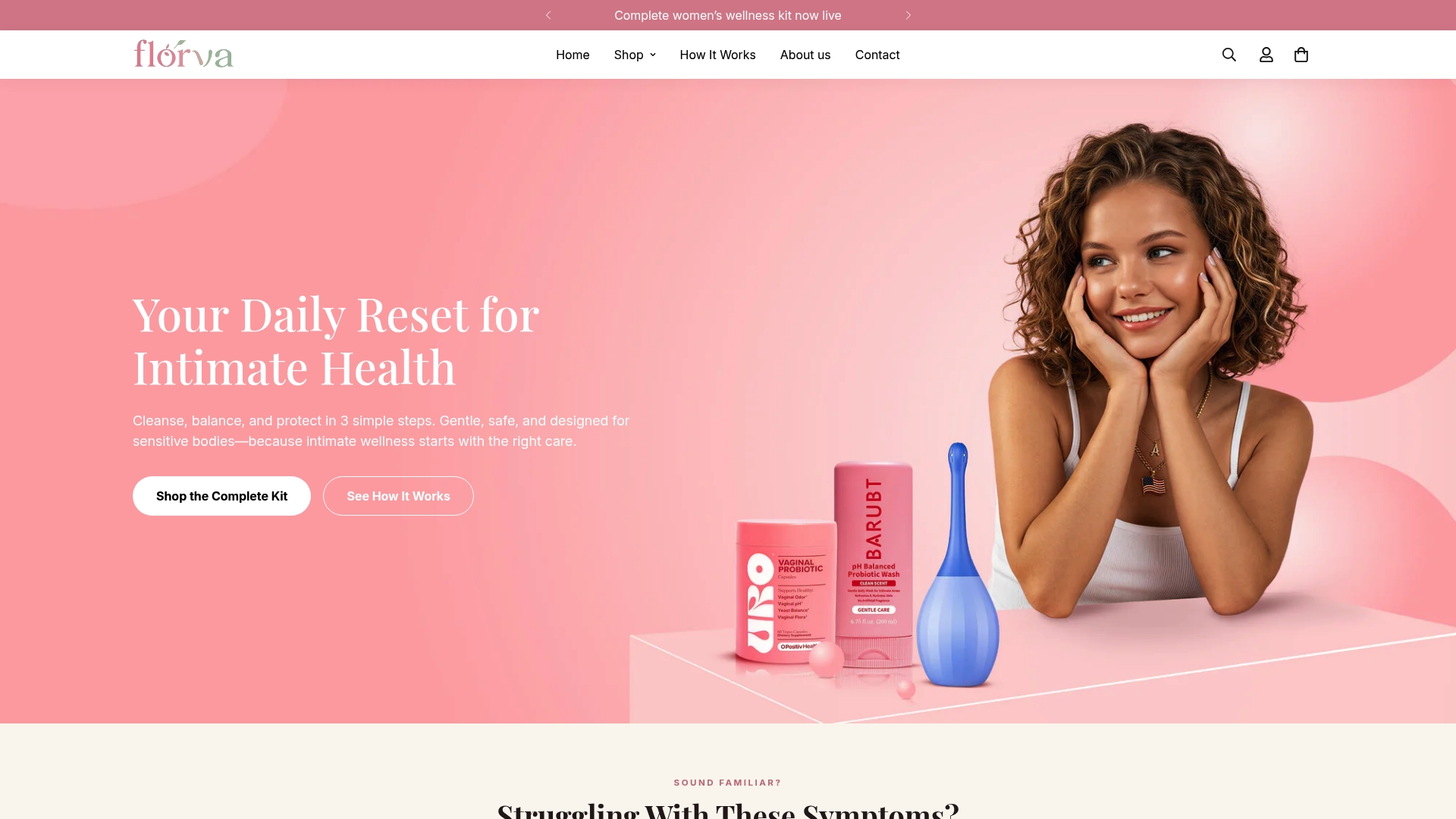
Florvahealth’s probiotic offerings are selected for strain transparency, CFU guarantees through expiration, and storage guidance that reflects how Lactobacillus actually behaves outside a lab. The difference between a product that works and one that just sounds good on a label often comes down to whether the manufacturer can answer the question: “Which specific strain is in this, and what trial used it?” Florvahealth can answer that.
If you are managing BV recurrence, recurrent yeast infections, or vaginal discomfort related to hormonal shifts, the Florvahealth women’s health system is a practical starting point — products designed to work alongside, not instead of, clinical care. This article is general health information, not medical advice; always confirm your approach with a qualified clinician before starting or changing a treatment regimen. Visit Florvahealth to explore strain-specific probiotic options and find the right fit for your goals.
Sources
- Expert Opinion on the Use of Probiotics in General Gynecological Conditions - PMC
- Lacticaseibacillus rhamnosus CA15 (DSM 33960) strain as a new driver in restoring the normal vaginal microbiota: A randomized, double-blind, placebo-controlled clinical trial
- Comparative efficacy of oral and vaginal probiotics in reducing the recurrence of bacterial vaginosis: a double-blind clinical trial | BMC Women’s Health
- Strain-specificity, timing, and synbiotic benefits in vaginal probiotic research - Nature Communications (2025)
This article is general information, not a substitute for advice from a qualified doctor. Consult a qualified healthcare professional about your own circumstances before acting on anything here.


