

For most US women dealing with unpredictable cycles, the most practical first-line nonprescription strategy is pairing a women-targeted probiotic with a myo-inositol formulation at the 40:1 Myo:D-Chiro ratio (2,000 mg myo-inositol + 50 mg D-chiro inositol daily), backed by foundational lifestyle changes. This combination targets two of the most common drivers of cycle irregularity: gut-hormone signaling and insulin sensitivity. Both are reversible, low-risk pathways for most women, and the approach is available without a prescription.
Clinical threshold: The Cleveland Clinic defines irregular periods as cycles shorter than 21 days, longer than 35 days, or those that vary significantly in length from month to month.
Plan a trial of several weeks before judging whether a supplement is working. Cycle changes are rarely fast. If you are pregnant, trying to conceive, managing a known thyroid condition or PCOS, or experiencing heavy bleeding, see a clinician before starting any supplement routine.
Pro Tip: Start a simple cycle-tracking app on the same day you begin any new supplement. Without a baseline, you have no way to know whether anything changed.

Table of Contents
- What counts as an irregular period?
- What causes irregular cycles?
- What are the most evidence-backed product categories to try?
- Why Florva’s integrated system is worth considering first
- How do you choose a safe, evidence-forward product?
- When should you see a clinician instead of trying products?
- How long should you try a product, and how do you know it’s working?
- How does gut health actually influence your cycle?
- Key Takeaways
- What the supplement industry gets wrong about cycle regularity
- Florva’s system addresses the whole picture, not just the symptoms
- Sources and further reading
What counts as an irregular period?
A cycle is considered irregular when it falls outside the clinically defined window or fluctuates significantly between consecutive months. Occasional variation is normal, especially after illness, travel, or a stressful month. Persistent irregularity across three or more cycles is worth investigating.
Measuring your cycle is straightforward: day 1 is the first day of full bleeding, and the cycle ends the day before the next period begins. Track at least 3–6 cycles before drawing conclusions. What you want to record:
- Cycle length (day 1 to day 1 of the next period)
- Bleed duration and flow intensity (light, moderate, heavy, clots)
- Presence or absence of fertile cervical mucus mid-cycle
- PMS symptoms and their timing
- Any missed or unusually short/long bleeds
Variability greater than seven days between cycles is a meaningful signal. A cycle that runs 28 days one month and 42 days the next is irregular by clinical standards, even if neither number looks alarming on its own.

What causes irregular cycles?
Irregular periods are usually a symptom of something upstream, not a standalone problem. Identifying the likely driver helps you pick products that address the root cause rather than just the bleeding pattern.
Common causes and their typical patterns:
- PCOS: Infrequent cycles (often 35+ days), anovulation, elevated androgens. The most common hormonal cause in women aged 20–40.
- Thyroid dysfunction: Hypothyroidism tends to produce heavy, prolonged, or frequent periods; hyperthyroidism often causes light or absent cycles.
- Weight extremes: Both low body weight and obesity disrupt the hypothalamic-pituitary-ovarian (HPO) axis. Rapid weight change in either direction can trigger missed cycles.
- Chronic stress: Elevated cortisol suppresses GnRH pulsatility, which delays or skips ovulation.
- Perimenopause: Cycle length becomes erratic in the years before menopause, typically starting in the mid-to-late 40s.
- Postpartum and breastfeeding: Prolactin suppresses ovulation; cycles may not return for months.
- Medications: Antipsychotics, some antidepressants, corticosteroids, and hormonal medications all affect cycle timing.
Lifestyle drivers are often reversible with targeted changes. The Endocrine Society’s PCOS guidance highlights healthy weight, moderate exercise, consistent sleep, and stress reduction as foundational because they directly modulate HPO axis function. Pairing hormone-supportive daily habits with a supplement routine tends to produce better outcomes than supplements alone.
Red flags that need prompt clinical care: very heavy bleeding (soaking a pad or tampon in under an hour), severe pelvic pain, fainting, fever with pelvic symptoms, or signs of anemia such as extreme fatigue and pallor. These are not supplement territory.
If you suspect PCOS, thyroid disease, or pregnancy, get tested first. A supplement will not fix an undiagnosed thyroid disorder, and starting one without knowing your baseline can delay the right treatment.
What are the most evidence-backed product categories to try?
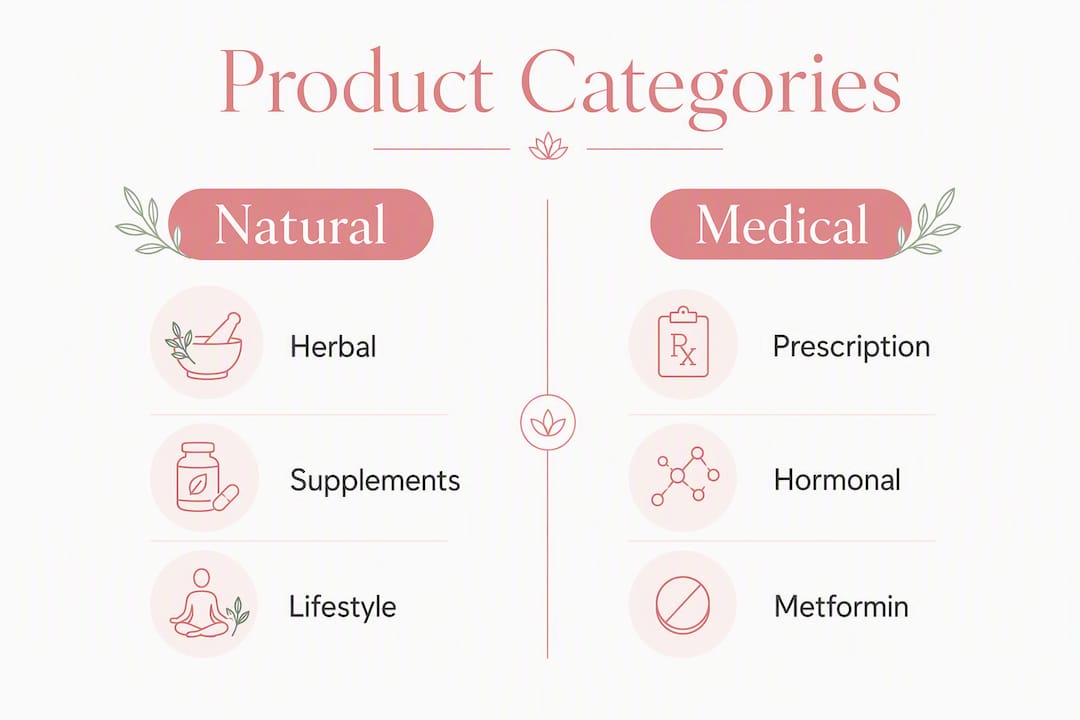
The table below summarizes the main categories, evidence strength, typical time to effect, and key safety notes.
| Category | Evidence level | Time to effect | Key safety notes |
|---|---|---|---|
| Myo-inositol / D-chiro inositol (40:1) | Clinical trials (especially PCOS) | 8–12 weeks for cycle changes | Generally safe; avoid high doses in pregnancy without guidance |
| Women-targeted probiotics | Clinical and preclinical; growing evidence | 8–12 weeks for hormonal markers | Safe for most; choose strain-labeled products |
| Vitex (chasteberry) | Clinical consensus; multiple RCTs | 3–6 months for full effect | Avoid with hormonal contraceptives or dopamine-related meds |
| Cinnamon / ginger / turmeric | Traditional and some clinical support | Variable; weeks for symptoms | Generally safe at food-level doses; turmeric may thin blood at high doses |
| Vitamin D, B6, magnesium | Clinical support for deficiency correction | 8–12 weeks | Safe at standard doses; excess B6 can cause nerve symptoms |
| Omega-3 fatty acids | Clinical support for inflammation and dysmenorrhea | 8–12 weeks | Blood-thinning effect at high doses; check with clinician if on anticoagulants |
| Hormonal contraceptives | Clinical standard; highly effective for cycle regulation | Days to weeks | Prescription required; not suitable for all women |
| Metformin (for PCOS) | Clinical standard for insulin-resistant PCOS | 3–6 months | Prescription required; GI side effects common |
| Tranexamic acid | Clinical; for heavy bleeding specifically | Per cycle | Prescription required; not for cycle regulation |
| Topical menstrual relief patches | Anecdotal / symptom relief only | Hours | Not for cycle regulation; for pain and bloating relief |
Yoga, stress management, ginger, and cinnamon are widely recommended in clinical wellness guidance, though the evidence for cycle regulation specifically is weaker than for inositol. They still earn a place in a routine because they address stress and inflammation, two genuine contributors to irregular cycles.
Delivery form matters more than most product labels admit. Capsules and tablets give you reliable, measurable dosing. Teas and tinctures have variable concentration and are harder to dose consistently. Topical patches are useful for symptom relief (cramping, bloating) but do not regulate the cycle itself. For herbal supplement options like vitex and cinnamon, capsule form is the most reliable way to hit a consistent daily dose.
Why Florva’s integrated system is worth considering first
Florvahealth’s range follows the same logic the research supports: look after the gut side of the gut-hormone axis alongside the insulin-focused habits above, rather than treating one symptom at a time.
What the system includes:
- Probiotic capsules: Formulated for women’s microbiome health, with strain-level labeling. The gut microbiome influences how estrogen is metabolized and recycled; a disrupted microbiome can push estrogen levels in the wrong direction.
- Targeted hormone and cycle supplements: Designed to support insulin sensitivity and ovulation signaling, aligned with the myo-inositol pathway evidence.
- Topical support (patches and pH-balanced washes): For symptom relief (bloating, cramping, skin flare-ups tied to hormonal shifts) rather than cycle regulation directly.
How the pieces work together: The probiotic addresses estrogen metabolism at the gut level. The supplement component targets insulin sensitivity and HPO axis signaling. The topical elements manage the day-to-day symptoms that make irregular cycles harder to live with. None of these pathways are redundant; they address different parts of the same underlying system.
Usage guidance:
- Take the probiotic daily, ideally with a meal, at a consistent time.
- Follow the myo-inositol supplement dosing on the label (typically 2,000 mg myo-inositol + 50 mg D-chiro inositol per day, divided or as directed).
- Use topical patches as needed for symptom days.
- Plan a minimum 8–12 week trial before evaluating results.
- Keep a cycle diary from day one so you have objective data.
Safety and contraindications:
- Do not start without clinician input if you are pregnant, actively trying to conceive, or managing a known endocrine condition.
- If you take blood-thinning medications, diabetes medications, or antidepressants, check for interactions before adding any new supplement.
- Discontinue and contact a clinician if you develop new or worsening symptoms.
Pro Tip: Photograph the product label before you open the packaging. If you see a clinician mid-trial, you will have the exact ingredient list and dosing information ready without hunting for the box.
How do you choose a safe, evidence-forward product?
The supplement market for menstrual health is crowded, and label claims vary wildly in how much they are backed by evidence. A few practical filters cut through most of the noise.
The single most important question to ask about any supplement: Does the label list the exact milligrams of each active ingredient per serving, or does it hide behind a “proprietary blend”? A proprietary blend means you cannot verify the dose. That is a reason to look elsewhere.
Checklist before buying:
- Evidence level: Is there clinical trial data, or is this traditional/anecdotal use? Both can be valid, but you should know which you are working with.
- Ingredient transparency: Exact mg per serving for every active ingredient, not just a blend total.
- Third-party testing: Look for USP, NSF International, or a certificate of analysis from an independent lab. These verify that what is on the label is actually in the capsule.
- Realistic dosing: For inositol, retail 40:1 formulas typically list 2,000 mg myo-inositol + 50 mg D-chiro per serving. If a product lists a fraction of that, it is underdosed.
- Allergen and full ingredient list: Check for fillers, binders, and common allergens if you have sensitivities.
- Price and value: Quality inositol formulas and women-targeted probiotics generally run $25–$60 per month in the US. Significantly cheaper products often cut corners on testing or dosing. For budget-conscious options, the hormonal health on a budget guide covers how to prioritize spending.
On insurance: OTC supplements are not covered by standard health insurance. Prescription treatments (metformin, hormonal contraceptives, tranexamic acid) may be covered depending on your plan and diagnosis. If a clinician prescribes a treatment for PCOS or heavy bleeding, check your formulary before paying out of pocket.
Format considerations deserve a second look. Capsules and tablets are the most reliable delivery form for consistent dosing. Teas and tinctures are pleasant but concentration varies batch to batch. Topical patches deliver localized relief and are appropriate for cramping and bloating, not for regulating cycle length. For hormone-balancing supplements, capsule form with verified dosing is the standard to hold products to.
When should you see a clinician instead of trying products?
Some patterns of irregular cycles need diagnostic testing and clinical treatment, not a supplement trial. Knowing the difference saves time and prevents harm.
Diagnostic tests your provider may order:
- Pregnancy test (always rule this out first)
- TSH and free T4 (thyroid function)
- Prolactin (elevated levels suppress ovulation)
- Fasting glucose, HbA1c, or fasting insulin (if PCOS or insulin resistance is suspected)
- Pelvic ultrasound (to assess ovarian morphology or structural causes)
Clinical treatment options:
- Hormonal contraceptives: Oral contraceptive pills, the progestogen-only pill, or hormonal IUDs can restore predictable bleeding. They work quickly but require clinician oversight and are not appropriate for everyone.
- Metformin: For insulin-resistant PCOS, metformin can help regulate cycles by improving insulin sensitivity. It is a prescription medication with GI side effects that often improve over time.
- Tranexamic acid: For heavy bleeding specifically, not cycle regulation. Reduces blood loss per cycle.
- Surgical options: Endometrial ablation or myomectomy in cases involving structural causes (fibroids, polyps) that do not respond to medical management.
Urgent red flags — seek emergency care:
- Soaking a pad or tampon in under an hour for two or more consecutive hours
- Fainting or near-fainting
- Fever combined with pelvic pain
- Sudden severe abdominal pain
Before your appointment, write a one-page summary: cycle lengths for the past 3–6 months, bleeding amount (light/moderate/heavy/clots), all medications and supplements you take, and any other symptoms. Clinicians can act on specific data far more effectively than a general description of “irregular.” For thyroid-related concerns specifically, the thyroid and hormone balance guide covers what to expect from testing and how results connect to cycle changes.
How long should you try a product, and how do you know it’s working?
Eight to twelve weeks is the accepted practical window for evaluating most supplements and lifestyle changes for cycle regularity. Symptom relief (cramping, bloating, mood) can improve faster, sometimes within the first cycle. Actual changes to cycle length and regularity take longer because the HPO axis responds slowly to hormonal shifts.
What to track during your trial:
- Cycle start and end dates (day 1 of bleeding to day before next period)
- Bleed duration and intensity (light/moderate/heavy, presence of clots)
- PMS symptoms and their timing relative to the expected period
- Basal body temperature or ovulation signs if you want to confirm ovulation is occurring
- Supplement adherence (did you take it daily, or were there gaps?)
- Any side effects, even mild ones
When to stop or escalate:
- No meaningful change after two full cycles within the 8–12 week window
- New or worsening symptoms at any point
- Any concerning side effect, including unusual bleeding, digestive distress that does not resolve, or mood changes
Tracking does not need to be elaborate. A notes app or a basic period tracker works fine. The goal is objective data, not a perfect log. Consistent, even imperfect, tracking over 8–12 weeks tells you far more than memory alone.
How does gut health actually influence your cycle?
The gut microbiome affects estrogen metabolism through a collection of bacteria sometimes called the estrobolome. These bacteria produce an enzyme (beta-glucuronidase) that deconjugates estrogen in the gut, allowing it to be reabsorbed into circulation rather than excreted. When the microbiome is disrupted, this recycling process goes off-balance, which can push circulating estrogen too high or too low and affect the hormonal signals that regulate ovulation and cycle timing.
Systemic inflammation driven by gut dysbiosis also affects HPO axis signaling. A gut environment with reduced microbial diversity tends to produce higher levels of inflammatory markers, which can interfere with the hormonal communication between the brain and ovaries.
The table below shows how the two main supplement pathways in an integrated routine address complementary mechanisms:
| Supplement pathway | Primary mechanism | Target outcome | Evidence base |
|---|---|---|---|
| Women-targeted probiotic | Estrogen metabolism via estrobolome; reduces systemic inflammation | Improved estrogen balance; reduced HPO axis disruption | Clinical and preclinical studies; growing body of evidence |
| Myo-inositol / D-chiro inositol (40:1) | Improves insulin sensitivity; supports FSH signaling and ovulation | More regular ovulation; shorter anovulatory cycles | Multiple clinical trials, particularly in PCOS populations |
| Combined probiotic + inositol | Addresses microbiome and metabolic pathways simultaneously | Complementary support for cycle regularity and symptom reduction | Mechanistically supported; combined use is common in clinical practice |
Strain specificity matters. A probiotic labeled only as “Lactobacillus” without a strain designation (e.g., Lactobacillus rhamnosus GG) gives you no way to match the product to the research. Look for strain-level labeling and third-party verification. For nutrition strategies that support this gut-hormone connection, resources covering micronutrient approaches to hormonal health offer a useful complement to supplement routines.
Pairing these two pathways is not redundant. The probiotic works at the estrogen-recycling level; the inositol works at the insulin-ovulation level. They address different parts of the same system, which is why an integrated approach tends to outperform either supplement used alone. Dietary choices reinforce both: insulin-friendly foods that stabilize blood glucose reduce the metabolic load on the HPO axis and make the supplement routine more effective.
Key Takeaways
An integrated probiotic plus myo-inositol routine, paired with lifestyle basics and tracked over several weeks, is the most practical nonprescription starting point for many patterns of irregular cycles.
| Point | Details |
|---|---|
| Clinical definition matters | Irregular cycles are shorter than 21 days, longer than 35 days, or vary by more than a week between months. |
| Target the root cause | PCOS, thyroid issues, stress, and weight changes each produce distinct patterns; match your product choice to the likely driver. |
| Allow a full trial window | Most supplements need 8–12 weeks before cycle-level changes are detectable; symptom relief can come sooner. |
| Red flags need clinical care | Heavy bleeding soaking a pad in under an hour, fainting, or fever with pelvic pain require prompt medical evaluation, not supplements. |
| Florvahealth’s range | Probiotic capsules and digestive enzymes add gut support alongside the core routine. |
What the supplement industry gets wrong about cycle regularity
Most supplement marketing treats irregular periods as a single problem with a single fix. Buy this herb, take this capsule, regulate your cycle. The reality is messier, and the gap between what the marketing promises and what the evidence actually supports is worth naming directly.
Vitex is a good example. It has genuine clinical backing for cycle support, particularly in cases of luteal phase deficiency. But it takes three to six months to show meaningful effect, and it interacts with hormonal contraceptives and dopamine-related medications. Most product pages skip both of those facts entirely. A woman who starts vitex expecting results in four weeks and stops because nothing happened may have quit right before the window where it would have worked.
The same problem shows up with inositol. The clinical evidence is real and reasonably strong, especially for PCOS-related anovulation. But the dose matters. Products that list a “proprietary blend” without specifying milligrams are almost certainly underdosed relative to the trial evidence. Buying a cheaper, underdosed product and concluding that inositol “doesn’t work” is a common and avoidable mistake.
What actually works is less exciting than the marketing: pick one or two evidence-supported supplements at therapeutic doses, track your cycle from day one, give it a full 8–12 weeks, and bring your data to a clinician if nothing changes. The integrated approach Florvahealth takes, combining gut support with metabolic support and symptom relief, is closer to how clinical practitioners actually think about this than most single-ingredient products are.
Florva’s system addresses the whole picture, not just the symptoms
If you have read this far, you already know that irregular cycles rarely have a single cause. Florvahealth’s range covers one part of that picture. Its probiotic capsules support the gut side of estrogen metabolism, and its digestive enzyme capsules support digestion. They do not replace the insulin and ovulation support discussed above.

That is a different approach from buying a single herbal capsule and hoping for the best. Think of it as a routine, not a collection of unrelated products.
Before starting, check the full ingredient list and confirm there are no interactions with medications you currently take. Women who are pregnant, trying to conceive, or managing a diagnosed endocrine condition should consult a clinician first. For everyone else, Florvahealth’s range is a practical place to start. Read the labels, track your cycle, and give any routine the full 8 to 12 weeks.
This article is general wellness information, not medical advice. Confirm current guidance with a qualified healthcare provider for your specific situation.
Sources and further reading
The sources below back the clinical claims in this article. Bookmark the ones most relevant to your situation before a clinician visit.
For anyone preparing for a provider appointment: bring the Cleveland Clinic page on abnormal menstruation and the PubMed inositol study as a starting point for the conversation. Clinicians respond well to patients who arrive with specific, sourced questions rather than general concerns.
- Irregular Periods (Abnormal Menstruation): Causes & Treatment — Cleveland Clinic: Clinical definitions, causes, and treatment options including hormonal contraceptives, metformin, and tranexamic acid.
- Myo-inositol and D-chiro inositol formulations — PubMed: Clinical evidence for the 40:1 ratio and therapeutic dosing in cycle and ovulatory support.
- How to Get Regular Periods Naturally — Healthline: Overview of home remedies and lifestyle strategies including ginger, cinnamon, yoga, and stress management.
- What causes irregular periods and how to treat them — Moolchand Health Blog: Practical dietary and herbal context for common home remedies.
- Herbal Supplements for Cycle Balance: What Works — Florvahealth blog: Florvahealth’s evidence review of herbal options including vitex, cinnamon, ginger, and turmeric.
- Everyday Foods Supporting Hormone Balance — Florvahealth blog: Dietary guidance and insulin-friendly food strategies that support cycle stability.
- Polycystic Ovary Syndrome Clinical Practice Guidelines — Endocrine Society: Authoritative guidance on lifestyle interventions and HPO axis management in PCOS.
- Nutrition and hormone health research references — Nourished: Reference library covering micronutrient and nutrition-based hormone interventions.


