

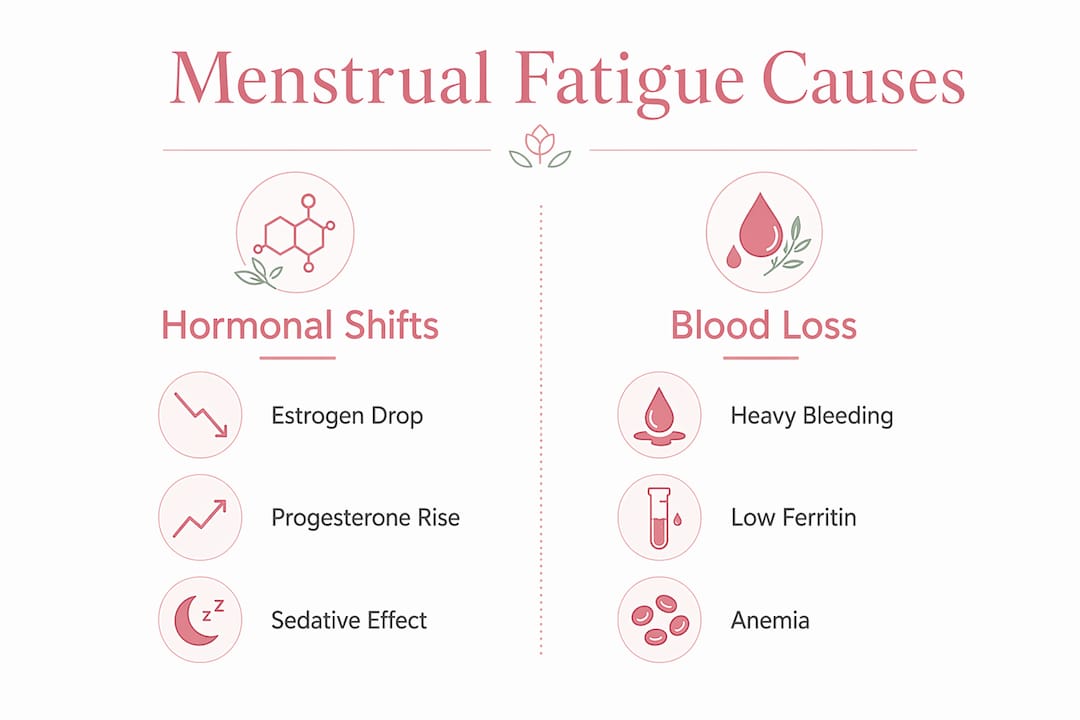
Cycle-related hormonal shifts and blood loss are the two primary reasons you feel unusually tired around your period. In the days before menstruation, estrogen and progesterone both drop sharply, reducing serotonin production and triggering a measurable energy dip. Once bleeding begins, iron loss compounds that exhaustion, especially if your flow is heavy.
The clinical threshold for heavy menstrual bleeding is blood loss exceeding 80 mL per cycle, a level that significantly raises your risk of iron-deficiency anemia. Separately, the drop in estrogen that precedes your period reduces serotonin, which directly lowers both mood and energy. These two mechanisms often hit at the same time, which is why the fatigue can feel so heavy.
Three things to do right now:
- Rest without guilt: your body is doing real physiological work
- Check your iron: ask your clinician for a ferritin and CBC if fatigue is persistent or severe
- Track your symptoms: note cycle day, flow volume, and energy level for at least two cycles
Table of Contents
- What are the main causes of menstrual fatigue?
- Why do hormonal changes make you so tired before your period?
- How does heavy bleeding cause fatigue, and what should you test?
- Could your thyroid be making period fatigue worse?
- How do endometriosis, fibroids, and PCOS cause fatigue?
- How do sleep, stress, diet, and caffeine affect your energy during your period?
- What can you do right now to feel less tired during your period?
- Which tests should you ask for when period fatigue is severe?
- What treatments actually work for period-related fatigue?
- How can you reduce period fatigue over the long term?
- What does recent research confirm about why menstrual fatigue happens?
- Key Takeaways
- Period fatigue deserves a real answer, not a shrug
- Florvahealth supports your cycle, not just your symptoms
- Useful sources for further reading
What are the main causes of menstrual fatigue?
Tiredness during your period rarely has a single cause. Most of the time, several factors stack on top of each other:
- Hormonal shifts: Estrogen and progesterone fall in the late luteal phase, reducing serotonin and raising the sedative effect of progesterone right before and during your period
- Blood loss and iron depletion: Heavy flow depletes iron stores, reducing the oxygen your red blood cells can carry
- Thyroid dysfunction: An underactive thyroid can cause persistent fatigue that worsens around menses and is often mistaken for cycle-only tiredness
- Gynecologic conditions: Endometriosis, fibroids, and PCOS all produce fatigue through a combination of pain, heavy bleeding, and chronic inflammation
- Sleep disruption: Rising basal body temperature in the luteal phase fragments sleep architecture, leaving you tired even after a full night
- Lifestyle contributors: Skipping meals, high caffeine intake, dehydration, and stress all amplify cycle-related exhaustion
Fatigue tends to peak in the late luteal phase (roughly days 22–28 of a 28-day cycle) and again at the start of menstruation. Energy levels typically rise again once bleeding is underway and hormone levels begin to stabilize.
Why do hormonal changes make you so tired before your period?
The late-luteal fall in estrogen and the sedative effect of progesterone are the direct hormonal drivers of pre-period exhaustion. Understanding the timing makes the fatigue feel less random.
After ovulation, progesterone rises to prepare the uterine lining for a possible pregnancy. Progesterone has a genuine sedative effect on the central nervous system, raising your basal body temperature slightly and making you feel drowsy. When pregnancy does not occur, both estrogen and progesterone drop steeply in the final days of the luteal phase. That estrogen drop reduces serotonin synthesis, which is why low mood and low energy often arrive together.

Serotonin does more than regulate mood. It influences motivation, appetite, and the perception of effort, so even routine tasks can feel harder than usual. Women with premenstrual dysphoric disorder experience this neurotransmitter disruption at a clinical level, but milder versions of the same mechanism affect a much broader group.
The timeline looks like this:
- Days 15–22 (early luteal): Progesterone rises; mild sedation and warmth begin
- Days 22–28 (late luteal): Estrogen falls; serotonin dips; fatigue and mood changes peak
- Days 1–3 (menstruation onset): Both hormones hit their lowest point; fatigue is often worst here before gradually lifting
The distinction between normal cycle fatigue and a red flag: if tiredness resolves within the first two or three days of your period and does not stop you from functioning, that is typical. Fatigue that persists through the whole cycle, worsens month over month, or comes with symptoms like brain fog, cold intolerance, or very heavy flow warrants a clinical workup.
How does heavy bleeding cause fatigue, and what should you test?
Heavy menstrual bleeding is one of the most common and most treatable causes of period-related exhaustion, yet it is frequently dismissed as “just a bad period.” The mechanism is straightforward: blood carries iron, and iron carries oxygen. Lose enough blood, and your tissues get less oxygen than they need.
Clinically, blood loss above 80 mL per cycle is the threshold for heavy menstrual bleeding, a level that significantly raises anemia risk. In practice, most people cannot measure milliliters, but soaking through a pad or tampon every hour for several consecutive hours, or passing clots larger than a quarter, suggests you may be above that threshold.
Symptoms that point specifically to iron-deficiency fatigue include:
- Shortness of breath during activities that did not previously wind you
- Pallor, particularly in the inner eyelids or nail beds
- Exercise intolerance or a racing heart at low effort
- Difficulty concentrating or persistent brain fog
- Brittle nails or unusual hair shedding
The two tests to request are a complete blood count (CBC) and a serum ferritin. Hemoglobin on the CBC tells you whether anemia is present, but ferritin tells you how depleted your iron stores are, and ferritin can fall well before hemoglobin drops. Clinicians advise a low threshold for ordering ferritin in people with heavy periods because early detection prevents months of avoidable fatigue.
Pro Tip: Count how many pads or tampons you saturate fully per day during your heaviest days and bring that number to your appointment. It gives your clinician a practical proxy for flow volume and helps justify ordering iron studies.
If ferritin comes back low, do not wait for your hemoglobin to drop before starting iron supplementation. Your clinician can guide the dose, but most oral iron protocols use ferrous sulfate or ferrous gluconate taken with vitamin C to improve absorption.
Could your thyroid be making period fatigue worse?
An underactive thyroid is one of the most commonly missed reasons why period fatigue feels disproportionate or never fully resolves. Hypothyroidism slows metabolism across the board, and its symptoms overlap almost perfectly with cycle-related tiredness: low energy, poor sleep, low mood, and heavy periods.
The key distinguishing signs that suggest thyroid dysfunction rather than cycle-only fatigue include:
- Fatigue that persists throughout the entire cycle, not just the luteal phase or menstruation
- Cold intolerance: feeling cold when others are comfortable
- Slowed cognition or memory problems that do not track with your cycle phase
- Unexplained weight gain despite no major dietary changes
- Dry skin, hair loss, or constipation alongside fatigue
The test to request is a TSH (thyroid-stimulating hormone) level. A high TSH indicates the pituitary is working harder to stimulate an underperforming thyroid. If TSH is abnormal, your clinician will typically add free T4 to complete the picture. For a deeper look at thyroid and hormone balance, the connection to cycle symptoms is worth understanding before your appointment.
Other endocrine contributors worth mentioning: adrenal dysfunction can produce fatigue and poor stress tolerance that worsens premenstrually. Insulin resistance, common in PCOS, creates energy crashes tied to blood sugar instability rather than hormone levels alone. PCOS-related fatigue often comes with irregular cycles, acne, and difficulty losing weight, which helps distinguish it from straightforward cycle-linked tiredness.
How do endometriosis, fibroids, and PCOS cause fatigue?
Chronic pelvic pain and heavy bleeding from conditions like endometriosis and fibroids produce fatigue through two overlapping routes: direct physiological drain and indirect sleep loss. Neither is “just in your head.”
Condition-specific clues to watch for:
- Endometriosis: Severe cramping that starts before bleeding, pain during sex (dyspareunia), and fatigue that feels disproportionate to flow volume. Chronic inflammation from endometrial tissue outside the uterus keeps the immune system in a low-grade activated state, which is itself exhausting.
- Fibroids: Pelvic pressure or heaviness, very heavy or prolonged bleeding, and fatigue that tracks with flow volume. Large fibroids can cause enough blood loss to produce significant anemia.
- PCOS: Irregular or infrequent cycles, metabolic symptoms (weight changes, skin tags, acne), and fatigue linked to insulin resistance and androgen imbalance rather than blood loss alone.
Repeated pain episodes disrupt sleep night after night. Even when total sleep time looks adequate, pain-related arousals fragment sleep architecture, producing the kind of daytime exhaustion that does not respond to an early bedtime. Heavy periods, endometriosis, PCOS, and fibroids all warrant further diagnostic evaluation when fatigue is persistent. If you recognize more than one of these patterns, a gynecology referral is the right next step.
How do sleep, stress, diet, and caffeine affect your energy during your period?
Interrupted sleep and excessive caffeine are two of the most reversible drivers of period fatigue, and fixing them costs nothing. The problem is that both tend to get worse, not better, during menstruation.
Basal body temperature rises in the luteal phase and can fragment sleep architecture even when you spend eight hours in bed. You wake up feeling unrefreshed, reach for coffee, drink more than usual, and then sleep worse the next night. Stress compounds this by elevating cortisol, which delays sleep onset and reduces deep sleep. For practical mental health habits that support sleep and resilience through cycle changes, building a consistent wind-down routine matters more than any single supplement.
Dietary contributors that worsen fatigue:
- Skipping meals or eating low-iron foods during heavy-flow days
- Relying on refined carbohydrates, which cause blood sugar spikes and crashes
- Inadequate hydration, which worsens headaches and low energy
- Very low caloric intake during a phase when your body has increased metabolic demands
Pro Tip: Cap caffeine at one to two cups before noon during your period. Caffeine after 2 PM delays melatonin release by roughly 40 minutes, which is enough to shorten your deep sleep and leave you more tired the next morning. Replace afternoon coffee with iron-rich snacks like pumpkin seeds or a small handful of cashews.
Gentle movement, such as a 20-minute walk or light yoga, reliably reduces prostaglandin-driven cramping and boosts endorphins without the cortisol spike that intense training can trigger during menstruation.
What can you do right now to feel less tired during your period?
Short-term tactics that reliably help: prioritize sleep, take short naps when possible, eat iron-rich foods, stay hydrated, and add gentle movement. None of these require a prescription.
Practical steps to work through on your heaviest days:
- Sleep first: Aim for 8–9 hours and keep your bedroom cool to counteract the temperature rise from progesterone. A cool room partially offsets the BBT effect on sleep quality.
- Eat iron-rich foods with vitamin C: Lean red meat, lentils, spinach, and fortified cereals paired with orange juice or bell peppers improve non-heme iron absorption significantly. Avoid coffee or tea within an hour of iron-rich meals, as tannins block absorption.
- Hydrate consistently: Even mild dehydration worsens fatigue and headaches. Aim for at least 8 cups of water daily, more if you are losing significant blood volume.
- Use heat for cramps: A heating pad on the lower abdomen reduces prostaglandin-driven pain without the rebound fatigue that high-dose NSAIDs can sometimes cause.
- OTC options: Ibuprofen taken at the start of bleeding (before cramps peak) reduces prostaglandin production and can lower flow volume slightly, which helps with both pain and fatigue. Follow package dosing and take with food.
- Short naps: A 20-minute nap before 3 PM restores alertness without disrupting nighttime sleep.
Pro Tip: On your two or three heaviest days, plan a 24–48 hour energy-preserving window: front-load your most demanding tasks to the morning when cortisol is naturally higher, eat a protein-and-iron-rich lunch, and protect your evening for rest. Treating these days like a mild recovery period, rather than pushing through at full capacity, reduces the cumulative fatigue debt that drags into the rest of the week.
For a daily routine to address hormonal fatigue naturally, combining these tactics with cycle-aware scheduling makes a real difference over time.
Which tests should you ask for when period fatigue is severe?
The standard initial workup for menstrual fatigue includes a CBC, serum ferritin, TSH, and a pregnancy test when clinically appropriate. Together, these four tests cover the most common treatable causes.
- CBC (complete blood count): Measures hemoglobin and hematocrit to detect anemia. A hemoglobin below 12 g/dL in women is the standard threshold for anemia.
- Serum ferritin: Measures iron stores. Ferritin can be low even when hemoglobin is still normal, which is why it must be ordered separately. A ferritin below 30 ng/mL is often associated with fatigue even without frank anemia.
- TSH: Screens for thyroid dysfunction. A TSH above the laboratory reference range suggests hypothyroidism and warrants follow-up with free T4.
- Pregnancy test: Rules out pregnancy-related fatigue and anemia, particularly when cycles are irregular.
- Iron studies (serum iron, TIBC, transferrin saturation): Added when ferritin is borderline or when the clinical picture suggests iron deficiency without clear anemia.
Red flags that require urgent evaluation, not a routine appointment: soaking through a pad or tampon every 30 minutes for two or more consecutive hours; lightheadedness or fainting (syncope); chest pain or severe shortness of breath at rest; a heart rate above 100 bpm at rest during your period. These suggest significant acute blood loss and need same-day medical attention.
If your results come back normal but fatigue remains severe, ask about inflammatory markers (CRP, ESR) and consider a referral to gynecology to evaluate for endometriosis or fibroids, which do not always show up on standard blood panels.
What treatments actually work for period-related fatigue?
Treatment follows diagnosis. The most common causes each have a well-established first-line option.
- Iron-deficiency anemia: Oral iron supplementation (ferrous sulfate 325 mg, typically once or twice daily with vitamin C) is the standard first step. Fatigue from iron deficiency usually begins to improve within 4–6 weeks of consistent supplementation, but full iron store repletion takes 3–6 months. Recheck ferritin at the end of that window.
- Heavy menstrual bleeding: Combined hormonal contraceptives (pill, patch, ring) reduce flow volume and stabilize hormone levels. The levonorgestrel intrauterine device (Mirena) reduces menstrual blood loss substantially and is often the most effective long-term option for heavy periods. NSAIDs taken at the onset of bleeding also reduce flow by inhibiting prostaglandins.
- Hypothyroidism: Levothyroxine replaces deficient thyroid hormone. Fatigue typically improves within 4–6 weeks of reaching the correct dose, though full symptom resolution can take longer.
- Endometriosis or fibroids: Management ranges from hormonal suppression (GnRH agonists, progestins) to surgical options depending on severity. A gynecology referral is appropriate when these conditions are suspected.
- PCOS-related fatigue: Lifestyle interventions targeting insulin resistance (lower glycemic diet, regular exercise) are first-line. Metformin or hormonal contraceptives may be added depending on the clinical picture.
Specialist referral to gynecology is appropriate when heavy bleeding does not respond to first-line hormonal management, when a structural cause (fibroid, polyp) is suspected, or when endometriosis is on the differential. Endocrinology referral is warranted for complex thyroid or adrenal presentations.
How can you reduce period fatigue over the long term?
Combining symptom tracking, nutritional maintenance, sleep planning, and targeted medical treatment is what actually prevents recurring fatigue across cycles. One good month does not mean the problem is solved.
Long-term habits that make a measurable difference:
- Track ferritin every 6–12 months if you have heavy periods. Iron stores can drift back down between checks, and catching it early prevents months of avoidable exhaustion.
- Cycle-sync your training: Reduce high-intensity exercise during the late luteal and early menstrual phases. Save strength training and interval work for the follicular and ovulatory phases when energy is naturally higher.
- Build a consistent sleep schedule that does not shift more than 30–60 minutes on weekends. Sleep debt accumulates across the luteal phase and hits hardest at menstruation onset.
- Maintain dietary iron year-round, not just during your period. Women with heavy cycles often need more than the standard 18 mg daily recommended intake to stay replete.
- Consider hormonal suppression if fatigue is severe and tied to heavy flow. Discuss the levonorgestrel IUD or continuous hormonal contraception with your clinician as a long-term strategy.
Realistic expectations: most people notice meaningful improvement within 1–3 cycles after starting an effective intervention, whether that is iron supplementation, hormonal management, or sleep restructuring. Expecting immediate results leads to abandoning strategies before they have time to work. Understanding why hormonal symptoms vary monthly helps set that timeline in context.
What does recent research confirm about why menstrual fatigue happens?
Recent studies confirm that menstrual fatigue is not a single phenomenon. It has at least three distinct physiological contributors that operate simultaneously, and clinical care works best when it addresses all of them.
First, hormone-driven neurotransmitter changes are well-documented. The drop in estrogen before menstruation reduces serotonin synthesis, and progesterone’s sedative properties compound that effect. Second, basal body temperature changes in the luteal phase fragment sleep architecture even when total sleep time appears adequate, producing daytime tiredness that is easy to misattribute to poor sleep habits alone. Third, the physical work of menstruation itself, including uterine contractions and lining shedding, carries a measurable metabolic cost that contributes to systemic fatigue independent of hormones.
A finding that changes clinical practice: Blood loss exceeding 80 mL per cycle is the established threshold for heavy menstrual bleeding, and iron-deficiency anemia from heavy periods is a distinct, treatable medical cause of fatigue that requires blood-panel confirmation rather than assuming symptoms are “just hormonal.” Ordering ferritin alongside hemoglobin is the single most impactful change a clinician can make in evaluating cycle-related exhaustion.
The practical implication: if you have been told your fatigue is normal and nothing has been tested, push for a ferritin level specifically. It is the test most likely to reveal a treatable cause that standard hemoglobin screening misses.
Key Takeaways
Menstrual fatigue has clear, treatable causes. The most important step most women skip is requesting a ferritin test alongside a standard CBC.
| Point | Details |
|---|---|
| Two primary causes | Hormonal shifts (estrogen/progesterone drop) and blood loss drive most cycle-related fatigue. |
| The 80 mL threshold | Blood loss above 80 mL per cycle significantly raises iron-deficiency anemia risk. |
| Ferritin before hemoglobin | Ferritin can fall while hemoglobin is still normal; always request both tests. |
| Red flags need same-day care | Soaking a pad every 30 minutes, syncope, or chest pain during your period requires urgent evaluation. |
| Florvahealth’s role | Florvahealth’s probiotic capsules complement medical care as daily support. |
Period fatigue deserves a real answer, not a shrug
The most frustrating thing about menstrual fatigue is how often it gets normalized without investigation. “It’s just your period” is not a diagnosis. It is a dismissal. The evidence is clear: hormonal shifts, iron depletion, sleep disruption, and underlying gynecologic conditions are all measurable, and most of them are treatable.
What I keep coming back to is the ferritin gap. Hemoglobin can look normal on a standard blood panel while ferritin is low enough to cause significant fatigue. That gap means a lot of women are told their labs are fine when the one test that would actually explain their exhaustion was never ordered. If you take one thing from this article, make it this: ask for ferritin by name.
Tracking your symptoms across two or three cycles before your appointment gives your clinician something concrete to work with. Note the cycle day, your flow volume, your energy level, and your sleep quality. That data turns a vague complaint into a clinical picture. The path is track, test, treat, in that order, and it works.
Florvahealth supports your cycle, not just your symptoms
Medical treatment addresses the root cause of severe fatigue. But between appointments and after diagnosis, daily wellness routines make a real difference in how you feel cycle to cycle.

Florvahealth’s approach is built around that in-between space. Its women’s probiotic capsules support gut health, which matters here: gut health influences estrogen metabolism, and a balanced microbiome helps the body handle hormonal shifts. These are not replacements for iron supplementation or thyroid treatment. They are a daily layer alongside whatever your clinician recommends. If you are ready to build a cycle-aware routine, start with Florvahealth’s range.
This article is general health information, not medical advice. If your fatigue is severe or persistent, consult a qualified clinician and request the specific tests discussed here.
Useful sources for further reading
These are the primary sources cited in this article. Bring the clinical ones to your appointment if you want to discuss specific tests or thresholds with your clinician.
- NCBI Bookshelf: Menorrhagia (heavy menstrual bleeding) — best for the 80 mL clinical threshold and iron-deficiency anemia criteria
- NCBI Bookshelf: Hormonal regulation and mood — explains estrogen’s role in serotonin production and energy
- PMC: Progesterone effects on mood and sleep — covers progesterone’s sedative properties and their clinical implications
- PMC: Basal body temperature and sleep across the menstrual cycle — explains luteal-phase sleep fragmentation
- Banner Health: Gynecologic causes of fatigue in women — practical overview of endometriosis, fibroids, PCOS, and when to seek evaluation
- Office on Women’s Health: Premenstrual syndrome — authoritative patient-facing summary of PMS symptoms and management
- Office on Women’s Health: Physical activity and the menstrual cycle — guidance on exercise timing across cycle phases
- CDC: Sleep and health — foundational reference for sleep recommendations and the consequences of disruption


