

Daily hormonal fatigue is persistent exhaustion caused by disruptions in the hormone systems that regulate energy, mood, and metabolism. Unlike ordinary tiredness, it does not resolve with a full night of sleep. Women aged 20–40 are especially vulnerable because cortisol, thyroid hormones, estrogen, progesterone, and insulin all fluctuate significantly during these years. Recognizing what causes daily hormonal fatigue is the first step toward addressing it. The condition is widely underdiagnosed because standard lab tests are designed to detect disease, not the subtle imbalances that drain your energy long before anything shows up as abnormal.
What causes daily hormonal fatigue?
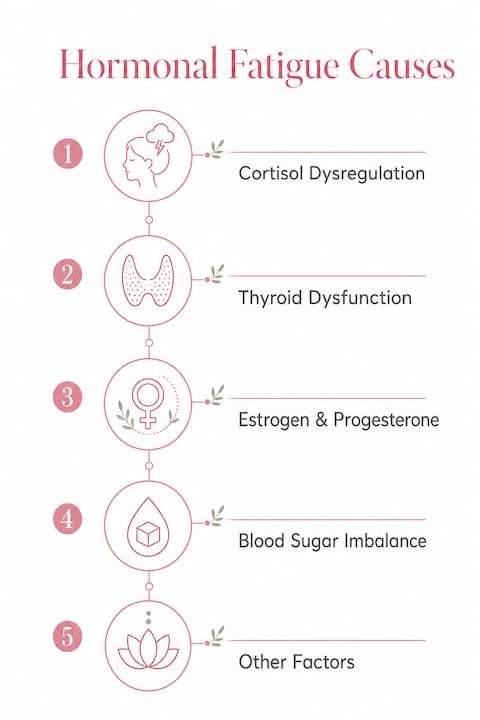
Hormonal fatigue, the clinical term for this pattern of exhaustion, results from disruption across multiple hormone systems at once. Cortisol, thyroid hormones, sex hormones, and insulin all interact. When one falls out of rhythm, the others follow. The result is a self-reinforcing cycle of tiredness that feels impossible to break.
The most telling sign is exhaustion that does not respond to rest. You sleep eight hours and wake up tired. You hit a wall at 2:00 PM regardless of what you ate. You feel foggy, irritable, and flat. These are not personality traits or signs of laziness. They are measurable hormonal symptoms with identifiable causes.
Hormones operate as an interconnected system. Fixing fatigue requires addressing the whole ecosystem, not a single hormone in isolation. That framing matters because most women spend years chasing one diagnosis when the real answer involves several overlapping imbalances.

How does cortisol dysregulation drain your energy?
Cortisol follows a natural daily rhythm: it peaks in the early morning to wake you up, then tapers steadily through the day. Chronic stress disrupts this rhythm by flattening or inverting the curve entirely. The result is a body that cannot generate energy when it needs to and cannot wind down when it should.
The hallmark symptom of cortisol dysregulation is feeling “wired but tired.” You are exhausted all day, yet alert and restless at night, unable to get the deep sleep that would actually restore you. This makes fatigue resistant to rest alone. No amount of early bedtimes fixes it.
Cortisol dysregulation also compounds fatigue through its effect on the thyroid. High cortisol suppresses the conversion of inactive T4 thyroid hormone to active T3, slowing cellular metabolism. That means stress does not just exhaust you directly. It also switches off the hormone your cells need to produce energy.
Common signs of cortisol rhythm disruption include:
- Morning grogginess that lasts two or more hours after waking
- A sharp energy drop between 2:00 PM and 4:00 PM
- Difficulty falling asleep despite feeling tired
- Feeling alert and anxious at night
- Relying on caffeine to function before noon
Pro Tip: Track your energy levels at three fixed points each day (morning, early afternoon, and evening) for two weeks. A consistent pattern of crashes at the same time points to cortisol rhythm disruption rather than general lifestyle fatigue.
Is your thyroid silently causing your fatigue?
Thyroid hormones T3 and T4 control the metabolic rate of every cell in your body. When T3 levels drop, even slightly, your cells produce less energy. The result is fatigue that feels heavy and physical, not just mental.
Hypothyroidism is the most recognized thyroid cause of fatigue. Its symptoms include cold hands and feet, unexplained weight gain, dry skin, hair thinning, and relentless tiredness. But many women experience these symptoms while their lab results come back normal. Standard reference ranges are calibrated to detect disease, not optimal function. Clinical symptoms like cold extremities or persistent afternoon crashes can appear well before lab values cross into abnormal territory.
The cortisol connection makes this worse. As noted above, chronic stress suppresses T4 to T3 conversion. This creates a self-reinforcing fatigue cycle that is common in clinical practice but rarely caught by a single thyroid panel. A woman under prolonged stress can have technically normal TSH and T4 levels while her active T3 is low enough to cause significant symptoms.
Signs that point to thyroid involvement include:
- Fatigue that is worst in the morning and does not improve with activity
- Feeling cold when others around you are comfortable
- Slow digestion, constipation, or bloating
- Brain fog and difficulty concentrating
- Dry skin and brittle nails
For a deeper look at how thyroid function connects to broader hormone health, the Florvahealth guide on thyroid and hormone balance covers the relationship clearly.
How do estrogen and progesterone affect your energy?
Estrogen and progesterone do far more than regulate your menstrual cycle. Both hormones affect sleep quality, mood stability, and metabolic function. When they fluctuate sharply, your energy goes with them.
Progesterone has mild sedative properties. In the luteal phase of your cycle (the two weeks before your period), progesterone rises and then drops sharply. That drop often triggers poor sleep, irritability, and the kind of bone-deep tiredness that many women recognize as premenstrual fatigue. Estrogen supports serotonin and dopamine production, so when it falls, mood and motivation fall with it.
Perimenopause, which can begin in the late 30s, amplifies all of this. Hormonal shifts during perimenopause cause fatigue, poor sleep, and irritability that persist despite adequate rest. Many women mistake these symptoms for burnout or stress, which delays proper care by months or years.
Recognizing the cyclical pattern of your fatigue is one of the most useful diagnostic tools available. If your energy reliably collapses in the week before your period, estrogen and progesterone fluctuations are the most likely cause. Florvahealth’s guide on cyclical living for hormonal health explains how to align your lifestyle with these natural rhythms to reduce their impact.
Pro Tip: Use a simple period-tracking app to log your energy levels alongside your cycle dates. After two to three months, a clear pattern will emerge that you can bring to your doctor as concrete evidence.
Why does your afternoon energy crash every day?
Blood sugar dysregulation is one of the most overlooked causes of fatigue in women, and it mimics hormonal fatigue almost perfectly. Frequent glucose spikes from refined carbohydrates and sugar trigger large insulin releases. The resulting blood sugar drop hits hard between 2:00 PM and 4:00 PM, producing fatigue, brain fog, and intense carbohydrate cravings.
Each spike-and-crash cycle also stresses the adrenal glands, which release cortisol to raise blood sugar back up. That means poor blood sugar control directly worsens cortisol dysregulation. The two systems feed each other in a loop that keeps energy unstable all day.
The table below shows how to tell blood sugar fatigue apart from other hormonal causes:
| Fatigue type | Timing | Key trigger | Relieved by |
|---|---|---|---|
| Blood sugar crash | 2:00–4:00 PM | Refined carbs at lunch | Protein-rich snack |
| Cortisol dysregulation | Morning and evening | Chronic stress | Stress reduction, sleep |
| Thyroid fatigue | All day, worst in morning | Hormone imbalance | Medical treatment |
| Luteal phase fatigue | Week before period | Progesterone drop | Cycle-aligned nutrition |
Practical steps to stabilize blood sugar and reduce afternoon crashes:
- Eat protein and fat with every meal, not carbohydrates alone.
- Avoid sugary drinks and refined snacks between 11:00 AM and 2:00 PM.
- Take a 10-minute walk after lunch to improve insulin sensitivity.
- Choose whole grains, legumes, and vegetables over white bread and pasta.
- Keep a protein-rich snack available for mid-afternoon to prevent the crash.
The Florvahealth article on snacks and hormone stability offers specific food choices that support blood sugar balance throughout the day.
Other causes of fatigue women in their 30s often miss
Fatigue in women is frequently attributed to stress when the real cause is a treatable medical condition. Iron deficiency is the most common example. Heavy menstrual bleeding depletes iron stores faster than diet can replace them, impairing red blood cell production and reducing the oxygen your muscles and brain receive. The result is dizziness, weakness, and a cognitive fog that feels identical to hormonal fatigue.
Poor sleep quality compounds every hormonal cause on this list. Hormonal shifts during transitional years reduce restorative deep sleep, so even eight hours in bed leaves you exhausted. The body repairs and rebalances hormones during deep sleep. Without it, the cycle of fatigue continues regardless of other interventions.
Additional causes that deserve evaluation include:
- Iron deficiency anemia from heavy periods or low dietary intake
- Dehydration, which impairs cognitive function and worsens brain fog
- Medication side effects, including certain contraceptives and antidepressants
- Vitamin D and B12 deficiency, both of which affect energy metabolism
- Undiagnosed sleep apnea, which is underdiagnosed in women
A comprehensive evaluation that goes beyond a basic hormone panel is the only way to identify which combination of factors applies to you. Treating one cause while ignoring others produces partial results at best.
Key Takeaways
Daily hormonal fatigue results from overlapping disruptions in cortisol, thyroid hormones, estrogen, progesterone, and insulin, and resolving it requires addressing all contributing systems together.
| Point | Details |
|---|---|
| Cortisol rhythm disruption | Chronic stress flattens the cortisol curve, causing morning grogginess and nighttime alertness. |
| Thyroid function and stress | High cortisol blocks T4-to-T3 conversion, creating fatigue even when lab results look normal. |
| Estrogen and progesterone cycles | Hormone drops in the luteal phase and perimenopause cause sleep disruption and persistent tiredness. |
| Blood sugar and insulin | Refined carb meals trigger insulin spikes and afternoon crashes that mimic and worsen hormonal fatigue. |
| Iron deficiency and sleep quality | Heavy periods and poor deep sleep are common, treatable causes that standard hormone tests miss. |
What I’ve learned from years of watching women chase the wrong diagnosis
The most frustrating pattern I see is women who have been told their labs are normal and their fatigue is “just stress.” They spend years adjusting their sleep schedules and cutting caffeine while the real problem goes untreated. Normal labs do not mean normal function. They mean you have not crossed the threshold for disease. That is a very different thing.
What actually works is treating the body as a system. Cortisol affects thyroid function. Blood sugar affects cortisol. Estrogen affects sleep. Sleep affects everything else. You cannot fix one without considering the others. Women who make progress are the ones who address stress, nutrition, sleep, and cycle awareness at the same time, not sequentially.
The other thing I want to say directly: your fatigue is real. It is not a personality flaw or a sign that you need to push harder. It is a biological signal that something in your hormone system needs support. Recognizing that distinction changes everything about how you approach care. Proactive symptom tracking, cycle-aware nutrition, and targeted support are not luxuries. They are the foundation of getting your energy back.
— Zamanee
How Florvahealth supports women dealing with hormonal fatigue
Women dealing with daily fatigue and hormones that feel hard to balance need more than generic wellness advice. Florvahealth’s range supports the gut side of that picture with women’s probiotic capsules and digestive enzyme capsules.

Fatigue that follows your cycle is worth tracking and raising with your provider. Florvahealth’s approach treats hormonal health as a system, which matches how fatigue actually works. Every product is designed to complement, not replace, professional medical care.
FAQ
What is hormonal fatigue?
Hormonal fatigue is persistent exhaustion caused by imbalances in cortisol, thyroid hormones, estrogen, progesterone, or insulin. It differs from ordinary tiredness because it does not resolve with rest alone.
Why am I always tired even after a full night of sleep?
Fatigue that persists despite adequate sleep often signals cortisol dysregulation, thyroid dysfunction, or hormonal shifts that reduce restorative deep sleep. A comprehensive hormone evaluation beyond standard lab panels can identify the cause.
Can normal lab results still mean I have hormonal fatigue?
Yes. Standard lab reference ranges detect disease, not optimal hormone function. Clinical symptoms like afternoon crashes, cold extremities, and brain fog can appear before any value crosses into abnormal territory.
How do I manage hormonal fatigue without medication?
Stabilizing blood sugar through protein-rich meals, tracking your energy across your menstrual cycle, reducing chronic stress, and prioritizing deep sleep are the most evidence-supported starting points. Targeted nutritional support can complement these steps.
Is afternoon fatigue always hormonal?
Not always. Blood sugar crashes from refined carbohydrate meals cause afternoon energy drops that closely mimic hormonal fatigue. Identifying whether your crash follows a high-carb meal or occurs regardless of diet helps distinguish the two causes.
Recommended
- Why Daily Rituals Support Hormones: a Women’s Guide
- Practice Cyclical Living for Hormonal Health
- Thyroid and Hormone Balance Explained for Women
- Why Hormonal Symptoms Vary Monthly: What’s Really Going On
Sources
- Thyroid Diseases — MedlinePlus, National Library of Medicine
- Iron-Deficiency Anemia — Cleveland Clinic
- Sleep and your health — MedlinePlus, National Library of Medicine


