

Perimenopause is the menopausal transition, the years when your ovaries produce hormones less predictably and your periods, sleep, mood, and body start to shift. According to the Mayo Clinic, estrogen levels rise and fall unevenly during this phase, which is why symptoms can feel random or confusing. Three things to know right now:
- Recognize it early: Irregular periods, hot flashes, and sleep or mood changes are the most common first signs.
- Know when to call a clinician: Heavy or abnormal bleeding, bleeding after 12 months without a period, or sudden severe symptoms all warrant prompt evaluation.
- Start tracking today: A simple cycle and symptom diary gives your clinician the clearest picture of what’s happening.
Pro Tip: Before your first appointment, jot down the dates of your last three to five periods, your top three symptoms, and any questions you want answered. That single page cuts the visit time in half.
Key Takeaways
Perimenopause is a multi-year hormonal transition that is diagnosed by symptoms and menstrual history, not a single lab test, and it is manageable with the right combination of lifestyle changes and clinical support.
| Point | Details |
|---|---|
| Definition and timing | Perimenopause is the menopausal transition, typically starting in the mid-40s and lasting 2–8 years. |
| First signs to track | Irregular periods, hot flashes, sleep disruption, and mood changes are the most common early signals. |
| Diagnosis is clinical | For people 45 and older, clinicians diagnose by symptoms and history; routine FSH tests are not recommended. |
| Red flags need prompt care | Heavy bleeding, bleeding between periods, or any bleeding after 12 period-free months requires evaluation. |
| Pregnancy risk continues | Ovulation is erratic, not absent; contraception is needed until 12 months after the final period. |
Table of Contents
- What perimenopause is and how it differs from menopause
- Why your hormones feel so unpredictable right now
- When does perimenopause start and how long does it last?
- What symptoms should you actually expect?
- How clinicians diagnose perimenopause
- Managing perimenopause: what actually helps
- How to prepare for a clinician visit
- An editorial perspective on perimenopause awareness
- Sources
What perimenopause is and how it differs from menopause
Perimenopause, sometimes called the menopausal transition, is the stage that precedes menopause itself. It is not a single event but a gradual process that can stretch across several years. Johns Hopkins Medicine describes it as the period when the ovaries gradually stop working, ovulation becomes erratic, and hormone production grows unpredictable.
Clinicians define menopause retrospectively: you have reached menopause after exactly 12 consecutive months without a period. Everything before that marker is perimenopause. Everything after is postmenopause. The distinction matters because symptoms, fertility status, and treatment decisions differ across all three stages.
Three markers that separate the stages:
- Period pattern: Perimenopause brings irregular, changing cycles; menopause is confirmed only after 12 period-free months; postmenopause is everything that follows.
- Hormone predictability: Estrogen and progesterone fluctuate widely during perimenopause, then settle at a consistently lower level after menopause.
- Diagnostic certainty: Perimenopause is a clinical impression based on symptoms and history; menopause is a retrospective date; postmenopause is a permanent state.
Why your hormones feel so unpredictable right now
The core driver of perimenopause symptoms is not simply falling estrogen. It is erratic estrogen. During the transition, your ovaries still produce estrogen but in bursts and dips rather than the steady monthly rhythm you had before. Progesterone, which depends on ovulation, drops first because ovulation itself becomes irregular.
Johns Hopkins Medicine explains that these fluctuations produce two distinct symptom clusters depending on where estrogen happens to be on a given week. When estrogen is relatively high, you may feel bloated, irritable, and breast-tender, essentially a PMS-like state. When it drops, vasomotor symptoms take over: hot flashes, night sweats, and disrupted sleep. That alternating pattern is why one week can feel like the worst PMS of your life and the next brings a hot flash at 3 AM.
Key hormone effects to understand:
- Estrogen variability drives hot flashes, vaginal dryness, and mood swings.
- Progesterone decline disrupts sleep architecture and can worsen anxiety.
- Erratic ovulation makes cycles shorter, then longer, then absent.
- FSH (follicle-stimulating hormone) rises as the ovaries become less responsive, but a single FSH reading is not a reliable diagnostic tool because it fluctuates day to day.
Pro Tip: If your clinician orders an FSH test to “confirm” perimenopause, ask what the result will change. NICE guidance recommends against using routine hormone tests to diagnose perimenopause in otherwise healthy people aged 45 and older because the fluctuations make a single value misleading.
For a broader look at how to read hormonal patterns in your own cycle, Florvahealth’s guide to identifying hormonal imbalance signs walks through the key signals worth tracking.
When does perimenopause start and how long does it last?
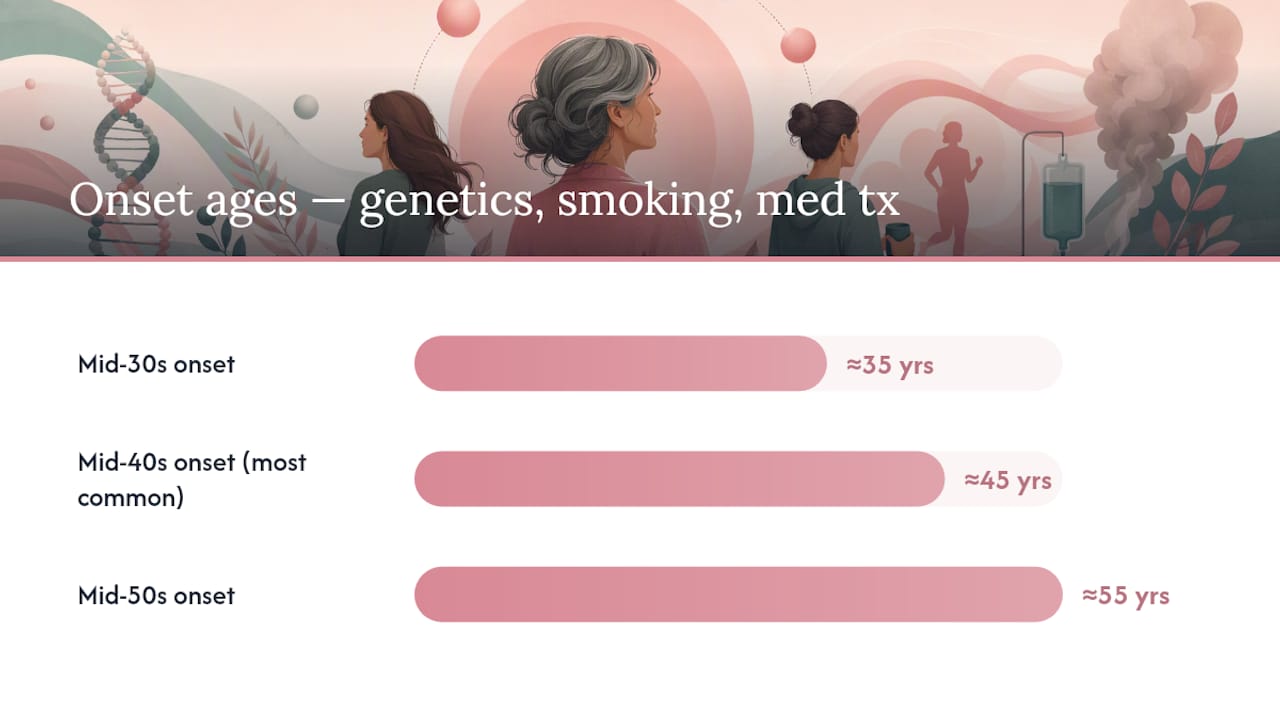
Most people enter perimenopause in their mid-40s, but the range is genuinely wide. Cleveland Clinic notes that onset can occur as early as the mid-30s or as late as the mid-50s. Genetics, smoking history, and certain medical treatments can all shift the timing earlier.
Johns Hopkins Medicine reports that the transition commonly lasts 2–8 years, though most people experience 4–5 years of noticeable symptoms before reaching the menopause marker. A small number of people move through it in under a year; others are still in transition at the far end of that range.
How the transition typically unfolds:
- Early perimenopause: Cycles may shorten slightly, PMS symptoms intensify, and mood shifts appear. Many people don’t connect these changes to hormones yet.
- Mid-transition: Cycle length becomes more variable, hot flashes and night sweats increase, and sleep quality drops noticeably.
- Late transition: The Menopause Society describes cycles that vary by 7 or more days from the previous pattern, and eventually gaps of 60 or more days between periods.
- Menopause marker: 12 consecutive months without a period. Only at that point is perimenopause officially over.
What symptoms should you actually expect?
Symptoms vary enormously from person to person. Some people sail through with minor cycle changes; others find hot flashes and sleep disruption genuinely disruptive to work and relationships. Mayo Clinic links the most common symptoms directly to hormone fluctuations.

Menstrual changes are usually the first sign: shorter cycles, heavier or lighter flow, and eventually skipped periods. Vasomotor symptoms (hot flashes and night sweats) affect a majority of people in transition and can last years. Sleep disruption often follows, partly from night sweats and partly from progesterone’s direct effect on sleep architecture.
Mood and cognitive changes are real and underreported. Anxiety, irritability, low mood, and what many people call “brain fog” (difficulty concentrating or finding words) are tied to hormone variability, not just life stress. For context on why mood swings happen and what helps, this Florvahealth breakdown of mood swing triggers is worth reading alongside this guide.
Genitourinary symptoms (vaginal dryness, discomfort during sex, increased urinary urgency) often appear later in the transition and tend to worsen after menopause if untreated. Musculoskeletal changes (joint aches, reduced muscle mass) and skin changes (dryness, thinning) are less discussed but common.
Red flags that need prompt evaluation:
- Very heavy bleeding (soaking a pad or tampon every hour for two or more hours)
- Bleeding between periods or after sex
- Any bleeding that restarts after 12 months without a period
Mayo Clinic advises contacting a clinician immediately if bleeding returns after the 12-month menopause marker, as it can signal a separate health problem unrelated to perimenopause.
Pro Tip: Track symptoms for at least four weeks before your appointment. Note the date, what happened, how severe it was on a 1–10 scale, and how it affected your day. That pattern is far more useful to a clinician than a general description.
How clinicians diagnose perimenopause
For most people aged 45 and older, diagnosis is clinical, meaning it is based on symptoms and menstrual history, not lab results. NICE guidance explicitly recommends against using routine laboratory tests, including FSH, to confirm perimenopause in otherwise healthy patients in this age group. The reason is straightforward: hormone levels fluctuate so much during the transition that a single blood draw tells you very little.
That said, clinicians often order tests to rule out other conditions that can mimic perimenopause symptoms. Harvard Health notes that thyroid disease, pregnancy, and bleeding disorders are the most common alternative explanations clinicians check for when symptoms don’t fit the expected pattern.
Tests commonly used to rule out other causes:
- Pregnancy test: Ovulation is erratic, not absent, during perimenopause. Pregnancy is possible until menopause is confirmed.
- Thyroid function tests (TSH): Hypothyroidism and hyperthyroidism both produce symptoms that overlap heavily with perimenopause.
- Complete blood count (CBC): Ordered when heavy bleeding raises concern about anemia or a bleeding disorder.
- Pelvic ultrasound or endometrial biopsy: Considered when bleeding patterns are unusual or postmenopausal bleeding occurs.
Pro Tip: If you are under 45 and experiencing these symptoms, your clinician is more likely to order hormone tests because early perimenopause is less expected and other causes are more probable. The NICE clinical-history approach applies specifically to the 45-and-older group.
Managing perimenopause: what actually helps
Management starts with lifestyle, not prescriptions. Weight-bearing exercise (walking, strength training) protects bone density at exactly the time estrogen withdrawal begins to accelerate bone loss. Cleveland Clinic emphasizes that early conversations about calcium, vitamin D, and weight-bearing activity during perimenopause create real lead time for reducing long-term bone and heart risk. Smoking cessation and limiting alcohol both reduce vasomotor symptom severity and cardiovascular risk simultaneously.
For specific symptoms that lifestyle changes don’t fully address, nonhormonal medical options exist. SSRIs and SNRIs (such as paroxetine and venlafaxine) reduce hot flash frequency and are a reasonable first-line option for people who cannot or prefer not to use hormone therapy. Gabapentin is another option, particularly for nighttime hot flashes. Vaginal moisturizers and low-dose vaginal estrogen address genitourinary symptoms with minimal systemic absorption.
Hormone therapy (HT) remains the most effective treatment for moderate to severe vasomotor symptoms and is appropriate for many people in perimenopause. The key is individualized risk assessment. People with a history of estrogen-sensitive cancers, unexplained vaginal bleeding, active blood clots, or certain cardiovascular conditions are generally not candidates. For everyone else, the decision involves weighing symptom burden against personal risk factors, ideally with a clinician who knows your history.
Contraception is a separate but related consideration. Because ovulation is erratic rather than absent, pregnancy is possible throughout perimenopause. Contraception should continue until 12 months after the final period.
For nonprescription support, Florvahealth’s digestive enzyme capsules support digestion if bloating after meals is part of your transition, and the brand’s guide to hormone-balancing supplements covers what the evidence says about supplement approaches.

Ready to support your hormonal health with natural, science-backed products? Florvahealth offers a full system designed for women navigating hormonal shifts, from probiotics and cycle support to intimate care and skin health.
How to prepare for a clinician visit
Walking in with organized information shortens the appointment and improves the quality of the conversation. Here is a practical framework.
Questions to bring:
- Could these symptoms be perimenopause, or should we rule out other causes first?
- What tests, if any, do you recommend and why?
- Am I still at risk of pregnancy, and what contraception makes sense now?
- What are my options for managing hot flashes and sleep disruption?
- What are the benefits and risks of hormone therapy given my personal history?
- Should I be screening for bone density or cardiovascular risk now?
- When would you refer me to a menopause specialist?
One-week symptom diary template:
Fill in one row per day for seven days. Harvard Health recommends capturing both objective events (dates, flow amount, hot flash count) and functional impact (sleep hours lost, activities affected) because that combination gives clinicians the clearest picture for shared decision-making.
Pro Tip: Before your appointment, write a single paragraph summarizing your diary: “Over the past week I had X hot flashes averaging severity Y, slept an average of Z hours, and missed [specific activity] twice.” Clinicians can act on a paragraph; a stack of daily notes takes time to parse.
An editorial perspective on perimenopause awareness
The most underserved part of the perimenopause conversation is not the symptom list. Every major clinic publishes one. What’s missing is the framing: perimenopause is a transition that can last nearly a decade, and the women navigating it are often told their symptoms are stress, anxiety, or “just getting older” before anyone considers hormones.
The NICE recommendation to diagnose by clinical history rather than lab tests is genuinely useful, but it only works if the clinician asks the right questions and the patient arrives prepared to answer them. That gap, between what the guidelines say and what actually happens in a 15-minute appointment, is where most women lose years of symptom management.
Bone health and cardiovascular risk are the two areas where early action during perimenopause pays the most dividends later. Neither gets enough attention in the average first conversation about irregular periods. If your clinician hasn’t mentioned bone density screening or heart health by the second visit, bring it up yourself.
Florvahealth’s approach, supporting hormonal health from the inside out with probiotics, cycle-targeted nutrition, and intimate care, fits naturally into the lifestyle-first tier of management. It doesn’t replace a clinical conversation, but it gives women something concrete to do while they’re figuring out the bigger picture.
Sources
- Perimenopause - Symptoms and causes - Mayo Clinic
- Perimenopause | Johns Hopkins Medicine
- Perimenopause: Age, Stages, Signs, Symptoms & Treatment - Cleveland Clinic
- Perimenopause | The Menopause Society
- Quality statement 1: Diagnosing perimenopause and menopause | Menopause | Quality standards | NICE
This article is general information, not a substitute for advice from a qualified doctor. Consult a qualified healthcare professional about your own circumstances before acting on anything here.


