

Hormonal imbalance is defined as a disruption in the normal production, regulation, or signaling of one or more hormones in the body. For women aged 20–40, these disruptions show up as a predictable set of physical, reproductive, systemic, and cognitive symptoms. Learning to identify hormonal imbalance signs early gives you the clearest path to understanding what your body is actually doing, and what to do about it. This guide covers the most common symptoms, how to track them accurately, which conditions cause them, and when to get professional support.
What are the common signs of hormonal imbalance in women?
Hormonal imbalance symptoms fall into four categories: physical, reproductive, systemic, and cognitive. Recognizing which category your symptoms belong to helps you describe them more clearly to a healthcare provider. The symptoms below are the most frequently reported in women aged 20–40.
Reproductive symptoms:
- Irregular, missed, or unusually heavy menstrual cycles
- Severe cramping that disrupts daily activity
- Spotting between periods
- Low libido or changes in sexual health
- Fertility difficulties
Physical symptoms:
- Adult acne, especially along the jawline and chin
- Hair thinning or noticeable shedding
- Unexplained weight changes, particularly around the midsection
- Breast tenderness or swelling
- Hot flashes or night sweats outside of perimenopause
Systemic symptoms:
- Persistent fatigue that does not improve with rest
- Bloating and digestive discomfort that worsens around your cycle
- Temperature sensitivity, feeling cold or overheated without cause
- Sleep disruptions affecting cortisol and melatonin levels, which then worsen mood and energy
Cognitive symptoms:
- Brain fog and difficulty concentrating
- Memory issues and cognitive slowdowns that accompany mood changes
- Anxiety, irritability, or low mood that tracks with your cycle
No single symptom confirms a hormonal imbalance. The pattern, timing, and combination of symptoms across your cycle are what matter most. If you recognize several of these signs together, that cluster is worth documenting and discussing with a provider.
How to track and document your symptoms before a doctor’s visit
Tracking your symptoms over time is the single most useful thing you can do before seeing a healthcare provider. Symptom patterns linked to cycle phases give clinicians far more diagnostic information than a one-time appointment description. Aim to track consistently for at least three months.
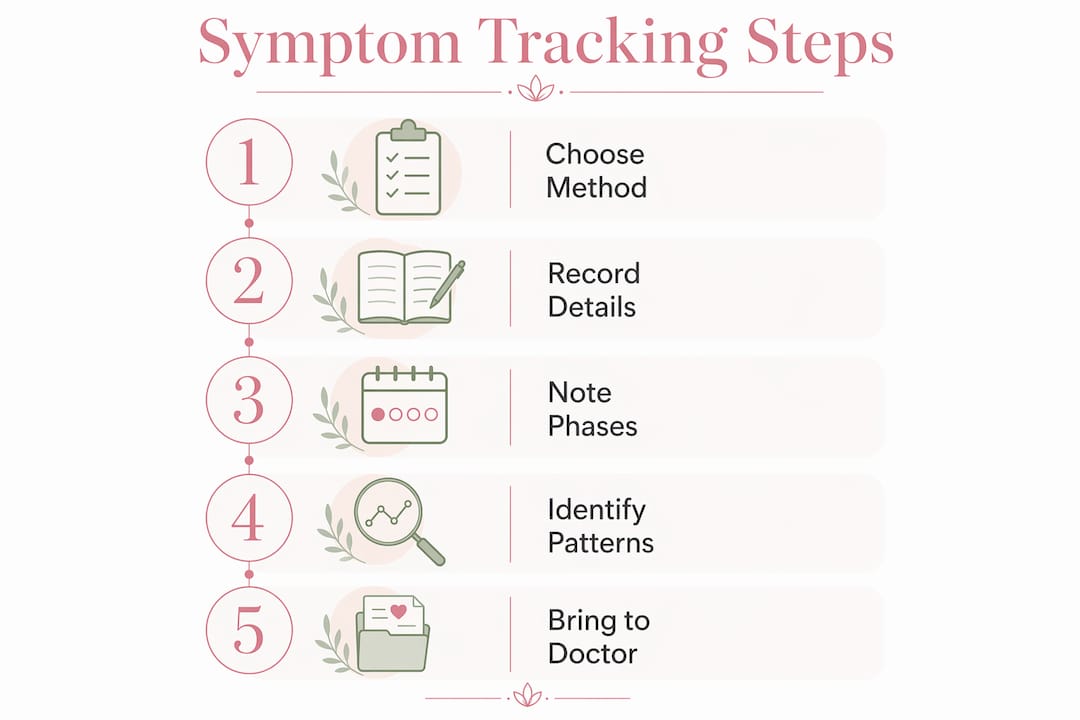
Step 1: Choose your tracking method. A paper diary, a dedicated cycle app, or a simple calendar all work. The format matters less than consistency. Pick the method you will actually use every day.
Step 2: Record the right details. Log symptom type, severity on a 1–10 scale, time of day, and where you are in your cycle. Also note sleep hours, stress level, diet changes, and exercise. These lifestyle factors directly influence hormone output.
Step 3: Note cycle phase correlations. Understanding your hormonal cycle phases helps you spot whether symptoms cluster in the luteal phase, around ovulation, or throughout the month. Symptoms that appear only in the two weeks before your period point to a different issue than symptoms present all month long.
Step 4: Look for repeating patterns. After three months, review your log for patterns. Symptoms that repeat at the same cycle point, worsen progressively, or appear in clusters are the most clinically useful data you can bring to an appointment.
Step 5: Bring your log to your appointment. A written record shortens the diagnostic process significantly. Providers can cross-reference your symptom timeline with lab results and clinical observations.
Pro Tip: Use a simple table in a notes app with columns for date, cycle day, symptom, severity, and one lifestyle note. Five minutes each evening is enough to build a three-month picture that most providers will find genuinely useful.
Here is a quick reference for what to track and why:
| What to track | Why it matters |
|---|---|
| Cycle day and flow | Identifies irregular patterns and cycle length changes |
| Symptom type and severity | Reveals symptom clusters and progression over time |
| Sleep quality and hours | Sleep disruptions directly affect cortisol and melatonin |
| Stress level (1–10 scale) | Chronic stress elevates cortisol and suppresses other hormones |
| Diet and hydration notes | Nutritional gaps can mimic or worsen hormonal symptoms |
Tracking symptoms across cycles also helps distinguish normal premenstrual syndrome from conditions like PMDD, which require different management approaches entirely.
What conditions cause hormonal symptoms, and how do they differ?
Several distinct conditions produce overlapping hormonal symptoms, which is why self-diagnosis is unreliable. Understanding the differences helps you ask better questions and push for the right tests.
Polycystic ovary syndrome (PCOS) is one of the most common hormonal conditions in women aged 20–40. PCOS presents with irregular periods and elevated androgen levels, which cause jawline acne, excess facial hair, and hair thinning on the scalp. Weight gain around the midsection is also typical.
Thyroid dysfunction produces symptoms that closely mimic general hormonal imbalance. Hypothyroidism causes fatigue, weight gain, cold sensitivity, and depression. Hyperthyroidism causes anxiety, rapid heartbeat, weight loss, and heat intolerance. Because thyroid hormones regulate metabolism and energy, their disruption affects nearly every system in the body. The thyroid and hormone balance connection is one of the most commonly missed in women who are told their labs are “normal.”
Estrogen dominance occurs when estrogen is high relative to progesterone. Symptoms include heavy or painful periods, breast tenderness, bloating, mood swings, and difficulty losing weight. This pattern is common in the late 20s through early 40s.
Premature ovarian insufficiency (POI) affects women under 40 and produces symptoms similar to perimenopause: hot flashes, night sweats, irregular or absent periods, and low libido. POI is often missed because providers do not expect it in younger women.
The symptom overlap between these conditions is significant. Fatigue, for example, appears in thyroid dysfunction, PCOS, estrogen dominance, and POI. This is why provider-ordered hormone panels carry more diagnostic weight than consumer test kits, which snapshot a single moment in a naturally fluctuating system.
How can you manage mild symptoms naturally, and when should you see a doctor?
Lifestyle changes are the first-line approach for mild hormonal symptoms, and they work. Non-medicated interventions including improved sleep, stress reduction, and dietary changes are recommended before pharmaceutical treatment in most cases. The key is applying them consistently, not occasionally.

Sleep: Aim for 7–9 hours of consistent sleep. Disrupted sleep raises cortisol and suppresses progesterone, which worsens mood swings, weight gain, and fatigue. A fixed sleep schedule matters more than total hours alone.
Nutrition: Reduce processed sugar and refined carbohydrates, which spike insulin and disrupt androgen balance. Prioritize fiber, healthy fats, and protein at each meal. Cruciferous vegetables like broccoli and cauliflower support estrogen metabolism through the liver.
Stress management: Chronic stress keeps cortisol elevated, which directly suppresses reproductive hormones. Practices like breathwork, walking, and consistent downtime lower cortisol more reliably than occasional intensive interventions.
Hydration: Hydration affects hormone transport and cellular signaling. Dehydration worsens fatigue and brain fog, two symptoms that are already common in hormonal imbalance.
Supplements: Certain supplements support hormonal health, but they are not a substitute for addressing root causes. Before adding anything, rule out nutritional deficits like low vitamin D, magnesium, or iron, which can independently cause fatigue, mood changes, and cycle irregularities. Learn more about evidence-based supplement options before choosing one.
Pro Tip: Before attributing symptoms to hormones, rule out sleep apnea, iron deficiency anemia, and vitamin D deficiency. These conditions produce nearly identical symptoms and are far more common than most women realize.
Seek medical evaluation when symptoms persist beyond two to three cycles, worsen over time, or significantly affect your daily function. Conditions like POI and PCOS require confirmed diagnosis before treatment. Early consultation improves outcomes and rules out serious underlying causes.
Key Takeaways
Recognizing hormonal imbalance requires tracking symptom patterns across multiple cycles, not reacting to isolated symptoms on a single bad day.
| Point | Details |
|---|---|
| Symptoms fall into four categories | Physical, reproductive, systemic, and cognitive symptoms often appear together in clusters. |
| Track for at least three months | Consistent logs of cycle day, symptom severity, sleep, and stress give providers actionable data. |
| Conditions overlap significantly | PCOS, thyroid dysfunction, estrogen dominance, and POI share symptoms; lab panels distinguish them. |
| Lifestyle changes come first | Sleep, nutrition, stress reduction, and hydration address mild symptoms before medication is needed. |
| Seek care for persistent symptoms | Symptoms that worsen over multiple cycles or impair daily life require professional evaluation. |
What I’ve learned about reading your body’s hormonal signals
By Zamanee
The most common mistake I see is treating a single bad week as proof of a hormonal disorder. Hormones fluctuate constantly. That is not a flaw in the system. It is how the system works. Pursuing what researchers call “hormonal harmony” rather than a fixed “perfect balance” is a far more realistic and medically grounded goal.
The second mistake is over-relying on consumer hormone tests. One-time hormone tests are often misleading because they capture a single snapshot of a system that changes by the hour. I have spoken with women who received alarming results from at-home kits, only to find their provider-ordered panel was entirely within range. Context matters enormously.
What actually works is detailed, consistent symptom tracking combined with a provider who listens. The women who get the clearest answers are the ones who walk into appointments with three months of logged data, not just a list of complaints from the past two weeks. That level of preparation changes the entire clinical conversation.
The last thing worth saying: not every symptom has a hormonal cause. Sleep apnea, iron deficiency, and nutritional gaps produce symptoms that look identical to hormonal imbalance. A good provider will rule those out first. If yours does not, ask them to.
— Zamanee
Florvahealth’s approach to women’s hormonal symptom support
Florvahealth was built specifically for women navigating the kind of symptoms covered in this article. PMS, bloating, hormonal acne, and cycle irregularities are not separate problems. They are connected, and Florvahealth addresses them as a system.

Florvahealth’s range combines probiotic capsules, pH-balanced intimate care and gentle skin care to support the body from the inside out. If hormonal acne is part of your symptom picture, Florvahealth’s skincare line connects directly to the hormonal acne and cycle phases framework so your routine works with your cycle, not against it.
FAQ
What is hormonal imbalance in women?
Hormonal imbalance is a disruption in the normal production or regulation of one or more hormones. In women aged 20–40, it commonly affects estrogen, progesterone, thyroid hormones, cortisol, and androgens.
How do I know if my symptoms are hormonal or something else?
Track your symptoms in relation to your menstrual cycle for at least three months. Symptoms that consistently appear at the same cycle phase are more likely hormonal. A provider-ordered panel can confirm or rule out hormonal causes.
Can lifestyle changes actually fix hormonal imbalance?
Lifestyle changes including consistent sleep, reduced sugar intake, stress management, and adequate hydration are first-line management for mild hormonal symptoms. They do not replace medical treatment for confirmed conditions like PCOS or thyroid dysfunction.
Are at-home hormone tests accurate?
Consumer hormone tests are often unreliable because hormones fluctuate throughout the day and cycle. Only comprehensive panels ordered by a provider, interpreted with clinical context, give diagnostically useful results.
When should I see a doctor about hormonal symptoms?
See a provider when symptoms persist beyond two to three cycles, worsen progressively, or interfere with daily life. Early evaluation rules out serious conditions like premature ovarian insufficiency and improves treatment outcomes.
Recommended
- Thyroid and Hormone Balance Explained for Women
- Benefits of Hormone Balancing Supplements for Women
- Manage Hormonal Health on a Budget: 2026 Guide
- How to Create an Evening Ritual for Hormonal Balance
Sources
- Thyroid Disease: Causes, Symptoms & Treatment — Cleveland Clinic
- Polycystic ovary syndrome — Office on Women's Health
- Perimenopause: Stages, Signs & Symptoms — Cleveland Clinic


