

The most reliable natural path for PCOS acne combines myo-inositol at a daily dose recommended by international consensus, a diet with low glycemic index, and a barrier-first topical routine with targeted actives. Topical results usually show up in about 2 to 3 months, while diet and supplement changes need several months to work through your hormone cycle. If you’re pregnant, breastfeeding, or dealing with painful cystic breakouts, talk to a clinician before starting any new supplement or retinoid.
TL;DR:
- Consistent intake of 4 grams of myo-inositol daily for at least six months can significantly improve PCOS-related acne symptoms.
- Low glycemic index diets, replacing high-sugar foods with fiber-rich options, help reduce insulin spikes that aggravate hormone-driven oil production.
- A gentle topical routine with azelaic acid, salicylic acid, and niacinamide, introduced gradually over 2 to 3 months, supports skin barrier recovery and reduces cystic breakouts.
- Lifestyle factors like sleep, stress management, and moderate exercise can improve insulin sensitivity and decrease androgen excess, easing acne over several months.
- If no improvement arises after three months or cystic scarring and severe symptoms develop, consulting a healthcare professional is essential for further treatment.
Table of Contents
- PCOS Acne Natural Treatment: Supplements and Diet That Actually Move the Needle
- Building a PCOS Skincare Routine That Protects Your Skin Barrier
- How Long Does It Take for Lifestyle Changes to Clear PCOS Acne?
- When Should You See a Doctor About PCOS Acne?
- FlorvaHealth’s Inside-Out Approach to PCOS Acne
- What Your Gut Has to Do With PCOS Breakouts
- Does Vitamin D Deficiency Make PCOS Acne Worse?
- Beyond Myo-Inositol: Other Herbs Worth Knowing About
- Why Exercise Matters More Than Most Women With PCOS Realize
- A Note on Patience and Tracking
- Getting Started With FlorvaHealth’s Probiotics and Skincare
- Sources
PCOS Acne Natural Treatment: Supplements and Diet That Actually Move the Needle
The single best-studied supplement for PCOS acne is myo-inositol. An international Delphi consensus of dermatologists and endocrinologists recommends 4 grams daily, split into two doses, for at least six months to see meaningful improvement in acne tied to PCOS. Some formulations pair it with folic acid and vitamin D3, which several consensus statements favor for broader endocrine benefits beyond skin alone.
Other nutraceuticals have supporting evidence, though the research pool is thinner. A systematic review of nutraceutical trials in PCOS found selenium supplementation reduced acne lesions significantly in one trial, and berberine, chromium, and antioxidant combinations showed promise in smaller studies. Treat these as add-ons, not replacements for myo-inositol or diet changes, since sample sizes in this research are small and results vary between trials.
Statistic Callout: Diets with low glycemic index are linked to measurably calmer skin. Foods above that threshold spike insulin and IGF-1, which pushes ovaries and skin glands to produce more androgens and oil, according to a review on diet and glycemic load in acne.
Practical swaps make this manageable:
- Replace white bread, white rice, and sugary cereal with steel-cut oats, quinoa, or lentils.
- Swap soda and fruit juice for water, unsweetened tea, or sparkling water with citrus.
- Choose Greek yogurt or nuts over pastries and candy for snacks.
- Add protein and fiber to every meal to slow glucose absorption.
Run this as a real experiment. Pick one supplement (myo-inositol is the strongest starting point) and one diet change, then track breakouts weekly for about 2 to 3 months before judging results. Two changes at once make it impossible to know what’s actually working.
Building a PCOS Skincare Routine That Protects Your Skin Barrier
A damaged skin barrier makes hormonal acne worse, not better, so the routine has to start gentle before it gets aggressive. Dermatology guidance points to azelaic acid, salicylic acid, and niacinamide as the most useful topical actives for hormonal breakouts, with realistic results in about 2 to 3 months of consistent use.
Here’s how each active earns its place in a PCOS acne skincare routine:
- Azelaic acid calms inflammation, fights acne bacteria, and fades post-acne dark marks with less irritation than most retinoids. It’s also considered safe during pregnancy, which makes it a common first choice.
- Salicylic acid dissolves the oil and dead skin clogging pores, which matters for PCOS because excess androgens drive more sebum production.
- Niacinamide helps regulate oil output and strengthens the skin barrier at the same time, so it pairs well with either acid above.
- Retinoids speed up cell turnover and prevent new clogged pores, but they’re contraindicated during pregnancy and need a slower introduction.
Clinical observations note that PCOS acne tends to cluster along the jawline and lower cheeks and often runs cystic and treatment-resistant, which is exactly why a slow, staged rollout beats jumping straight to strong actives. A practical staging plan looks like this: weeks 1 to 2 focus purely on a low-pH cleanser, non-comedogenic moisturizer, and mineral SPF; weeks 3 to 8 add one active (azelaic or salicylic) three nights a week; weeks 9 to 12 consider adding a retinoid on alternate nights if you’re not pregnant, never combining two strong actives the same night.
Pro Tip: Introduce only one new active every two to three weeks. Rapid product rotation is the number one reason PCOS skin flares instead of clears. Hydrocolloid patches on active cysts also reduce picking and scarring while you wait for the routine to work.
How Long Does It Take for Lifestyle Changes to Clear PCOS Acne?
Sleep, stress, and movement all feed back into insulin sensitivity, which is the metabolic switch behind most PCOS breakouts. Even modest weight loss around 5% of body weight has been shown to meaningfully improve insulin sensitivity in women with PCOS, which in turn can ease androgen-driven oil production.
Daily habits that support this shift:
- Aim for 7 to 9 hours of sleep; poor sleep raises cortisol, which worsens insulin resistance.
- Try 20 to 30 minutes of moderate exercise most days rather than sporadic intense workouts.
- Drink water consistently and consider spearmint tea, which some women use for its mild anti-androgenic reputation.
- Moderate dairy and alcohol intake if you notice flares correlating with either.
- Practice a short stress-reduction habit daily, even five minutes of breathing or a walk outside.
Be honest with yourself about the timeline: by week 4, expect maybe less irritation and oiliness. By week 8, fewer new breakouts. By week 12, visibly calmer skin if you’ve stayed consistent. By week 24, the deeper hormonal shifts from diet and supplements typically show their full effect.
When Should You See a Doctor About PCOS Acne?
Natural treatment has real limits, and knowing when to escalate matters as much as knowing what to try first. If you see no sustained improvement after three full months of consistent effort, or if breakouts are leaving scars, forming deep painful cysts, or coming with symptoms like excessive hair growth or irregular periods, it’s time for a dermatologist or endocrinologist visit.
Retinoids are off-limits during pregnancy and breastfeeding, and even azelaic acid should be discussed with your OB-GYN first. When you do see a clinician, bring specifics: which supplements and doses you’ve tried, how long, and what diet changes you made. That history helps them decide fast whether you need topical adjustments, hormonal therapy, or bloodwork to rule out other causes.
FlorvaHealth’s Inside-Out Approach to PCOS Acne
FlorvaHealth builds its system around the same logic dermatology research supports: skin clarity starts inside the gut and hormone system, then gets reinforced on the surface. That means pairing hormone-balancing supplements with pH-balanced topical washes designed for reactive, hormonal skin, rather than treating breakouts as a surface-only problem.
For readers who want a ready-made version of the routine outlined above, FlorvaHealth’s educational content on what causes adult female acne walks through the hormonal mechanics in more depth, while its product collections translate the supplement and skincare guidance into a simple daily system.
What Your Gut Has to Do With PCOS Breakouts
Gut bacteria influence how your body processes estrogen and androgens, and an imbalanced gut microbiome is increasingly linked to the inflammation that shows up as PCOS acne. When gut flora is disrupted, a condition sometimes called estrobolome dysfunction, hormones that should be cleared from the body get reabsorbed instead, adding to the androgen load already driving your breakouts.
Probiotics won’t replace myo-inositol or a diet with low glycemic index, but they support the same insulin-sensitivity goal from a different angle. Fermented foods like plain kefir, sauerkraut, and kimchi introduce beneficial bacteria strains, while a daily probiotic supplement offers a more consistent dose than diet alone can guarantee. Pair probiotics with prebiotic fiber (found in onions, garlic, and oats) since beneficial bacteria need that fiber to actually thrive rather than pass through.
Digestive enzyme support matters too, particularly if bloating or irregular digestion accompanies your PCOS symptoms. Poor digestion means poor nutrient absorption, and that undercuts everything else in your routine, from the zinc in your diet to the myo-inositol in your supplement. Think of gut health as the foundation the rest of your routine sits on, not a separate track running alongside it. If you’re already tracking a supplement and diet trial, add “gut symptoms” as a third column. Bloating, irregular digestion, and skin flares often move together, and noticing that pattern early saves months of guessing.
Does Vitamin D Deficiency Make PCOS Acne Worse?
Vitamin D deficiency shows up more often in women with PCOS than in the general population, and low levels correlate with worse insulin resistance, the same metabolic driver behind androgen-fueled acne. Vitamin D also plays a direct role in skin cell turnover and inflammation regulation, which is why some myo-inositol formulations pair the two nutrients together for combined endocrine and skin benefit.
Zinc deserves its own mention. It regulates oil gland activity and has mild antibacterial and anti-inflammatory properties, and low zinc levels are common in women with more severe acne. Selenium, mentioned earlier for its acne-lesion reduction in PCOS trials, works partly through its antioxidant effect on inflamed skin. B vitamins, particularly B6 and B12, support hormone metabolism in the liver, which affects how efficiently excess androgens get cleared from your system.
None of these micronutrients work in isolation, and none replace a blood test. If you suspect a deficiency, ask your doctor for a vitamin D and zinc panel before adding high-dose supplements. Excess vitamin D and zinc both carry their own risks at high doses, so this is one area where guessing costs more than it saves. Once you know your levels, correcting a genuine deficiency often shows up in skin clarity within two to three months, running on a similar timeline to the diet and supplement changes covered earlier.
Beyond Myo-Inositol: Other Herbs Worth Knowing About
Spearmint has a specific reputation in PCOS circles for a reason: it shows mild anti-androgenic activity, meaning it may modestly lower free testosterone levels when taken regularly as a tea, typically two cups daily. It won’t replace myo-inositol, but it’s a low-risk addition many women layer into their routine alongside diet changes.

Saw palmetto is the other herb that comes up frequently in natural PCOS acne discussions. It’s thought to work by partially blocking the conversion of testosterone into its more potent form, dihydrotestosterone (DHT), which is one of the hormones most directly tied to oil gland overactivity. Evidence in PCOS specifically is limited compared to myo-inositol’s consensus-backed dosing, so treat saw palmetto as a secondary option rather than a first move.
Licorice root and green tea extract also show up in integrative dermatology discussions for mild anti-androgenic and anti-inflammatory properties, though the research behind either is thinner than what backs myo-inositol or a diet with low glycemic index. If you’re combining several herbal supplements at once, introduce them one at a time, the same way you would a new topical active, so you can actually tell what’s helping. For a broader rundown of herbal options and their safety profiles, FlorvaHealth’s guide to herbal supplements for cycle balance covers dosing considerations in more detail. A fertility-focused perspective on PCOS management is also worth reading if you’re weighing these herbs against future pregnancy plans, since some anti-androgenic herbs need to be stopped well before conception.
Why Exercise Matters More Than Most Women With PCOS Realize
Exercise doesn’t just burn calories. It directly improves how efficiently your cells respond to insulin, which is the exact mechanism behind androgen-driven acne in PCOS. Resistance training in particular has an outsized effect on insulin sensitivity compared to cardio alone, because muscle tissue is where a large share of glucose gets absorbed after you eat.
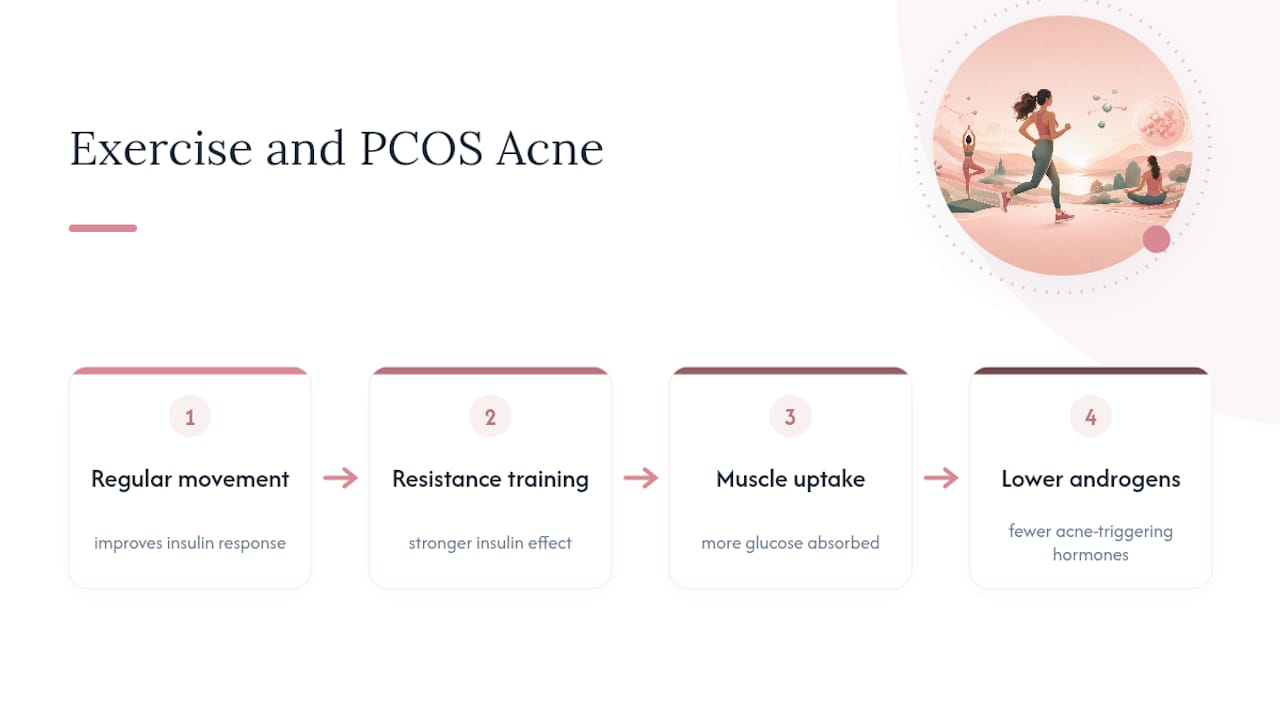
You don’t need extreme workouts to see this benefit. Thirty minutes of brisk walking, cycling, or strength training most days of the week is enough to start shifting insulin sensitivity within a matter of weeks, well before the 5% weight loss milestone mentioned earlier ever becomes relevant. That’s an important distinction: the metabolic benefit of movement shows up faster than visible weight change does, which is worth remembering if the scale feels like the only measure of progress.

Weight management matters here specifically because of fat distribution, not aesthetics. Visceral fat, the kind that accumulates around the abdomen, is more metabolically active and more likely to worsen insulin resistance than fat stored elsewhere. That’s part of why even a modest reduction in visceral fat can meaningfully calm PCOS symptoms, acne included, without requiring dramatic total weight loss. If exercise and diet changes aren’t moving your metabolic markers after a few months, that’s a reasonable point to loop in a doctor about whether a medication like metformin or a GLP-1 approach fits your situation, particularly if you’re also managing contraception decisions.
A Note on Patience and Tracking
PCOS acne rarely responds to any single fix, and that’s genuinely frustrating when you want clear skin now, not in three months. Start small: pick one diet swap and one topical active this week, track them for four weeks, and build from there.
— Zamanee
Getting Started With FlorvaHealth’s Probiotics and Skincare
If you’re ready to put this roadmap into action rather than piecing it together from a dozen tabs, FlorvaHealth’s women's probiotics and digestive enzymes are built around the same insulin-sensitivity and gut-hormone connection covered above, paired with a skincare line formulated specifically for hormonal skin rather than generic acne products that ignore the PCOS piece entirely.
Before starting anything new, confirm with your doctor if you’re pregnant, breastfeeding, or on medication that could interact with a new supplement, and give any routine a genuine 8 to 12 week trial before judging it. If you want the full picture of how gut health, hormones, and skin connect before you buy anything, FlorvaHealth’s full wellness collection is a reasonable place to start browsing and build a routine that matches where you are right now.
This article is general information, not a substitute for advice from a qualified doctor. Consult a qualified healthcare professional about your own circumstances before acting on anything here.
Sources
- Myo-inositol for cutaneous manifestations of polycystic ovary syndrome: an international Delphi consensus recommendation for dermatology practice
- Role of diet and glycemic load in acne (review)
- Can the right diet get rid of acne? — American Academy of Dermatology (patient-facing guidance)


