

Hormonal acne is defined as a recurring skin condition driven by fluctuations in androgen hormones that trigger excess sebum production, follicular blockage, and deep inflammatory lesions. Unlike teenage breakouts, this condition targets adult women most often between ages 20 and 40, appearing as tender cysts along the jawline, chin, and neck. The American Academy of Dermatology recognizes adult female acne as a distinct clinical pattern, separate from adolescent acne in both cause and treatment. Hormonal acne is not caused by poor hygiene. Washing your face more often will not fix it, and understanding that distinction is the first real step toward clearing your skin.
What causes hormonal acne in women?
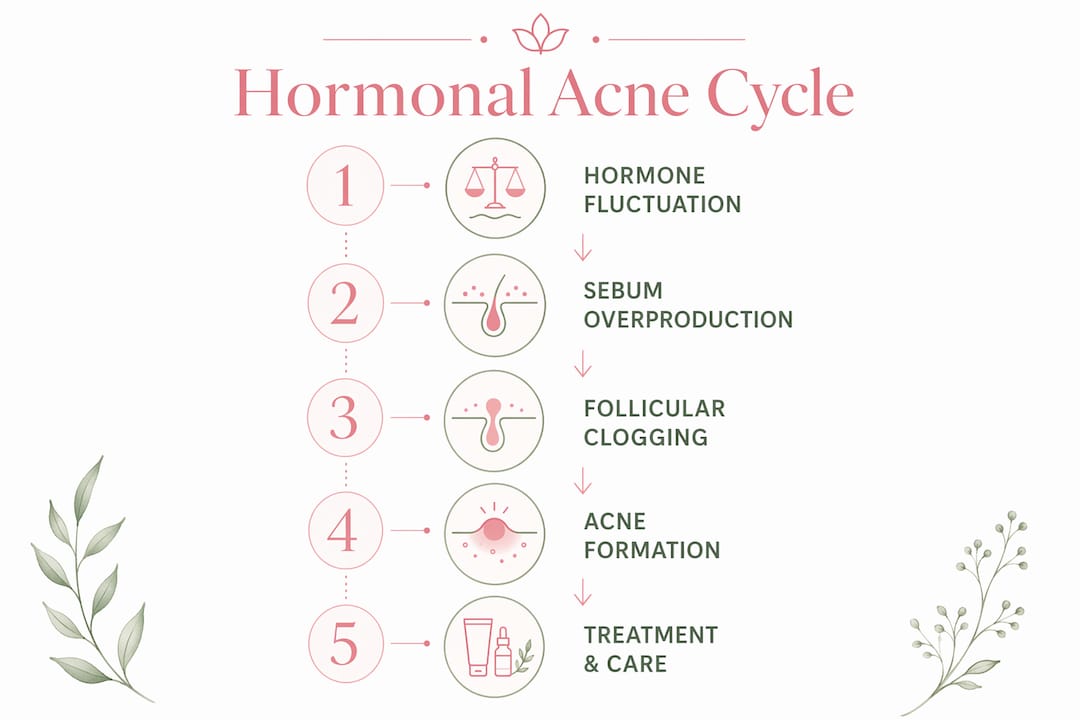
Hormonal acne develops when androgen hormones, specifically testosterone and dihydrotestosterone (DHT), overstimulate the sebaceous glands. Those glands respond by producing far more oil than your skin needs. That excess oil mixes with dead skin cells inside the follicle, creating a blockage that bacteria inflame into a cyst or nodule.
The process is called follicular hyperkeratinization. It means the cells lining the pore shed too quickly and clump together, sealing the follicle shut. Androgens drive both the oil surge and this abnormal cell shedding, which is why hormonal acne produces deeper, more painful lesions than surface-level blackheads.
Hormonal fluctuations across the menstrual cycle are the most common trigger. Estrogen levels drop sharply in the days before menstruation, leaving androgens relatively dominant. That shift is why breakouts cluster in the week before your period. Pregnancy, perimenopause, and stopping hormonal contraceptives all create similar androgen surges that show up on the skin.
Polycystic ovary syndrome (PCOS) is the most significant endocrine disorder linked to hormonal acne. PCOS causes androgen excess that produces persistent, treatment-resistant breakouts alongside irregular cycles and increased body hair. If your acne does not respond to standard treatments, a PCOS evaluation is worth discussing with your doctor.
- Testosterone and DHT overstimulate sebaceous glands, producing excess oil
- Follicular hyperkeratinization seals pores and traps sebum and bacteria
- Menstrual cycle shifts create pre-period androgen dominance
- Pregnancy and perimenopause cause hormonal swings that trigger flares
- PCOS and other endocrine disorders sustain chronically elevated androgens
Pro Tip: Track your breakouts on a calendar for two full cycles. If they consistently appear 5–7 days before your period, the pattern itself is strong clinical evidence of hormonal acne.
Adult female acne requires personalized treatment because its hormonal interactions differ from adolescent acne. Teenage acne is largely driven by puberty-related androgen surges that resolve with age. Adult hormonal acne often persists for decades without targeted intervention.
How to identify hormonal acne: signs and breakout types
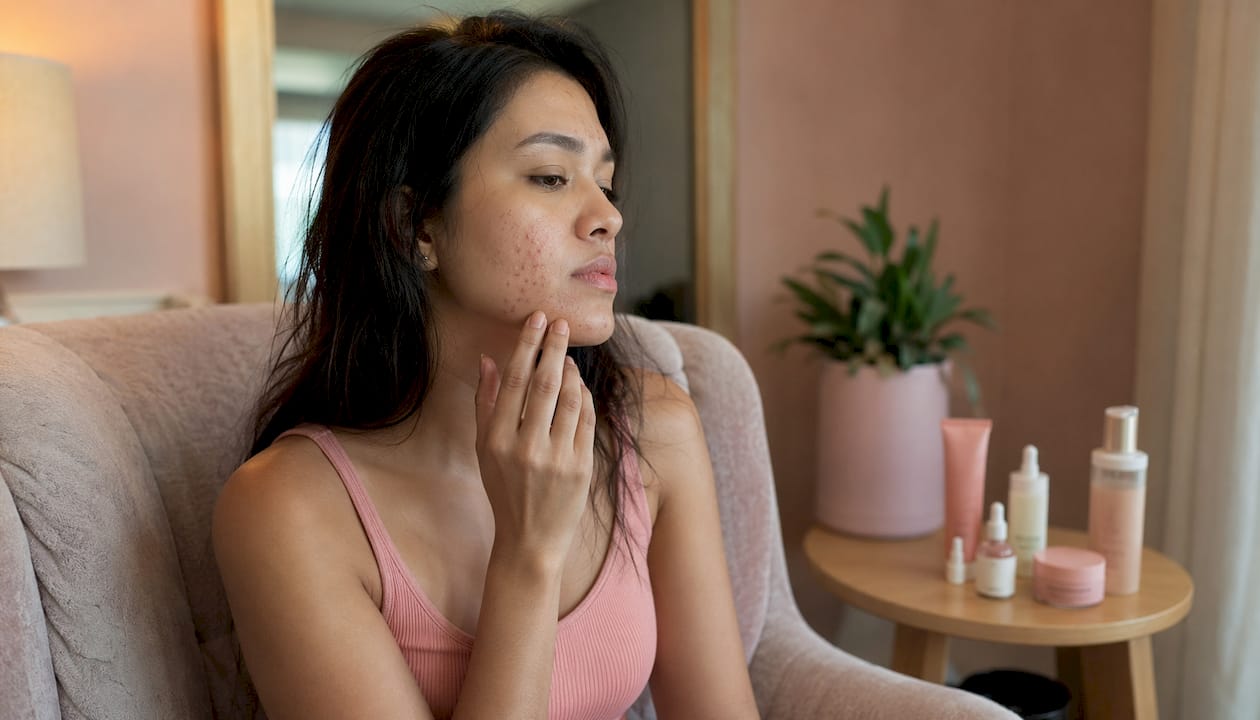
Hormonal acne has a signature location. Breakouts concentrate on the lower third of the face, specifically the jawline, chin, and sides of the neck. This pattern reflects the high density of androgen receptors in that region of the skin.
Lesions are deeper, more inflammatory, and usually localized to the lower face. The most common types of hormonal acne breakouts include:
- Cystic nodules: Large, painful lumps deep under the skin with no visible head. These carry the highest scarring risk.
- Inflammatory papules: Red, raised bumps that are tender to the touch but smaller than cysts.
- Pustules: Papules with a visible white or yellow center caused by trapped pus.
- Comedones: Clogged pores that appear as blackheads or whiteheads, often alongside deeper lesions.
The cyclical pattern is the clearest diagnostic signal. Lesions worsen predictably before menstruation and improve after it. Persistence and cyclic recurrence that resists over-the-counter treatments points firmly toward a hormonal cause rather than typical adolescent acne.
Clinical diagnosis is primarily symptom and pattern-based. No single blood test confirms hormonal acne definitively. A dermatologist assesses lesion type, location, cycle timing, and any associated symptoms like irregular periods or excess hair growth.
| Feature | Hormonal acne | Common adolescent acne |
|---|---|---|
| Primary location | Jawline, chin, neck | Forehead, nose, cheeks |
| Lesion depth | Deep cysts and nodules | Surface blackheads and pustules |
| Cycle pattern | Worsens before menstruation | No consistent cycle link |
| Age of onset | 20s–40s (adult women) | Puberty (teens) |
| Response to OTC products | Low | Moderate |
Scarring is a real risk with hormonal acne because cystic lesions sit deep in the dermis. Manipulating cystic lesions by picking or squeezing causes scarring and hyperpigmentation. Leaving them alone, even when they are painful, protects your skin’s long-term appearance.
Why diet and lifestyle affect hormonal acne
Diet does not cause hormonal acne on its own, but it amplifies the hormonal signals already driving it. Two dietary factors stand out above the rest: sugar and dairy.
Why sugar causes hormonal acne
High-glycemic diets raise insulin and insulin-like growth factor 1 (IGF-1) levels in the blood. IGF-1 directly stimulates sebaceous glands to produce more oil and promotes the follicular cell overgrowth that blocks pores. Eating refined carbohydrates, white bread, sugary drinks, and processed snacks creates a blood sugar spike that feeds this cycle. Reducing high-glycemic foods is one of the most evidence-backed dietary changes for acne-prone skin. For practical guidance on hormone-stabilizing snacks, swapping refined carbs for fiber-rich whole foods makes a measurable difference.
Why dairy triggers hormonal acne
Dairy products, particularly skim milk, contain naturally occurring hormones and growth factors that interact with IGF-1 pathways. Reducing sugar and dairy can complement pharmacological treatment for hormonal acne. The effect is not universal, but women who notice flares after consuming dairy have good reason to trial an elimination period of 6–8 weeks.
Stress is the third major lifestyle driver. Cortisol, the primary stress hormone, increases inflammation throughout the body and triggers androgen production. Stress management techniques such as mindfulness and cognitive-behavioral therapy reduce acne exacerbations linked to hormonal imbalance. That connection is direct and well-documented.
- Cut high-glycemic foods like white rice, sugary drinks, and processed snacks
- Trial a dairy elimination for 6–8 weeks to assess personal sensitivity
- Prioritize sleep of 7–9 hours per night to regulate cortisol
- Exercise regularly to improve insulin sensitivity and reduce systemic inflammation
- Stay hydrated to support skin barrier function and toxin clearance
Pro Tip: You do not need to overhaul your entire diet at once. Eliminate one high-glycemic food category for 30 days and photograph your skin weekly. The visual record will tell you more than any elimination diary.
How to treat hormonal acne effectively
Treating hormonal acne requires addressing the hormonal root cause, not just the surface lesion. Combination treatments with topical retinoids, oral anti-androgens, and lifestyle changes show the highest effectiveness in managing hormonal acne long-term.
- Topical retinoids (tretinoin, adapalene): These vitamin A derivatives normalize follicular cell turnover and prevent pore blockage. They are the first-line topical treatment for most acne types, including hormonal.
- Oral contraceptives: Combination pills containing estrogen and progestin reduce free androgen levels, directly addressing the hormonal driver. The FDA has approved specific formulations for acne treatment.
- Spironolactone: This oral anti-androgen blocks androgen receptors in the skin. Dermatologists prescribe it widely for adult women with hormonal acne, particularly when contraceptives are not appropriate.
- Isotretinoin: Reserved for severe, scarring, or treatment-resistant cases. It reduces sebaceous gland size and sebum output dramatically. Requires medical supervision and regular monitoring.
- Topical antibiotics and benzoyl peroxide: Useful for managing bacterial load in inflammatory lesions, but they do not address the hormonal cause and work best as part of a broader regimen.
- Probiotics and anti-inflammatory supplements: Emerging research supports the gut-skin axis. Probiotic supplementation can reduce systemic inflammation that worsens acne flares.
Your skincare routine matters too. Over-washing and harsh cleansing do not resolve the hormonal causes of acne and can strip the skin barrier, triggering more oil production as compensation. Cleanse twice daily with a gentle, pH-balanced formula. Avoid abrasive scrubs on active cysts.
Adjusting your routine across your menstrual cycle phases can also reduce flare severity. Skin is more reactive and oil-prone in the luteal phase, the two weeks before your period. Lighter moisturizers and targeted spot treatments work better during that window.
Evaluation for PCOS is advised when hormonal acne comes with irregular cycles, hirsutism, or weight changes. Treating the underlying endocrine disorder produces better skin outcomes than treating the acne alone.
Pro Tip: Give any new treatment at least 12 weeks before judging its effectiveness. Skin cell turnover takes 4–6 weeks, and hormonal treatments need additional time to shift androgen activity.
Key Takeaways
Hormonal acne is a clinically distinct condition driven by androgen excess, requiring targeted hormonal, dietary, and skincare interventions rather than surface-level cleansing alone.
| Point | Details |
|---|---|
| Root cause is hormonal | Androgens like testosterone and DHT drive excess sebum and pore blockage. |
| Location identifies it | Breakouts on the jawline, chin, and neck signal a hormonal pattern. |
| Diet amplifies the problem | High-glycemic foods and dairy raise IGF-1, worsening sebum production. |
| Combination therapy works best | Retinoids, anti-androgens, and lifestyle changes together outperform single treatments. |
| Never manipulate cysts | Picking or squeezing deep lesions causes scarring and long-term pigmentation. |
What I’ve learned after years of watching women fight this condition
The most frustrating thing about hormonal acne is how invisible the real problem is. Women spend years trying new cleansers, changing their diets overnight, and blaming themselves for breakouts that have nothing to do with how clean their skin is. The cause is internal, and no amount of external scrubbing will fix an internal hormonal imbalance.
What I’ve seen work consistently is patience combined with a clear strategy. Women who get the best outcomes are the ones who stop chasing quick fixes and commit to understanding their own cycle. They track their breakouts, they talk to a dermatologist about hormonal options, and they make one dietary change at a time rather than overhauling everything at once.
The other mistake I see constantly is treating cysts aggressively. Squeezing a deep nodule does not drain it. It pushes the inflammation deeper and almost guarantees a scar. The hands-off approach feels counterintuitive, but it is the single most protective thing you can do for your skin’s long-term appearance.
My honest recommendation is to treat hormonal acne as a systemic issue, not a skin issue. The skin is just where the hormonal imbalance shows up. Address the hormones, support the gut, manage stress, and give your skin a gentle, consistent routine. That combination works. Individual products and crash diets do not.
— Zamanee
Florvahealth’s approach to hormonal skin health
Hormonal acne responds best when you address it from the inside and outside at the same time. Florvahealth builds its products around exactly that principle, combining internal hormone support with targeted skincare for women navigating PMS, cycle-related breakouts, and skin sensitivity.
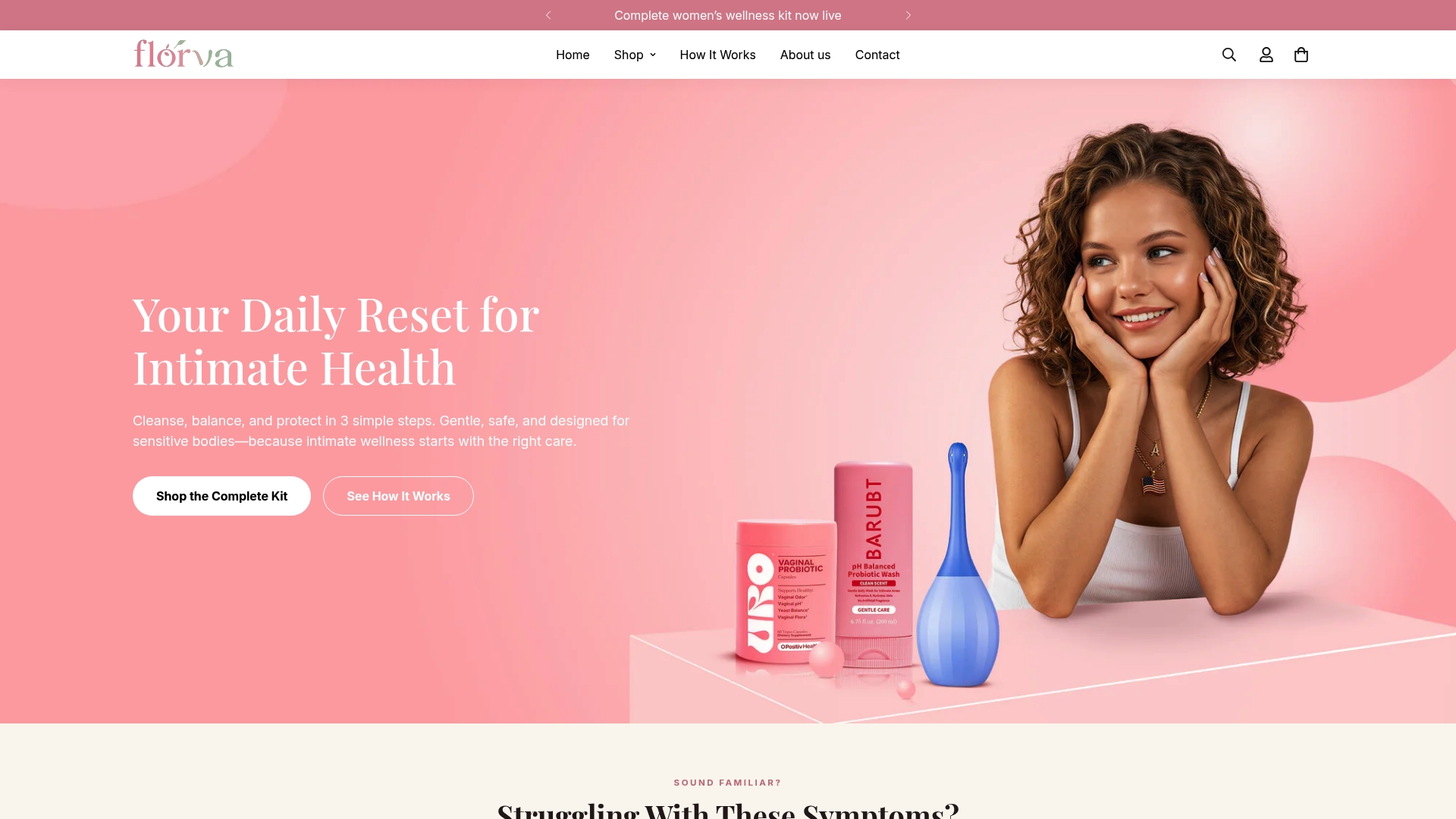
Florvahealth pairs probiotic support with gentle topical tools for acne-prone skin. The ultrasonic facial cleansing brush gives a thorough cleanse without stripping the skin barrier, and the turmeric and kojic acid foaming cleanser and tea tree hydrocolloid pimple patches suit women managing hormonal breakouts. These products work alongside, not instead of, medical treatment. They support the skin barrier and make consistency easier to keep.
FAQ
What is hormonal acne exactly?
Hormonal acne is a recurring skin condition caused by androgen hormones stimulating excess sebum production and follicular blockage. It appears as deep cysts and nodules primarily along the jawline, chin, and neck in adult women.
Can hormonal acne be prevented?
Hormonal acne cannot be fully prevented, but its severity can be reduced. Managing diet, stress, sleep, and using cycle-aware skincare significantly lowers flare frequency and intensity.
Why does hormonal acne appear on the jawline?
The jawline and lower face have a high concentration of androgen receptors in the skin. When androgen levels rise, those receptors respond by stimulating oil glands in that specific region, producing the characteristic lower-face breakout pattern.
Does dairy really trigger hormonal acne?
Dairy contains hormones and growth factors that interact with IGF-1 pathways, which stimulate sebum production. Not every woman is equally sensitive, but a 6–8 week dairy elimination trial can reveal whether it is a personal trigger.
When should I see a doctor about hormonal acne?
See a doctor if breakouts are deep, painful, and recurring cyclically, or if they come with irregular periods, excess hair growth, or weight changes. These signs point to an underlying hormonal disorder like PCOS that needs clinical evaluation.
Recommended
- Hormonal Acne Cycle Phases Explained for Women
- Simple Skin Care and Hormones: Your Practical Guide
- Adjust Skincare Across Your Menstrual Cycle
- How to Identify Hormonal Imbalance Signs in Women
Sources
- Hormonal Acne: Causes, Treatment & Prevention — Cleveland Clinic
- Is it really acne? — American Academy of Dermatology
- Polycystic Ovary Syndrome (PCOS) — Cleveland Clinic


