

Hormonal eczema is defined as atopic dermatitis triggered or worsened by fluctuations in female sex hormones, particularly estrogen and progesterone. These hormones act directly on skin barrier function and immune activity, which means a drop in estrogen or a surge in progesterone can set off a flare within days. The condition follows predictable patterns tied to the menstrual cycle, pregnancy, and menopause. Understanding those patterns gives you a real advantage. You can anticipate flares, adjust your skincare routine ahead of time, and stop feeling like your skin is completely out of your control.
Hormonal eczema explained: how estrogen and progesterone trigger flares
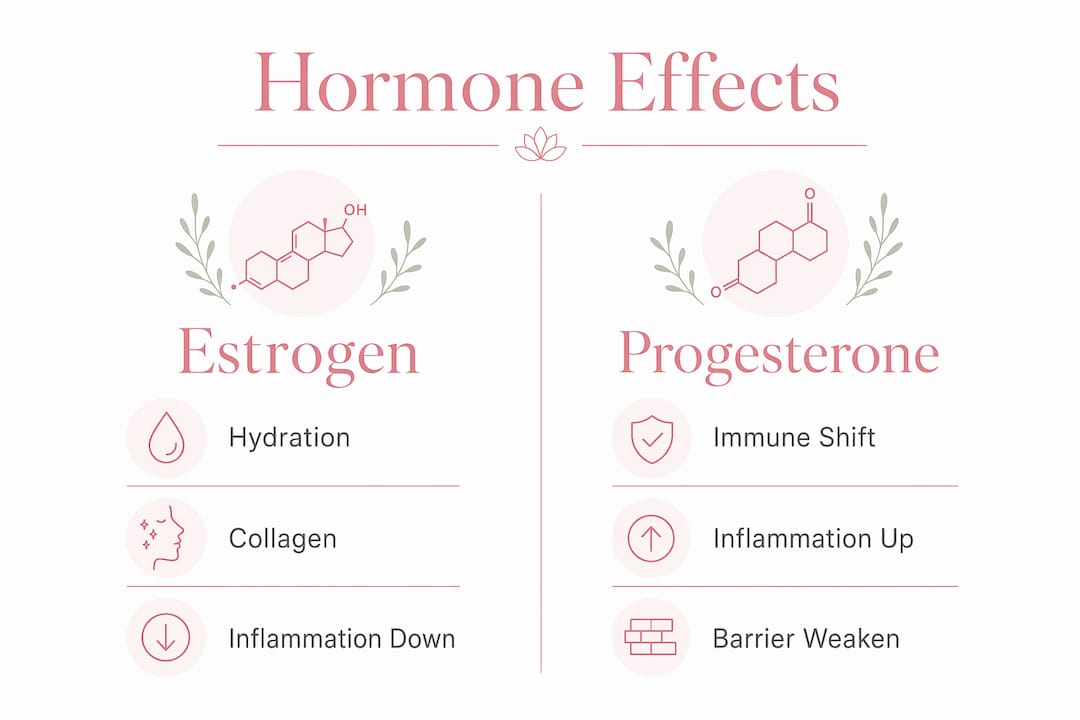
Estrogen and progesterone do not just regulate your cycle. They directly control how strong your skin barrier is and how reactive your immune system becomes. Estrogen supports skin hydration, collagen production, and barrier integrity. When estrogen drops, your skin loses moisture faster, becomes thinner, and repairs itself more slowly.
Progesterone works differently. A surge in progesterone shifts immune activity toward the Th2 pathway, which is the allergic immune response associated with eczema. This is why progesterone surges worsen eczema by encouraging the immune system to overreact to irritants it would otherwise tolerate. Testosterone, by contrast, suppresses Th2 activity, which partly explains why eczema is more common and more severe in women than in men.
The table below shows how each hormone affects your skin and immune function.
| Hormone | Effect on skin | Effect on immune system |
|---|---|---|
| Estrogen | Increases hydration, collagen, and barrier strength | Moderates immune response |
| Progesterone | Reduces barrier function when elevated | Shifts toward Th2 allergic response |
| Testosterone | Supports sebum production and thickness | Reduces Th2 activity, protective effect |
Pro Tip: Track your eczema flares alongside your cycle dates for two months. You will likely see a clear pattern emerge in the week before your period, which is when estrogen falls and progesterone peaks.
What are the eczema patterns during your cycle, pregnancy, and menopause?
The timing of hormonal eczema flares is not random. Each major hormonal stage produces a distinct pattern, and recognizing yours is the first step toward managing it.
During your menstrual cycle:
- Eczema typically worsens in the days before your period, when estrogen drops and progesterone peaks, leaving skin dry, reactive, and prone to flares.
- Flares often appear on the face, neck, inner elbows, and behind the knees.
- Symptoms usually improve once your period starts and hormone levels begin to stabilize.
- Women with a history of atopic dermatitis report this premenstrual pattern as one of their most consistent triggers.
During pregnancy and postpartum:
- Pregnancy causes major hormonal surges that worsen eczema in over half of women with a prior history of the condition.
- Postpartum eczema is a separate and often surprising problem. Rapid hormonal decline after delivery, combined with sleep deprivation and stress, frequently triggers new flares on the wrists and behind the knees within four months of giving birth.
- The immune system shifts dramatically during and after pregnancy, making skin more reactive even in women who had no prior eczema history.
During perimenopause and menopause:
- Sustained low estrogen during menopause reduces skin barrier function, alters the skin microbiome, and slows healing. This leads to persistent, more severe eczema symptoms even when Th2 immune activity is lower than in younger years.
- Skin becomes thinner, drier, and less able to recover from irritation.
- Flares at this stage tend to be more widespread and harder to resolve quickly.
Understanding why hormonal symptoms vary monthly helps you stop treating each flare as an isolated event and start seeing the bigger pattern.
How can women effectively manage hormonal eczema?
Managing hormonal eczema means working with your cycle, not against it. The most effective approach combines proactive skincare, stress management, and realistic expectations about what diet can and cannot do.
A practical self-care routine for hormonal eczema:
- Moisturize preemptively. In the week before your period, increase moisturizer application to twice daily using a fragrance-free, ceramide-based cream. Do not wait for the flare to start.
- Use a gentle cleanser daily. Harsh soaps strip the skin barrier. A pH-balanced, non-foaming cleanser protects the barrier you are trying to rebuild.
- Apply topical steroids early and briefly. Mild topical corticosteroids are safe during pregnancy and breastfeeding when used on small areas for short periods under medical guidance. Low-potency options like hydrocortisone are appropriate for most mild flares.
- Prioritize sleep and stress reduction. Stress raises cortisol levels, which disrupts immune balance and damages the skin barrier. Even one poor night of sleep can amplify a hormonal flare. Consistent sleep hygiene is a genuine treatment tool, not a soft suggestion.
- Skip unnecessary food restrictions. Routine elimination diets do not improve hormonal eczema and risk nutritional deficits. Unless a specific food allergy is confirmed by testing, dietary restriction is not the answer.
- Adjust your skincare by cycle phase. Learning to adjust skincare across your menstrual cycle means your routine actively supports your skin when it is most vulnerable.
Pro Tip: Clinicians recommend focusing on skin barrier repair and stress reduction before any dietary changes. Barrier repair gives faster, more reliable results than elimination diets for most women with hormonal eczema.
Florvahealth’s approach to skin care and hormones connects gut health, hormone regulation, and skin clarity into one system, which reflects how interconnected these factors genuinely are.
How do you tell hormonal eczema apart from other triggers?
Hormonal eczema has a distinct signature, but it often overlaps with environmental and allergenic triggers, which makes diagnosis feel complicated. The key is pattern recognition over time.
Tracking eczema symptoms alongside your menstrual cycle is the most reliable way to identify hormonal patterns. A simple skin diary noting flare location, severity, and cycle day reveals connections that are invisible in the moment but obvious across two or three months.
The table below compares hormonal eczema characteristics with non-hormonal triggers to help you identify what you are dealing with.
| Feature | Hormonal eczema | Non-hormonal eczema |
|---|---|---|
| Timing | Tied to cycle phases, pregnancy, or menopause | Random or linked to exposure events |
| Pattern | Predictable, recurring monthly | Unpredictable, varies with environment |
| Common triggers | Estrogen/progesterone shifts | Allergens, irritants, weather, stress alone |
| Typical locations | Face, neck, inner elbows, wrists | Hands, face, or any area of contact |
| Diagnosis approach | Skin diary plus hormone evaluation | Patch testing, allergen identification |
Non-hormonal triggers that commonly overlap with hormonal eczema include synthetic fabrics, fragranced products, cold dry air, and stress-driven cortisol spikes. These can amplify a hormonal flare or mimic one entirely. If your eczema does not follow a clear cycle pattern, ask your doctor to evaluate thyroid function and overall hormone levels. Thyroid dysfunction in particular can cause skin changes that resemble eczema without a hormonal cycle connection. Persistent or atypical symptoms always warrant a dermatologist consultation for diagnostic clarity.
Key Takeaways
Hormonal eczema is driven by estrogen and progesterone fluctuations that weaken the skin barrier and shift immune activity toward allergic responses, making cycle-aware skincare the most effective management strategy.
| Point | Details |
|---|---|
| Hormones control skin barrier strength | Estrogen builds barrier integrity; drops in estrogen cause dryness and flares. |
| Progesterone drives Th2 immune shifts | Progesterone surges push the immune system toward allergic responses that worsen eczema. |
| Flares follow predictable timing | Symptoms worsen before menstruation, postpartum, and during menopause due to estrogen decline. |
| Barrier repair beats elimination diets | Focus on moisturizing and stress reduction before restricting foods without confirmed allergies. |
| Skin diaries reveal hormonal patterns | Tracking flares alongside cycle dates helps you anticipate and prevent future episodes. |
What I’ve learned from watching hormonal eczema patterns up close
The thing that strikes me most about hormonal eczema is how often women blame themselves for flares that were completely predictable. They change their laundry detergent, cut out gluten, buy a new pillowcase, and still flare every month like clockwork, because the trigger was never environmental. It was hormonal, and it was coming regardless.
What I have found is that the emotional weight of unpredictable skin is often heavier than the physical symptoms. When you understand that a flare is tied to day 25 of your cycle and not to something you did wrong, the anxiety around it drops significantly. That shift in mindset is genuinely therapeutic.
The women who manage this best are not the ones with the most expensive skincare. They are the ones who treat their routine as a moving target, adjusting it by cycle phase the way you would adjust your diet or exercise intensity. They moisturize more aggressively in the premenstrual window, they sleep like it is medicine, and they do not panic when a flare arrives because they saw it coming.
The hardest part is convincing people that stress management is a clinical intervention, not a lifestyle luxury. Cortisol genuinely damages the skin barrier. Addressing it is not optional for anyone dealing with hormonally driven skin conditions.
— Zamanee
Florvahealth’s support for hormone-related skin health
Florvahealth builds its products around the link between hormonal balance and skin health. Its range combines internal support through probiotic capsules with gentle skincare. For skin that needs direct support, the ultrasonic facial cleansing brush and the green tomato clay facial cleanser offer gentle cleansing that works alongside a cycle-aware routine. These tools are not a replacement for medical care, and eczema-prone skin should always be patch tested first.
FAQ
What is hormonal eczema?
Hormonal eczema is atopic dermatitis triggered or worsened by fluctuations in female sex hormones, particularly estrogen and progesterone. These hormones directly affect skin barrier strength and immune activity, causing flares that follow predictable hormonal patterns.
When does hormonal eczema typically flare?
Flares most commonly occur in the days before menstruation, when estrogen drops and progesterone peaks. Postpartum hormonal decline and sustained low estrogen during menopause are also common flare windows.
Can hormonal eczema be treated during pregnancy?
Yes. Mild topical corticosteroids like low-potency hydrocortisone are generally safe during pregnancy and breastfeeding when applied to small areas for short durations under medical supervision.
Does diet help with hormonal eczema?
Dietary changes rarely improve hormonal eczema unless a specific food allergy is confirmed by testing. Clinicians recommend prioritizing skin barrier repair and stress reduction over elimination diets.
How do I know if my eczema is hormonal?
Keep a skin diary that logs flare location, severity, and cycle day for two to three months. A consistent pattern tied to specific cycle phases is the clearest indicator of a hormonal trigger.
Recommended
- Hormonal Acne Cycle Phases Explained for Women
- Adjust Skincare Across Your Menstrual Cycle
- Simple Skin Care and Hormones: Your Practical Guide
- Hormonal Cycle Phases Explained for Better Health
Sources
- Atopic dermatitis overview — American Academy of Dermatology
- Eczema: Symptoms, Causes, Types & Treatment — Cleveland Clinic
- Menstrual Cycle: Overview & Phases — Cleveland Clinic


