

Hormones are the main driver behind most adult female acne, specifically androgen activity and how your skin metabolizes those hormones locally, with diet, stress, and skincare choices acting as accelerants on top. This pattern shows up on the lower face: jawline, chin, and along the neck, often flaring the week before your period.
Prevalence tells its own story. Roughly 50% of women in their 20s deal with acne, dropping to 25% in the 30s, over 10% in the 40s, and under 5% after 51. So if you’re 32 and still breaking out, you’re far from alone. It’s biologically expected, not a sign something is wrong with your skincare routine.
What to do right now, before you dive into causes and treatment:
- Switch to a gentle, fragrance-free cleanser and stop scrubbing. Harsh cleansing damages your skin barrier and tends to make breakouts worse, not better.
- Start tracking your cycle alongside your breakouts. A pattern (flares 5 to 7 days before your period) are a strong clue you’re dealing with hormonal acne.
- Pause any new actives, masks, or “purging” products until you know what’s actually triggering the flare.
- See a clinician if you notice irregular periods, excess facial or body hair, sudden severe acne, or acne that hasn’t responded to over-the-counter treatment after 2 to 3 months.
Key Takeaways
Adult female acne is most often driven by androgen activity and local skin hormone metabolism, with diet, stress, and skincare choices determining how visible that hormonal activity becomes.
| Point | Details |
|---|---|
| Hormones lead, lifestyle amplifies | Hyperandrogenism appears in about 50% of cases, and diet, stress, and product choices intensify existing hormonal activity. |
| Normal labs don’t rule out hormonal acne | Local skin enzymes like 5α-reductase can drive breakouts even when systemic testosterone tests look typical. |
| Jawline pattern is a clue, not a diagnosis | Lower-face, premenstrual acne suggests hormonal involvement and should prompt cycle tracking before assuming a diagnosis. |
| Treatment takes layers and time | Combining topicals with hormonal therapy like spironolactone typically needs 8 to 12 weeks before real judgment. |
| Red flags need prompt evaluation | Sudden severe acne, irregular cycles, or excess hair growth call for a clinician visit, not a longer wait-and-see period. |
Table of Contents
- What Causes Adult Female Acne on a Hormonal Level?
- What Lifestyle and External Factors Trigger Breakouts?
- Why Does Skin-Level Hormone Metabolism Matter?
- When Should You See a Doctor About Hormonal Acne?
- What Treatments Actually Work for Hormonal Acne?
- How Can You Prevent Hormonal Acne Flares Day to Day?
- How Florvahealth Supports Hormonal Skin From the Inside Out
- An Editorial Take on the Hormonal Acne Conversation
- Sources
What Causes Adult Female Acne on a Hormonal Level?
The short answer: androgens, which are hormones like testosterone that everyone’s body produces, stimulate your sebaceous glands to pump out more oil. More oil, combined with dead skin cells and bacteria, means more clogged pores and more inflammatory lesions. This is why adult female acne clusters so heavily around hormonal transitions and why it behaves so differently from the acne you may have had as a teenager.
Hyperandrogenism, a clinical term for higher-than-typical androgen activity, is present in about 50% of adult female acne cases. That statistic alone should reframe how you think about persistent jawline acne: it’s frequently one visible symptom of a broader hormonal condition, not an isolated skin problem.
Here’s the part that surprises most people: hyperandrogenism doesn’t always mean sky-high testosterone on a lab report. It can also come from your ovaries or adrenal glands producing slightly more androgen precursor than average, or from your skin itself converting those precursors into active hormones more efficiently. We’ll get into that skin-level mechanism in the next section, because it explains a lot of confusing lab results.
Life stages that commonly trigger flares:
- The luteal phase (perimenstrual week). Progesterone rises and estrogen drops in the days before your period, which increases sebum production and swells oil gland ducts, shrinking the exit and trapping oil beneath the skin.
- Pregnancy. Some women clear up entirely thanks to rising estrogen; others break out for the first time as progesterone surges, especially in the first trimester.
- Perimenopause and menopause. Estrogen declines faster than androgens do, which shifts the hormonal ratio in favor of androgen effects, even though absolute androgen levels are also falling.
- Starting or stopping hormonal contraception. Certain progestin-only methods have androgenic activity and can trigger breakouts. Stopping combined oral contraceptives that were previously suppressing acne often unmasks the underlying hormonal pattern within a few months.
A polycystic ovary syndrome diagnosis usually involves more than acne; it often includes symptoms like hormonal hair loss, which you can learn more about in detail from Hormonal hair loss in women: causes, treatments, and solutions – LIVDOR. Irregular or absent periods, excess hair growth on the face or body, scalp thinning, and difficulty losing weight often travel together with hormonal acne when PCOS is the underlying driver. If you’re seeing two or more of these alongside your breakouts, that’s worth raising with a clinician, not just a dermatologist.
One finding that trips up a lot of women trying to self-diagnose: plenty of people with a clearly hormonal acne pattern get bloodwork back that looks completely normal. That’s not a contradiction. It’s a clue that the action is happening at the skin level, which is a different mechanism from what a standard blood panel measures.
What Lifestyle and External Factors Trigger Breakouts?
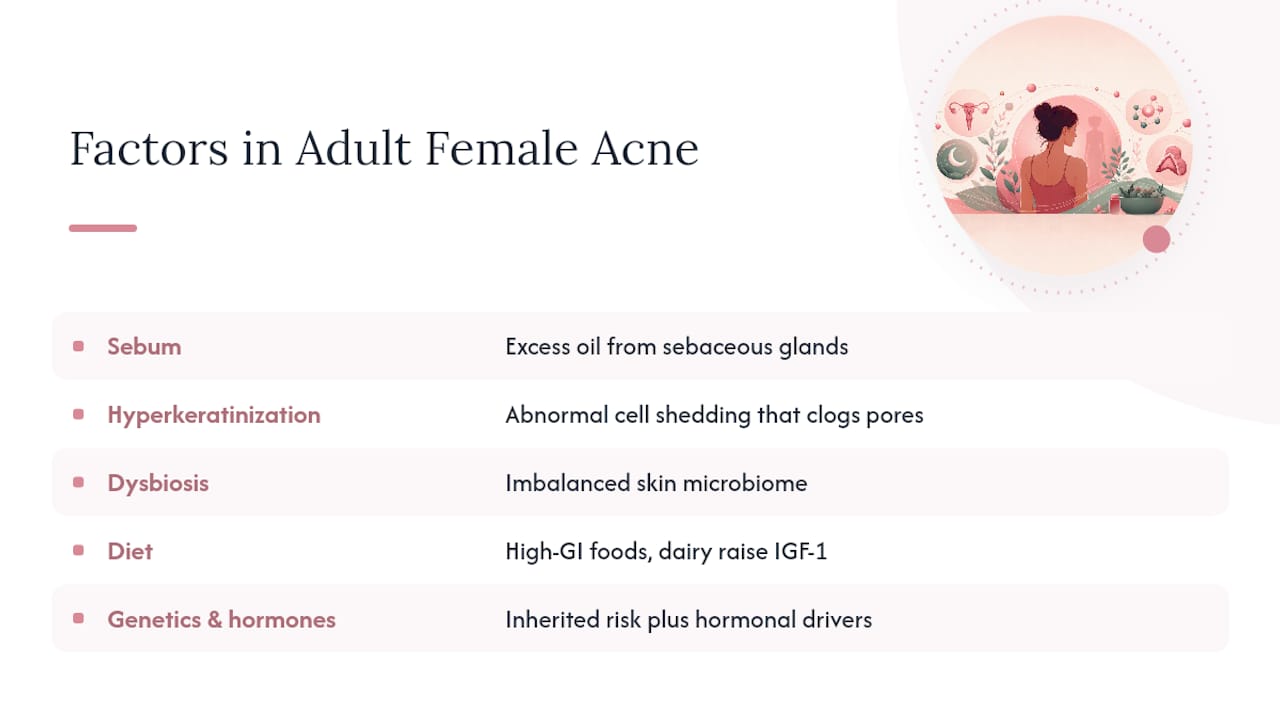
Hormones set the stage, but diet, stress, medications, and even your pillowcase can decide how bad the show gets. A broad systematic review of adult female acne research identifies sebum overproduction, follicular hyperkeratinization (skin cells shedding abnormally and clogging pores), cutaneous dysbiosis, and diet as contributing factors alongside genetics and hormones. None of these act alone.

Diet. High-glycemic-index foods, white bread, sugary drinks, refined snacks, spike insulin and IGF-1 (insulin-like growth factor 1). Elevated IGF-1 pushes sebaceous glands to produce more oil and speeds up skin cell turnover, both of which feed acne formation. Dairy, particularly skim milk and whey protein, shows a similar association in several studies, likely because dairy also raises IGF-1 and contains hormone precursors from pregnant cows.
Stress. Chronic stress triggers your adrenal glands to release cortisol and adrenal androgens. That combination increases sebaceous gland activity, which is how a stressful work week can translate into a breakout ten days later. It also creates a frustrating feedback loop: acne itself is stressful, so a flare can extend its own life span.
Medications and topical ingredients. Some prescriptions list acne as a side effect, including certain anticonvulsants, corticosteroids, and lithium. On the skincare side, heavy oils, certain silicones, and some sunscreen formulations can clog pores in acne-prone skin. Check labels for “non-comedogenic” and patch-test anything new on your jawline for two weeks before committing.
Mechanical triggers. Friction and occlusion from face masks, chin straps, phone screens, and helmets create a condition sometimes called acne mechanica. If your breakouts cluster exactly where a mask or strap sits, that’s your answer. Testing it is simple: switch materials (cotton instead of synthetic), wash the item daily, and see if the pattern shifts within two weeks.
Pro Tip: Keep a simple log for one full cycle, noting food, stress level, sleep, and where new lesions appear. Adult acne is rarely caused by one thing, and a log usually reveals which of these variables actually moves the needle for your skin.
Why Does Skin-Level Hormone Metabolism Matter?
This is the piece that explains why your dermatologist might treat you for hormonal acne even after your labs come back “normal.” Your sebaceous glands aren’t passive targets of hormones traveling through your bloodstream. They’re active hormone factories in their own right.
Sebaceous glands and hair follicles express the full set of steroid-producing enzymes, including multiple forms of 5α-reductase, an enzyme that converts weaker precursor hormones into potent, active androgens directly inside the gland. This means your skin can generate meaningful androgen activity locally, even when the hormone levels circulating in your blood look entirely typical.
That local conversion process helps explain a clinical marker called androsterone glucuronide, a byproduct of skin-level androgen metabolism that researchers use as an indicator of how active this local pathway is. It doesn’t show up on a standard hormone panel, which is exactly why standard panels can miss what’s actually driving your breakouts.
The practical implication: a normal testosterone or DHEAS result doesn’t rule out hormonally driven acne. It just means the problem, if there is one, isn’t happening at the ovary or adrenal gland level; it’s happening in the skin itself, where 5α-reductase activity and androgen receptor sensitivity vary from person to person for genetic reasons that have nothing to do with your systemic hormone status.
This is also why dermatologists lean heavily on clinical pattern, jawline distribution, premenstrual timing, deep cystic lesions along the lower face, rather than waiting for lab confirmation before starting antiandrogen-based treatment. Labs help rule out a distinct endocrine disorder like PCOS or an adrenal tumor. They’re not always necessary to justify treating the acne itself as hormonal in nature.
When Should You See a Doctor About Hormonal Acne?
Most adult acne doesn’t require urgent medical attention. But certain signs mean you should move faster than “wait and see.”
- Sudden, severe acne onset, especially if it develops over weeks rather than gradually, warrants prompt evaluation to rule out an underlying endocrine trigger.
- Signs of virilization, including new or worsening excess facial/body hair, deepening voice, or significant scalp hair thinning, should prompt an urgent referral, since these can indicate a more significant androgen excess condition.
- Irregular or absent menstrual cycles paired with persistent jawline acne is a classic combination clinicians screen for PCOS with.
- Rapid, unexplained weight gain or loss alongside new acne can point to a broader endocrine or metabolic issue beyond the skin.
- No improvement after 2 to 3 months of consistent over-the-counter treatment is a reasonable point to bring in a dermatologist rather than continuing to guess.
When you do seek testing, expect a clinician to check total and free testosterone, DHEAS (dehydroepiandrosterone sulfate, produced by the adrenal glands), and sometimes androstenedione. If your presentation includes rapid-onset severe symptoms, they may add 17-hydroxyprogesterone to screen for a rarer adrenal condition. Metabolic screening, fasting glucose, insulin, and a lipid panel, often gets added when PCOS is suspected, since insulin resistance is common in that population.
Dermatologists handle most hormonal acne cases, including prescribing antiandrogen therapy. You’d typically get referred to an endocrinologist or a reproductive endocrinologist when bloodwork suggests a distinct hormonal disorder needing its own management, not simply for acne that responds to standard dermatologic treatment. A jawline and chin distribution pattern in particular is one of the clinical signs dermatologists watch for when deciding whether to dig deeper into hormonal causes.
What Treatments Actually Work for Hormonal Acne?
Treatment works best layered, rarely does one product or prescription solve adult acne on its own, and expectations matter: most options take 6 to 12 weeks to show real improvement, sometimes longer for hormonal therapies.
Topical first-line options:
- Benzoyl peroxide kills acne-causing bacteria and reduces inflammation; it’s the one ingredient bacteria haven’t developed resistance to.
- Topical retinoids (adapalene, tretinoin) normalize skin cell turnover, preventing the clogged-pore stage before it starts.
- Azelaic acid reduces inflammation and pigmentation, a useful pick if you’re also dealing with post-acne dark marks, which are more common in adult skin.
Hormonal treatment options carry the most direct evidence for jawline-pattern, cyclical acne. Combined oral contraceptives work by reducing ovarian androgen production and increasing sex hormone binding globulin, which mops up free testosterone in the bloodstream. Spironolactone, an antiandrogen medication originally developed for blood pressure, blocks androgen receptors directly at the skin level, which is exactly the local mechanism described earlier. It requires periodic blood pressure and potassium monitoring and isn’t used during pregnancy due to feminization risk to a male fetus.
Short courses of oral antibiotics sometimes bridge the gap while topical or hormonal treatments take effect, but they’re meant as a temporary tool, not a long-term plan, given resistance concerns. Oral isotretinoin is reserved for severe, scarring, or treatment-resistant cystic acne. It’s highly effective but carries a strict pregnancy safety protocol, since it causes severe birth defects, meaning reliable contraception and monthly pregnancy testing are non-negotiable requirements during treatment.
Combination strategies, a topical retinoid plus spironolactone, for example, tend to outperform any single approach for hormonally influenced acne, according to clinical management guidance. Give any new regimen a full 8 to 12 weeks before judging whether it’s working; quitting at week three is the single most common reason treatment plans get abandoned prematurely.
How Can You Prevent Hormonal Acne Flares Day to Day?
You can’t override your hormones with skincare, but you can reduce how often they translate into visible breakouts.
- Cleanse gently, twice daily maximum. Over-washing damages the skin barrier and can actually trigger more oil production as your skin compensates.
- Choose non-comedogenic products and patch-test new items on your jawline for two weeks before applying them to your whole face.
- Try a low-glycemic-index diet for 4 to 6 weeks if you suspect diet is a factor, cutting refined sugar and processed carbs while keeping protein and vegetable intake steady, and note whether breakout frequency changes.
- If dairy seems linked, eliminate it for a month rather than guessing; whey protein powders are a commonly overlooked source.
- Protect your sleep and manage stress deliberately. Even modest stress reduction, walking, breathing exercises, consistent sleep timing, can blunt the cortisol driven flares described earlier.
- Quit smoking if you smoke. It’s linked to worse acne severity and slower healing in several studies.
- Adjust your routine around your cycle. Introduce stronger actives like retinoids in the two weeks after your period, when skin tends to tolerate them best, and pull back to gentler, more hydrating products in the week before your period when skin is most reactive.
Pro Tip: Set a phone reminder for the day your luteal phase typically starts and switch to a lighter, oil-free moisturizer that week. Small, cycle-timed swaps prevent more flares than any single “acne product” usually does.
How Florvahealth Supports Hormonal Skin From the Inside Out
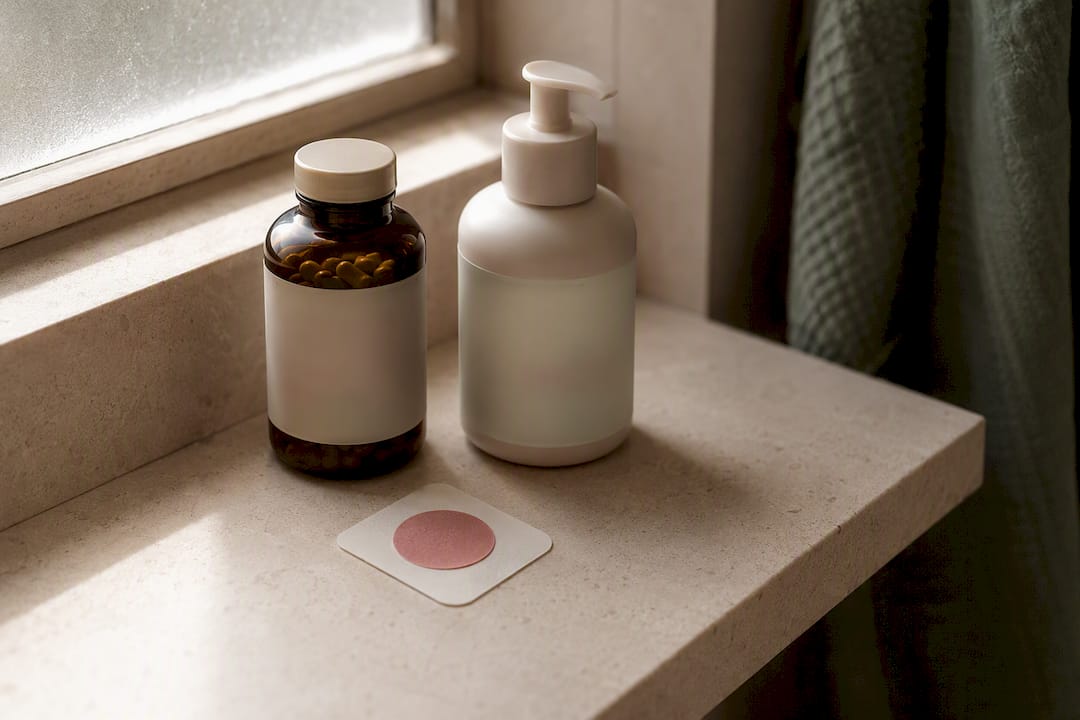
Skincare and prescriptions treat the skin directly. Florvahealth approaches the same problem from the gut side, working on the theory that gut health and hormonal balance influence skin clarity from the inside. The product lineup includes probiotic capsules aimed at supporting gut balance, a pH-balanced intimate wash, gentle facial cleansers and hydrocolloid pimple patches.
If cycle-timed breakouts are your pattern, Florvahealth’s hormonal acne cycle guide walks through phase-by-phase skin changes, and the practical skincare and hormones guide covers routine adjustments in more depth than we can fit here.
Worth saying plainly: these products are wellness support, not a replacement for the antiandrogen therapies, prescription retinoids, or PCOS workup described above. Think of them as one layer in a broader plan, useful alongside medical care, not instead of it, particularly if you’re already showing red flags that warrant a clinician’s evaluation.
An Editorial Take on the Hormonal Acne Conversation
Most advice aimed at adult women with acne still treats it like teenage acne with a different face cream. That’s the gap worth naming: the research consistently points to local skin hormone metabolism, not just bloodwork, as central to why so many women get normal lab results and a hormonal-pattern breakout at the same time.
The conventional advice, cut sugar, wash your face, wait it out, isn’t wrong, but it underweights how much cycle timing and local androgen sensitivity matter compared to generic “clean eating.” If you take one thing from this piece, prioritize pattern tracking over product hunting. Knowing whether your acne clusters premenstrually, along the jawline, or after specific foods tells a clinician more in five minutes than another round of blind product-switching ever will.
— Zamanee
This article is general information, not a substitute for advice from a qualified doctor. Consult a qualified healthcare professional about your own circumstances before acting on anything here.


