

The fastest natural period cramp relief combines sustained heat on your lower abdomen, slow diaphragmatic breathing, and gentle movement, ideally started the moment cramps begin. For relief that lasts across cycles, not just one afternoon, magnesium and omega-3 fatty acids taken consistently over two to three months lower the prostaglandin activity that drives cramping in the first place.
Heat works because it relaxes uterine muscle and increases local blood flow, undoing the vasoconstriction that causes the pain. Magnesium and omega-3s work differently: they shift your body’s inflammatory chemistry over time so contractions are gentler to begin with. One large meta-analysis found that heat applied continuously produced relief comparable to ibuprofen for period pain, which is worth knowing before you reach for a pill.
Two things to try right now:
- Apply a heat patch or hot water bottle to your lower belly and breathe in for 4 seconds, out for 6, for five full minutes.
- Take a slow 10 minute walk if you can manage it. Movement pumps blood into the pelvis and blunts the ache faster than sitting still.
Key Takeaways
Natural period cramp relief works best as a layered protocol: sustained heat and breathing for immediate pain, consistent magnesium and omega-3 intake for lasting reduction over months.
| Point | Details |
|---|---|
| Heat beats quick fixes | Sustained low-level heat for several hours matches ibuprofen’s pain relief in trials. |
| TENS works fast | High-frequency suprapubic TENS reduces cramping within one session. |
| Ginger has real evidence | 500 mg three times daily, started two days before your period, rivals NSAID effects in small trials. |
| Supplements need months | Magnesium (300-360 mg/day) and omega-3s (300-1,800 mg/day) require 2-3 cycles to show full benefit. |
| Florvahealth fits as an adjunct | Relief patches and targeted supplements support the same heat and magnesium mechanisms covered here, without replacing medical care for red-flag symptoms. |
This article is general information, not a substitute for advice from a qualified doctor. Consult a qualified healthcare professional about your own circumstances before acting on anything here.
Table of Contents
- Natural Period Cramp Relief You Can Try in the Next Hour
- Does Gentle Movement Actually Reduce Cramping?
- What Foods and Supplements Reduce Period Cramps Long-Term?
- Which Herbal Remedies Have Real Clinical Evidence?
- Building a Preventive Routine That Reduces Cramps Over Time
- When Should Period Cramps Be Checked by a Doctor?
- How Florvahealth’s Products Fit This Protocol
- What This Protocol Gets Right That Most Advice Misses
- A Practical Next Step for Ongoing Relief
- Sources
Natural Period Cramp Relief You Can Try in the Next Hour
If you need relief in the next 15 to 60 minutes, three tools beat almost everything else: heat, TENS, and massage. Here’s how to use each one correctly, because the details (temperature, timing, technique) determine whether they actually work.
Heat first, always. An adhesive heat patch worn against the skin at a low, sustained temperature for several hours produced pain relief comparable to a standard dose of ibuprofen in a randomized controlled trial on primary dysmenorrhea. The key word is sustained. A hot water bottle you reheat every 20 minutes works, but it’s inferior to a patch that holds steady heat under your clothes through a workday or a school shift.
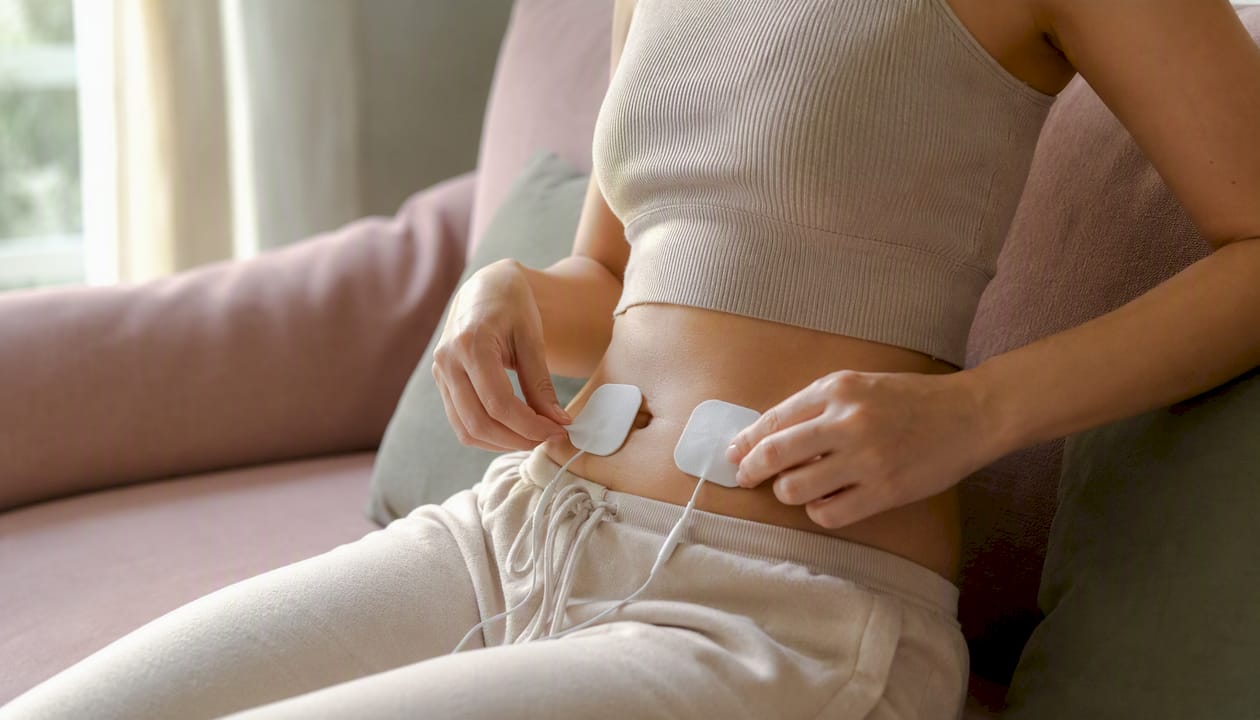
TENS units are the most underused tool in this list. A high-frequency TENS device placed suprapubically reduces cramping within a single session, according to a review of TENS trials for menstrual pain. Expect noticeable relief in 15 to 30 minutes. Keep the intensity at a strong but comfortable tingling sensation, never painful, and avoid placement directly over broken skin.
Self-massage with a diluted essential oil acts as a counter-irritant, essentially distracting your nervous system from the deeper ache. Mix two drops of peppermint oil per teaspoon of carrier oil (roughly a 2% dilution) and massage in slow circles over the lower abdomen for three to five minutes.
Here’s a small but effective sequencing trick most people skip.
Pro Tip: Lie on your side in a fetal position with a pillow tucked between your knees while your heat patch is working. This position takes tension off the abdominal wall and often deepens the relief within minutes.
Drink water steadily throughout. Dehydration tightens muscle tissue generally, and a cramping uterus is no exception.
Does Gentle Movement Actually Reduce Cramping?
Yes, and the mechanism is well understood: light exercise triggers endorphin release and improves pelvic circulation, which counteracts the oxygen-starved muscle contractions behind cramp pain. Health researchers now treat movement as a legitimate first-line intervention for period pain, not just a nice-to-have.
A simple 10 to 15 minute walk or light cycling session is often enough to blunt an active cramp. Pair it with these three restorative yoga poses:
- Supta baddha konasana (reclined bound angle pose): opens the hips and relaxes the pelvic floor while you rest on your back.
- Balasana (child’s pose): gently compresses and releases the abdomen, easing lower back referral pain.
- Pelvic tilts, done slowly on hands and knees, mobilize the lumbar spine and reduce the guarding tension many people hold during cramps.
Combine movement with diaphragmatic breathing: inhale for 4 seconds through the nose, exhale for 6 seconds through the mouth. This ratio activates the parasympathetic nervous system, which can ease uterine vasospasm within minutes.
Scale intensity to your pain. On a rough day, skip the walk and stick to floor poses and breathing. Never push through sharp or worsening pain during exercise. That’s your body telling you to stop, not to power through.
What Foods and Supplements Reduce Period Cramps Long-Term?
Diet and supplements won’t rescue you in the middle of a cramp, but they change how bad your cramps are in the first place, given consistent use over two to three cycles.
Omega-3 fatty acids carry the strongest evidence in this category. A meta-analysis of omega-3 supplementation found that doses between 300 and 1,800 mg per day taken for two to three months reduced period pain severity and cut reliance on painkillers. The effect builds gradually as omega-3s get incorporated into cell membranes, so don’t expect results in week one. Fatty fish like salmon and sardines deliver EPA and DHA directly; if you supplement, look for a product listing combined EPA and DHA content rather than total fish oil weight.
Magnesium is the other well-studied option. Trials using magnesium glycinate or citrate around 300 to 360 mg per day show measurable reductions in cramp intensity, especially for people who start out with low magnesium levels. Some people start dosing during the luteal phase (the two weeks before their period); others take it continuously. Loose stools are the most common side effect, and glycinate tends to be gentler on digestion than citrate or oxide forms. A partner guide on magnesium forms and dosing breaks down the differences in more depth if you want to compare options.
Vitamin D and calcium show smaller but real associations with reduced cramp severity, particularly in people with a diagnosed deficiency. Worth a blood test if cramps are severe and unexplained.
On the food side:
- Add fatty fish, leafy greens, and walnuts several times a week.
- Use turmeric with black pepper (piperine boosts absorption) in cooking for its anti-inflammatory compounds.
- Cut back on alcohol, excess sodium, and trans fats in the days before your period, all of which promote fluid retention and inflammation.
- Stay ahead of hydration rather than catching up once cramps start.
Which Herbal Remedies Have Real Clinical Evidence?
Ginger has the best evidence of any herb for period pain. Randomized trials using commonly used doses of ginger supplements shown effective in trials, reduced menstrual pain severity to a degree comparable with common NSAIDs in several small studies. Timing matters: start two days before your period is expected, or at the very first sign of cramping, rather than waiting until pain peaks.
Beyond ginger, the evidence gets thinner but still points somewhere useful:
- Chamomile tea has mild antispasmodic properties and is commonly used the way people reach for a warm drink and a moment to sit down; evidence is more modest than ginger’s.
- Fennel extract has shown pain reduction in small trials, likely through an antispasmodic effect on smooth muscle. A deeper look at fennel’s pharmacology explains why it also shows promise for other types of cramping pain.
- Cinnamon, typically standardized extract rather than the spice in your pantry, has limited but positive trial data for reducing bleeding and pain together.
A broader review of herbal and dietary therapies for dysmenorrhea found genuine signal for several of these, but noted many trials are small, so treat this as promising rather than settled science. Culinary amounts (a sprinkle of cinnamon, a cup of chamomile) are unlikely to match therapeutic trial doses. If you take blood thinners, talk to a doctor before starting ginger or cinnamon in supplement form, since both can affect clotting.
A simple 3-day protocol: start ginger at 500 mg three times daily two days before your period, add a cup of chamomile tea in the evening, and keep fennel tea on hand for breakthrough cramping. For more detail on dosing and combinations, see this guide to herbal supplements for cycle balance.
Building a Preventive Routine That Reduces Cramps Over Time
Cramp severity isn’t fixed. A consistent routine over two to three cycles changes your baseline pain, not just your response to a bad day.
- Take magnesium (around 300 mg per day) alongside omega-3s (1 to 2 grams of combined EPA and DHA daily) as your supplement foundation.
- Get 20 to 30 minutes of aerobic exercise three to five times a week, walking, swimming, or cycling all count.
- Consider a probiotic. Evidence here is still early, but at least one randomized trial found improved cycle-related symptoms and reduced need for pain medication after three months of consistent use, tied to the gut’s role in hormone metabolism.
- Prioritize consistent sleep, limit alcohol and tobacco, and keep processed food intake low.
Pro Tip: Keep a one-line symptom log each cycle, pain score, what you tried, and what helped. After two or three months you’ll have real data on what’s working instead of guessing.
If nothing in this list has moved the needle after three cycles, that’s a signal to reassess, not push harder.
When Should Period Cramps Be Checked by a Doctor?
Most cramping is normal, but certain patterns are not. See a clinician if you notice:
- Pain that arrives suddenly, is far more severe than usual, or worsens cycle over cycle.
- Cramps that don’t respond to heat, movement, or the natural approaches covered here.
- Heavy bleeding, fever, or pain that persists outside your period window.
- Difficulty conceiving alongside worsening pain, which can point to underlying conditions like endometriosis.
A clinician evaluation typically includes a focused history, a pelvic exam, and sometimes an ultrasound or lab work to rule out structural or hormonal causes. Bring a symptom diary and a list of everything you’ve already tried, supplements included, so the visit moves efficiently toward answers.
How Florvahealth’s Products Fit This Protocol
Florvahealth’s product line was built around the same gut-hormone-skin connection this protocol relies on, and its role here is supportive, not a replacement for the fundamentals above.
- Relief patches apply the same sustained, low-level heat principle shown effective in dysmenorrhea trials, making them a practical adjunct for daytime or overnight wear. The science behind period relief patches explains the heat mechanism in more detail.
- Probiotic capsules target the gut-hormone axis mentioned in the preventive routine above, where early trial evidence is encouraging but still developing.
- Magnesium and turmeric-based supplements align with the dosing ranges covered in the diet and supplement sections.
None of these substitute for a medical evaluation if you’re seeing red-flag symptoms. They’re tools that fit into an existing evidence-based routine, not a bypass around it.
| Point | Category |
|---|---|
| Heat patches | Adjunct to sustained heat therapy |
| Probiotics | Gut-hormone support (early evidence) |
| Magnesium/turmeric supplements | Aligns with trial dosing ranges |
What This Protocol Gets Right That Most Advice Misses
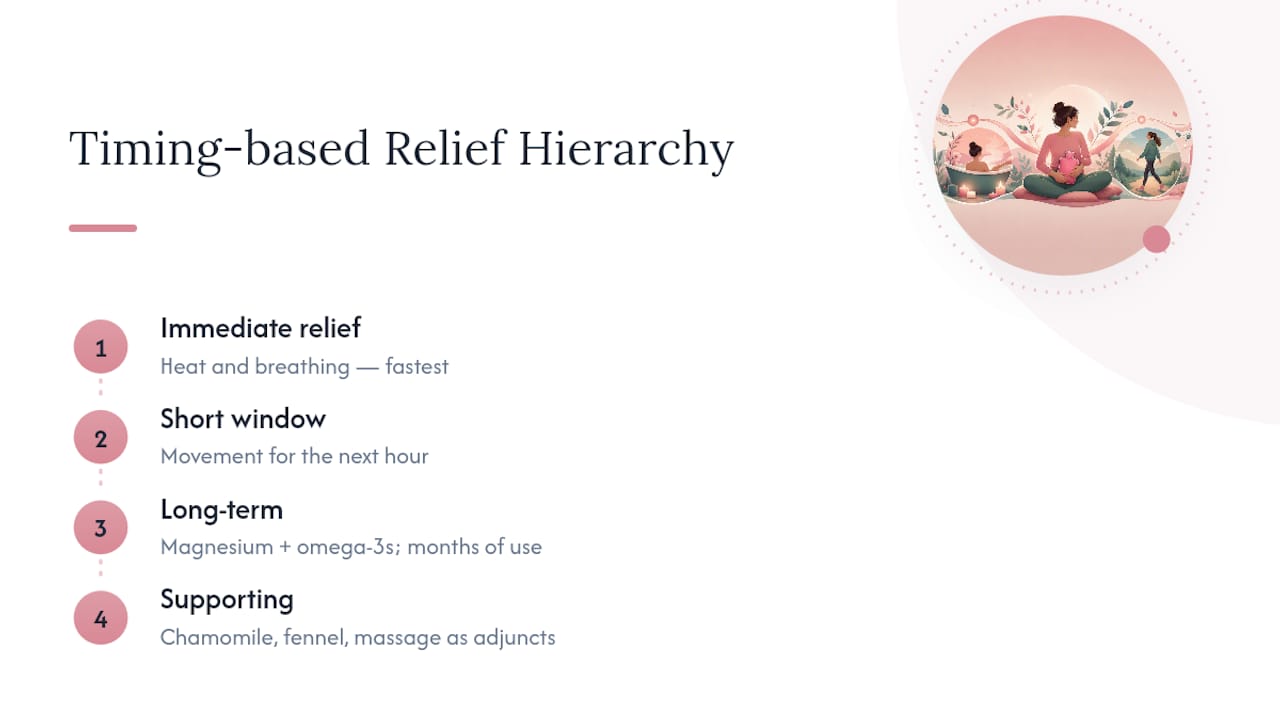
Most cramp advice treats “natural remedies” as a grab bag: try ginger, try yoga, try a heating pad, see what sticks. That approach wastes cycles. The research actually supports a much narrower, more useful hierarchy: heat and breathing for speed, movement for the next hour, and magnesium plus omega-3s for the months ahead. Everything else, chamomile, fennel, massage, sits in a supporting role.
The bigger gap in conventional advice is the timeline mismatch. People take magnesium for one cycle, feel nothing, and quit, not realizing the trials behind these numbers ran for two to three months. Supplementation for period pain is a slow lever, not a fast one, and treating it like ibuprofen guarantees disappointment.
If you take one thing from this protocol, prioritize consistency over novelty. A heat patch used correctly every cycle, plus magnesium taken daily for three straight months, will outperform a rotating cabinet of remedies tried once each and abandoned. Track what you use. Give it real time before judging it.
— Zamanee
A Practical Next Step for Ongoing Relief
If you’ve read this far, you already know that period pain rarely responds to a single fix. It responds to a system, heat in the moment, supplements building over months, and support for the gut-hormone connection underneath it all. That’s the actual gap between people who get lasting relief and people who reset to square one every 28 days.

Florvahealth builds its range around a layered approach instead of a single quick fix. Its probiotics and digestive enzymes cover the gut side, while relief patches and heat cover the acute pain side. If severe or unpredictable pain persists despite consistent care, that’s a signal to see a clinician, not a reason to add more supplements.
Sources
- PubMed: omega-3 and dysmenorrhea meta-analysis
- PMC10098011: heat therapy RCT for dysmenorrhea
- NIH ODS: Magnesium — Health Professional Fact Sheet


