

Yes, period relief patches can reduce menstrual pain, but the reason depends entirely on which type you’re using. A patch works when its mechanism (sustained heat, a menthol counterirritant, far-infrared material, or targeted acupoint delivery) actually matches the kind of pain you’re having.
Here’s what the evidence actually shows:
- A randomized trial found continuous low-level topical heat performed about as well as oral ibuprofen for dysmenorrhea, and pairing heat with ibuprofen worked faster than either alone.
- Heat patches relieve cramps mainly through vasodilation, easing the uterine ischemia that prostaglandins cause.
- Menthol patches work differently: they activate cold-sensing TRP receptors, creating a counterirritant effect that distracts your nervous system from the deeper ache.
- Transdermal hormonal patches (like contraceptive patches) are a completely separate category. They deliver systemic hormones and aren’t designed for direct pain relief the way a topical heat patch is.
Key Takeaways
Period relief patches work when their specific mechanism, heat-driven vasodilation, menthol’s nerve distraction, or FIR-boosted circulation, matches the type of menstrual pain you’re treating.
| Point | Details |
|---|---|
| Heat rivals ibuprofen | A randomized trial found topical heat performed comparably to oral ibuprofen for dysmenorrhea. |
| Combining speeds relief | Heat plus ibuprofen brought median relief in 1.5 hours versus 2.79 hours for medication alone. |
| Menthol works differently | It activates TRPM8 receptors for a counterirritant effect, not vasodilation. |
| Hormonal patches aren’t pain patches | Transdermal contraceptive patches deliver systemic hormones and belong to a separate product class. |
| Heat targets ischemic pain | A heat patch uses continuous topical warmth aimed at dull, ischemic cramping. |
Table of Contents
- How Do Period Relief Patches Actually Reduce Pain?
- What Are the Main Types of Period Relief Patches?
- Is There Real Clinical Evidence Behind These Patches?
- How Should You Use a Period Relief Patch Safely?
- How Do You Choose the Right Patch for Your Pain?
- What We Believe About Period Care at Florvahealth
- Try a Patch Built Around the Science That Actually Works
- Frequently Asked Questions
- Sources
How Do Period Relief Patches Actually Reduce Pain?
Menstrual cramps start with prostaglandins, hormone-like compounds your uterine lining releases to trigger contractions that shed tissue. Too much prostaglandin activity means stronger, more frequent contractions, which squeeze off local blood flow. That reduced circulation, called ischemia, lets metabolic byproducts like lactic acid build up in the tissue. That buildup is a big part of what you feel as cramping pain. Every patch mechanism on the market is trying to interrupt some part of this chain.
Heat patches: chemistry doing the heavy lifting
Most disposable heat patches rely on an exothermic reaction, typically iron powder oxidizing when exposed to air, sometimes mixed with activated carbon and salt to control the reaction speed. That reaction generates steady, low-level heat for several hours. Applied to the lower abdomen, that warmth penetrates tissue and triggers vasodilation, widening blood vessels and restoring the circulation that prostaglandins had constricted. Better blood flow clears out the lactic acid and other metabolites causing pain, and the warmth itself relaxes the smooth muscle of the uterus.
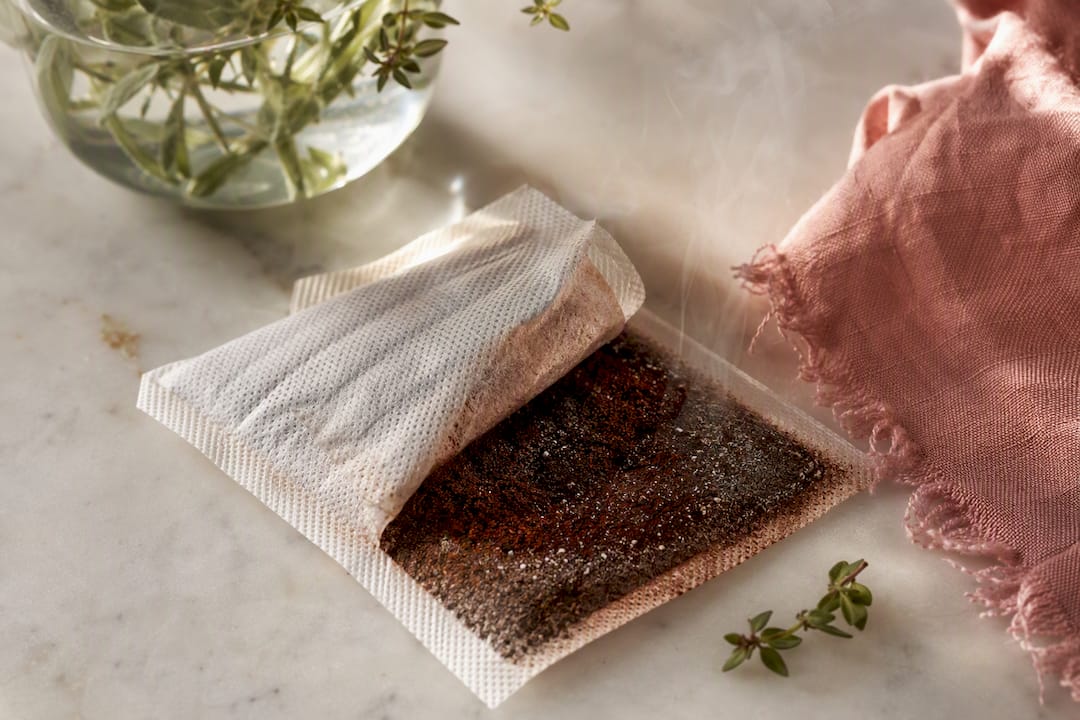
This isn’t a theoretical mechanism. A randomized clinical trial comparing a heated patch to oral ibuprofen found the heat therapy performed comparably to the medication for dysmenorrhea. More strikingly, patients who combined the heat patch with ibuprofen reported a median time to relief of just 1.5 hours, compared to 2.79 hours for ibuprofen alone.
That gap, nearly 90 minutes, is the single most persuasive data point in this entire category. It suggests heat isn’t just a placebo add-on; it’s addressing a different part of the pain pathway than the drug is.
Menthol and counterirritant patches: hijacking your nerves
Menthol patches don’t touch inflammation directly. Instead, menthol activates TRPM8 receptors, the same cold-sensing channels that make peppermint feel cool on your skin. That activation floods your nervous system with a competing sensory signal, which partially crowds out the deeper cramping pain your brain would otherwise focus on. It’s a real neurological effect, sometimes called gate control, not just a distraction trick. Product labeling for menthol patches, including one listed on DailyMed, specifies menthol at 10 mg per patch with directions to apply to dry, intact skin.
Far-infrared materials: reflecting your own heat back at you
FIR patches don’t generate heat chemically. They’re woven with materials that absorb and reflect the far-infrared energy your own body already emits, concentrating it back into the tissue to boost local microcirculation. Clinical monitoring of one such non-medicated patch, marketed as FIT Lady, reported a significant reduction in menstrual pain and discomfort among the study cohort. Separately, a multicenter randomized trial of an acupoint-based patch found measurable shifts in prostaglandin biomarkers, specifically lower PGF2α and higher PGE2 after three menstrual cycles, alongside better pain scores than placebo.
Transdermal hormonal patches: a different job entirely
It’s worth being blunt here: a contraceptive patch is not a pain patch. It releases estrogen and progestin systemically to prevent ovulation, and its side-effect profile reflects that systemic hormonal action, not localized pain relief. If you’re looking to ease cramps, that’s not the product category you want.
| Patch type | Mechanism | Primary evidence | Action target |
|---|---|---|---|
| Chemical heat | Iron oxidation raises tissue temperature | RCT: comparable to ibuprofen | Vasodilation, muscle relaxation |
| Menthol/counterirritant | TRPM8 receptor activation | Product labeling, sensory studies | Nerve signal competition |
| Far-infrared (FIR) | Reflects body heat, boosts microcirculation | Clinical monitoring (FIT Lady) | Local blood flow |
| Acupoint patch | Targeted delivery at specific points | Multicenter RCT, biomarker shifts | Prostaglandin modulation |
| Transdermal hormonal | Systemic estrogen/progestin release | Clinical guidance (NHS) | Ovulation suppression, not pain |
What Are the Main Types of Period Relief Patches?
Walk into this category expecting one product and you’ll be confused fast. These four types look similar but do fundamentally different things.
- Single-use chemical heat patches last roughly 8 to 12 hours and stay in a safe range around 104 to 113°F, designed for continuous wear against the lower abdomen or back.
- Menthol/counterirritant patches deliver several hours of cooling, tingling sensory relief, often layered under clothing since they don’t require the bulk of a heat pack.
- FIR and acupoint patches work more slowly and subtly, relying on reflected thermal energy or targeted placement rather than an immediate sensory jolt.
- Systemic transdermal patches (hormonal or pharmaceutical) aren’t topical pain relief at all. They’re a distinct product class governed by entirely different usage and safety rules, as outlined in contraceptive patch guidance.
Pro Tip: Match the mechanism to the pain. A dull, radiating ache that feels like pressure usually responds better to heat, because it’s an ischemia problem. A sharp, localized cramp often responds faster to menthol’s cooling distraction, since there’s less circulation to restore and more nerve signaling to interrupt.
Is There Real Clinical Evidence Behind These Patches?
The evidence quality varies a lot by category, and it’s worth saying that plainly instead of pretending every patch type has equally strong backing.
Heat therapy has the deepest evidence base. The Akin et al. trial directly pitted heated patches against ibuprofen in a randomized design, which is the gold standard for this kind of comparison, even though the sample size and single-site design mean it isn’t the final word. FIR and acupoint patches have real but thinner support: the FIT Lady clinical monitoring study and the Frontiers acupoint trial both show promising biomarker and symptom shifts, but acupoint research overall still needs larger, more rigorously blinded trials before anyone should call the mechanism settled.
Menthol patches sit in a different regulatory lane entirely. As an over-the-counter topical analgesic, the DailyMed label specifies exact dosing (10 mg menthol per patch), application to dry skin only, and an age cutoff of 12 and up. That labeling exists precisely because menthol, applied incorrectly or too frequently, can cause skin reactions.
Common adverse effects across topical patches include local irritation, contact dermatitis, and, with chemical heat patches specifically, burns if the patch overheats or sits against skin for too long without a barrier layer. Systemic transdermal hormonal patches carry a completely different risk profile, including the estrogen-related risks the NHS outlines, which has nothing to do with skin reactions and everything to do with circulating hormone levels.
Stop using any patch and check with a clinician if you notice blistering, spreading redness, fever, or pain that doesn’t ease within your normal cycle pattern. Those are signs the issue may not be ordinary dysmenorrhea.
For a broader look at how pills and patches compare on onset speed and systemic exposure, Harvard Health’s overview is a useful, level-headed read.
How Should You Use a Period Relief Patch Safely?
Getting the placement and timing right changes how much relief you actually get.
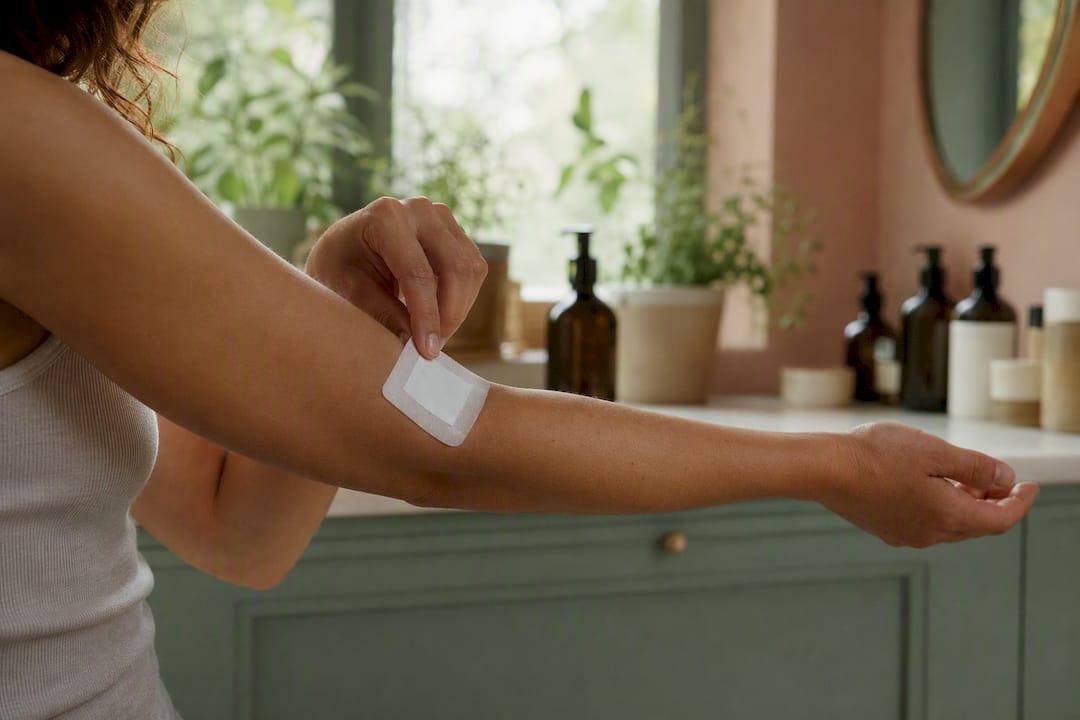
- Apply to the lower abdomen or lower back, depending on where your pain refers to, and rotate the exact spot between cycles to reduce skin irritation over time.
- Apply early, ideally as soon as you notice cramping starting, rather than waiting for pain to peak. Getting ahead of the ischemia and metabolite buildup blunts the whole cascade before it intensifies.
- Wear continuous heat patches for their full 8 to 12 hour window rather than removing and reapplying, since the steady, low-level warmth is what drives sustained vasodilation.
- Combine heat with a low-dose NSAID if needed. The evidence suggests this pairing addresses both local ischemia and systemic inflammation at once, which is likely why it beat either approach alone in trial data. Check for contraindications first.
- Never stack a menthol patch and a chemical heat patch on the same skin area at the same time. The conflicting thermal signals raise your risk of skin injury and make it harder to tell if something’s actually wrong.
Pro Tip: If you’re prone to sensitive skin, do a placement test the day before your period is expected, applying the patch for just an hour to check for early redness before committing to a full 8 to 12 hour wear.
Watch for burns, spreading rash, or pain that feels different from your usual cramps. Any of those warrant pulling the patch and calling a clinician rather than pushing through.
How Do You Choose the Right Patch for Your Pain?
Start with the type of pain you actually have, because that decision does most of the work for you.
- If your cramps feel like a dull, deep ache or pressure, that’s typically ischemic pain, so a heat patch is your strongest evidence-backed option.
- If your pain is sharp and highly localized, a menthol or cooling patch often provides faster sensory relief.
- If you’re sensitive to adhesives or fragrances, check the ingredient list before committing to daily wear across a full cycle.
- If your goal is avoiding oral medication entirely, heat and menthol patches both let you skip the gastrointestinal tract, which is a real advantage over NSAIDs for some people.
- If you’re actually looking for hormonal cycle control or contraception, you want a transdermal hormonal patch, a different product with different risks entirely.
- Larger patches cover more surface area, and adhesive quality matters more than most people expect for staying put through a full workday.
What We Believe About Period Care at Florvahealth
We think topical, non-systemic relief deserves a bigger role in period care than it usually gets, precisely because the mechanisms behind it (vasodilation, counterirritation, targeted warmth) are grounded in real physiology, not vague wellness claims. Florvahealth builds toward gentle, evidence-aware relief that fits alongside medication when you need it, not instead of your judgment.
Try a Patch Built Around the Science That Actually Works
If dull, aching cramps are your main complaint, you now know why heat is the mechanism worth prioritizing. Look for a patch built around that principle: continuous, low-level topical warmth that sits against your lower abdomen for hours of steady relief, without adding another pill to your routine.
Use it the way covered above: apply early, wear it through its full window, and switch sides between uses to keep your skin comfortable. If you’re combining it with an NSAID, that pairing has real trial support behind it, just don’t layer it with a menthol product on the same patch of skin. For the gut side of cycle discomfort, Florvahealth’s probiotics and digestive enzymes round out the routine. Head to Florvahealth to see the full lineup.
Frequently Asked Questions
Do menstrual patches really work, or is the relief mostly placebo? The heat category has real randomized trial support showing effects comparable to ibuprofen, so it’s more than placebo for most users. Menthol and FIR patches have thinner but still real evidence behind their specific mechanisms.
How long does a period relief patch typically last? Chemical heat patches usually stay active for 8 to 12 hours, while menthol patches provide several hours of sensory relief depending on the formulation and skin contact.
Can I use a period relief patch with ibuprofen? Yes, and trial data suggests the combination works faster than either approach alone, though you should check your own dosing limits and any contraindications first.
Are period relief patches safe for sensitive skin? Most people tolerate them well, but contact dermatitis and irritation can happen, especially with prolonged wear. Rotating placement sites and doing a short trial application helps catch reactions early.
What’s the difference between a period relief patch and a birth control patch? A period relief patch works topically on skin and muscle tissue to ease cramps. A birth control patch delivers hormones systemically through the skin to prevent pregnancy, an entirely different mechanism and risk profile.
This article is general information, not a substitute for advice from a qualified doctor. Consult a qualified healthcare professional about your own circumstances before acting on anything here.
Sources
- PubMed record: Akin et al. trial (heated patch vs ibuprofen)
- Clinical monitoring of safety and functionality of a non‑medicated patch for pain alleviation associated to dysmenorrhea (PMC)
- DailyMed: FEMININE PAIN RELIEF- menthol patch label (BEYOU Period Patches)
- Frontiers in Endocrinology: Dysmenorrhea Patch acupoint application RCT (2026)
- NHS: Contraceptive patch—side effects and risks


