

Yes. A diet heavy in sodium, refined sugar, and fried or processed foods is linked to measurably worse PMS symptoms, while nutrient-dense, anti-inflammatory eating tends to blunt them. The fastest way to find out if that’s true for you isn’t a full diet overhaul. It’s a focused 5 to 7 day swap during your late luteal window, with real anti-inflammatory meals in place of the usual salty, sugary defaults, tracked against how you actually feel.
TL;DR:
- Choosing a focused 5 to 7 day anti-inflammatory diet during the luteal phase can significantly reduce PMS severity, especially for symptoms like bloating and mood swings.
- High-sodium, refined sugar, fried, and ultra-processed foods are the main triggers that worsen PMS by increasing systemic inflammation and water retention.
- Incorporating omega-3 fatty acids, calcium, fiber-rich vegetables, and complex carbs supports inflammation reduction and stabilizes mood and cramps.
- Tracking food intake and symptoms over two menstrual cycles helps personalize triggers, enabling targeted elimination and dietary adjustments.
- Stress, poor sleep, and gut microbiome imbalance amplify PMS symptoms, making diet changes more effective when combined with stress management and digestive health support.
Table of Contents
- Inflammatory Foods and PMS: What the Science Actually Shows
- Foods That Worsen PMS: The Main Triggers to Limit
- Anti-Inflammatory Foods That Actually Help With PMS
- The 5 to 7 Day Luteal-Window Plan That Actually Works
- Supplements With Real Evidence for PMS Relief
- Easy Swaps and Two Fast Luteal-Window Meals
- Tracking Your Triggers: A Simple Two-Cycle Experiment
- Your Gut Might Be Driving More of Your PMS Than You Think
- Stress Doesn’t Just Add to PMS. It Multiplies What Food Is Already Doing
- Mood Symptoms vs. Physical Symptoms: Inflammatory Foods Don’t Hit Evenly
- A Realistic Take on Food, Inflammation, and PMS
- Where FlorvaHealth Fits Into Your Anti-Inflammatory Approach
- Sources
Inflammatory Foods and PMS: What the Science Actually Shows
The clearest evidence comes from a 2023 cross-sectional study out of Kermanshah that measured Dietary Inflammatory Index (DII) scores against PMS severity in a group of adult women between the ages of 20 and 46. The researchers found a direct correlation: women eating Western, high-salt, high-sugar dietary patterns scored higher on the DII and reported more severe PMS symptoms. Women following healthier eating patterns showed the opposite relationship, with lower DII scores tracking to milder symptoms. That’s not a fringe result. It’s one of the more direct links between everyday food choices and how rough your week before your period actually feels.
The finding in numbers: Among the women studied, higher intake of Western/high-salt–high-sugar patterns correlated with elevated DII scores and more severe PMS, while healthy dietary patterns moved in the opposite direction, according to the Kermanshah cross-sectional study.
A StatPearls clinical review backs this up from a different angle. It treats dietary and other nonpharmacological strategies as foundational to PMS management, sitting alongside (not instead of) medical treatment when needed. The review also flags a specific mechanism worth remembering: complex carbohydrates can increase tryptophan availability in the brain, which supports serotonin production. That’s part of why a bowl of oatmeal often feels more stabilizing during PMS week than a candy bar, even though both are technically “carbs.”
On the supplement side, a nutrient and dietary pattern review identifies omega-3 fatty acids and calcium as the two nutrients with the strongest evidence for reducing PMS symptom severity. The catch is that effect sizes vary study to study, and benefits generally depend on consistent use over weeks, not days. A single omega-3 rich dinner won’t undo a month of fast food.
Here’s what this evidence base does and doesn’t tell you:
- It shows a real, measurable association between inflammatory dietary patterns and PMS severity, not just a wellness-industry talking point.
- It supports specific mechanisms, like the tryptophan-serotonin pathway, rather than vague “eat clean” advice.
- It’s still largely observational. Correlation isn’t the same as proof that food X causes symptom Y in every woman.
- Sample sizes in the strongest studies are modest, and larger randomized controlled trials would sharpen the picture.
- Individual variability is significant. What spikes bloating for one woman might barely register for another.
That last point matters more than it might seem. The research tells you what tends to happen across groups of women. It doesn’t tell you what will happen to you specifically, which is exactly why the tracking approach later in this article matters as much as the food list itself.
Foods That Worsen PMS: The Main Triggers to Limit
Some foods don’t just sit poorly with you during PMS week. They actively interact with the hormonal shifts happening in your body and turn up the volume on symptoms you’d otherwise barely notice. Here’s what tends to cause the most trouble, and why.
- High-sodium foods. Chips, canned soups, deli meat, and restaurant meals push sodium intake up right when progesterone is already encouraging your body to retain water. The result is the bloating and puffiness that make jeans feel tight the week before your period.
- Refined sugar and high-glycemic carbs. White bread, pastries, and sugary drinks spike blood sugar fast, then drop it just as fast. That crash lines up with the mood swings and energy dips a lot of women describe as the worst part of PMS, not the cramps.
- Fried and ultra-processed foods. Trans fats and heavily processed oils are associated with higher inflammatory markers in the body, and that inflammation can intensify cramping and pelvic discomfort.
- Processed red meat and saturated fat in excess. Regular high intake has been associated with elevated CRP, a common marker of systemic inflammation, which may compound period pain on top of everything else going on hormonally.
- Alcohol and excess caffeine. Both disrupt sleep, and poor sleep amplifies anxiety and irritability. Caffeine in particular is frequently linked to breast tenderness during the luteal phase.
- High-fat dairy, with nuance. This one isn’t a flat “avoid.” Some women find full-fat dairy fuels bloating and cramping, while others tolerate it fine and even benefit from the calcium. Pay attention to your own pattern here rather than cutting dairy on principle.
Pro Tip: Instead of cutting salty snacks cold turkey, swap them for something with a similar crunch and saltiness, like roasted chickpeas or lightly salted edamame. You keep the satisfaction without the sodium load.
Patient-facing resources back up nearly all of these, listing refined carbs, ultra-processed foods, high sodium, alcohol, and excess caffeine as the most commonly reported triggers across women’s health guidance. None of this means one bag of chips will ruin your week. It means a pattern of these foods, especially stacked during the days leading into your period, tends to make a hard week harder.
Anti-Inflammatory Foods That Actually Help With PMS
If the goal is calming inflammation and steadying your mood and energy, a few food categories consistently show up as genuinely useful, not just trendy.
Omega-3 fatty acids top that list. Fatty fish like salmon, sardines, and mackerel two to three times a week, or a daily tablespoon of ground flaxseed, gives you a steady anti-inflammatory input rather than a one-time fix. Leafy greens, berries, legumes, and whole grains round things out with fiber and antioxidants that support digestion and help buffer blood sugar swings, which matters a lot when refined sugar is often the trigger you’re trying to avoid.
Worth knowing: Nutrition organizations like the Physicians Committee for Responsible Medicine point to fruits, vegetables, whole grains, and legumes as core tools for reducing menstrual pain, tying the effect to their fiber and anti-inflammatory nutrient content rather than any single “miracle” food.
Calcium and magnesium deserve specific attention because they’re tied to mood and cramp relief, not just general nutrition. Dairy, fortified plant milks, leafy greens, and almonds cover calcium. Pumpkin seeds, dark chocolate (yes, really, in moderation), and spinach cover magnesium. Complex carbs and tryptophan-rich foods, like oats, sweet potatoes, turkey, and eggs, support the serotonin pathway the StatPearls review highlights, which is part of why a warm bowl of oatmeal can genuinely take the edge off mood symptoms.
Here’s a quick reference for building your plate during the week before your period:
- Omega-3s: salmon, sardines, walnuts, ground flaxseed, 2 to 3 servings weekly.
- Leafy greens and berries: spinach, kale, blueberries, daily if possible.
- Legumes and whole grains: lentils, chickpeas, oats, quinoa, most meals.
- Calcium and magnesium: yogurt, almonds, pumpkin seeds, dark leafy greens, daily.
- Hydration: aim for consistent water intake and go easy on added salt in home cooking to counter the water retention high sodium creates.
Cooking with herbs, citrus, and vinegar instead of salt keeps flavor high without the sodium spike, which makes the anti-inflammatory approach easier to stick with instead of feeling like a punishment.
The 5 to 7 Day Luteal-Window Plan That Actually Works
The final days of your luteal phase, roughly the week before your period, are when progesterone and estrogen drop sharply and prostaglandins ramp up. That hormonal shift is what makes your body more reactive to inflammatory triggers right then, even if the same foods barely bothered you two weeks earlier. This is why a targeted short window often works better than a month-long overhaul: you’re intervening exactly when your body is most sensitive, not diluting the effort across days when it wouldn’t have mattered as much anyway.
A simple day-by-day approach:
- Days 1 to 2: Cut added salt and processed snacks. Swap your usual coffee for one cup instead of two or three.
- Days 3 to 4: Add a daily omega-3 source and a magnesium-rich food, like pumpkin seeds or dark chocolate.
- Days 5 to 7: Layer in complex carbs at each meal and keep alcohol out entirely for the window.
Shopping and prep tips that make this realistic instead of aspirational:
- Batch-cook a pot of lentils or quinoa at the start of the week so a complex carb is always ready.
- Keep pre-portioned nuts and seeds on hand for snack attacks instead of reaching for chips.
- Stock frozen salmon or sardines in olive oil as a no-effort omega-3 backup.
- Prep a pitcher of water infused with lemon or cucumber to make hydration automatic.
None of this works in isolation. The Royal Women’s Hospital’s guidance on exercise and diet notes that sleep and stress modulate inflammatory response just as much as food does, so pairing this plan with consistent sleep and light movement, like a daily walk, tends to produce better results than diet changes alone. A science-backed evening routine built around wind-down habits can reinforce exactly this kind of window.
Supplements With Real Evidence for PMS Relief
Diet changes go further with the right supplement backup, but not every supplement on a PMS shelf has research behind it. A few do.
- Omega-3s have meta-analysis level support for reducing PMS symptom severity, with common dosing in the range of 1 to 2 grams of combined EPA/DHA daily. Fish oil allergies are worth screening for before starting, and shellfish-derived omega-3s carry the same caution.
- Calcium has some of the strongest RCT backing among PMS supplements, particularly for mood symptoms, with total daily intake around 1,200 mg typically cited across food and supplement sources combined.
- Magnesium shows promising but mixed trial-level evidence, usually dosed in the 200 to 360 mg range daily, often taken alongside vitamin B6 for combined effect.
- Vitamin B6 has similarly mixed but generally positive trial data, commonly dosed at 50 to 100 mg daily, though very high doses over long periods have been linked to nerve issues in rare cases.
What the RCT evidence actually supports: Calcium supplementation, generally totaling around 1,200 mg per day between food and supplements, shows some of the clearest trial-level support among PMS-targeted nutrients, particularly for mood-related symptoms.
None of this replaces a conversation with your clinician, especially if you’re on other medications, pregnant, managing kidney disease, or already taking supplements that overlap with these. Omega-3s can interact with blood thinners, and high-dose calcium isn’t automatically safe for everyone. Evidence-based doesn’t mean risk-free.
Easy Swaps and Two Fast Luteal-Window Meals
Small substitutions add up faster than a full recipe overhaul, and they’re easier to stick with because you’re not white-knuckling through cravings.
- Swap salty chips for roasted edamame or seasoned chickpeas, same crunch, none of the sodium spike.
- Swap a candy bar craving for dark chocolate with almonds, which delivers magnesium alongside the sweetness.
- Swap soda for sparkling water with a splash of tart cherry juice, which also carries some anti-inflammatory compounds.
- Swap a fast-food dinner for a 10-minute salmon bowl: canned or leftover salmon, cooked quinoa, spinach, and a lemon-olive oil dressing.
- Swap a sugary breakfast pastry for a 10-minute veggie and egg scramble with a side of berries.
Pro Tip: Keep one “emergency” anti-inflammatory snack, like a small bag of walnuts and dried cherries, in your bag or desk drawer during your luteal week. Decision fatigue is real, and having the better option already available beats willpower every time.
For blood sugar stability specifically, pair protein and fat in every snack rather than eating carbs alone. A resource on mindful snacking makes a similar point: pairing rather than restricting tends to hold up better over time than strict elimination.
Tracking Your Triggers: A Simple Two-Cycle Experiment
You don’t need a nutritionist to figure out which foods actually move the needle for you. You need two cycles and a notebook, or a notes app, whichever you’ll actually use.
For two full cycles, log three things daily during the two weeks before your period: what you ate, your symptom severity on a simple 1 to 5 scale, and your sleep quality. Patterns tend to jump out by the second cycle, especially around sodium, sugar, and caffeine.
Once you spot a suspected trigger, run a real elimination test. Cut just that one food or category for one cycle, keeping everything else the same, then reintroduce it deliberately in the following cycle and watch what happens. Changing five things at once tells you nothing useful. Changing one thing tells you everything.
A few signs mean it’s time to loop in a clinician rather than keep experimenting solo:
- Mood symptoms severe enough to disrupt work or relationships, which can signal PMDD rather than standard PMS.
- Pain that doesn’t respond to over-the-counter relief or dietary changes.
- Bleeding heavy enough to soak through protection hourly, or clots larger than a quarter.
Reviewing your food-symptom log alongside a list of common triggers can help you spot patterns faster than starting from scratch on your own.
Your Gut Might Be Driving More of Your PMS Than You Think
The gut microbiome doesn’t just handle digestion. It’s directly involved in regulating systemic inflammation, and that inflammation is one of the mechanisms tying diet to PMS severity in the first place. A gut environment dominated by beneficial bacteria tends to produce fewer inflammatory compounds. A gut disrupted by ultra-processed food, excess sugar, and alcohol tends to produce more of them.
This creates a feedback loop worth understanding. Inflammatory foods don’t just affect you directly. They shift your gut bacteria toward species associated with higher inflammation, which then amplifies the very symptoms those foods were already contributing to. Fiber-rich foods, fermented foods like yogurt and kimchi, and diverse plant intake support a more balanced microbiome, which in turn may lower baseline inflammation heading into the luteal phase.
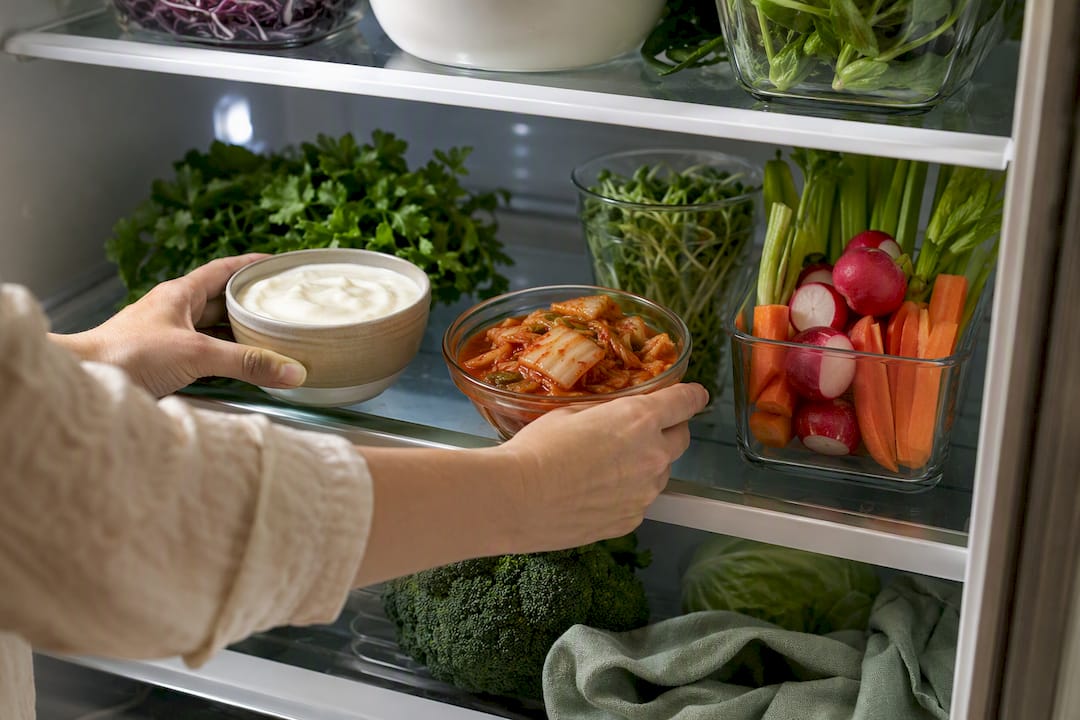
This is also part of why bloating during PMS week isn’t purely about water retention. Gut motility and bacterial balance shift with hormonal changes too, meaning the same dietary triggers can hit harder during the second half of your cycle than they would on any other day of the month. It’s a two-way relationship: hormones affect the gut, and the gut affects how you experience your symptoms.
Stress Doesn’t Just Add to PMS. It Multiplies What Food Is Already Doing
Stress and diet don’t operate independently during your luteal phase. They compound each other. Chronic stress elevates cortisol, and elevated cortisol is itself a driver of low-grade systemic inflammation, the same kind of inflammation that inflammatory foods contribute to on their own.
That means a stressful week combined with a sodium-heavy, sugar-heavy diet doesn’t produce additive symptoms. It tends to produce symptoms worse than either factor alone would predict. This is likely why some months feel brutal and others feel manageable, even when your eating habits look roughly the same on paper. The missing variable is often stress load, not food.
It also explains why dietary changes alone sometimes underdeliver. If you clean up your food choices during a high-stress week and don’t see much improvement, that’s not necessarily a sign the diet approach failed. It may mean stress is the larger lever that month. Pairing dietary swaps with stress-reduction tools, brief walks, breathing exercises, or consistent sleep timing, gives the anti-inflammatory approach a real chance to show its effect instead of getting drowned out by cortisol.
Mood Symptoms vs. Physical Symptoms: Inflammatory Foods Don’t Hit Evenly
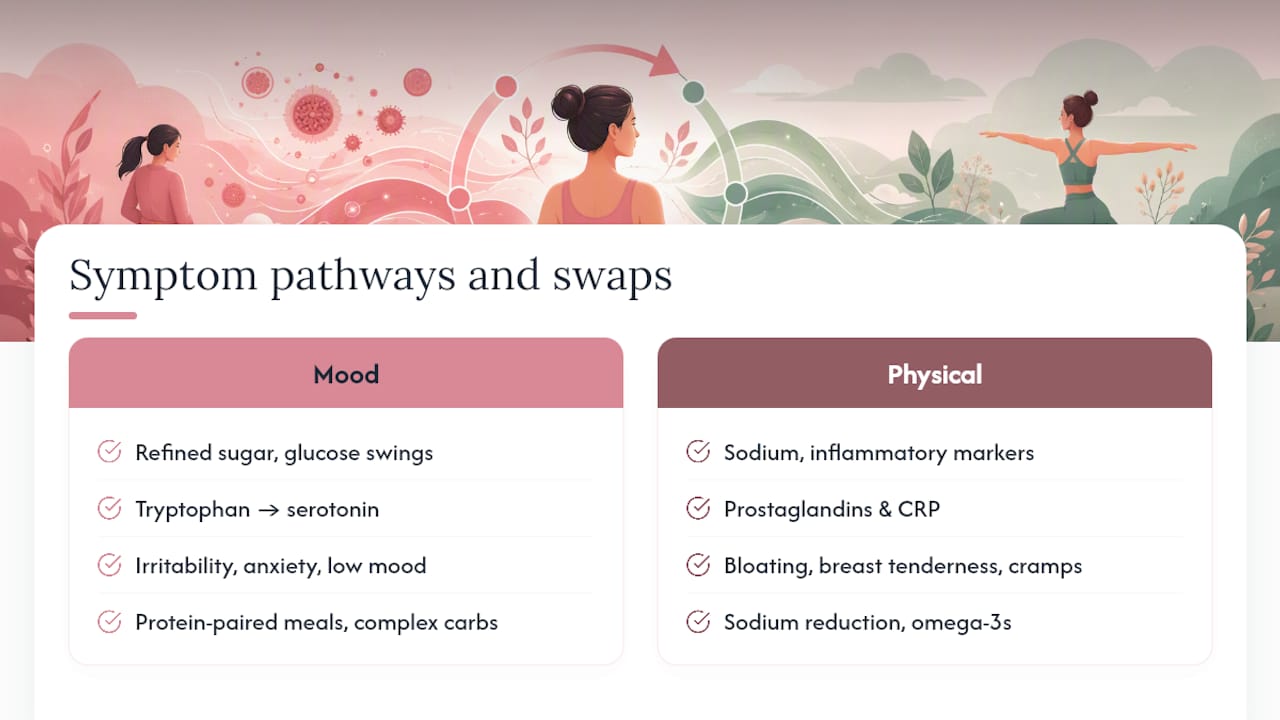
Not every PMS symptom responds to diet the same way, and that distinction matters for setting realistic expectations. Mood-related symptoms, irritability, anxiety, and low mood, appear tightly linked to blood sugar swings and the tryptophan-serotonin pathway the StatPearls review describes. That’s why refined sugar tends to show up so consistently as a mood trigger: the crash after the spike hits the same neurochemical pathway that regulates mood stability.
Physical symptoms, bloating, breast tenderness, and cramping, respond more directly to sodium intake, prostaglandin activity, and inflammatory markers like CRP. Cutting salt tends to move bloating faster than it moves irritability. Adding omega-3s tends to ease cramping faster than it lifts a low mood.
The practical takeaway is to match your swap to your dominant symptom instead of assuming one dietary change fixes everything. If mood swings are your main complaint, prioritize stabilizing blood sugar with protein-paired meals and complex carbs. If bloating and cramps dominate, prioritize sodium reduction and omega-3 intake. Most women deal with some blend of both, which is exactly why the two-cycle tracking approach earlier in this article matters. It tells you which lever to pull hardest for your specific pattern, rather than guessing.
A Realistic Take on Food, Inflammation, and PMS
The biggest misconception about diet and PMS is that food is either the whole answer or basically irrelevant. Neither is true. Zamanee has spent years studying how women’s hormonal health research translates into practical, sustainable habits, and the honest answer sits in the middle: diet is a genuinely powerful lever, but it’s one lever among several, alongside sleep, stress, and sometimes medical treatment.
Florvahealth was built around that same inside-out philosophy, pairing gut-supportive probiotics with targeted external care because inflammation rarely has one cause. What surprises most women is how fast a short, focused experiment reveals real information. You don’t need a month of perfect eating. You need seven honest days, a notebook, and the willingness to actually look at what you wrote down. Start small, track it seriously, and let your own data guide the next step instead of another generic food list.
— Zamanee
Where FlorvaHealth Fits Into Your Anti-Inflammatory Approach
Diet changes work best when your gut is already getting some backup, and that’s where Florvahealth’s range comes in. Rather than asking you to overhaul everything at once, Florvahealth focuses on simple, inside-out support you can layer onto the food swaps already covered here.
For anyone leaning into probiotics to support gut health and lower baseline inflammation, Florvahealth’s probiotic and digestive enzyme line is designed to work alongside dietary changes rather than replace them. For women also noticing hormonal breakouts tied to inflammatory eating patterns, the skincare for hormonal skin collection rounds out the inside-out approach.
None of these products substitute for the food swaps or the two-cycle tracking protocol you just read about. Think of them as reinforcement for the parts diet alone doesn’t fully cover, particularly gut balance and topical skin support. If you’re on medication or managing a chronic condition, check with your clinician before adding anything new. Ready to see how the full system fits your cycle? Visit Florvahealth to browse the complete lineup.
Sources
The clinical backbone of this article comes from a handful of sources worth reading directly if you want the full data behind the recommendations. The Kermanshah DII and PMS study offers the clearest look at how dietary inflammatory patterns track with symptom severity. The StatPearls clinical review covers nonpharmacological management in more clinical depth than this article can. For the supplement evidence specifically, the nutrient and dietary pattern review in Nutrients breaks down omega-3 and calcium research in detail, and the Healthline food guide offers a patient-friendly cross-check on the food lists covered above.
This article is general information, not a substitute for advice from a qualified doctor. Consult a qualified healthcare professional about your own circumstances before acting on anything here.
- The relationship of dietary inflammatory index and dietary patterns with premenstrual syndrome among women in Kermanshah: An analytical cross‐sectional study
- Premenstrual Syndrome - StatPearls
- Relationships between Premenstrual Syndrome (PMS) and Diet Composition, Dietary Patterns and Eating Behaviors
- What to Eat During Your Period: 15 Foods to Eat and Some to Limit


