

Most large, well-controlled studies find no clear link between caffeine intake and premenstrual syndrome once researchers account for other factors, though certain symptoms and higher doses show weaker, inconsistent signals in some populations. The honest answer is that caffeine probably isn’t the villain older research made it out to be for most women, but individual response varies enough that tracking your own pattern beats following a blanket rule. The rest of this article breaks down why, and how to test it on yourself.
TL;DR:
- Most large, well-controlled studies find no significant link between caffeine intake and the development of PMS, even among women consuming four or more cups daily.
- Short-term caffeine reintroduction does not impact cognitive performance or mood symptoms related to PMS, suggesting minimal effect on brain fog or alertness.
- Individual factors like genetics, timing, and dose threshold influence caffeine’s effect, so personal trial and self-tracking are more reliable than blanket rules.
- Consuming caffeine within an hour of waking or after 2 to 3 p.m. can exacerbate sleep issues, which often worsen mood and physical PMS symptoms.
- Population data may exaggerate caffeine’s impact because women with severe PMS tend to associate their symptoms with caffeine, but comprehensive research indicates no clear causation.
Table of Contents
- What the Best Research Actually Says About Caffeine and PMS Symptoms
- The Biological Case for Why Caffeine Could Still Affect Your Symptoms
- Are You in a Higher-Risk Group for Caffeine-Related PMS Symptoms?
- How to Test Whether Caffeine Affects Your Own PMS Symptoms
- What Clinical Guidelines Say and When to See a Doctor
- Caffeine and Your PMS Medications: What to Watch For
- FlorvaHealth’s Take: Evidence Over Blanket Rules
- Complementary Support While You Run Your Caffeine Trial
- Sources
What the Best Research Actually Says About Caffeine and PMS Symptoms
The strongest evidence on caffeine and PMS symptoms comes from a prospective analysis nested inside the Nurses’ Health Study II, which followed women over time rather than asking them to recall habits after symptoms had already started. That distinction matters more than it sounds. Prospective cohorts track exposure before an outcome happens, which strips out a lot of the guesswork that plagues weaker study designs.
The Nurses’ Health II data found no meaningful association between total caffeine intake and the development of PMS, even among women drinking four or more cups of coffee daily. After adjusting for age, body mass index, smoking, and physical activity, the risk of developing PMS among the heaviest caffeine consumers actually trended slightly lower than among light consumers, with an odds ratio of 0.79. Breast tenderness specifically showed a similar pattern in heavy coffee drinkers, with an odds ratio of 0.73. Neither result reached strong statistical significance, but both point away from caffeine as a driver of new PMS cases.
A newer piece of evidence adds nuance rather than contradiction. A 2024 crossover trial gave women with existing PMS a period of caffeine abstinence followed by a controlled caffeine challenge, then measured cognitive performance. The result: caffeine reintroduction produced no measurable change in working memory or general attention, regardless of whether participants carried the fast or slow version of the CYP1A2 gene that governs caffeine metabolism. That’s a narrow finding, focused on cognition rather than mood or physical symptoms, but it reinforces that short-term caffeine exposure doesn’t reliably trigger the “brain fog” many women associate with their luteal phase.
So why does the internet seem so convinced caffeine makes PMS worse? Older cross-sectional research is the likely culprit. A frequently cited 1985 study of young women found strong correlations between caffeinated beverage intake and PMS symptom severity. Cross-sectional designs, though, capture a single snapshot in time, and they can’t distinguish cause from effect. Women who already feel exhausted, foggy, or low tend to reach for coffee to cope. That reverse pattern, where symptoms drive caffeine use rather than the other way around, is exactly the kind of confounding a well-run prospective study is designed to catch.
Clinically significant PMS affects a notable minority of menstruating women, according to widely cited prevalence estimates, and it’s this group whose symptom patterns tend to dominate older survey-based research, skewing perceptions of how strongly caffeine is tied to the condition.
Where the evidence gets genuinely murkier is on hormone biomarkers. Some studies measuring serum caffeine directly, rather than relying on self-reported intake, have found associations with lower total and free testosterone and a reduced risk of anovulation in certain cohorts. That doesn’t mean caffeine improves PMS. It means caffeine’s relationship with reproductive hormones is real, measurable, and more complicated than a simple “avoid it” directive suggests.
None of this means the science is settled. A few gaps are worth naming honestly:
- Most large studies measure total caffeine intake, not timing relative to cycle phase, which may matter more than the daily total.
- Few trials isolate luteal-phase caffeine use specifically, so we’re often extrapolating from general-population data.
- Genetic metabolism differences (CYP1A2 fast versus slow metabolizers) are rarely tracked in the older observational studies driving the “avoid caffeine” advice.
- Self-reported symptom severity, the main outcome in most of this research, is inherently subjective and hard to standardize across studies.
The takeaway from the best-designed research: caffeine is not a proven cause of PMS at the population level, but that doesn’t rule out a real effect for you specifically, especially at higher doses or with poor timing.
The Biological Case for Why Caffeine Could Still Affect Your Symptoms
Population data telling you caffeine “probably doesn’t cause PMS on average” is a different question from whether caffeine affects your PMS. Biology gives us several plausible pathways, and understanding them helps explain why some women swear caffeine wrecks their luteal phase while researchers keep finding null results in the aggregate.
Caffeine works primarily by blocking adenosine receptors in the brain. Adenosine normally builds up throughout the day and promotes drowsiness; caffeine’s blockade is why you feel alert after a cup of coffee. In someone already running high on anxiety or hypersensitive to nervous system stimulation, which many women report during the luteal phase, that same adenosine block can tip into jitteriness, racing thoughts, or a wired-but-tired feeling that reads as PMS anxiety.
Timing compounds this; for practical advice on symptomatic relief, consider the essential guide to relieving period cramps. Cortisol naturally peaks within the first hour of waking as part of the body’s normal circadian rhythm. Drinking coffee immediately on waking stacks caffeine’s stimulant effect on top of that natural cortisol surge, and some research suggests this combination amplifies the cortisol spike rather than simply adding alertness. Elevated cortisol later in the day can interfere with sleep onset, and disrupted sleep is one of the most consistent aggravators of mood-related PMS symptoms.
The hormone picture is genuinely mixed. As noted above, some biomarker studies link higher serum caffeine to lower testosterone and reduced anovulation risk, changes that could theoretically help some cycle-related symptoms while doing nothing for others. This is likely why symptom-specific results vary so much between studies: caffeine may nudge several different hormonal and neurological systems at once, and the net effect on any single symptom depends on which pathway dominates for that person.
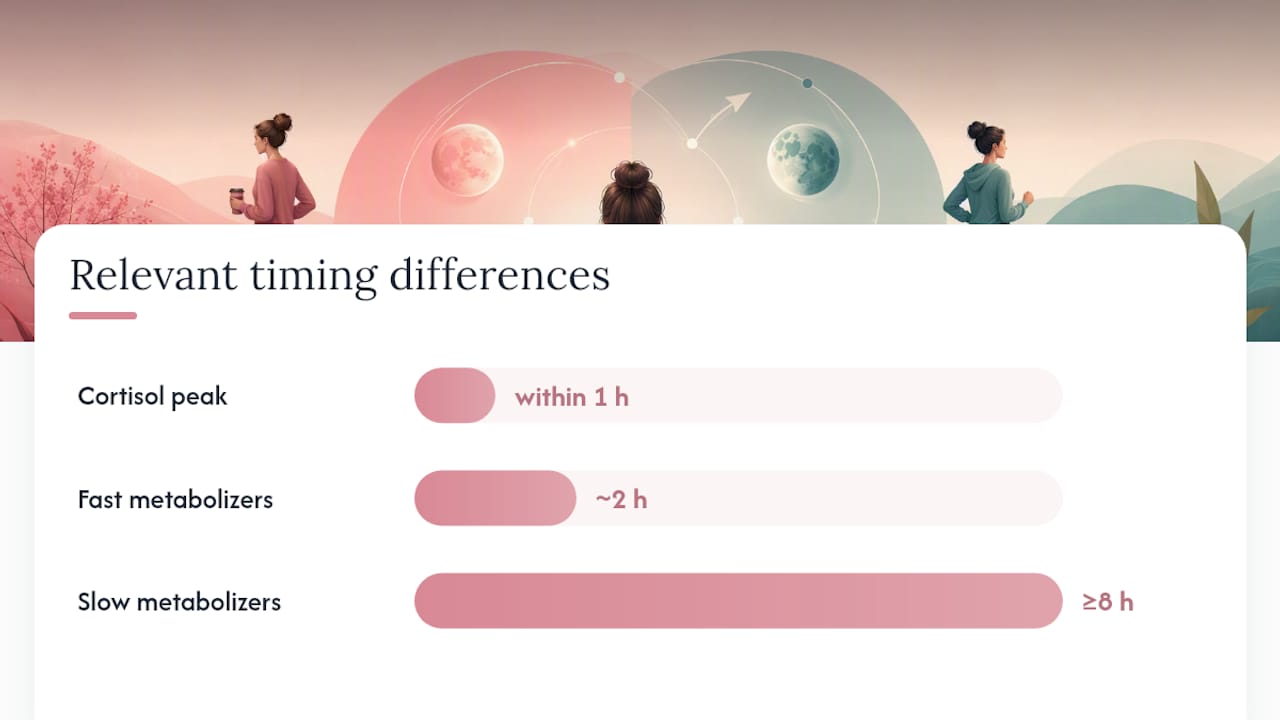
Genetics adds another layer. The CYP1A2 gene controls how quickly your liver clears caffeine. Fast metabolizers process caffeine in a couple of hours; slow metabolizers can still have meaningful blood levels eight or more hours later. That’s a big part of why one woman can drink espresso at 3 p.m. with no consequence while another lies awake at midnight.
Pro Tip: If you don’t know your caffeine sensitivity, treat the first two weeks of any experiment as a baseline observation period rather than a change period. Note your habitual intake and timing before you alter anything.
- Adenosine blockade raises alertness and, in sensitive people, anxiety and jitteriness.
- Morning caffeine may amplify the natural cortisol peak, with downstream effects on sleep.
- Hormone biomarker studies show real but inconsistent shifts in testosterone and ovulation risk.
- CYP1A2 genotype determines how long caffeine stays active in your system.
Are You in a Higher-Risk Group for Caffeine-Related PMS Symptoms?
Not everyone’s PMS responds to caffeine the same way, and dose, timing, genetics, and lifestyle factors all shape who notices a difference.
- Your daily dose matters more past a threshold. Moderate intake generally falls under 200 mg a day, roughly two 8-ounce cups of brewed coffee. Habitual consumption above 400 mg daily, the general upper limit cited by MedlinePlus for most healthy adults, is where sleep disruption and anxiety symptoms become more likely regardless of PMS status.
- When you drink it counts as much as how much. Caffeine consumed within an hour of waking stacks on top of your natural cortisol peak; caffeine after 2 or 3 p.m. is more likely to interfere with sleep onset that night, which can worsen next-day irritability and fatigue during the luteal phase.
- Your genotype sets your baseline sensitivity. Slow CYP1A2 metabolizers retain caffeine’s stimulant effects for longer stretches, making late-day cups riskier for sleep and next-morning mood than for a fast metabolizer drinking the same amount.
- Habitual users may respond differently than occasional drinkers. Regular daily consumers can develop a blunted cortisol response to caffeine compared with occasional users, meaning someone who quit caffeine recently and restarted may feel effects more intensely than a steady daily drinker.
- Smoking and body weight distort population data. Smoking is more common among heavy caffeine users in several older observational studies, and both smoking and higher body mass index independently affect hormone levels and mood. Studies that don’t fully adjust for these factors can end up blaming caffeine for effects that smoking or weight are actually driving.
If you check two or three of those boxes, that heightens the odds caffeine is doing something measurable in your specific cycle, even if the population-level data stays neutral.
How to Test Whether Caffeine Affects Your Own PMS Symptoms
Population averages won’t tell you what’s happening in your own body. A short, structured trial will.
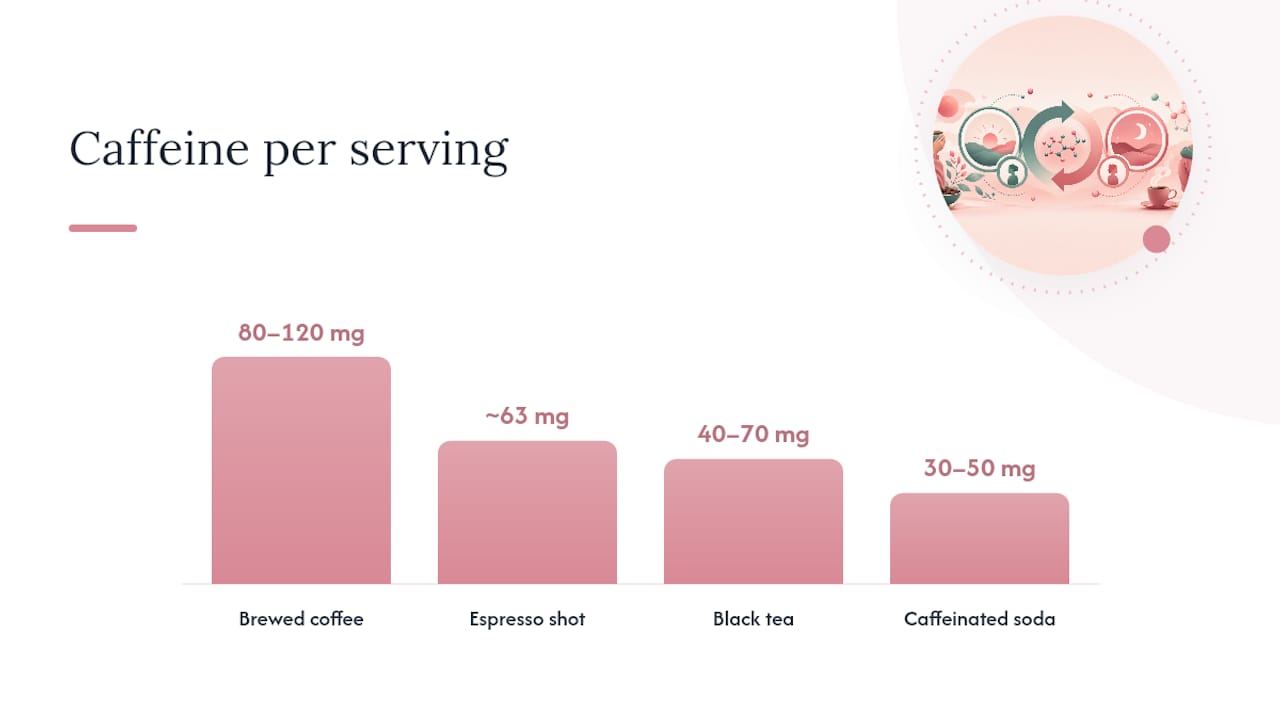
- Start a two-domain daily log. Rate symptom severity (1 to 10) across at least four categories, mood/anxiety, fatigue, breast tenderness, and headache or cramps, alongside an estimated caffeine total in milligrams. Use standard references: brewed coffee runs 80 to 120 mg per 8 ounces, an espresso shot around 63 mg, black tea 40 to 70 mg, and caffeinated soda 30 to 50 mg.
- Track for one full cycle before changing anything. You need a follicular-phase versus luteal-phase baseline for your own symptoms and intake before you can judge whether a change actually helped.
- Make one change at a time. Delay your first cup by about 60 minutes to avoid stacking on your natural cortisol peak, cut off caffeine by noon, or switch your afternoon cup to half-caff or decaf. Don’t do all three simultaneously, or you won’t know which one mattered.
- Hold the change through an entire luteal phase, not just a few days. Sleep-linked symptoms and anxiety often shift within a week; breast tenderness and physical symptoms tend to take longer to show any pattern, if one exists at all.
- Repeat the trial once before concluding anything. A single cycle can be thrown off by stress, travel, illness, or an unusually poor sleep stretch that has nothing to do with caffeine. If you have the patience, alternate: high intake one cycle, reduced the next, and compare your own logged averages.
Pro Tip: Compare your luteal-phase average symptom score against your follicular-phase average, not against some external standard. You’re looking for a shift in your own pattern, not a passing grade.
This kind of structured self-experiment is exactly what several clinical health resources now recommend in place of automatic caffeine elimination. Protecting your sleep during this window helps isolate caffeine’s effect from sleep debt’s effect, two things that often get tangled together; a consistent evening wind-down routine makes the comparison cleaner.
What Clinical Guidelines Say and When to See a Doctor
The American College of Obstetricians and Gynecologists has historically recommended reducing caffeine as part of general PMS lifestyle management, advice rooted largely in the older observational research described earlier. Given what the newer prospective and crossover data show, that recommendation is increasingly treated as one reasonable option among several rather than a mandatory first step. Cutting caffeine costs little to try, but it isn’t the guaranteed fix older guidance sometimes implied.
Self-tracking and modest adjustments are appropriate for typical PMS. Some symptom patterns warrant a clinical conversation instead:
- Mood symptoms severe enough to disrupt work, relationships, or daily functioning, which may signal premenstrual dysphoric disorder (PMDD) rather than standard PMS.
- Heavy, irregular, or unpredictable bleeding alongside your PMS symptoms.
- No improvement after two full cycles of consistent tracking and targeted changes.
- Physical symptoms (severe cramping, migraine, or breast pain) that feel disproportionate or are worsening over time.
Bring your symptom log, a rough caffeine intake and timing summary, sleep notes, and a list of current medications or supplements to that appointment. It turns a vague “my PMS is bad” conversation into something a clinician can actually act on.
Caffeine and Your PMS Medications: What to Watch For
Caffeine isn’t inert alongside other things you might be taking for PMS symptoms, and a few interactions deserve a second look.
Combination hormonal contraceptives, sometimes prescribed to manage PMS symptoms, can slow how quickly your liver clears caffeine, meaning the same afternoon coffee you’ve always had may hit harder and linger longer on birth control than it did before you started. NSAIDs like ibuprofen, a common choice for cramps, don’t interact dangerously with caffeine, but stacking a caffeinated pain reliever (many contain added caffeine to boost absorption) on top of your regular coffee intake can push your daily total higher than you realize.
Magnesium and calcium supplements, both frequently used for PMS symptom relief, are generally fine alongside moderate caffeine, though caffeine can modestly increase urinary calcium excretion over time. If you’re using an herbal sleep aid like valerian or melatonin to counter caffeine-linked sleep disruption, taking both close to a late caffeine dose is working against yourself. It’s better to fix the timing than to layer a sedative on top of a stimulant.
None of these interactions are dangerous for most healthy women at typical doses. They’re worth knowing because they can quietly muddy your self-tracking results. If your intake log shows moderate coffee but you’re also taking a caffeinated pain reliever twice a day, your real total is higher than you think.
FlorvaHealth’s Take: Evidence Over Blanket Rules
The old advice, “just cut caffeine if you have PMS,” made sense when the only data available was cross-sectional and confounded by reverse causation. It doesn’t hold up as well against prospective cohort data and controlled trials that keep coming back neutral at the population level. We think the honest, evidence-respecting position is that caffeine’s role in PMS is genuinely individual, shaped by genetics, timing, and what else is going on in your life, not a fact you can look up once and apply forever.
That’s the philosophy behind how Florvahealth approaches cycle support: pair structured self-tracking with gut-hormone balance, targeted topical relief, and sleep-supportive habits, rather than promising that any single change eliminates symptoms. Our probiotic and topical products are designed to sit alongside a personalized trial like the one outlined above, not replace the data you collect about your own body, and never as a substitute for a clinician’s input when symptoms are severe.
— Zamanee
Complementary Support While You Run Your Caffeine Trial
Running a two-cycle caffeine experiment is useful precisely because it gives you real data instead of guessing, and that same window is a good time to layer in support that targets PMS from more than one angle.

Florvahealth’s probiotic capsules support the gut side of the gut-hormone link, which matters independent of what’s in your coffee cup. Pairing a simple routine with your symptom log, rather than relying on either alone, gives you a clearer read on what’s actually driving your worst days. If sleep disruption is part of your pattern, our guide on evening routines and PMS pairs naturally with the timing changes described above.
Start by browsing the full PMS & bloating relief lineup and picking one product to add during your next tracked cycle, so you can see how it performs alongside your caffeine adjustments rather than guessing at either in isolation.
This article is general information, not a substitute for advice from a qualified doctor. Consult a qualified healthcare professional about your own circumstances before acting on anything here.
Sources
The source of your caffeine changes more than the flavor. It changes the dose curve, the co-ingredients, and how your symptoms might respond.
Coffee delivers the highest per-serving dose among common sources and typically hits your system fastest, which is exactly why timing advice centers on coffee more than anything else. Tea contains less caffeine per cup but also carries L-theanine, an amino acid some research associates with a calmer, less jittery form of alertness, potentially making tea a gentler substitution during your trial rather than a full elimination.
Energy drinks are the wild card. Beyond caffeine, they often pack taurine, added sugar, and sometimes guarana, another caffeine source that can push your real daily total well past what the label’s “caffeine content” line suggests. If you’re tracking milligrams for a personal trial, energy drinks are the easiest category to underestimate.
Chocolate is a smaller contributor for most people but not a negligible one. Dark chocolate carries meaningfully more caffeine than milk chocolate, and it’s easy to forget to log a few squares eaten while cooking or during a stressful afternoon, exactly the kind of small, unlogged intake that skews a self-tracking experiment. If breast tenderness or bloating is your main complaint, chocolate’s fat and sugar content may matter as much as its caffeine.
- A prospective study of caffeine and coffee intake and premenstrual syndrome
- Caffeine intervention after abstinence does not alter cognitive parameters in premenstrual syndrome women regardless of CYP1A2 genotype
- The effect of caffeine on PMS
- Caffeine - MedlinePlus


