

The most effective way to support progesterone naturally with food is to prioritize zinc, vitamin B6, magnesium, vitamin C, healthy fats, and fiber at every main meal. These nutrients supply the raw materials and cofactors your body needs for ovulation and steroid hormone synthesis. A simple daily pattern that works: pair a quality protein source with a handful of seeds or nuts and a generous serving of leafy greens or cruciferous vegetables at breakfast, lunch, and dinner.
Start with these foods:
- Pumpkin seeds (zinc, magnesium)
- Lentils and chickpeas (zinc, protein, fiber)
- Salmon (vitamin B6, omega-3 fats)
- Eggs (B6, healthy fats, cholesterol for steroid synthesis)
- Spinach and leafy greens (magnesium, folate)
- Broccoli and Brussels sprouts (fiber, cruciferous compounds for estrogen clearance)
- Almonds and walnuts (healthy fats, magnesium)
- Avocado (healthy fats, B6)
Key Takeaways
Prioritizing zinc, magnesium, vitamin B6, and healthy fats through whole foods is the most practical dietary strategy to support progesterone production, but clinical testing remains the right next step when symptoms persist.
| Point | Details |
|---|---|
| Lead with zinc, B6, and magnesium | Pumpkin seeds, lentils, salmon, and spinach cover all three nutrients in one day of eating. |
| Pair protein, fat, and fiber at every meal | This combination stabilizes blood sugar and reduces cortisol, which competes with progesterone signaling. |
| Avoid the main disruptors | Excess alcohol, very-low-calorie diets, high refined sugar, and extreme training all suppress ovulation. |
| Test when symptoms persist | A mid-luteal progesterone draw and OB/GYN consult are the right step for short luteal phase, infertility, or recurrent loss. |
| Florvahealth as extra support | Florvahealth’s probiotic capsules complement a food-first routine. |
Table of Contents
- What does progesterone do, and what happens when it’s low?
- How does food actually support progesterone production?
- Which nutrients matter most for progesterone?
- What should you actually eat? A practical grocery list and sample meals
- What foods and habits work against progesterone?
- Lifestyle habits that make dietary changes more effective
- What does the research actually show, and when should you get tested?
- The case for starting with food, not supplements
- Florvahealth supports your cycle from the inside out
- Sources
What does progesterone do, and what happens when it’s low?
Progesterone is the hormone that dominates the second half of your menstrual cycle, the luteal phase, preparing the uterine lining for a potential pregnancy and supporting early fetal development if conception occurs. Without adequate progesterone, the luteal phase shortens, the lining sheds too early, and implantation becomes difficult.
Progesterone production depends entirely on ovulation. When a follicle releases an egg, the leftover follicular shell transforms into the corpus luteum, a temporary gland that secretes progesterone for roughly 10–14 days. If ovulation doesn’t happen or the corpus luteum is weak, progesterone stays low regardless of what you eat.
Common signs of low progesterone include irregular or short cycles, premenstrual spotting, a luteal phase under 10 days, mood changes and anxiety in the week before your period, heavy PMS symptoms, and difficulty conceiving. Recurrent early miscarriage is another signal worth discussing with a clinician, since luteal-phase support is a recognized area of reproductive medicine.
How does food actually support progesterone production?
Cleveland Clinic notes plainly that food products do not contain progesterone. What diet can do is supply the building blocks and cofactors that make ovulation and steroid synthesis more likely to succeed. Here is where food realistically intervenes:
- Supports ovulation: Adequate caloric intake, healthy body fat, and stable blood sugar all help maintain the pulsatile GnRH/LH/FSH signaling that triggers ovulation.
- Provides steroid synthesis cofactors: Progesterone is a steroid hormone built from cholesterol. Zinc, vitamin C, B vitamins, and magnesium act as enzymatic cofactors in that synthesis pathway.
- Improves estrogen clearance: Dietary fiber and cruciferous vegetables support liver detoxification and gut transit, helping the body excrete excess estrogen rather than recirculate it.
- Stabilizes blood sugar: Chronic blood sugar spikes raise cortisol, which competes with progesterone for the same receptor and can suppress its production.
The honest caveat: strong, large-scale clinical evidence that specific foods reliably raise progesterone in humans is limited. Medical News Today summarizes the current picture well: no single food or remedy works for all women, and lifestyle factors often matter as much as individual nutrients. Diet is a support system, not a prescription.
Which nutrients matter most for progesterone?
Six nutrients consistently appear in the evidence on nutrition and reproductive health. Here is what each one does and where to find it.
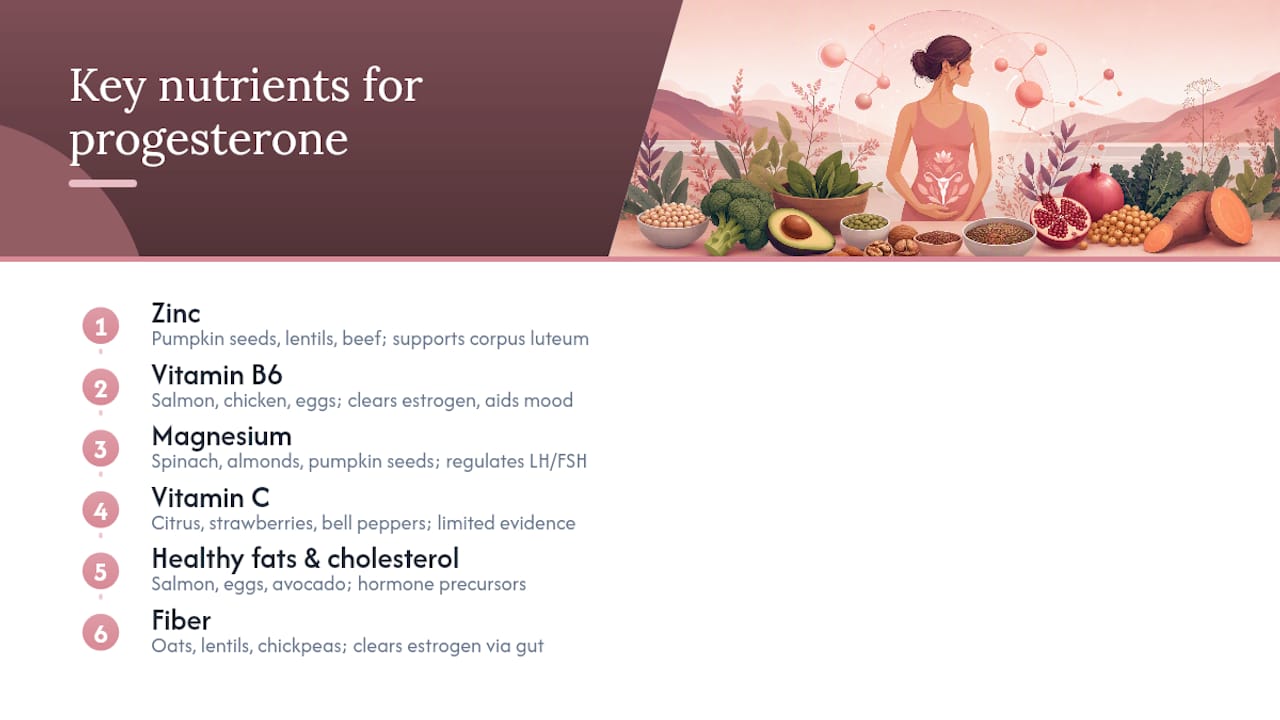
Zinc supports ovarian follicle development and corpus luteum function. Pumpkin seeds are the most concentrated plant source; lentils, chickpeas, and lean beef also contribute meaningfully.
Vitamin B6 helps the liver metabolize and clear excess estrogen and supports neurotransmitter pathways that affect mood and cycle regularity. The NIH Office of Dietary Supplements recommends 1.3 mg/day for adult women (1.5 mg/day for women over 50). Salmon, chicken, eggs, and avocado are reliable sources.
Magnesium helps regulate the pituitary hormones LH and FSH that drive ovulation. The NIH/ODS magnesium fact sheet sets the recommended dietary allowance at about 310–320 mg/day for most adult women. Spinach, almonds, pumpkin seeds, and oats all contribute.
Vitamin C appears in older small-sample studies as potentially associated with progesterone changes, though findings remain limited and not definitive. Citrus fruit, strawberries, and bell peppers are the easiest sources.
Healthy fats and dietary cholesterol provide the raw material for all steroid hormones, including progesterone. Salmon, eggs, avocado, and walnuts cover this well.
Fiber supports estrogen clearance through the gut. Oats, lentils, chickpeas, broccoli, and Brussels sprouts are all high-fiber staples.
RDA values from NIH/ODS. Therapeutic doses used in some studies differ from RDAs; consult a clinician before supplementing above food-level amounts.
What should you actually eat? A practical grocery list and sample meals
The grocery list below covers every must-have food, with rough serving guidance to keep things practical rather than obsessive.
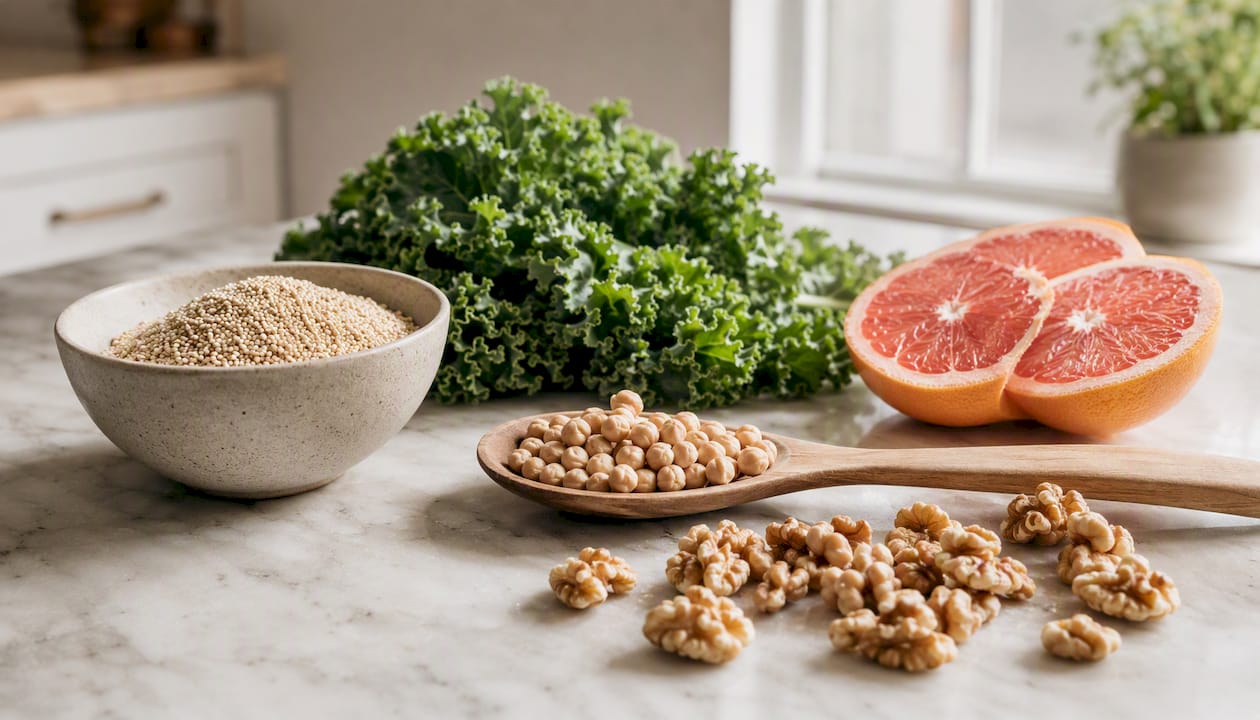
Your grocery list: pumpkin seeds, lentils, salmon, chicken, lean beef, eggs, spinach, broccoli, Brussels sprouts, almonds, walnuts, chickpeas, oats, avocado.
Serving guidance: 1–2 tablespoons of seeds per meal, 3–4 oz of lean protein per serving, 1 cup of cooked legumes, 1–2 cups of leafy greens or cruciferous vegetables.
Three sample meals for a progesterone-supporting day:
Breakfast: Oatmeal (1 cup cooked oats) topped with 1 tablespoon of pumpkin seeds, a handful of almonds, and sliced strawberries. Add two scrambled eggs on the side for protein and B6.
Lunch: Large spinach salad with 1 cup of chickpeas, half an avocado, roasted broccoli, and 3–4 oz of grilled chicken. Dress with olive oil and lemon for vitamin C and healthy fat.
Dinner: 4 oz baked salmon with 1 cup of lentils and a side of roasted Brussels sprouts. Add a small handful of walnuts for extra omega-3s.
Each meal pairs protein, fat, and fiber together. That combination slows glucose absorption, keeps cortisol steadier, and gives your body the raw materials it needs across the day.
For vegetarian or vegan needs: lean on extra lentils, chickpeas, pumpkin seeds, and fortified plant milks to cover zinc, B6, and protein. A registered dietitian can help you identify any gaps, particularly for B12 and zinc, which are harder to source from plants alone. For budget-friendly hormone support, lentils and oats are among the most cost-effective options on this list.
What foods and habits work against progesterone?
Some patterns actively undermine the hormonal system, and they are worth knowing about.
- Excessive alcohol disrupts liver function and impairs the estrogen-clearance pathways that keep hormones in balance.
- High refined sugar and ultra-processed foods spike blood sugar repeatedly, raising cortisol and creating a hormonal environment that suppresses ovulation.
- Very-low-calorie diets and rapid weight loss reduce body fat below the threshold needed for GnRH pulsatility, which can halt ovulation entirely.
- Extreme endurance training or overtraining raises cortisol and can suppress LH surges, particularly during a conception attempt.
On soy: current evidence does not show that moderate consumption of whole soy foods (edamame, tofu, tempeh) prevents ovulation in most women. High-dose isolated isoflavone supplements are a different matter and warrant caution. If you are working with a fertility specialist, mention your soy intake.
On herbal supplements: products marketed as “natural progesterone” or “progesterone-boosting herbs” vary widely in quality and evidence. Herbal supplements for cycle balance may complement a food-first approach, but self-prescribing high-dose extracts without clinician oversight carries real risk, especially if you take medications that affect hormone metabolism. Always disclose supplements to your prescriber.
Lifestyle habits that make dietary changes more effective
Food alone rarely moves the needle if sleep is poor, stress is chronic, or exercise is extreme. The highest-impact lifestyle supports for progesterone are consistent sleep, active stress reduction, stable blood sugar, moderate exercise, and maintaining a healthy weight.
- Keep a regular sleep schedule: aim for 7–9 hours, since cortisol dysregulation from poor sleep directly competes with progesterone signaling.
- Eat protein and fiber at every meal to prevent the blood sugar swings that spike cortisol.
- Practice short breathwork or mindfulness routines daily; even 5–10 minutes of diaphragmatic breathing measurably lowers cortisol.
- Avoid late-night high-sugar snacks, which disrupt overnight cortisol patterns.
- During a conception attempt, limit high-intensity endurance training to moderate sessions and prioritize recovery.
For cycle-aware scheduling of nutrition and exercise, the luteal phase (roughly days 15–28) is when progesterone peaks and when your body benefits most from magnesium-rich evening foods like spinach or almonds, which also support sleep quality.
Pro Tip: Add a small serving of magnesium-rich food, such as a handful of almonds or a cup of cooked spinach, to your evening meal during the luteal phase. Magnesium supports both sleep quality and pituitary regulation, making it one of the most practical nutritional levers in the second half of your cycle.
What does the research actually show, and when should you get tested?
Diet and nutrients can support the hormonal system, but direct evidence that specific foods reliably raise progesterone in large human populations is limited and mixed. A peer-reviewed nutrition and reproductive health review describes the evidence as promising but preliminary, with most human trials being small, short, or observational. Some older micronutrient studies show associations, but heterogeneity across studies makes firm conclusions difficult. The LetsGetChecked resource on magnesium, zinc, and B6 reflects the practical consensus: these nutrients matter, food sources are the safest starting point, and supplementation should be guided by testing.
Zinc deficiency is one of the more common micronutrient gaps in reproductive-age women, particularly among those eating low-meat or highly processed diets, though precise prevalence figures vary by population and measurement method.
When to see a clinician:
Dietary changes are a reasonable starting point, but they are not a substitute for medical evaluation when symptoms are persistent. Seek testing if you have a luteal phase consistently under 10 days, difficulty conceiving after 6 months of trying (or 12 months if you are under 35), recurrent early miscarriage, or severe PMS symptoms that affect daily function. A clinician can order a mid-luteal progesterone blood draw (typically around day 21 of a 28-day cycle) to establish a baseline. Thyroid dysfunction can also mimic or worsen low-progesterone symptoms, so thyroid and hormone balance is worth discussing with your provider at the same visit.
The case for starting with food, not supplements
There is a tendency in wellness spaces to reach for a supplement bottle the moment a hormone concern surfaces. That instinct is understandable, but it skips a step. The foods on this list, pumpkin seeds, lentils, salmon, eggs, leafy greens, avocado, deliver zinc, B6, magnesium, and healthy fats in forms your body absorbs well, alongside fiber and phytonutrients that support estrogen clearance simultaneously. A supplement delivers one isolated nutrient. Food delivers a package.
That said, food is not a cure for clinically low progesterone, and pretending otherwise does women a disservice. If your luteal phase is short, if you have had repeated losses, or if you have been trying to conceive for months without success, a blood test and a conversation with a reproductive endocrinologist will tell you more in one appointment than six months of dietary changes alone. Use food as the foundation, not the ceiling.
Florvahealth supports your cycle from the inside out
Women who want a product-supported approach alongside their food-first strategy can find it at Florvahealth. Its women’s probiotic capsules support gut health, which is linked to how the body handles estrogen. They are an extra step, not a replacement for prescribed progesterone or clinical care.

Florvahealth’s inside-out approach combines gut-supporting probiotics, pH-balanced intimate care, and topical relief in one cohesive system built for women managing hormonal symptoms day to day. If you want to pair your progesterone-supporting diet with a structured wellness routine, explore the full system at Florvahealth and find the bundle that fits your cycle.


