

Hormonal health is defined as the body’s ability to produce, regulate, and respond to hormones at levels that support mood, energy, metabolism, and reproductive function. You can manage hormonal health on a budget more effectively than most wellness marketing suggests. Foundational lifestyle habits improve 70–80% of hormonal health for roughly $0.65 per day beyond normal food spending. That works out to about $19.50 per month. The most expensive part of hormone care is usually the part you don’t need.
What foundational lifestyle habits support hormonal balance on a budget?
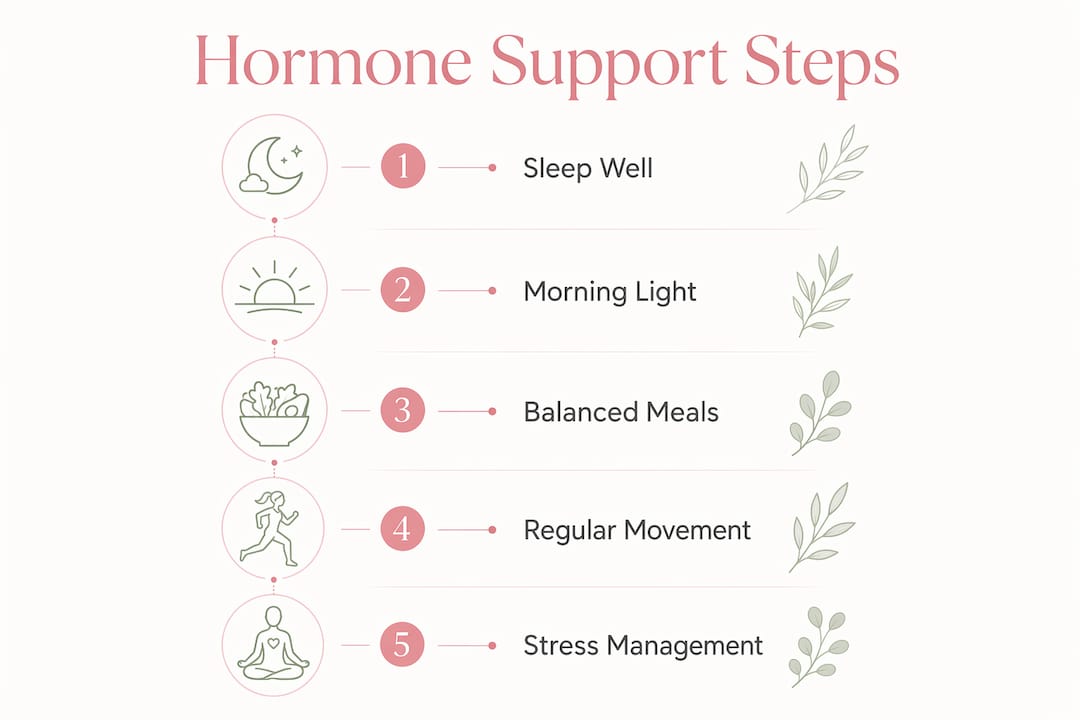
Sleep, light, and movement are the three lowest-cost, highest-impact tools for natural hormone management. Consistent 7–8 hours of sleep regulates cortisol, leptin, and growth hormone. These three hormones control stress response, hunger signals, and tissue repair. Disrupting sleep even two or three nights per week measurably raises cortisol and suppresses leptin. No supplement corrects that.

Morning light exposure is free and underused. Getting 10–15 minutes of natural sunlight within an hour of waking sets your circadian rhythm, which directly influences cortisol, melatonin, and thyroid hormone production. Women who skip this step often report afternoon energy crashes and poor sleep quality, both of which compound hormonal disruption over time.
Daily physical activity supports insulin sensitivity and hormone receptor efficiency. You don’t need a gym membership. A 30-minute walk counts. So does a 20-minute bodyweight session at home. The key is consistency, not intensity.
Stress management is the most skipped and most consequential habit. Chronic stress keeps cortisol elevated, which suppresses progesterone and disrupts the entire hormonal cascade. Free techniques work. Walking, slow breathing, and journaling all lower cortisol when practiced daily.
- Sleep: Aim for 7–8 hours at a consistent bedtime. Even one hour of variance shifts cortisol patterns.
- Morning light: Step outside within 60 minutes of waking. No sunglasses for the first 10 minutes.
- Movement: 30–60 minutes of moderate activity daily. Walking, cycling, or bodyweight exercises all qualify.
- Stress relief: Five minutes of slow nasal breathing (4 counts in, 6 counts out) lowers cortisol acutely.
- Hydration: Water supports hormone transport and balance throughout the body.
Pro Tip: Set your alarm 15 minutes earlier than needed and use that time for morning light and slow breathing before checking your phone. This single habit costs nothing and sets your hormonal tone for the entire day.
How can you build a hormone-supportive diet without overspending?
A hormone-supportive meal plan costs under $50 per week when built around protein, fiber, healthy fat, and complex carbohydrates from inexpensive whole foods. This is not a restrictive diet. It is a structure that stabilizes blood sugar, which is the single most direct dietary lever for hormonal balance. Unstable blood sugar drives insulin spikes, which disrupt estrogen, testosterone, and cortisol in a chain reaction.
The plate formula is simple. Fill half your plate with non-starchy vegetables. Add a palm-sized portion of protein. Include a small serving of complex carbohydrates and a thumb-sized portion of fat. This combination slows glucose absorption and keeps insulin steady across the day.
Protein-fiber-fat combinations stabilize blood sugar and support insulin resistance related to hormonal issues. Practical meal examples include eggs with spinach and sweet potato for about $1.50, lentil soup with cabbage for about $1.20, and chicken with broccoli and rice for about $2.00. These are not diet meals. They are complete, satisfying plates built from grocery staples.
| Food | Approximate cost | Hormonal benefit |
|---|---|---|
| Eggs (dozen) | $3.00–$4.00 | Protein, choline for liver detox of estrogen |
| Dried lentils (1 lb) | $1.50–$2.00 | Fiber, plant protein, blood sugar stability |
| Canned sardines | $1.00 per can | Omega-3s, calcium, vitamin D |
| Frozen spinach (16 oz) | $1.50–$2.00 | Magnesium, iron, folate |
| Brown rice (2 lb) | $2.00–$3.00 | Complex carbs, B vitamins |
| Ground flaxseeds (1 lb) | $3.00–$4.00 | Lignans that support estrogen metabolism |
| Brazil nuts (small bag) | $4.00–$5.00 | Selenium for thyroid function |
Batch cooking reduces weekly grocery spending by 20–30% and covers 15 or more meals from two hours of Sunday prep. Cook a large pot of lentils, a tray of roasted vegetables, and a batch of brown rice. These three base components combine into five different meals across the week. This approach also eliminates the decision fatigue that leads to expensive, hormone-disrupting takeout.
Pro Tip: Buy dried lentils and oats instead of protein bars or packaged snacks. Unit price awareness is the single most effective grocery habit for keeping hormone-supportive eating affordable long-term.
Avoid expensive wellness food trends. Adaptogenic lattes, collagen powders, and specialty protein blends cost far more than the whole foods they claim to replace. Eggs, sardines, and lentils deliver comparable or superior nutrition at a fraction of the price.
Which low-cost supplements and natural remedies effectively support hormones?
Supplements work best after foundational habits are stable. Adding magnesium glycinate to a diet of processed food and poor sleep produces minimal results. Fixing the foundation first, then adding targeted supplements, is the correct sequence.
Magnesium glycinate, vitamin D3, and omega-3 fish oil are the three most evidence-backed, affordable supplements for hormonal support. Magnesium glycinate costs $9–$15 per month and supports sleep quality, stress regulation, and progesterone function. Vitamin D3 costs under $10 per month and influences mood, immune function, and bone health. Omega-3 fish oil costs $12–$18 per month and reduces systemic inflammation, which is a direct driver of hormonal disruption.
The most cost-effective omega-3 source is not a supplement at all. Canned sardines cost about $1 per serving and deliver highly bioavailable omega-3s, calcium, and vitamin D in one package. Supplement capsules delivering the same omega-3 dose cost $3–$4 per day. Eating sardines two or three times per week covers your omega-3 needs at a fraction of that cost.
- Magnesium glycinate: $9–$15/month. Supports sleep, cortisol regulation, and progesterone production.
- Vitamin D3: Under $10/month. Critical for mood, thyroid function, and immune balance.
- Omega-3s: $12–$18/month via fish oil, or free via canned sardines and mackerel.
- Ground flaxseeds: $3–$4/lb. Lignans support healthy estrogen metabolism daily.
- Brazil nuts: Two per day provides your full daily selenium requirement for thyroid health.
Avoid multi-ingredient “hormone balance” marketing bundles. These products combine multiple compounds at sub-therapeutic doses and charge premium prices for the packaging. The benefits of individual hormone-supporting supplements are well documented. Buying single-ingredient supplements separately costs less and gives you control over what you’re actually taking.
Women with diagnosed conditions like PCOS or thyroid disorders need medical oversight. Natural strategies support but do not replace treatment for clinical hormonal conditions. Use these tools as complements to medical care, not substitutes.
How does exercise and stress management support hormone health affordably?
Exercise is one of the most direct and free tools for hormonal regulation. It lowers cortisol after acute stress, improves insulin sensitivity, and increases the density and responsiveness of hormone receptors throughout the body. None of that requires a gym.
Home workouts, walking, yoga, and bodyweight exercises deliver full hormonal benefit at zero cost. A 30-minute brisk walk lowers cortisol and improves insulin sensitivity within hours. A 20-minute yoga session reduces perceived stress and supports parasympathetic nervous system activity, which is the state your body needs to produce progesterone and regulate estrogen properly.
Consistent wellness routines built on simple daily habits create sustainable hormone balance more reliably than expensive products. The research is clear on this point. Frequency matters more than intensity. Twenty minutes of movement six days per week outperforms one intense 90-minute session on the weekend.
- Walking: 30 minutes daily lowers cortisol and supports blood sugar regulation.
- Bodyweight training: Squats, push-ups, and lunges build muscle, which improves insulin sensitivity.
- Yoga: Reduces cortisol and supports the parasympathetic state needed for progesterone production.
- Journaling: Five minutes of written reflection reduces rumination and lowers stress hormone output.
- Breathing exercises: Four counts in, six counts out activates the vagus nerve and lowers cortisol acutely.
Pro Tip: Schedule movement and stress relief the same way you schedule meals. Hormonal cycle phases shift your energy and recovery needs across the month. Lighter movement in the luteal phase and more intense effort in the follicular phase aligns exercise with your hormones rather than fighting them.
Stress management is not optional. Chronic psychological stress is a direct hormonal disruptor. Foundational inputs like consistent sleep and physical activity are more effective and affordable than pricey wellness trends or supplements for managing stress-driven hormonal imbalance. The free tools work. The expensive ones usually don’t add much on top.
Key Takeaways
The most effective way to manage hormonal health affordably is to fix sleep, food, and movement first, then add low-cost supplements like magnesium glycinate and vitamin D3 as precision tools.
| Point | Details |
|---|---|
| Foundation first | Sleep, morning light, and daily movement improve 70–80% of hormonal health for about $0.65/day. |
| Budget meal structure | A protein-fiber-fat plate built from eggs, lentils, and frozen vegetables costs under $50/week and stabilizes blood sugar. |
| Batch cook weekly | Two hours of Sunday prep covers 15+ meals and cuts grocery spending by 20–30%. |
| Targeted supplements | Magnesium glycinate, vitamin D3, and omega-3s cost under $45/month combined and address the most common hormonal gaps. |
| Consistency beats cost | Daily 20–30 minute habits outperform expensive products and sporadic intense efforts every time. |
What I’ve learned after years of watching women spend on the wrong things
The wellness industry profits from making hormonal health feel complicated and expensive. It isn’t. I’ve watched women spend hundreds of dollars monthly on adaptogenic powders, specialty hormone tests, and multi-ingredient supplements while skipping the basics that actually move the needle.
The uncomfortable truth is that most hormonal symptoms, including PMS, fatigue, acne, and mood swings, respond dramatically to consistent sleep, blood sugar stability, and reduced chronic stress. These cost almost nothing. The $0.65-per-day foundation is not a compromise. It is the actual solution for the majority of women.
Where I see budgets go wrong most often is in the supplement aisle. Women buy expensive bundles because the marketing is persuasive. But a single-ingredient magnesium glycinate supplement at $12 per month does more for sleep and stress than a $60 “hormone harmony” blend with eight ingredients at sub-effective doses.
My honest advice: spend your first three months fixing sleep, building a batch-cook habit, and walking 30 minutes daily. Track how you feel. Then, and only then, add one supplement at a time and assess its actual impact. Patience here is not passive. It is the most cost-effective strategy available.
— Zamanee
Florvahealth’s approach to affordable hormonal wellness
Natural habits form the foundation of hormonal health, but targeted support can fill the gaps that diet and lifestyle alone don’t fully address.

Florvahealth’s range is built for exactly this moment. Once your foundational habits are in place, its products work as simple tools rather than expensive replacements. Women’s probiotic capsules and digestive enzyme capsules cover the gut side, and gentle facial cleansers cover the skin side. They are natural, non-medicated options that fit the budget-friendly strategies covered here.
FAQ
What is the cheapest way to balance hormones naturally?
Sleep 7–8 hours consistently, eat protein-fiber-fat meals from whole foods, and walk 30 minutes daily. These three habits address the majority of hormonal imbalance for nearly zero additional cost.
How much does it cost to support hormonal health on a budget?
The foundational lifestyle approach costs approximately $0.65 per day beyond normal food spending. Adding magnesium glycinate, vitamin D3, and omega-3s brings the total to roughly $45 per month.
Do I need supplements to balance my hormones?
Supplements are not required as a starting point. Foundational habits like sleep, diet, and movement deliver the greatest hormonal impact. Supplements like magnesium glycinate and vitamin D3 add meaningful support once those habits are stable.
Can diet alone improve hormonal symptoms like PMS or acne?
A diet built around blood sugar stability, adequate protein, and anti-inflammatory fats significantly reduces PMS severity and hormonal acne. Foods like ground flaxseeds, eggs, and fatty fish address the nutritional gaps most commonly linked to these symptoms.
When should I see a doctor about hormonal health?
See a doctor if symptoms are severe, persistent, or interfere with daily life. Women with PCOS, thyroid disorders, or irregular cycles need medical oversight. Natural strategies support but do not replace clinical treatment for diagnosed hormonal conditions.
Recommended
- Simple Skin Care and Hormones: Your Practical Guide
- Benefits of Hormone Balancing Supplements for Women
- Snacks and Hormone Stability: A Guide for Women
- Hydration and Hormone Balance: What Women Need to Know
Sources
- Healthy Eating — Office on Women's Health
- Getting Active — Office on Women's Health
- Women's Health — MedlinePlus, National Library of Medicine


