

The best acne diet breakfast combines low-glycemic carbs, a moderate amount of protein, healthy fat, and fiber, while limiting added sugars and regular cow’s milk. This combination stabilizes blood sugar, which calms the hormone pathway behind breakouts. Give it several weeks alongside your regular skincare or prescribed treatment, not instead of it. It’s one lever, not a cure, but it’s a lever most people never pull.
Shop the routine: Food changes take weeks to show on your skin. For spots that are already there, our tea tree pimple patches cover a single blemish, and our turmeric face wash is a foaming cleanser for morning and evening use.
TL;DR:
- Consuming a low-glycemic breakfast with adequate protein, healthy fats, and fiber helps stabilize blood sugar levels and reduces insulin spikes that trigger acne.
- Avoid sugary cereals, pastries, sweetened coffee drinks, fruit juice, white bread, regular milk, and sweetened plant milks, as these cause rapid blood sugar spikes linked to breakouts.
- A diet change requires at least six to twelve weeks to show skin improvements, and tracking meal patterns alongside skin responses enhances success.
- Incorporating probiotics and omega-3 fatty acids as supplements may provide additional support for calming inflammation and breakouts.
- Combining diet adjustments with gentle skincare routines and, if needed, dermatologist advice will yield the best results for hormonal or persistent acne.
Table of Contents
- Acne-Friendly Breakfast Ideas That Actually Work
- Breakfast Foods and Ingredients to Avoid
- How Breakfast Affects Acne: The Science in Brief
- Quick Recipes, Swaps, and a One-Week Test Plan
- Tracking Results and Setting Realistic Expectations
- A Practitioner’s View on Breakfast and Hormonal Acne
- Sources
Acne-Friendly Breakfast Ideas That Actually Work
Forget bland “clean eating” plates. A good acne diet breakfast just needs three things on the plate at once: protein, slow-burning carbs, and fat or fiber to keep things moving slowly through digestion.
- Veggie egg scramble with avocado. Two eggs, which provide a moderate amount of protein plus spinach and half an avocado for fat and fiber. Skip the toast, or use one slice of sprouted grain bread.
- Greek yogurt bowl with berries and chia. Plain, unsweetened Greek yogurt, a good source of protein, a handful of berries, and a tablespoon of chia seeds for fiber and omega 3s.
- Overnight oats with protein powder. Rolled oats have a lower glycemic impact than instant oats. Stir in unflavored or vanilla protein powder to increase the protein content, then top with cinnamon and walnuts.
- Savory tofu scramble. Firm tofu crumbled with turmeric and nutritional yeast delivers a plant-based, dairy-free option with a moderate amount of protein per half block.
- Smoothie with protein and greens. Blend unsweetened almond milk, a scoop of protein powder, spinach, half a frozen banana, and flaxseed. Skip the fruit juice base.
- Avocado toast with a poached egg. Use sprouted or sourdough bread instead of white, and add the egg for staying power.
- Kefir with nuts and cinnamon. A fermented, probiotic option that’s often easier to digest than milk, paired with almonds for fat.
- Cottage cheese with pineapple and pumpkin seeds. Cottage cheese carries less of the hormonal load associated with regular milk and still delivers around 14 grams of protein per half cup.
- Chia pudding with unsweetened coconut milk. Made the night before, it’s naturally low-glycemic and rich in fiber.
Pro Tip: If a breakfast feels protein-light, add a scoop of collagen or whey isolate rather than reaching for more carbs. It boosts the protein count without spiking blood sugar the way a bagel would.
For a full morning routine that pairs these meals with other hormone-supportive habits, see this morning routine for hormone health.
Breakfast Foods and Ingredients to Avoid
Some breakfast staples are basically a setup for a breakout. Here’s what tends to cause the most trouble, ranked by how often it shows up as a problem:
- Sugary cereals and granola. Fast glycemic spike, minimal fiber, often disguised as “healthy.”
- Pastries, muffins, and bagels. Refined flour digests almost as fast as table sugar, triggering the same insulin surge.
- Sweetened coffee drinks. Flavored lattes and bottled iced coffees can carry as much sugar as a candy bar.
- Fruit juice. Stripped of fiber, it spikes blood sugar nearly as fast as soda.
- White bread and white bagels. High glycemic load with almost no nutritional buffer.
- Regular cow’s milk in large amounts. Some studies tie it to acne flares, likely through hormones and growth factors it naturally contains.
- Sweetened plant milks. Vanilla or chocolate oat and almond milks often sneak in as much sugar as soda.
Swap sugary cereal for oats with protein powder, trade the flavored latte for black coffee with a splash of unsweetened milk, and replace juice with whole fruit.
How Breakfast Affects Acne: The Science in Brief
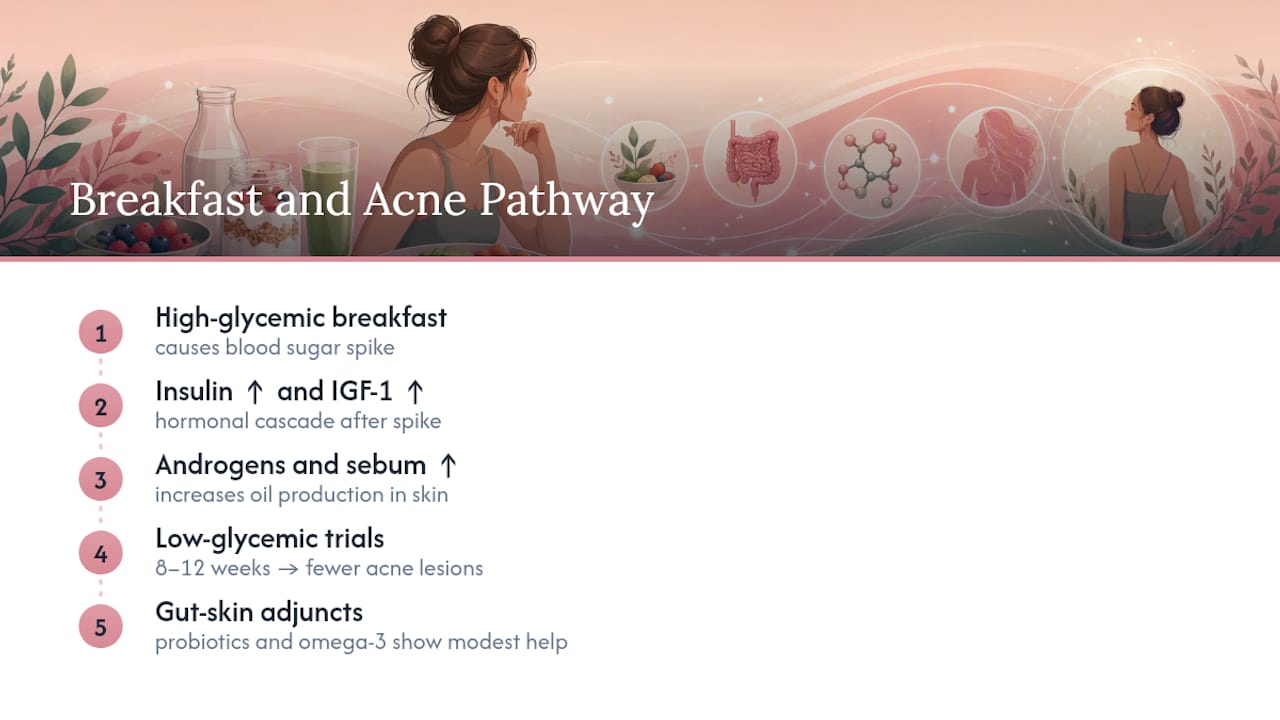
The mechanism starts with insulin. When you eat a high-glycemic breakfast, blood sugar spikes, insulin follows, and insulin triggers a rise in insulin-like growth factor 1, or IGF-1. That hormone ramps up androgen activity and sebum production, both of which feed acne. Peer-reviewed research has traced this insulin and IGF-1 pathway directly to increased oil production in skin.
Small clinical trials following participants on a low-glycemic diet for 8 to 12 weeks have reported measurably fewer acne lesions compared to control groups eating a typical high-glycemic diet.
The American Academy of Dermatology points to this same body of trial evidence when it discusses diet as a factor worth addressing, not a fringe idea.
There’s also a gut side to this. Inflammation that starts in the digestive tract doesn’t stay there. It’s part of what researchers call the gut-skin axis, and it’s why probiotics and omega-3 fatty acids show up in some trials as modest, adjunctive helpers for calming breakouts. None of this makes diet a guaranteed fix. It’s one input among several, alongside genetics, hormones, and skincare, but it’s an input you control every single morning.
Quick Recipes, Swaps, and a One-Week Test Plan
Testing whether a breakfast change actually helps your skin means picking a few reliable recipes and sticking with them long enough to see a pattern.
- 5-minute Greek yogurt bowl (about 18g protein): plain Greek yogurt, blueberries, chia seeds, cinnamon.
- 10-minute veggie scramble (about 14g protein): two eggs, spinach, tomato, half an avocado.
- Overnight protein oats (about 22g protein): rolled oats, protein powder, almond milk, walnuts, prepped the night before.
- Savory tofu bowl (about 15g protein): crumbled tofu, turmeric, nutritional yeast, sautéed peppers.
Shopping list essentials: eggs, plain Greek yogurt or kefir, rolled oats, protein powder, avocados, chia and flax seeds, spinach, firm tofu, and unsweetened almond or coconut milk.
For a 7 day trial, rotate through these four recipes so you’re not eating the same thing daily, keep coffee black or lightly sweetened with cinnamon, and cut sugary cereal, pastries, and juice completely for the week. Consistency matters more than variety here, but a little variety keeps you from quitting on day 4.
Tracking Results and Setting Realistic Expectations
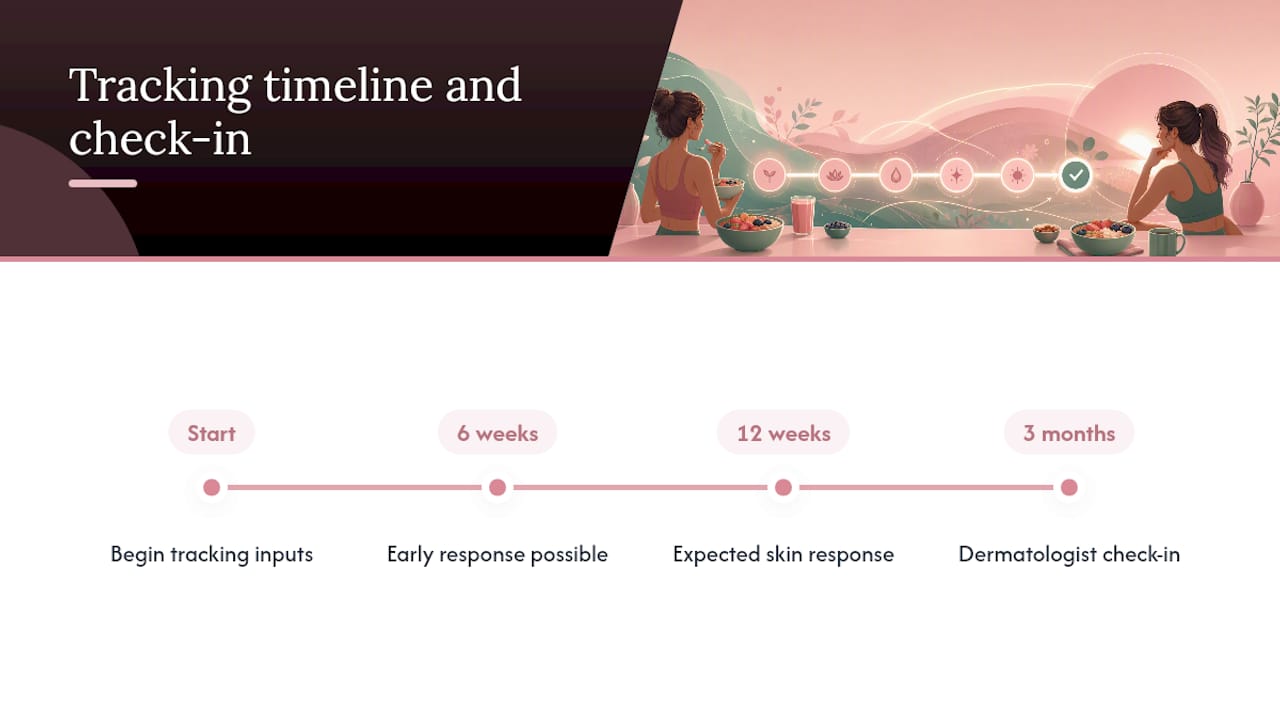
Skin needs 6 to 12 weeks to show a real response to dietary change, since a pimple forming today started developing weeks ago. Keep a simple photo diary, a meal log, and, if you’re a woman with hormonal patterns, notes on your menstrual cycle, since flares often cluster around specific days. Track location and type of breakouts too. If acne is moderate to severe or you’re not seeing change after three months, see a dermatologist. Diet supports treatment; it rarely replaces it.
A Practitioner’s View on Breakfast and Hormonal Acne
Working alongside women managing hormonal acne makes one pattern obvious: breakfast is the meal people cut corners on, then wonder why nothing changes. A protein-forward, low-glycemic morning is a genuine lever, but it works best paired with support from the inside, like probiotics, and consistent, gentle topical care rather than harsh actives that inflame already-irritated skin. Food alone rarely resolves stubborn hormonal breakouts. Combine the diet shift with an inside-out routine and, when needed, a dermatologist’s input.
— Zamanee
If you’re ready to pair these breakfast habits with support built for hormonal skin, Florvahealth’s women's probiotics and digestive enzymes combine probiotics with the kind of inside-out care this guide points toward. For a topical complement, the skincare for hormonal skin collection is built around the same gut-skin thinking.
Sources
- Can the right diet get rid of acne? — American Academy of Dermatology (AAD)
- PubMed: Study linking insulin/IGF-1 and acne mechanisms
- PMC review on probiotics, omega-3s and skin inflammation
This article is general information, not a substitute for advice from a qualified doctor. Consult a qualified healthcare professional about your own circumstances before acting on anything here.


