

Cycle syncing means adjusting what you eat and how you move to match the four hormonal phases of your menstrual cycle rather than eating the same way every day of the month. Paired with a nutrient-dense overall diet, it can genuinely ease bloating, cravings, and energy crashes for some women. It is not a proven way to correct a hormonal imbalance, and it does not replace medical evaluation when something feels off.
TL;DR:
- Tracking your cycle for two to three months is essential to accurately plan phase-specific nutrition strategies.
- Iron-rich foods with vitamin C should be prioritized during menstruation to replenish iron stores and reduce fatigue.
- Increasing protein intake during the follicular phase supports muscle repair, especially when engaging in regular training.
- During the ovulatory phase, focus on antioxidant-rich produce and lean proteins to harness peak energy levels and support hormone clearance.
- Complex carbohydrates and magnesium-rich foods during the luteal phase help stabilize blood sugar and reduce carb cravings, but diet alone cannot fix hormonal imbalances.
Table of Contents
- What Cycle Syncing Diet Means and Why Hormones Drive It
- Menstrual Phase Nutrition: Replenishing Iron and Calming Inflammation
- Follicular Phase Nutrition: More Protein and Liver-Supporting Foods
- Ovulatory Phase Nutrition: Fueling Peak Energy Days
- Luteal Phase Nutrition: Stabilizing Blood Sugar and Cravings
- How to Build a Cycle Syncing Meal Plan Week by Week
- Does Cycle Syncing Actually Work? What the Research Shows
- When to See a Doctor About Cycle-Related Symptoms
- Sample Meals by Phase: Quick Ideas You Can Use Today
- Why I Think Self-Awareness Beats Rigid Rules Here
- Where Florvahealth Fits Into a Cycle-Aware Diet
- Sources
What Cycle Syncing Diet Means and Why Hormones Drive It
The idea traces back to fitness and nutrition coaches who noticed that women’s energy, hunger, and recovery didn’t stay flat across the month. It made intuitive sense: estrogen and progesterone rise and fall on a fairly predictable schedule, and both hormones touch appetite, insulin sensitivity, and inflammation.
A typical menstrual cycle breaks into four phases, each with distinct hormonal changes affecting energy and metabolism, though the exact days can vary by individual.
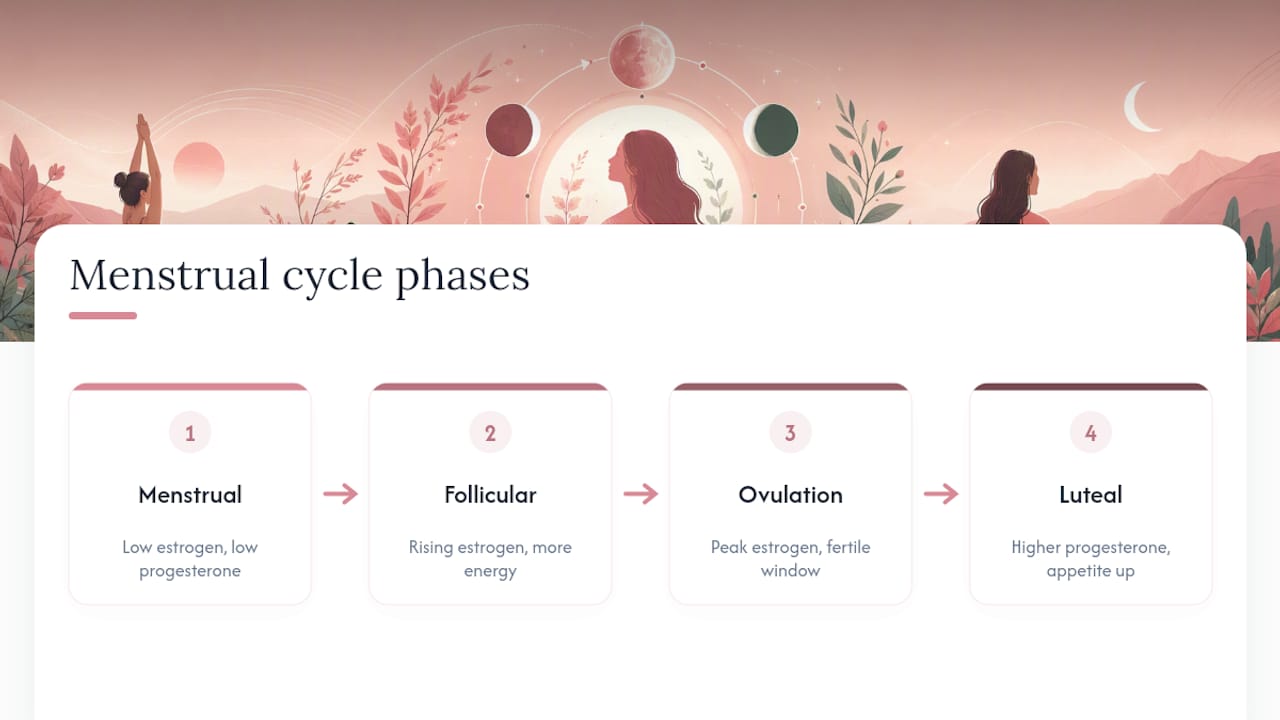
Research on menstrual-cycle physiology confirms that appetite and insulin sensitivity genuinely shift phase to phase. Tracking your own cycle for two or three months, rather than assuming a textbook 28 days, makes any of this actually useful.
Menstrual Phase Nutrition: Replenishing Iron and Calming Inflammation
Blood loss during your period pulls down iron stores, and low energy is often the first sign. Pairing iron-rich foods with vitamin C improves absorption, since nonheme iron from plants needs an acidic boost to get used efficiently. Cleveland Clinic specifically recommends iron-rich foods during this window for exactly that reason.
Priorities during the menstrual phase include iron sources such as red meat, lentils, spinach, and fortified cereals, eaten alongside vitamin C-rich foods like citrus, bell peppers, or strawberries to improve absorption.
- Omega-3s for cramp relief: salmon, walnuts, chia, and flaxseed.
- Warm, mineral-rich broths and extra water to offset bloating from fluid shifts.
- Low-effort swaps: add lentils to canned soup, or blend spinach into a smoothie with orange juice.
Pro Tip: If you dread cooking on day one, batch-cook a lentil and spinach soup during your follicular phase and freeze single portions. Future you will thank past you.
Follicular Phase Nutrition: More Protein and Liver-Supporting Foods
As estrogen rises after your period ends, your body shifts into a more anabolic state, meaning it’s primed to build and repair muscle tissue efficiently. That is the physiological rationale behind nudging protein intake higher during this window, an approach discussed in exercise-nutrition research across cycle phases.
Practical moves for the follicular window:
- Aim for roughly 1.6 to 1.8 grams of protein per kilogram of body weight on training days, especially if you lift or run consistently.
- Add cruciferous vegetables (broccoli, cauliflower, brussels sprouts) to support estrogen metabolism in the liver.
- Include fermented foods like yogurt, kefir, or sauerkraut for gut diversity, which early research links to estrogen metabolism.
- Time a protein and complex carb meal an hour or two before workouts to capture the anabolic advantage.
Rising energy here makes it a good stretch for meal prepping the rest of the month.
Ovulatory Phase Nutrition: Fueling Peak Energy Days
Estrogen peaks right before ovulation, often bringing the most energy and social drive of the whole cycle. This is the window to keep training hard and eating in a way that matches that output, not to cut back.
- Keep lean protein and complex carbs steady: grilled chicken with quinoa, or a bean and brown rice bowl.
- Lean into antioxidant-rich produce: berries, citrus, and leafy greens continue supporting the liver’s estrogen clearance work.
- Carry portable snacks for busy days: a hard-boiled egg with fruit, or hummus with carrot sticks.
Because this phase is short, roughly three to five days, small consistent choices matter more than any single meal.
Luteal Phase Nutrition: Stabilizing Blood Sugar and Cravings
Progesterone dominates after ovulation, and it tends to blunt insulin sensitivity, which is a big part of why carb cravings intensify in the days before your period. Cleveland Clinic points specifically to complex carbohydrates during this window because they release glucose more slowly than refined sugar does.
What actually helps:
- Magnesium sources: dark chocolate, almonds, pumpkin seeds, and leafy greens, which can ease mood swings and muscle tension.
- Fiber and complex carbs: sweet potatoes, oats, and brown rice instead of white bread or pastries.
- Protein at every meal and snack to slow the blood sugar swings that drive cravings.
- Smaller, more frequent meals rather than three large ones, plus scaling back alcohol and caffeine, both of which can worsen bloating and irritability.
Pro Tip: Keep a small stash of roasted chickpeas or almonds at your desk during the luteal phase. A protein-forward snack within reach beats willpower every time.
How to Build a Cycle Syncing Meal Plan Week by Week
Turning any of this into a routine starts with tracking. A basic period app, or even a paper calendar noting flow, energy, and mood, gives you two or three cycles of real data before you plan around a phase.
- Track first, plan second. Log start and end dates of each phase for at least two cycles before locking in a meal plan.
- Build one plate template per phase. Menstrual: protein plus iron-rich vegetable plus warm carb. Follicular: higher protein plus cruciferous vegetable plus fermented side. Ovulatory: lean protein plus antioxidant produce plus complex carb. Luteal: protein plus magnesium-rich food plus slow-digesting carb.
- Set a protein anchor. Most active women do well around 1.2 to 1.6 grams per kilogram daily, moving toward the higher end during the follicular phase and around workouts.
- Shop and prep during your follicular energy peak. Batch-cook grains, roast a tray of vegetables, and portion proteins so luteal and menstrual days require minimal effort.
For readers who don’t eat meat, swap animal iron and protein for lentils, tofu, tempeh, and pumpkin seeds, and pair every plant-iron meal with a vitamin C source to help absorption. Learn more about which everyday foods support hormone balance if you want a deeper list to shop from.
- Keep a running grocery list organized by phase so shopping trips take five minutes instead of thirty.
- Freeze proteins in single-serving portions to avoid decision fatigue on low-energy days.
Does Cycle Syncing Actually Work? What the Research Shows
The honest answer is nuanced: cycle syncing can help you manage symptoms and energy, but it is not a clinically validated way to fix hormonal imbalances. WebMD’s clinical summary is direct about this, noting limited direct evidence for phase-specific diets while acknowledging there’s no real harm in tailoring meals to how you feel.
No single food balances your hormones. What actually moves the needle is overall diet quality, adequate iron, consistent sleep, and regular activity, with phase-aware tweaks layered on top rather than replacing that foundation.
That framing matters because misconceptions run in the opposite direction constantly, usually in the form of a supplement or smoothie promising to “balance” estrogen on its own. The most useful thing you can do is track your own symptoms across two or three cycles: energy, mood, bloating, and cravings, day by day. That personal data tells you far more than any generic phase chart ever will.
When to See a Doctor About Cycle-Related Symptoms
Cycle syncing addresses everyday symptoms, not medical conditions. Certain signs need a clinician, not a meal plan:
- Soaking through a pad or tampon every hour for several hours, or bleeding that lasts more than seven days.
- Pain severe enough to interfere with daily function, or pain that doesn’t respond to over-the-counter relief.
- Dizziness, fainting, or extreme fatigue, which can signal anemia and warrant iron studies.
- Cycles shorter than 21 days or longer than 35 days, or missed periods without a clear cause.
Ask your doctor about iron panels if fatigue and heavy flow show up together, and mention any hormonal birth control you’re on, since it changes or suppresses the natural hormone swings this whole approach is built around. If irregular cycles or severe symptoms persist, a referral to an OB-GYN or endocrinologist is worth requesting directly. For a broader rundown of warning signs, this guide on identifying hormonal imbalance symptoms is a useful next stop. Always check with a clinician before adding new supplements, particularly if you’re pregnant, trying to conceive, or managing a diagnosed condition.
Sample Meals by Phase: Quick Ideas You Can Use Today
Real meals beat theory. Here’s one full day per phase, built for minimal effort:
- Menstrual: Breakfast: oatmeal with strawberries and pumpkin seeds. Lunch: lentil soup with orange slices. Dinner: salmon, spinach, and sweet potato. Snack: dark chocolate and almonds.
- Follicular: Breakfast: Greek yogurt with kefir and berries. Lunch: chicken and quinoa bowl with roasted broccoli. Dinner: tofu stir-fry with brown rice. Snack: hard-boiled eggs.
- Ovulatory: Breakfast: eggs with avocado and citrus. Lunch: black bean and brown rice bowl. Dinner: grilled fish with roasted vegetables. Snack: hummus and carrots.
- Luteal: Breakfast: oats with almond butter and cinnamon. Lunch: turkey and sweet potato hash. Dinner: chickpea curry with brown rice. Snack: roasted chickpeas.
Simple swaps make comfort food work harder: add lentils to jarred pasta sauce, or stir chia seeds into pudding for a fiber and omega-3 boost. Every meal above works meatless with tofu, tempeh, or beans standing in for animal protein.
Why I Think Self-Awareness Beats Rigid Rules Here
Cycle syncing works best as a feedback loop, not a rulebook. At FlorvaHealth, the approach behind cyclical living for hormonal health treats diet as one lever among several, alongside gut support and skin care, because hormones, digestion, and skin clarity are more connected than most people realize. I’d rather see a woman track two cycles honestly than follow a phase chart blindly. Pair any dietary changes with a clinician’s input if symptoms feel bigger than everyday PMS.
— Zamanee
Where Florvahealth Fits Into a Cycle-Aware Diet
Food does most of the heavy lifting, but it isn’t the only lever. Florvahealth offers women's probiotics and digestive enzymes designed to complement phase-aware eating, with the connection between gut health and hormone metabolism in mind.
If iron-rich meals during your period still leave you drained, or your luteal phase cravings feel unmanageable despite dietary changes, targeted probiotic or magnesium-based supplements may support symptom management alongside nutrition. These products aim to assist women experiencing PMS, bloating, and cycle irregularity as natural, non-medicated options. Browse the women’s probiotics and digestive enzymes collection to explore options that may fit your current symptoms.
This article is general information, not a substitute for advice from a qualified doctor. Consult a qualified healthcare professional about your own circumstances before acting on anything here.
Sources
- Nutrition and Exercise Throughout Your Menstrual Cycle (Cleveland Clinic)
- Cycle Syncing Guide: Syncing Food and Workouts to Your Cycle (WebMD)
- NCBI review article (PMC5376807)
- NCBI review article (PMC7456450)


