

Luteal phase bloating is normal and hormonal, not a sign your body suddenly can’t tolerate certain foods. The most effective first steps are cutting sodium in the evenings, sipping water steadily through the day instead of chugging it, taking a 30 minute walk, and trying 200 to 300 mg of magnesium at bedtime (check with your clinician first). Most women see it ease within a few days after their period starts. If it doesn’t, or it comes with severe pain, that’s worth a call to your doctor.
TL;DR:
- Bloating during the luteal phase is caused by progesterone relaxing gut muscles and increasing sodium retention, while visceral hypersensitivity amplifies discomfort.
- Bloating typically starts a few days after ovulation and peaks in the three to five days before menstruation, usually resolving within a day or two after bleeding begins.
- Consistent lifestyle adjustments such as reducing sodium, drinking water steadily, engaging in light activity, and taking magnesium supplements can effectively ease symptoms.
- Tracking cycle symptoms alongside diet, bowel patterns, and stress helps distinguish hormonal bloating from other conditions like IBS or ovarian cysts.
- Restrictive diets like low-FODMAP are generally ineffective unless underlying digestive issues exist, with habit-based approaches offering better relief for cyclical bloating.
Table of Contents
- What Causes Bloating During the Luteal Phase?
- When Does Luteal Bloating Start and How Long Does It Last?
- How Do You Know if Bloating Is Normal or a Red Flag?
- What Actually Helps: Diet, Movement, and Supplements
- How Do You Track Bloating to Confirm It’s Hormonal?
- Bloating and Your Mood: The Overlooked Connection
- Does a Low-FODMAP or Anti-Inflammatory Diet Help?
- An Editorial Take on Why “Just Deal With It” Advice Fails
- A Simpler Way to Support Your Luteal Week
- Sources
What Causes Bloating During the Luteal Phase?
Progesterone rises sharply after ovulation, and it does more than regulate your cycle. It relaxes smooth muscle throughout your body, including the muscle lining your intestines. That slows the rhythmic contractions that normally move food and gas through your gut, so things sit longer, ferment more, and stretch your abdomen from the inside.
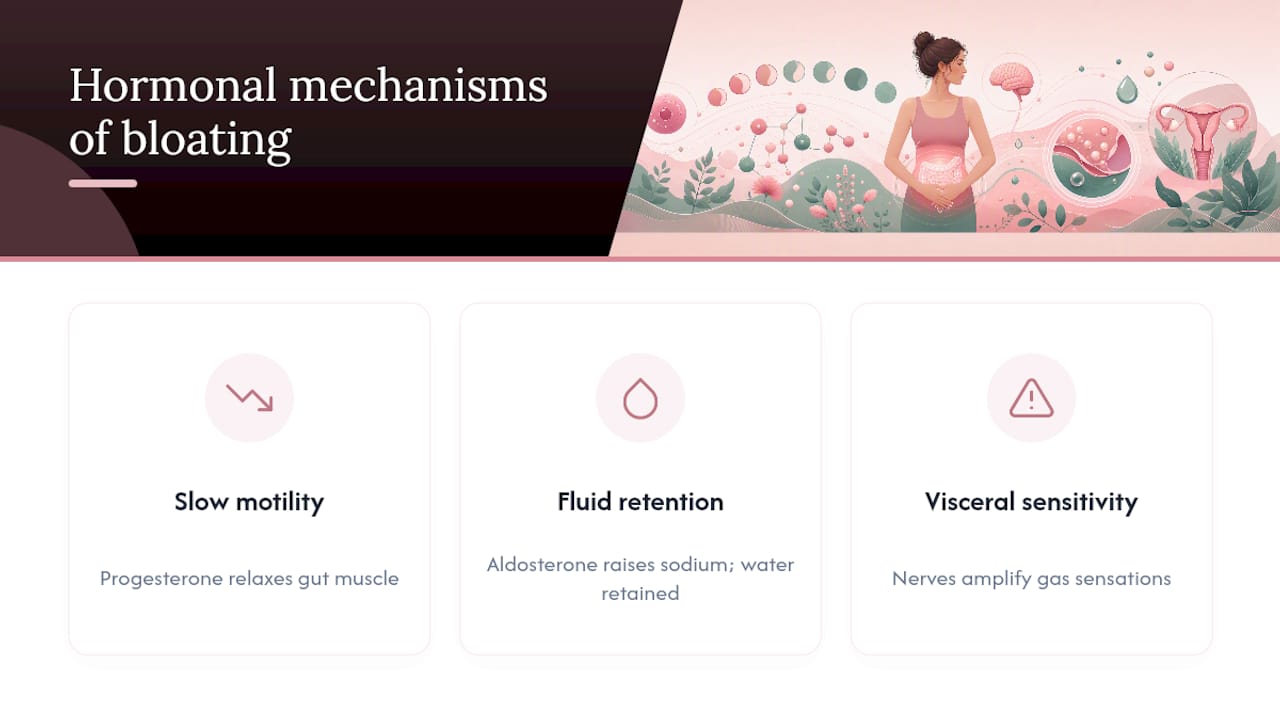
At the same time, progesterone triggers your adrenal glands to release more aldosterone, a hormone that tells your kidneys to hold onto sodium. Where sodium goes, water follows, which is why your rings feel tighter and your waistband digs in during the week before your period.
There’s a third piece most explanations skip: visceral hypersensitivity. Hormonal shifts turn up the volume on nerve signals from your gut, so a normal amount of gas can feel like genuine distension even when nothing unusual is happening inside. This is the mechanism behind luteal phase bloating, and it’s a useful diagnostic clue. If your bloating shows up like clockwork around the same cycle day every month, that’s hormonal. If it flares an hour after a specific meal regardless of where you are in your cycle, that points toward a food trigger or something like IBS instead.
When Does Luteal Bloating Start and How Long Does It Last?
Bloating typically starts a few days after ovulation, once progesterone has had time to build up, and tends to peak in the three to five days right before your period. It usually fades within a day or two once bleeding begins, as progesterone drops and fluid balance resets.
The actual physical change is smaller than it feels. A study tracking menstrual water retention found an average weight gain of about one pound, which is a modest number compared to how distended and heavy the luteal week can feel. That gap between the small measurable change and the outsized sensation is largely the visceral hypersensitivity at work.
Timing varies by person and cycle length. Someone with a shorter luteal phase might notice symptoms compress into just a few days, while a longer luteal phase can stretch the uncomfortable window out. Tracking your own pattern over a couple of cycles tells you more than any general timeline can.
How Do You Know if Bloating Is Normal or a Red Flag?
Typical luteal bloating feels like a fuller, tighter abdomen, visible distension by evening, gas, mild temporary weight gain, and either constipation or looser stools. It comes and goes with your cycle and doesn’t get progressively worse over months.
Pay attention if bloating shows up most days regardless of cycle phase, if pain is severe or getting worse, or if you notice a sudden change from your usual pattern. Fever, unexplained weight loss, blood in your stool, or new urinary symptoms are not things to wait out.
Conditions like endometriosis, uterine fibroids, ovarian cysts, and IBS can all mimic or worsen cyclical bloating, and they need actual diagnosis rather than more lifestyle tweaks. If your pattern doesn’t match a clean calendar alignment with your cycle, ask your doctor about imaging or a specialist referral.
What Actually Helps: Diet, Movement, and Supplements
The luteal week rewards small, consistent adjustments more than a dramatic overhaul. Here’s what has real support behind it.
Diet. Sodium is the biggest lever you control. Highly processed food, restaurant meals, and salty takeout in the days before your period work directly against the fluid balance you’re trying to protect. Soluble fiber from oats, kiwi, or psyllium helps keep things moving through a gut that’s already running slower than usual, and smaller, more frequent meals put less pressure on a digestive system that’s temporarily sluggish.

Hydration. It sounds backwards, but drinking enough water actually helps your body release retained sodium instead of hoarding more of it. Aim for an adequate amount of water spread across the day rather than a couple of huge glasses at once, and skip the extremes in both directions, since both dehydration and overdoing it can work against you.
Movement. Thirty minutes of gentle aerobic activity, walking, swimming, or yoga, stimulates the gut motility that progesterone is actively slowing down. You don’t need an intense workout. The goal is getting things moving, literally.

Supplements. Magnesium in the 200 to 300 mg range at bedtime has trial support for easing fluid retention, and it’s one of the few supplement recommendations that shows up consistently in Mayo Clinic’s guidance on managing PMS symptoms. Talk to your clinician before starting it, especially if you’re already taking NSAIDs or a diuretic, since combinations matter more than any single ingredient does. Cleveland Clinic’s rundown on PMS management makes a similar point: over-the-counter options and supplements can help, but they need to be used with some medical oversight rather than trial and error.
Sleep and stress. Poor sleep and high stress both seem to turn up visceral hypersensitivity, which means the same amount of gas can feel more uncomfortable on a bad night than a good one. Regular sleep and basic relaxation habits, breathing exercises, a short walk outside, aren’t just nice extras here.
Putting it together, a practical sequence looks like this:
- Plan lower sodium dinners starting the week bloating usually hits for you
- Add fiber and daily movement early, before constipation sets in, not after
- Keep hydration steady rather than reactive
- Pull back on alcohol in the last three to four days before your period, since it dehydrates you and irritates an already sensitive gut
Pro Tip: Don’t wait until you’re already bloated to start these habits. Back them into your calendar starting the day after ovulation, roughly two weeks before your period, so your gut never gets the chance to fall behind.
How Do You Track Bloating to Confirm It’s Hormonal?
A short symptom diary does more to clarify what’s happening than guessing ever will. Run this for two to three cycles:
- Log the cycle day next to a bloating severity score from 1 to 5.
- Note your bowel pattern that day, constipated, normal, or loose.
- Write down what you ate, especially anything unusual.
- Record exercise and sleep hours.
- List any supplements or medications you took.
After a couple of cycles, the pattern usually speaks for itself. Consistent spikes in the same luteal window point to hormones. Spikes that follow specific meals regardless of cycle day point toward a food trigger or something like IBS worth investigating separately.
If you do need to see a clinician, bring two or three cycle excerpts showing the pattern, a note of any red-flag symptoms you’ve experienced, and your current medication list. That’s far more useful to a doctor than trying to describe months of vague discomfort from memory.
Bloating and Your Mood: The Overlooked Connection
Physical bloating and emotional strain during the luteal phase aren’t separate problems. They’re tangled together. The same hormonal shifts that slow your gut and trigger fluid retention also affect neurotransmitters tied to mood, which is part of why irritability, anxiety, and low motivation often show up on the exact same days as the physical discomfort.
There’s also a more direct feedback loop. Feeling physically uncomfortable, self-conscious about a distended stomach, or frustrated that clothes fit differently for a week each month takes a real toll on how you feel about yourself, even when you know intellectually that it’s temporary. That frustration can then heighten stress, and stress itself seems to intensify visceral hypersensitivity, making the physical bloating feel worse. It’s a loop, not two unrelated symptoms happening to coincide.
Naming that connection matters practically. If you’ve written off luteal-week moodiness as unrelated to your bloating, you’re missing a chance to treat both with the same tools. Sleep, movement, and stress reduction don’t just ease physical symptoms. They tend to soften the emotional edge of the week too. If mood symptoms are severe enough to disrupt work or relationships every cycle, that’s worth raising with a clinician separately, since it may point toward premenstrual dysphoric disorder rather than typical PMS.
Does a Low-FODMAP or Anti-Inflammatory Diet Help?
Not necessarily, and this is where a lot of well-meaning advice misses the mark. Low-FODMAP diets are built to identify and remove specific fermentable carbohydrates that trigger IBS symptoms, and they work well for that purpose. But hormonal bloating tied to your cycle typically won’t respond to a low-FODMAP approach unless you also happen to have underlying IBS, because the mechanism driving it, progesterone slowing gut motility, has nothing to do with fermentable carbs.
That doesn’t mean diet is irrelevant. Anti-inflammatory eating patterns rich in vegetables, fatty fish, and olive oil, and lighter on ultra-processed food, tend to support steadier digestion generally, which can take some edge off luteal symptoms even if they’re not a targeted fix. Foods that reliably make things worse for most people include high-sodium processed meals, carbonated drinks, and large amounts of alcohol in the days right before your period, since alcohol dehydrates you and irritates a gut that’s already running slow.
The honest takeaway is that restrictive diets are the wrong tool for hormonal bloating. Targeted habit changes, less sodium, more soluble fiber, steady hydration, do more for luteal-phase symptoms than eliminating entire food groups ever will. Save low-FODMAP for when you suspect a genuine food-triggered pattern, not as a blanket response to cyclical bloating.
An Editorial Take on Why “Just Deal With It” Advice Fails
Most bloating advice treats the luteal week like a single problem with a single fix: cut salt, drink water, done. That undersells how layered this actually is. You’re dealing with slowed gut motility, active fluid retention, and a nervous system that’s temporarily more sensitive to normal sensations, all at once. Treating only one of those three usually leaves you frustrated when the bloating persists anyway.
The bigger blind spot is how disconnected the physical and emotional symptoms get treated in most guidance. Nobody tells you that the same magnesium supplement research suggests for fluid retention also has a plausible mood benefit, or that the walk you’re taking for gut motility is doing double duty on stress. Florvahealth’s view is that inside-out support, gut health, targeted supplementation, and topical care working together, makes more sense than chasing one symptom in isolation. That’s the thinking behind pairing habit changes with products like probiotics and magnesium-based supports rather than reaching for a restrictive diet as a first move. Persistent or severe symptoms still belong in a conversation with your doctor, not a supplement aisle.
— Zamanee
A Simpler Way to Support Your Luteal Week
If you’ve read this far, you already know the individual tactics: less sodium, more water, gentle movement, magnesium. What’s harder is doing all of it consistently, every single cycle, without it feeling like a part-time job. Florvahealth’s women’s probiotics and digestive enzymes back up the digestive side of those habits, so there is one less thing to assemble yourself.
Florvahealth’s digestive enzyme capsules and probiotic capsules support the digestive side of luteal bloating, for women who want a straightforward routine rather than a cabinet full of separate supplements. These are non-prescription, supportive products, not medical treatment, so talk with your clinician before combining them with existing medications or diuretics. If your bloating matches the calendar-aligned pattern described earlier in this piece, Florvahealth’s women’s probiotics and digestive enzymes are a reasonable next place to look.
This article is general information, not a substitute for advice from a qualified doctor. Consult a qualified healthcare professional about your own circumstances before acting on anything here.
Sources
- PubMed: study on menstrual water retention
- Luteal phase bloating: why it happens and what helps — Suna Health


