

What a natural daily routine for hormonal fatigue actually looks like
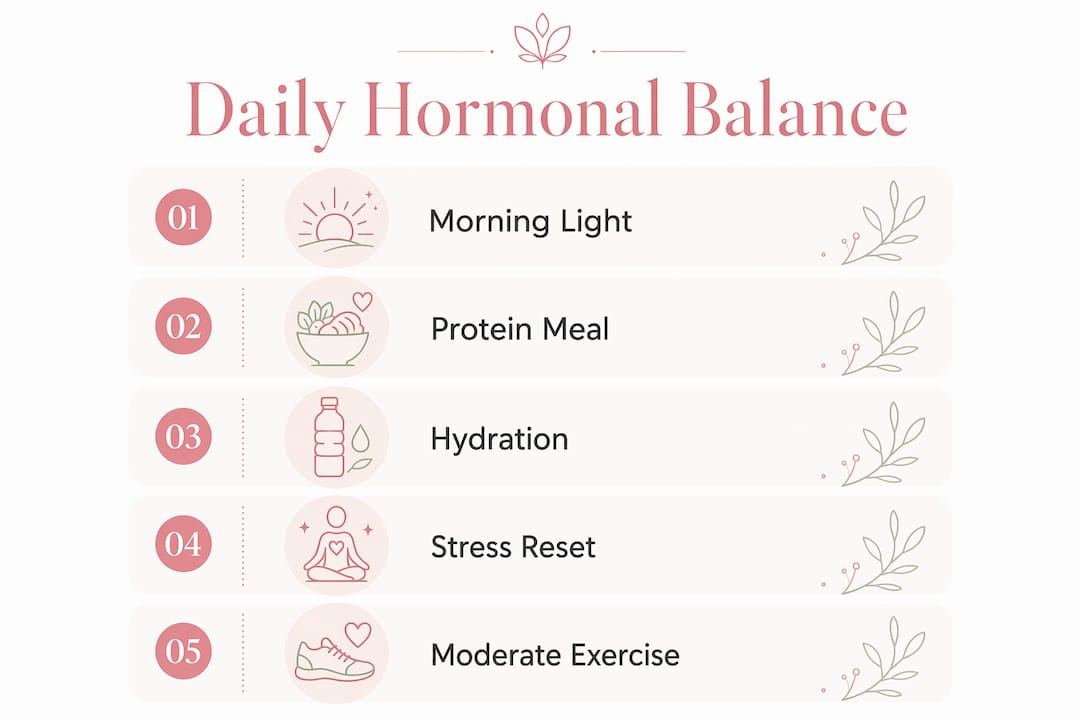
The most effective way to address hormonal fatigue through a daily routine is not one dramatic change. It is a sequence of small, consistent habits that work together: morning sunlight soon after waking, a protein-forward breakfast, steady hydration, stress resets throughout the day, and a fixed sleep-wake window. Stack these, and the cumulative effect on cortisol rhythm, blood sugar, and energy metabolism is real.
Key daily elements to build around:
- Morning light exposure (30–60 minutes after waking) to anchor cortisol and circadian rhythm
- Protein at breakfast to stabilize blood sugar and prevent the mid-morning crash
- Consistent hydration starting before your first coffee
- Mindfulness or breathing exercises to interrupt chronic cortisol elevation
- Fixed sleep and wake times, even on weekends
- Symptom tracking over at least two weeks to spot your personal fatigue triggers
One caution worth stating plainly: supplements marketed for “adrenal support” are not regulated by the FDA and carry real risks. The Endocrine Society warns that taking adrenal hormone supplements unnecessarily can suppress your adrenal glands for months. Stick to lifestyle-first strategies.
Pro Tip: Don’t try to overhaul everything at once. Attach one new habit to something you already do, like drinking a glass of water before your morning coffee. That’s habit stacking, and it’s how small changes compound into lasting energy.
Table of Contents
- Scientifically supported daily habits that reduce hormonal fatigue
- How gut health shapes your hormones, energy, and skin
- How to safely add natural products and lifestyle changes
- Building a routine you will actually keep
- Key Takeaways
- Florvahealth brings the inside-out approach together
Scientifically supported daily habits that reduce hormonal fatigue
Morning: light, protein, and timing
Getting natural sunlight within 30–60 minutes of waking is one of the highest-leverage habits for managing hormonal fatigue. Light exposure regulates cortisol rhythms and sets your circadian clock, which governs everything from sleep quality to hormone secretion timing. Ten to fifteen minutes outside, without sunglasses, is enough on most mornings.

Breakfast composition matters just as much as timing. The American Heart Association recommends 0.8 grams of protein per kilogram of body weight daily, and front-loading protein at breakfast stabilizes blood sugar for hours. Aim for 0.8 grams of protein per kilogram of body weight daily, with a moderate protein portion at breakfast. Eggs, Greek yogurt, or a protein smoothie with whole-food additions all work. A hormone health morning routine built around these two anchors can shift your energy within a week.
Hydration and its direct link to hormones
Dehydration impairs hormonal signaling faster than most people realize. Even mild fluid loss affects energy metabolism and amplifies fatigue. Drink water before caffeine, not after. Proper hydration supports the organ systems that clear metabolic waste and regulate hormone production, including the kidneys and liver.
Stress management: brief resets, not long rituals
Chronic stress keeps cortisol elevated past its natural morning peak, flattening the rhythm your body needs to feel awake and then wind down. Mindfulness and breathing exercises reduce cortisol and support circadian normalization. You do not need a 30-minute meditation. Box breathing (four counts in, four hold, four out, four hold) for two minutes between tasks is enough to interrupt the stress spiral.
“Habit stacking — combining morning movement, hydration, and stress management — creates cumulative benefits to energy and hormonal resilience that no single change can match.” — Dr. Allie Buttarazzi, as cited by Everyday Health
Paloma Health research on hormonal fatigue treatment shows that Fatigue Severity Scale scores drop significantly after consistent treatment and lifestyle adjustment. Improvements take months, not days. That timeline is worth knowing before you give up on a routine that is actually working.
| Habit | Target | Why it matters |
|---|---|---|
| Morning sunlight | 30–60 min after waking | Anchors cortisol rhythm and circadian clock |
| Protein at breakfast | 0.8 g/kg daily | Stabilizes blood sugar, prevents energy crashes |
| Hydration | Water before caffeine, consistent all day | Supports hormone signaling and metabolism |
| Breathing/mindfulness | 2 minutes between tasks | Lowers cortisol, normalizes stress response |
| Sleep-wake consistency | Within 30–60 min window daily | Aligns hormone secretion with circadian rhythm |
Exercise: type and timing both count
Moderate, consistent movement outperforms intense sporadic workouts for hormonal balance. Aim for regular moderate aerobic activity and strength sessions weekly. Short walks after meals improve insulin sensitivity and blunt post-meal blood sugar spikes. High-intensity training right before bed disrupts melatonin and sleep architecture, so keep hard sessions to mornings or early afternoons.
How gut health shapes your hormones, energy, and skin
Your gut does far more than digest food. Gut imbalances like dysbiosis and leaky gut reduce nutrient absorption, disrupt hormone metabolism, and drive the chronic inflammation that underlies both fatigue and hormonal skin issues. When the gut is compromised, even a clean diet may not translate into usable energy.
Estrogen metabolism is particularly gut-dependent. The estrobolome, a collection of gut bacteria, helps process and clear estrogen from the body. When this system is disrupted, estrogen can recirculate rather than clear, contributing to estrogen dominance and the fatigue, mood shifts, and skin flares that come with it. Mitochondrial function, your cells’ actual energy production, is also affected by gut-driven inflammation.
Restoring gut balance through probiotics, fiber-rich foods, and reduced inflammatory inputs supports hormone metabolism, nutrient absorption, and skin clarity from the inside out.
Fermented foods like kefir, kimchi, and plain yogurt feed beneficial bacteria. High-fiber vegetables and legumes support estrogen clearance. These are not supplements with unknown ingredients. They are foods with a long track record.
Pro Tip: If you notice that fatigue, bloating, and skin breakouts tend to cluster together around your cycle, gut health is often the common thread. Supporting your microbiome consistently, not just when symptoms flare, is what creates lasting change.
Florvahealth’s approach connects these dots directly, combining probiotic support with topical care to address hormonal symptoms from both inside and out. For women dealing with hormonal skin concerns alongside fatigue, this inside-out framing is not a marketing angle. It reflects how these systems actually interact.
How to safely add natural products and lifestyle changes
The safest path to managing hormonal fatigue starts with what you can control without risk: diet, sleep, movement, and stress. These are not consolation prizes for people who cannot afford supplements. They are the interventions with the strongest evidence.
Safe, evidence-backed starting points:
- Eat balanced meals with protein, healthy fats, and fiber at consistent times
- Limit caffeine after 2 PM and avoid alcohol close to bedtime
- Build a 20–30 minute wind-down before sleep: dim lights, no screens, gentle stretching
- Track sleep, mood, energy, and alcohol intake for two weeks to identify your personal fatigue patterns
- Introduce one new habit at a time and give it at least two weeks before judging its effect
On caffeine specifically: it sharpens alertness temporarily, but the Endocrine Society is clear that caffeine masks fatigue without addressing its root causes. Leaning on it to get through the day is a sign the underlying hormonal or metabolic issue needs attention, not more coffee.
Warning: Supplements sold for “adrenal fatigue” are not regulated by the FDA. The Endocrine Society cautions that adrenal hormone supplements can suppress your adrenal glands’ natural function. When stopped, those glands may remain inactive for months, creating a genuine risk of adrenal crisis. If you are considering any supplement targeting hormone function, discuss it with your doctor first.
Women navigating perimenopause or menopause often find that hormonal symptoms overlap with fatigue in ways that make it hard to know where to start. Lifestyle changes remain the foundation regardless of life stage. If symptoms persist despite consistent effort, functional medicine testing can surface thyroid and nutrient imbalances that standard labs often miss.
Building a routine you will actually keep
No single habit fixes hormonal fatigue. What works is the combination: morning light and protein, midday movement, afternoon stress resets, and a consistent sleep window. These habits reinforce each other. Better sleep improves cortisol rhythm. Stable blood sugar reduces cravings and mood swings. Lower stress supports gut health, which supports hormone clearance.
Core habits to commit to:
- Morning sunlight and a protein-rich breakfast within the first hour of waking
- Hydration before caffeine, every day
- Two to three brief breathing or mindfulness resets during the workday
- Consistent bedtime and wake time, including weekends
- Two strength sessions and 150 minutes of moderate cardio per week
- Two-week symptom tracking to personalize your approach
Improvements in energy and mood can appear within days of normalizing sleep and meals. Meaningful shifts in cycle regularity or hormonal balance typically take 6–12 weeks of consistent habits. That is not a long time when the alternative is years of fatigue.
Key Takeaways
A consistent daily routine combining morning sunlight, protein-forward meals, steady hydration, stress resets, and fixed sleep timing is the most evidence-backed approach to managing hormonal fatigue naturally.
| Point | Details |
|---|---|
| Morning light anchors hormones | Get natural sunlight within 30–60 minutes of waking to regulate cortisol and circadian rhythm. |
| Protein stabilizes energy | Aim for 0.8 grams of protein per kilogram of body weight daily, with a generous protein portion at breakfast to prevent blood sugar crashes and sustained fatigue. |
| Gut health drives hormone balance | Dysbiosis and leaky gut disrupt estrogen metabolism and nutrient absorption, worsening fatigue and skin issues. |
| Supplement risks are real | FDA-unregulated adrenal supplements can suppress adrenal function for months; lifestyle changes are safer and more effective. |
| Florvahealth supports inside-out balance | Florvahealth combines probiotic and topical care to address hormonal fatigue and skin symptoms from within. |
Florvahealth brings the inside-out approach together
Most wellness products address one symptom at a time. Florvahealth is built differently, specifically for women who want to work with their hormones, not just manage the fallout.

The Florva hormone and skin balance system combines probiotic support, pH-balanced care, and targeted relief for PMS, bloating, and hormonal skin concerns in one integrated routine. It is designed for women who have already done the lifestyle work and want products that match that same inside-out logic, not a shelf of unregulated capsules with vague claims. If PMS symptoms and skin flares are part of your fatigue picture, the PMS and Bloating Relief Kit is a practical next step. Visit Florvahealth to find the right system for where you are right now.


