

Daily rituals are defined as deliberate, repeated behaviors that directly regulate hormonal balance by sending consistent signals to the body’s stress and reproductive systems. The science behind why daily rituals support hormones centers on two key systems: the HPA axis (hypothalamic-pituitary-adrenal), which governs cortisol and stress response, and the HPG axis (hypothalamic-pituitary-gonadal), which controls reproductive hormones like estrogen and progesterone. When these two systems receive predictable input from your daily habits, they function in sync. When they don’t, symptoms like irregular cycles, PMS, hormonal acne, and mood swings follow. The good news is that small, consistent daily habits create measurable change over time.
Why do morning rituals regulate cortisol and hormonal health?
Cortisol follows a precise daily rhythm. It peaks within 30–45 minutes of waking in what researchers call the cortisol awakening response (CAR). This morning surge is not a stress signal. It is your body’s natural ignition system, priming your immune function, metabolism, and mental focus for the day ahead.
Morning light exposure is the most powerful cue for circadian alignment, supporting both cortisol and melatonin rhythms. Blue-wavelength light from natural sunlight tells your brain’s suprachiasmatic nucleus that the day has begun, which sharpens the CAR and sets the stage for melatonin production later that night. Getting outside within 20 minutes of waking, even on a cloudy day, delivers this signal reliably.

Nutrition timing matters just as much. Protein intake within 60 minutes of waking stabilizes blood sugar and prevents a cortisol spike driven by low glucose. When cortisol stays stable in the morning, the HPA axis does not send distress signals to the HPG axis. That means your reproductive hormones, including progesterone and LH, can operate without interference.
A practical morning ritual for hormone support includes:
- Natural light exposure within 20 minutes of waking (outdoors or near a bright window)
- Protein-rich breakfast within 60 minutes, such as eggs, Greek yogurt, or a protein smoothie
- Gentle movement like a 10-minute walk, which reduces excess cortisol and signals safety to the nervous system
- Avoiding your phone for the first 15–30 minutes to prevent a cortisol spike from social or news stimulation
- Hydration before caffeine, since dehydration elevates cortisol before you even reach for coffee
Pro Tip: Eat protein before coffee. Caffeine on an empty stomach amplifies cortisol output. A small protein snack first blunts that spike and keeps your energy steadier through the morning.
Does routine consistency matter more than ritual intensity?
Consistency beats intensity every time when it comes to hormonal and metabolic health. Regularity in wake times and light exposure lowers cardiovascular risk and improves mood independent of total exercise volume. That finding reframes how most women think about wellness. You do not need a 90-minute morning routine. You need the same 20-minute routine, repeated daily.
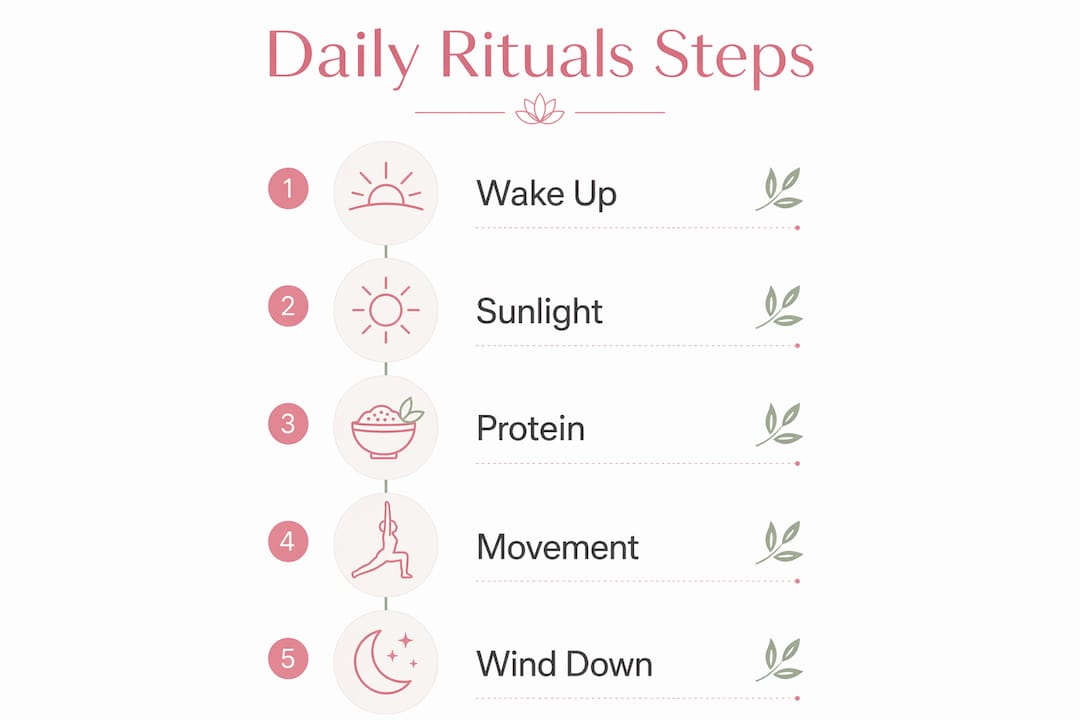
Your hormonal systems respond to patterns, not perfection. Consistent morning habits create a favorable environment for cycle regularity and progesterone production. Think of each repeated behavior as a circadian “anchor,” a fixed point that tells your endocrine system when to release which hormone and in what amount.
Building consistency without burning out requires a gradual approach. Clients who adopt one ritual for 2–3 weeks before adding another show better adherence and better hormonal outcomes than those who overhaul everything at once. The sequence matters:
- Pick one anchor habit to start, such as a consistent wake time, and hold it for two weeks before adding anything else.
- Layer in light exposure as your second habit once the wake time feels automatic.
- Add a protein-first breakfast as your third habit, building on the circadian foundation already in place.
- Introduce a stress reduction practice like five minutes of deep breathing or journaling once the first three habits feel stable.
- Evaluate and adjust after 30 days. Drop what creates stress. Keep what feels sustainable.
Pro Tip: Use the “soft cutoff” technique. Instead of committing to a rigid 6:00 AM wake time, set a 30-minute window: wake between 6:00 and 6:30 AM. This reduces the anxiety of missing a target while still anchoring your circadian rhythm.
How do stress reduction rituals calm the nervous system?
Stress is the single biggest disruptor of hormonal balance in women aged 20–40. Chronic stress suppresses GnRH release, the hormone that triggers LH and FSH production, which in turn disrupts ovulation and lowers progesterone. The mechanism is direct: a stressed HPA axis actively suppresses the HPG axis.
Rituals reduce amygdala activation, signaling safety to the brain and lowering stress hormones. The amygdala is your brain’s threat-detection center. Predictable, meaningful rituals tell it that no threat is present, which dials down cortisol and adrenaline output. This is not a metaphor. It is a measurable physiological shift.
“Predictable, meaningful rituals help decrease physiological stress load and improve mood by reducing the brain’s need to constantly scan for threats. When the nervous system feels safe, it stops borrowing resources from reproductive function.”
Effective stress reduction rituals do not need to be elaborate. The most clinically relevant options include:
- Meditation or breathwork (even five minutes of box breathing lowers cortisol measurably)
- Journaling to externalize worry and reduce rumination, which keeps the amygdala from staying on high alert
- Mindful movement like yoga or slow stretching, which activates the parasympathetic nervous system
- Consistent bedtime rituals such as dimming lights and avoiding screens, which signal the brain to shift from alert to rest mode
The key is that the ritual must feel meaningful to you, not prescribed. A ritual that feels like a chore adds stress rather than reducing it. Start with one practice that you actually want to do, and let it become automatic before adding another.
What daily habits best support hormone balance and wellness?
Hormone balance is built from four pillars: nutrition, movement, sleep, and evening wind-down. Each one feeds directly into the HPA and HPG axes, and each one compounds the effect of the others.
Balanced meals with protein, fiber, and healthy fats maintain insulin sensitivity and prevent cortisol spikes. Insulin and cortisol are closely linked. When blood sugar crashes from a low-protein or high-sugar meal, cortisol rises to compensate. That cortisol surge then suppresses reproductive hormone production. Eating balanced meals at regular intervals is one of the most direct ways to keep both systems stable.
Gentle exercise supports cortisol regulation and mood without overtaxing the system. Over-exercising with a low body weight or caloric deficit risks hormonal suppression, particularly of estrogen and progesterone. A 30-minute walk, a yoga class, or light strength training three to four times per week delivers the hormonal benefits of movement without triggering a stress response.
Sleep is where hormone production and repair happen. Waking at a consistent time is more critical than total sleep duration for maintaining cortisol rhythm. A consistent wake time anchors your entire circadian system, which governs when cortisol rises, when melatonin releases, and when growth hormone peaks during deep sleep.
| Ritual category | Key habit | Hormonal benefit |
|---|---|---|
| Morning | Sunlight within 20 minutes of waking | Sharpens cortisol awakening response |
| Nutrition | Protein-first meals at regular intervals | Stabilizes insulin and prevents cortisol spikes |
| Movement | 30 minutes of gentle exercise daily | Reduces excess cortisol, supports mood |
| Evening | Dim lights and screen-free wind-down | Promotes melatonin and restorative sleep |
| Stress | Five minutes of breathwork or journaling | Lowers amygdala activation, protects HPG axis |
Evening rituals deserve specific attention. Dimming lights after 8:00 PM, avoiding blue-light screens, and doing something calming like reading or gentle stretching all signal the brain to begin melatonin production. Melatonin does not just help you sleep. It also has a protective role in hormonal cycle regulation, influencing the timing of LH surges and ovulation.
Key Takeaways
Daily rituals support hormones by providing consistent, predictable signals to the HPA and HPG axes, creating the conditions for cortisol stability, cycle regularity, and reproductive hormone balance.
| Point | Details |
|---|---|
| Morning light anchors cortisol | Get outside within 20 minutes of waking to sharpen the cortisol awakening response. |
| Consistency beats intensity | A repeated 20-minute routine outperforms an occasional 90-minute one for hormonal outcomes. |
| Stress rituals protect the HPG axis | Chronic stress suppresses GnRH, disrupting ovulation; breathwork and journaling reduce this effect. |
| Protein timing stabilizes blood sugar | Eating protein within 60 minutes of waking prevents cortisol spikes driven by low glucose. |
| Gradual habit-building works best | Adding one ritual every 2–3 weeks produces better adherence and hormonal results than overhauling everything at once. |
What I’ve learned about rituals and hormones after years in wellness
Most women come to me frustrated. They have tried the five-step morning routines, the supplement stacks, the elimination diets. And they still feel off. What I have observed, consistently, is that the problem is not the ritual itself. The problem is the pressure around it.
A rigid routine that you dread is a stressor. And a stressor suppresses the very hormones you are trying to support. The women I see make the most progress are the ones who pick two or three simple habits and hold them loosely. They wake at roughly the same time. They eat protein in the morning. They go outside. That is often enough to shift the pattern.
The mind-body connection in hormonal health is real and underestimated. Your nervous system does not distinguish between a work deadline and a missed workout. Both register as threat. Rituals work because they register as safety. They tell your body that the day is predictable, that resources do not need to be rationed, and that reproductive function can proceed normally.
My honest advice: ignore the complexity. Pick the one habit that feels most manageable right now. Do it for three weeks. Then add one more. The impact of rituals on health is cumulative, not immediate. Give your system time to respond, and it will.
— Zamanee
How Florvahealth supports your hormone-balancing daily rituals
Daily rituals lay the foundation. The right support system builds on it.

Florvahealth designs products for women dealing with hormonal changes like bloating, hormonal acne and irregular cycles. Its women’s probiotic capsules and pH-balanced probiotic intimate wash work as a simple complement to the stress and nutrition habits covered here. To see how each product fits a daily routine, the Florvahealth homepage shows the full range.
FAQ
Why do daily rituals support hormones?
Daily rituals provide consistent, predictable signals that regulate the HPA and HPG axes, the two systems governing cortisol and reproductive hormones. Repeated morning habits create a favorable environment for cycle regularity and progesterone balance.
What is the cortisol awakening response?
The cortisol awakening response (CAR) is a natural surge in cortisol that occurs within 30–45 minutes of waking. It primes metabolism, immune function, and focus, and it is strengthened by morning light exposure and protein intake.
How does stress disrupt hormonal balance?
Chronic stress suppresses GnRH release, which disrupts LH, FSH, ovulation, and progesterone production. Stress reduction rituals like breathwork and journaling lower amygdala activation and protect the HPG axis from cortisol interference.
How long does it take for daily rituals to affect hormones?
Hormonal systems respond to patterns built over weeks, not days. Adopting one ritual for 2–3 weeks before adding another produces the best adherence and the most consistent hormonal outcomes over time.
Does sleep consistency matter for hormone health?
Consistent wake time is more critical than total sleep duration for maintaining cortisol rhythm and hormone balance. A stable wake time anchors the circadian system that governs cortisol, melatonin, and growth hormone release.
Recommended
- Simple Skin Care and Hormones: Your Practical Guide
- Florva Health: probiotics, intimate care and skincare
- Benefits of Hormone Balancing Supplements for Women
- Adjust Skincare Across Your Menstrual Cycle
Sources
- Cortisol: What It Is, Function & Levels — Cleveland Clinic
- Healthy Sleep — MedlinePlus, National Library of Medicine
- Your menstrual cycle — Office on Women's Health


