

The slow wellness approach is a gradual, inside-out routine that combines microbiome support, pH-balanced intimate care and cycle-aware topical care to ease cycle-related symptoms without medication. Florvahealth applies this model through products for gut, intimate and skin health.
Three outcomes this approach aims to deliver:
- Reduced cycle-related symptoms (cramping, bloating, mood shifts) over 8–12 weeks of consistent practice
- Clearer skin by addressing the gut–skin axis rather than surface-only treatments
- Steadier energy and mood through microbiome-supported hormone metabolism
Two meaningful success criteria: a symptom journal showing a downward trend in severity scores, and measurable improvement in cycle regularity. At the 3-month mark, you have enough data to decide whether to continue, adjust, or consult a clinician.
Key Takeaways
The slow wellness approach works because it targets the gut–hormone loop at the source, using microbiome support, diet, and cycle-aware care to produce incremental, lasting hormonal change over 3–6 months.
| Point | Details |
|---|---|
| Definition | An inside-out hormonal-wellness protocol combining probiotics, fiber, pH care, and topical routines. |
| Timeline | Small shifts at 2–4 weeks; measurable benefits by 8–12 weeks; systemic change by 3–6 months. |
| Product selection | Prioritize named strains, CFU at expiry, third-party testing, and a minimum 8–12 week trial. |
| Safety limits | Stop and see a clinician for severe pain, sudden heavy bleeding, fever, or no improvement after 3–4 months. |
| Florvahealth | Probiotic capsules, a pH-balanced intimate wash and gentle cleansers map to weeks 3 to 12 of the starter plan. |
Table of Contents
- Why the science supports an inside-out approach
- The six core components of a slow wellness routine
- What realistic timelines actually look like
- Your 12-week starter plan
- How to choose products that actually support this approach
- When to stop self-care and see a clinician
- Why Florvahealth frames it this way
- Florvahealth’s system and your 12-week plan
- Sources
Why the science supports an inside-out approach
Three mechanisms drive this:
- Estrobolome and β-glucuronidase activity: Specific gut bacteria produce β-glucuronidase, an enzyme that deconjugates estrogen in the intestine, allowing it to be reabsorbed. An imbalanced estrobolome can push estrogen levels higher or lower than optimal, contributing to hormone-related disease states.
- SCFAs and endocrine signaling: Short-chain fatty acids produced by fiber-fermenting bacteria modulate immune and endocrine pathways relevant to reproductive health. Gut-derived metabolites including SCFAs, bile acids, and indoles influence estrogen metabolism and immune tolerance at reproductive sites.
- Gut–brain–skin neuroendocrine routes: Microbial signals travel via the vagus nerve and systemic circulation, affecting cortisol, androgens, and inflammatory cytokines that show up as acne or mood disruption.
One honest caveat: most human trials are small, and clinical effects are incremental. The gut microbiome’s role in sex-hormone-related diseases is well-supported mechanistically, but microbial interventions are still adjunctive tools, not replacements for clinical care.
| Mechanism | Expected systemic effect | Applicable intervention |
|---|---|---|
| β-glucuronidase modulation | Estrogen reabsorption regulation | Strain-characterized probiotics |
| SCFA production | Immune and endocrine signaling support | Prebiotic fiber, fermented foods |
| Gut–brain–skin axis | Androgen and cortisol modulation | Diet, sleep, stress practices |
The six core components of a slow wellness routine
A well-built inside-out routine covers six areas. Miss one and the others underperform.
- Targeted probiotics: Strain identity matters more than CFU count. Look for Lactobacillus and Bifidobacterium strains with documented effects on gut barrier integrity or estrogen metabolism, not generic “probiotic blend” labels.
- Prebiotic fiber: Soluble fiber from sources like oats, chicory root, and legumes feeds SCFA-producing bacteria. Aim for 25–30g of total dietary fiber daily as a practical baseline.
- Fermentation-supporting foods: Kimchi, kefir, plain yogurt, and sauerkraut add live cultures and support microbial diversity. Diet and lifestyle patterns strongly shape microbiome composition and downstream hormonal signals.
- pH-balanced intimate care: Vaginal pH sits between 3.8 and 4.5. Conventional soaps disrupt this, creating conditions that worsen cycle-related discomfort. A pH-matched wash preserves the local microbiome.
- Cycle-aware topical skin routines: Follicular phase skin tolerates actives like niacinamide and light exfoliation better; the luteal phase calls for barrier-supporting, lower-irritant products. Adjusting skincare across your menstrual cycle reduces flare severity.
- Sleep, stress, and movement: Chronic sleep debt elevates cortisol, which suppresses progesterone and worsens PMS. Thirty minutes of moderate movement most days and consistent sleep timing are non-negotiable foundations.
Pro Tip: Skip the 7-day “detox” kits. A single short intervention cannot retrain a microbiome that took years to reach its current state. Layered, consistent habits over months outperform any single-supplement sprint.
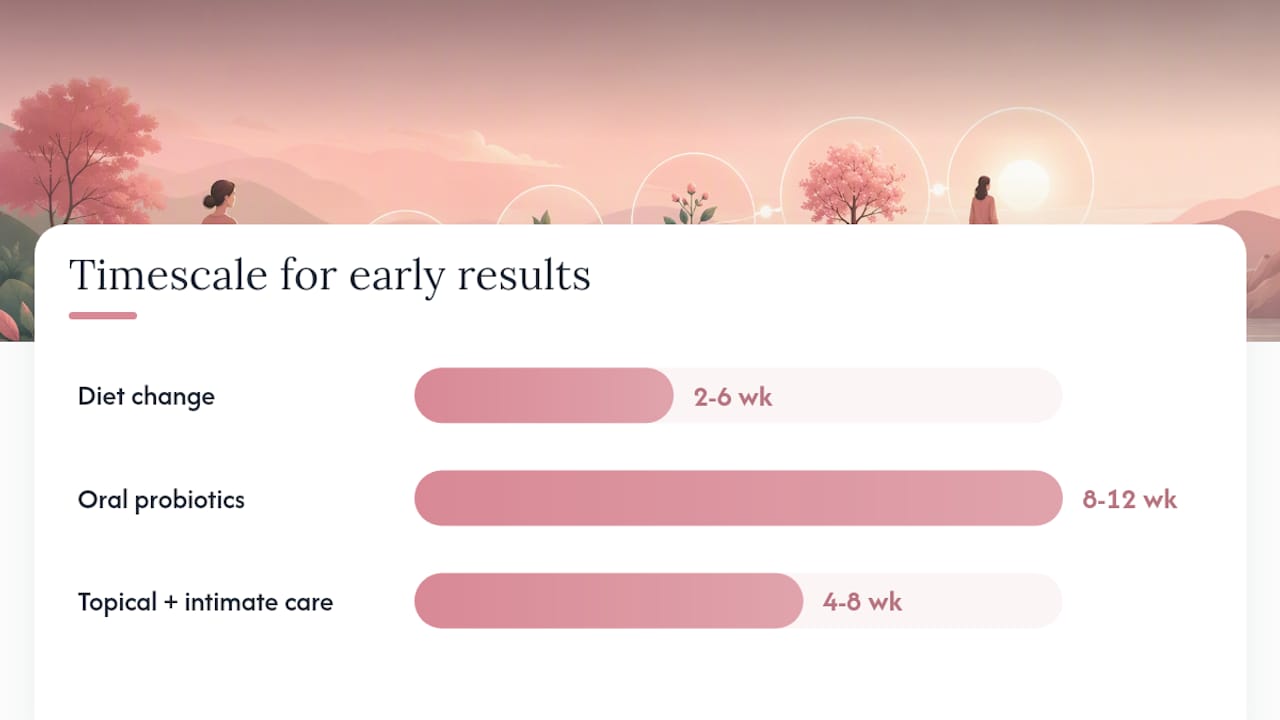
| Approach | Timescale | Primary mechanism | Likely early outcome |
|---|---|---|---|
| Diet change (fiber, fermented foods) | 2–6 weeks | SCFA production, microbial diversity | Reduced bloating, improved digestion |
| Oral microbiome support (probiotics) | 8–12 weeks | Estrobolome modulation, barrier support | Acne lesion reduction, cycle shifts |
| Topical + intimate care | 4–8 weeks | Local pH, skin barrier, inflammation | Fewer flares, reduced irritation |
What realistic timelines actually look like
Small subjective shifts often appear in 2–4 weeks. Measurable benefits typically emerge by 8–12 weeks. Systemic rebalancing takes 3–6 months or longer.
- Weeks 2–4: Reduced bloating after meals, slightly steadier energy, less digestive discomfort
- Weeks 8–12: Visible reduction in acne lesion counts; a synbiotic intervention showed meaningful lesion reductions over 8 weeks in a small randomized trial; cycle length may begin to normalize
- Months 3–6+: Hormonal skin patterns shift more predictably; PMS symptom severity trends downward in a consistent symptom log; cycle regularity improves
Individual variability is real. Stress load, sleep quality, baseline gut diversity, and medication history all affect pace. A systematic review of probiotics for acne confirmed that probiotics work as adjunctive tools requiring multi-month adherence, not quick cures.
Pro Tip: Track three things weekly: a 1–10 symptom severity score, a photo log of skin, and cycle start/end dates. After 12 weeks, patterns become visible that feel invisible day to day.

Your 12-week starter plan
A staged 12-week plan balances microbiome support, diet, sleep, and topical care without overwhelming you in week one.
- Weeks 1–2: Foundation. Prioritize sleep (7–8 hours, consistent timing), add one fiber-rich food per meal, and cut ultra-processed foods. No supplements yet. Let the dietary shift begin working first.
- Weeks 3–6: Introduce microbiome support. Add a strain-characterized multi-strain probiotic (taken consistently, same time daily). Swap your current intimate wash for a pH-balanced option. Begin hormone-supporting food habits like adding oats, flaxseed, or legumes daily.
- Weeks 7–12: Optimize and evaluate. Introduce cycle-aware topical adjustments. Add a prebiotic fiber supplement if dietary fiber is still below target. Review your symptom log at week 12: if severity scores have dropped and cycle regularity has improved, continue. If not, consider whether a clinician consult would clarify underlying hormonal factors.
Daily checklist:
- 25g+ dietary fiber from whole food sources
- Probiotic taken at the same time each day
- pH-balanced intimate cleansing (no conventional soap)
- 7–8 hours sleep, consistent wake time
- 20–30 minutes moderate movement
- One stress micro-practice (diaphragmatic breathing, a short walk, or a screen-free meal)
Florvahealth’s probiotic capsules, pH-balanced intimate wash and gentle cleansers are designed to slot into weeks 3 to 12 of this roadmap.
How to choose products that actually support this approach
Answer-first: prioritize strain-characterized probiotics, a clear prebiotic fiber dose, minimal allergenic excipients, and CFU claims stated at expiry rather than at manufacture.
- Green flags: Named strains (e.g., Lactobacillus rhamnosus GG, not “proprietary blend”), CFU count at expiry date, third-party testing seal, recommended duration of 8–12 weeks minimum
- Red flags: Proprietary blends with no strain IDs, sweeping detox claims with no mechanism, single-dose CFU counts far outside clinical study ranges, any product promising hormone normalization in under 2 weeks
- Questions to ask on any product page: What strains are included? What is the CFU count at expiry? Does it require refrigeration? What duration is recommended?
Pro Tip: Space probiotics at least 2 hours away from antibiotics if you are taking both. And check storage: a probiotic that requires refrigeration but ships unrefrigerated has likely lost potency before it reaches you.
When to stop self-care and see a clinician
The slow wellness approach is generally safe for healthy adults. Stop and seek medical attention for any of the following:
- Severe pelvic pain or sudden, significantly heavier bleeding than your baseline
- Fever alongside cycle-related symptoms
- Rapidly worsening mood, anxiety, or depression
- No measurable improvement after 3–4 months of consistent practice
Special populations: If you are pregnant, breastfeeding, immunocompromised, or on immunosuppressive medication, consult a clinician before starting any probiotic or prebiotic supplement. Probiotics require strain-specific selection and safety monitoring in high-risk groups, and the evidence base for safety in these populations is thinner.
When you do see a clinician, bring your 12-week symptom log, a list of all supplements and doses, and your cycle data. Labs like a full hormone panel (FSH, LH, estradiol, progesterone, androgens) and a thyroid screen can clarify whether an underlying condition is driving symptoms that lifestyle alone cannot address.
Why Florvahealth frames it this way
Florvahealth’s approach is built on one conviction: you cannot treat hormonal skin or cycle symptoms sustainably from the outside only. The gut–hormone loop described above means that supporting estrogen metabolism through the microbiome is not a wellness trend. It is a mechanistically grounded strategy. Florvahealth integrates microbiome support, pH-balanced intimate care, and topical routines with educational content so women can build a complete inside-out system rather than buying disconnected products.
Pro Tip: Sync your product use to your cycle phases. Use cyclical living practices to time higher-fiber days and topical actives to the follicular phase, and prioritize barrier support and stress reduction in the luteal phase.
Florvahealth’s system and your 12-week plan
For bloating after meals, digestive enzyme capsules are a practical starting point. If you are ready to start the plan, explore the full range at Florvahealth.
Sources
The following reviews and trials underpin the claims in this article. Evidence levels are noted so you can weigh findings appropriately.
- Microecological modulators—new perspectives for treating sex hormone disorders
- The role of the gut microbiome in sex hormone-related diseases
- The Role of the Gut Microbiota in Female Reproductive and Gynecological Health: Insights into Endometrial Signaling Pathways
- Prospective Comparative Study of an Oral Synbiotic and a Myoinositol-Based Herbal Supplement in Modifying Hormone Levels and the Gut Microbiome in Non-cystic Acne | Dermatology and Therapy | Springer Nature Link
This article is general information, not a substitute for advice from a qualified doctor. Consult a qualified healthcare professional about your own circumstances before acting on anything here.


