

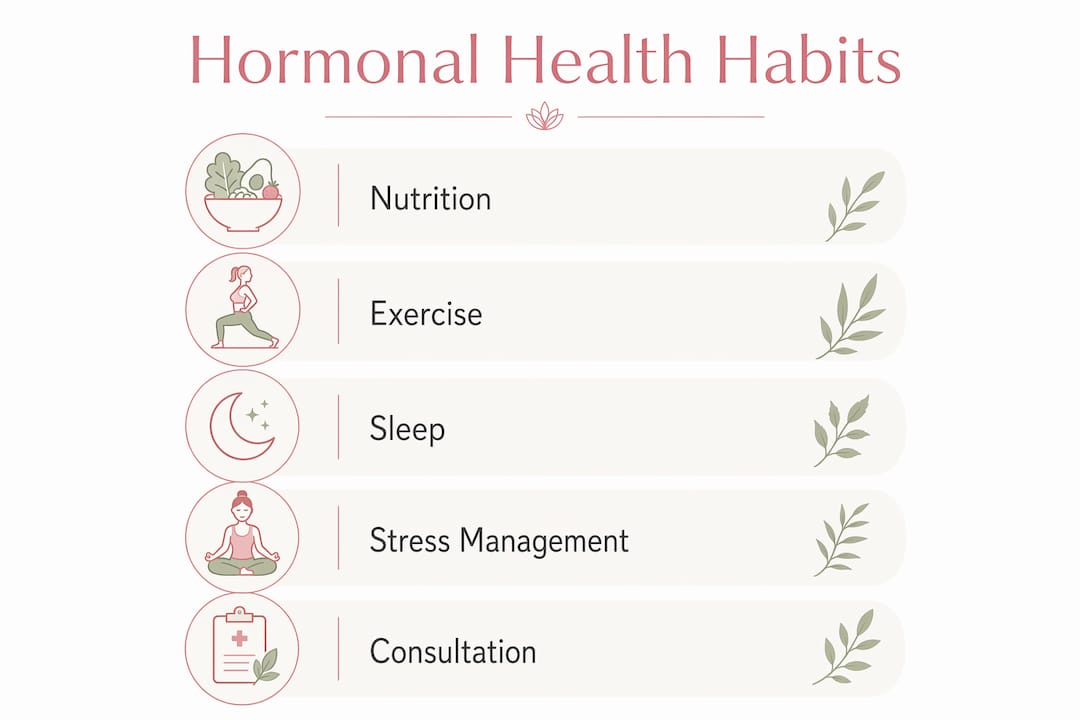
Your hormones respond to what you do every single day. The most effective way to support hormonal balance is not a detox protocol or a supplement stack. It is a set of consistent, low-effort habits: eating protein at every meal, sleeping at the same time each night, moving your body regularly, managing stress in small doses, and reducing your exposure to environmental toxins. These actions directly influence cortisol, insulin, estrogen, leptin, and ghrelin. Get them right consistently, and the downstream effects on your mood, energy, skin, and cycle are real.
Here is the short version of what actually works:
- Eat protein at every meal to regulate hunger hormones ghrelin and leptin
- Sleep 7–9 hours at a consistent bedtime to support growth hormone and melatonin
- Move moderately for roughly 20 minutes daily to improve insulin sensitivity
- Eat cruciferous vegetables several times a week to support estrogen metabolism via liver pathways
- Manage stress in short bursts throughout the day rather than waiting for a weekend reset
- Drink enough water to support endocrine transport and cellular function
- Reduce plastic and synthetic fragrance exposure to limit endocrine-disrupting chemicals
None of these require a prescription or a major lifestyle overhaul. They work because they address the root inputs your endocrine system depends on.
Table of Contents
- What actually causes hormonal imbalance?
- Nutrition strategies that support hormonal balance
- How sleep and exercise support hormone regulation
- Stress management techniques that actually work for your hormones
- When to consult a healthcare professional about hormone concerns
- Florvahealth’s approach to hormonal wellness
- Florvahealth makes natural hormone support practical
- Key Takeaways
What actually causes hormonal imbalance?
Hormonal imbalance rarely has a single cause. It usually builds from several overlapping factors that compound over time.
Internal causes are often the most overlooked. Chronic stress keeps cortisol elevated, which suppresses progesterone production and disrupts the hypothalamic-pituitary-adrenal (HPA) axis. Poor or irregular sleep throws off growth hormone secretion and leptin regulation, which affects both appetite and metabolic function. Gut dysbiosis, where beneficial bacteria are outnumbered by harmful ones, can impair how the body processes and eliminates used estrogen.
External causes include diet quality, activity level, and chemical exposure. A diet high in refined carbohydrates spikes insulin repeatedly, which over time reduces receptor sensitivity. A sedentary lifestyle compounds this. Endocrine-disrupting chemicals (EDCs) found in plastics, pesticides, and synthetic fragrances mimic or block hormone signals at the receptor level.
Common symptoms that suggest your hormones need attention:
- Persistent fatigue that sleep does not fix
- Irregular or painful menstrual cycles
- Unexplained weight gain or difficulty losing weight
- Hormonal acne, particularly along the jaw and chin
- Mood swings, anxiety, or low mood tied to your cycle
- Bloating and digestive changes around menstruation
Pro Tip: If you recognize three or more of these symptoms consistently across multiple cycles, lifestyle changes are a reasonable first step. But if symptoms are severe or have appeared suddenly, get bloodwork done before assuming lifestyle is the only factor.
Nutrition strategies that support hormonal balance
Food is the most direct lever you have over your hormones. The goal is not eating “clean” in a vague sense. It is eating in a way that keeps blood sugar stable, supports liver detoxification, and provides the raw materials for hormone synthesis.

Protein at every meal is the single highest-impact nutrition habit for hormone regulation. Adequate protein intake at each meal helps regulate ghrelin, the hunger hormone, and supports the production of metabolic hormones. Aim for a palm-sized portion of protein at breakfast, lunch, and dinner. Eggs, Greek yogurt, legumes, fish, and chicken all qualify.
Cruciferous vegetables deserve their own mention. Broccoli, cauliflower, Brussels sprouts, and kale contain compounds called indole-3-carbinol (I3C) and diindolylmethane (DIM), which support estrogen detox through Phase II liver pathways. This process steers estrogen metabolism toward less proliferative metabolites, which matters for cycle regularity and long-term hormonal health.
Fiber and healthy fats round out the picture. Fiber-rich foods like berries, leafy greens, and legumes slow glucose absorption and improve insulin sensitivity. Healthy fats from avocado, olive oil, and fatty fish provide cholesterol, the precursor molecule your body uses to synthesize steroid hormones including estrogen, progesterone, and testosterone.
Foods that support hormone balance:
- Eggs and fatty fish (omega-3s, vitamin D)
- Broccoli, kale, and Brussels sprouts (estrogen metabolism)
- Berries and oats (fiber, blood sugar stability)
- Avocado and olive oil (hormone precursors, anti-inflammatory)
- Flaxseeds (phytoestrogens, fiber)
Foods to minimize:
- Refined sugar and white flour (insulin spikes)
- Alcohol (impairs liver estrogen clearance)
- Highly processed seed oils (pro-inflammatory)
- Conventional dairy and meat with added hormones when possible
Hydration is foundational and often skipped in hormone conversations. Water supports the transport of hormones through the bloodstream and helps the kidneys and liver clear metabolic waste. The role of hydration in endocrine function is direct. Aim for at least 8 cups daily, more if you exercise or live in a hot climate.
Pro Tip: Pair your carbohydrates with protein or fat at every meal. This one habit alone flattens the blood sugar curve that drives insulin spikes and, over time, improves insulin sensitivity without any other dietary change.
How sleep and exercise support hormone regulation
Sleep is not passive recovery. It is when your body does its most active hormonal work.

Consistent sleep timing influences melatonin rhythms and growth hormone secretion more strongly than total hours alone. Irregular bedtimes create what researchers call “social jetlag,” which disrupts the circadian patterns that govern hormone release. The CDC recommends 7–9 hours of quality, uninterrupted sleep per night for adults. Keeping your bedtime within a 30-minute window every night, including weekends, is the single most underrated hormone habit.
Practical sleep habits for hormonal health:
- Set a consistent bedtime and wake time, even on weekends
- Keep your bedroom cool and dark to support melatonin production
- Avoid screens for 30–60 minutes before bed
- Limit caffeine after 2:00 PM
- Build a short evening ritual that signals your nervous system to wind down
Exercise improves hormone receptor sensitivity, meaning your cells respond better to the hormones already circulating. Daily moderate activity of around 20 minutes, or roughly 1.5–2.5 hours weekly, hits the sweet spot for improving insulin response without triggering the cortisol elevation that comes with overtraining.
For women, exercise type matters across the menstrual cycle. Strength training and higher-intensity work tend to feel better and produce better results in the follicular phase (days 1–14), when estrogen is rising. Lighter movement like yoga, walking, or Pilates often suits the luteal phase (days 15–28) better, when progesterone is dominant and recovery needs are higher. Aligning your workouts with your cycle is one of the clearest applications of cyclical living for hormonal health.
Stress management techniques that actually work for your hormones
Cortisol is not your enemy. It is a necessary hormone that helps you wake up, respond to challenges, and regulate inflammation. The problem is chronic elevation, which suppresses progesterone, disrupts thyroid function, and keeps the HPA axis in a state of low-grade alarm.
The most practical approach is not a two-hour meditation retreat. It is short, repeated calming practices distributed across the day. Think of it as dosing your nervous system with recovery signals rather than waiting for a single long reset. A few minutes of deep breathing mid-morning and again before dinner can meaningfully reduce cortisol spikes without requiring any equipment or extra time.
Stress management habits with timing suggestions:
- Morning (within 30 minutes of waking): 5 minutes of slow, diaphragmatic breathing before checking your phone
- Mid-morning: A short walk outside, even 10 minutes, to lower cortisol and reset focus
- Afternoon: Journaling for 5 minutes to offload mental load before it accumulates
- Pre-dinner: Gentle yoga or stretching to shift from sympathetic to parasympathetic mode
- Evening: A consistent wind-down routine that does not involve screens or work email
Managing stress this way supports progesterone production. Chronically high cortisol competes with progesterone for the same precursor molecule, pregnenolone, a phenomenon sometimes called “pregnenolone steal.” Keeping cortisol in check through these small daily habits protects the progesterone levels that regulate your cycle, mood, and sleep quality.
When to consult a healthcare professional about hormone concerns
Lifestyle habits are a powerful first line of support, but they are not a substitute for diagnosis. Some hormonal symptoms point to underlying conditions that require clinical evaluation.
Symptoms that warrant a conversation with your doctor:
- Cycles shorter than 21 days or longer than 35 days, consistently
- Severe PMS or premenstrual dysphoric disorder (PMDD) that disrupts daily function
- Unexplained weight changes of more than a few pounds over a short period
- Chronic fatigue that does not improve with adequate sleep
- Hair loss, especially diffuse thinning across the scalp
- Signs of thyroid dysfunction: cold intolerance, constipation, brain fog, or heart palpitations
- Acne that does not respond to topical treatment and is tied to your cycle
Unexplained weight changes, fatigue, and irregular cycles are among the clearest signals that clinical diagnosis is needed rather than lifestyle adjustment alone. Normal hormonal fluctuations happen across the menstrual cycle and across life stages. Pathological imbalance is persistent, progressive, and often tied to a diagnosable condition like polycystic ovary syndrome (PCOS), hypothyroidism, or adrenal dysfunction.
When you do see a provider, ask specifically for a hormone panel that includes TSH, free T3 and T4, estradiol, progesterone, testosterone, DHEA-S, fasting insulin, and cortisol. Bring a symptom log covering at least two full cycles. The more specific your data, the more useful the appointment.
Florvahealth’s approach to hormonal wellness
Florvahealth was built around one core observation: hormonal health is not just about what you eat or how you sleep. It is also about what you put on and in your body every day, and how those inputs interact with your gut, your skin, and your cycle.
The brand’s inside-out methodology connects gut health, probiotics, and topical skincare into a single system. Probiotic support addresses the gut-hormone axis directly, since a healthy gut microbiome helps metabolize and eliminate excess estrogen. pH-balanced intimate care and targeted relief patches address the external symptoms of hormonal imbalance, from bloating and PMS discomfort to hormonal acne, without synthetic hormones or harsh chemicals.
Florvahealth’s approach reflects what the research consistently shows: no single product or habit works in isolation. Hormonal balance builds from the inside out, combining gut support, consistent daily rituals, and skin-safe topical care into a system that addresses the full picture.
The connection between gut health and hormone regulation is well-supported. Research published in peer-reviewed journals confirms that the gut microbiome plays a direct role in estrogen metabolism and recirculation, a pathway sometimes called the “estrobolome.” Florvahealth’s probiotic formulations are designed with this pathway in mind, supporting the bacterial diversity that keeps estrogen clearance on track.
For women dealing with hormonal acne specifically, the skin and hormone connection runs through both internal inflammation and topical care. Florvahealth’s cleansing products are formulated to work with the skin’s natural barrier rather than stripping it, which matters when hormonal fluctuations already compromise skin resilience.
Florvahealth makes natural hormone support practical
Most women know the habits that support hormonal health. The gap is in having products and tools that make those habits easier to maintain consistently, especially during the phases of the cycle when symptoms are loudest.
Florvahealth’s range is built for exactly that gap. Rather than selling a single supplement and calling it done, it combines probiotic capsules, digestive enzyme capsules, a pH-balanced intimate wash and gentle cleansers, so the gut, intimate and skin sides are all covered. For skin-focused support, the green tomato clay facial cleanser pairs well with the dietary and stress habits in this article. Visit Florvahealth to find the right starting point.
Key Takeaways
Consistent daily habits, not short-term fixes, are what actually move the needle on hormonal balance, and the evidence points to sleep timing, protein intake, and cortisol management as the highest-leverage starting points.
| Point | Details |
|---|---|
| Sleep timing over total hours | Keeping a consistent bedtime within a 30-minute window each night supports melatonin and growth hormone more than extra sleep alone. |
| Protein at every meal | Eating protein at breakfast, lunch, and dinner regulates ghrelin and leptin, the hormones that govern hunger and metabolic rate. |
| Cruciferous vegetables for estrogen | Broccoli, kale, and Brussels sprouts contain I3C and DIM, which support liver-based estrogen detoxification through Phase II pathways. |
| Stress in small doses | Short calming practices distributed across the day, such as breathing exercises mid-morning and pre-dinner, reduce cortisol more practically than occasional long resets. |
| Florvahealth for inside-out support | Florvahealth’s probiotic, intimate care, and topical system addresses PMS, bloating, and hormonal acne through a coordinated natural approach. |


