

A pH-balanced, fragrance-free external wash can be a reasonable addition to your vulvar care routine — but only when used correctly on the outside, never internally. The PMC review on intimate hygiene is clear: daily gentle vulvar cleansing with a hypoallergenic, pH-appropriate liquid cleanser is supported by clinical guidance, while internal douching is not. If you’re choosing a feminine wash, the conditions that make it safe are specific: external use only, pH in a range that is slightly acidic and supports skin homeostasis, no fragrance, and clinically tested formulation.
- Use externally only. The vagina self-cleans. A wash touches the vulva, not the canal.
- Choose a pH level close to that of healthy vulvar skin. This range aligns with vulvar skin homeostasis.
- Fragrance-free is non-negotiable. Perfumes are the leading cause of contact dermatitis in this area.
- Look for clinical testing. Gynecologist- or dermatologist-reviewed formulas carry meaningful quality signals.
- When in doubt, warm water works. Gynecologists consistently recommend water as the safest daily option.
Table of Contents
- What does “vaginal wash” actually mean — external vs. internal?
- When a wash can cause harm — and when to avoid it entirely
- What to look for in a safe vulvar wash — ingredients that help and hurt
- How to use a vulvar wash safely — the right routine
- Inside-out approaches that support long-term vaginal balance
- How to shop for a safe feminine wash in the US
- When to stop self-care and see a clinician
- Key Takeaways
- The case for thinking inside-out first
- Florvahealth’s pH-balanced wash and probiotic system
- Useful sources and further reading
What does “vaginal wash” actually mean — external vs. internal?
Most shoppers searching for a vaginal wash are actually looking for a vulvar cleanser: a product applied to the external skin folds, not inside the vaginal canal. The distinction matters more than most product labels make clear.
Internal douching, which involves flushing fluid into the vaginal canal, disrupts the natural Lactobacillus-dominant microbiota that keeps the vaginal environment acidic and infection-resistant. Clinical guidance consistently advises against it. The vagina maintains its own ecosystem; introducing liquid internally can shift pH, wash out protective bacteria, and raise the risk of bacterial vaginosis and yeast overgrowth.
Pro Tip: If a product’s label doesn’t say “external use only” or “vulvar cleanser,” don’t assume it’s safe for the area. When in doubt, warm water and clean hands are enough.
When a wash can cause harm — and when to avoid it entirely
Not every situation calls for a cleanser, and some make one actively counterproductive.
Documented risks from misuse:
- Disruption of normal vaginal flora, particularly Lactobacillus species that maintain acidity
- Increased susceptibility to bacterial vaginosis and yeast infections from internal douching
- Contact dermatitis triggered by fragrances, dyes, or harsh surfactants on sensitive vulvar skin
- Masking of symptoms that need clinical evaluation (odor, discharge changes)
Situations to avoid commercial washes entirely:
- Active signs of infection: foul or fishy odor, green or gray discharge, significant itching
- Recent gynecologic surgery or procedure
- Recurrent unexplained symptoms that haven’t been evaluated by a clinician
- Pregnancy, unless a clinician has specifically advised a product
Red flags that require clinician evaluation, not more self-care: fever, severe pelvic pain, bleeding unrelated to your period, discharge with a strong odor that doesn’t resolve within 48–72 hours of stopping a product, or any systemic symptoms like chills or nausea. These are not wash problems.
Vulvar skin is among the most sensitive skin on the body, and clinical guidelines specifically warn that it’s prone to contact dermatitis from irritants found in conventional soaps and bubble baths, including their alkaline pH alone.
What to look for in a safe vulvar wash — ingredients that help and hurt
The ingredient list is where most products either earn trust or lose it.
Target pH: 4.2–5.5. Vulvar skin sits at a slightly acidic pH, and a cleanser that matches this range supports the skin barrier rather than stripping it. Products outside this window, particularly alkaline bar soaps, can disrupt the local environment even with a single wash.
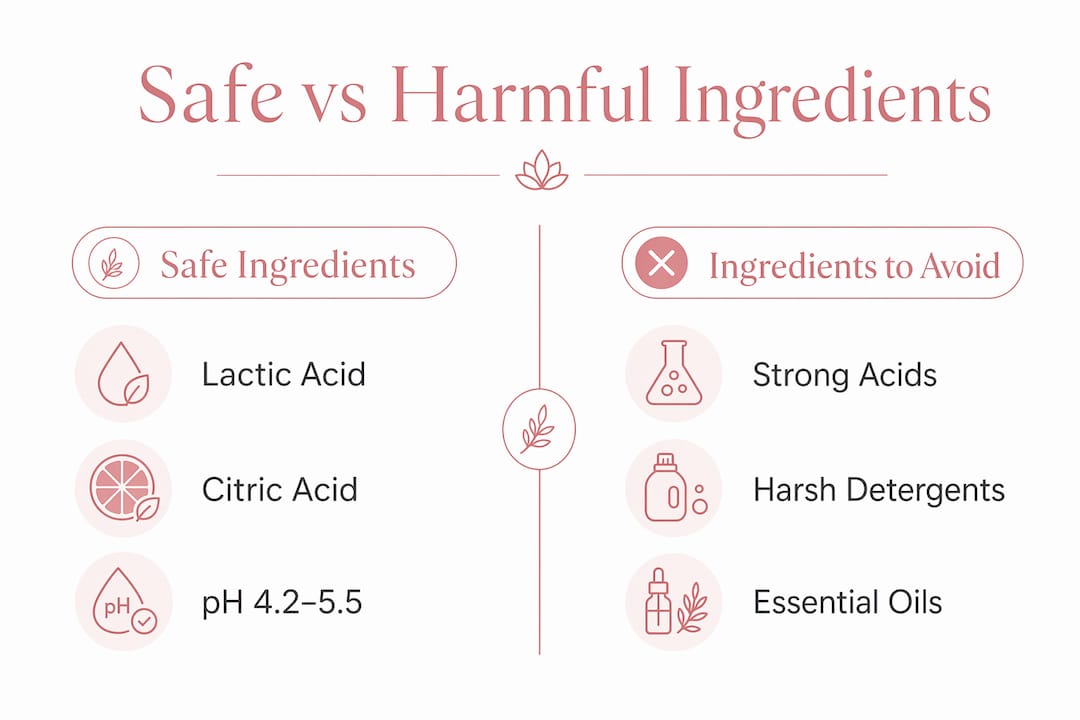
| Ingredient Category | Safe/Favor | Avoid |
|---|---|---|
| pH adjusters | Lactic acid, citric acid | Strong acids above clinical concentrations |
| Surfactants | Mild non-ionic or amphoteric (e.g., coco-glucoside) | SLS, SLES, harsh sulfates |
| Hydrators | Glycerin, hyaluronic acid (low concentration) | High-concentration alcohol |
| Preservatives | Phenoxyethanol, sodium benzoate (skin-friendly systems) | Parabens, formaldehyde releasers |
| Fragrance | None | Perfume, essential oils, botanical extracts with sensitizing potential |
Lactic acid deserves specific mention. Beyond its role as a pH adjuster, clinical evidence shows lactic acid formulations can help maintain an acidic environment and may reduce recurrence of bacterial vaginosis as an adjunct to treatment, though they are not a standalone cure.
Natural ingredients are not automatically gentle. Many botanicals and essential oils are potent sensitizers on mucosal skin. “Natural” on a label is a marketing claim, not a safety guarantee.
Pro Tip: Prefer products that publish their full INCI list, include clear allergy warnings, and carry gynecologist or dermatologist review language. If the ingredient list isn’t findable before purchase, that’s a signal worth heeding.
How to use a vulvar wash safely — the right routine
Start with warm water. That’s the baseline, and for many people, it’s all that’s needed.
If you choose to add a cleanser, here’s how to use it without causing harm:
- Wet the external vulvar area with warm (not hot) water.
- Dispense a pea-sized amount of your chosen external cleanser onto clean fingertips.
- Apply gently to the external folds only — labia majora, perineum — never inside the vaginal opening.
- Rinse thoroughly, front to back, to avoid introducing bacteria from the anal area.
- Pat dry with a clean, soft towel. Rubbing increases friction and irritation.
- Frequency: Most gynecologists suggest using a cleanser sparingly — a few times per week at most, not necessarily daily. Water handles daily cleansing fine.
Stop using a product immediately if you notice new burning, increased discharge, persistent odor, or any skin changes. Do a patch test on inner forearm skin before regular use if you have a history of sensitive skin or contact reactions.
Inside-out approaches that support long-term vaginal balance
Topical care addresses the surface. What happens internally, in your gut microbiome and hormonal environment, shapes the vaginal ecosystem over time.
The gut and vaginal microbiomes share bacterial species and respond to many of the same dietary and hormonal signals. When gut flora is disrupted, vaginal Lactobacillus populations can shift too, raising infection risk and affecting the skin’s ability to maintain its barrier. This connection is why hormonal health and hydration matter as much as what you apply externally.
Practical adjuncts with clinical backing:
- Oral Lactobacillus probiotics (particularly L. rhamnosus and L. reuteri strains) have shown promise in clinical literature for reducing recurrence of bacterial vaginosis after antibiotic treatment. They are not a replacement for medical care, but they’re a reasonable adjunct.
- Reducing dietary sugar limits the substrate that Candida and other opportunistic organisms thrive on.
- Staying hydrated supports mucosal tissue integrity throughout the body, including vulvar and vaginal skin.
- Cautious antibiotic use matters: broad-spectrum antibiotics wipe out protective Lactobacillus species. If you need antibiotics, ask your clinician about probiotic timing.
Clinical note: Lactic acid–containing topical agents may help maintain an acidic environment and reduce BV recurrence as an adjunct after antibiotic therapy. They are not a treatment for active infection and should not replace clinician-directed care.
Pairing a cycle-aware skincare approach with internal support gives you a more complete picture than topical care alone. Hormonal fluctuations across your cycle affect skin barrier function and vaginal pH, which is why what works in week one may feel different in week three.
How to shop for a safe feminine wash in the US
Use this checklist before adding any product to your cart:
- pH listed on label (target: 4.2–5.5)
- Fragrance-free — no “parfum,” no essential oils, no botanical extracts with sensitizing potential
- Simple INCI list — fewer ingredients means fewer opportunities for a reaction
- External-use labeling — the product must explicitly state it’s for external/vulvar use only
- Gynecologist or dermatologist review or clinical testing language
- Clear allergy cautions on the packaging
Label literacy matters: “Clinically tested” with no further detail is a weak claim. Look for “gynecologist-reviewed,” “dermatologist-tested,” or published clinical framing with ingredient transparency — not just a marketing badge.
Where to buy safely: US pharmacies (CVS, Walgreens, Target pharmacy sections) stock a range of options. Reputable brand websites with published INCI lists and clinical language are preferable to marketplace listings where product authenticity is harder to verify.
For a product that checks these boxes, Florvahealth’s pH-balanced wash is formulated for external vulvar use with a fragrance-free, clinically framed approach and full ingredient transparency. Their probiotic capsules pair as an inside-out adjunct for women managing recurrent symptoms or hormonal shifts.
Pro Tip: “Natural” and “gentle” are unregulated marketing terms. Read the INCI list, not the front-of-pack claims. One ingredient you’re sensitive to undoes everything else the formula gets right.
When to stop self-care and see a clinician
Some symptoms are not a product problem. They’re a clinical one.
See a clinician promptly if you notice:
- Fever or chills alongside vaginal or pelvic symptoms
- Severe pelvic or lower abdominal pain
- Foul-smelling discharge that is green, gray, or unusually thick
- Bleeding not related to your menstrual cycle
- Symptoms that persist more than 48–72 hours after stopping a product
- Any new symptoms during pregnancy or the postpartum period
- Recurrent episodes of the same symptoms without a clear cause
Immunocompromised individuals should have a lower threshold for seeking care — self-care delays can allow infections to progress faster.
Pro Tip: Bring your product’s ingredient list and a list of any recent antibiotics or medications to your appointment. It cuts the diagnostic conversation in half.
Key Takeaways
A pH-balanced, fragrance-free external vulvar wash can support comfort and hygiene when used correctly, but warm water remains the safest daily option for most women.
| Point | Details |
|---|---|
| External use only | Apply to the vulva only; never douche internally — it disrupts protective flora. |
| Target a pH level close to that of healthy vulvar skin | This range supports vulvar skin homeostasis; alkaline soaps can cause irritation. |
| Fragrance-free matters | Perfumes and essential oils are the leading triggers of vulvar contact dermatitis. |
| Inside-out support | Oral Lactobacillus probiotics and dietary changes complement topical care for long-term balance. |
| Florvahealth’s approach | Florvahealth offers a pH-balanced wash and probiotic capsules aligned with these evidence-based principles. |
The case for thinking inside-out first
The conventional framing around vaginal hygiene puts the product at the center. Pick the right wash, use it correctly, and you’re done. That framing isn’t wrong, but it’s incomplete.
What I find consistently underappreciated is how much the vaginal environment reflects what’s happening systemically. Hormonal fluctuations, gut microbiome disruption, dietary patterns, stress — these shift vaginal pH and Lactobacillus populations in ways that no topical product fully compensates for. A well-formulated external cleanser is a reasonable tool. It’s not a solution to a systemic imbalance.
The women who tend to see the most durable improvement are the ones who treat intimate care as part of a broader hormonal and gut-health routine, not as an isolated hygiene step. Probiotics, hydration, cycle-aware skincare, and a genuinely simple external cleanser used sparingly — that combination addresses more of the actual biology than any single product can. The holistic PMS management lens applies here too: the body doesn’t compartmentalize, and neither should your care routine.
Florvahealth’s pH-balanced wash and probiotic system
Women who want a product that already passes the checklist in this article don’t need to spend an hour reading INCI lists at the pharmacy.
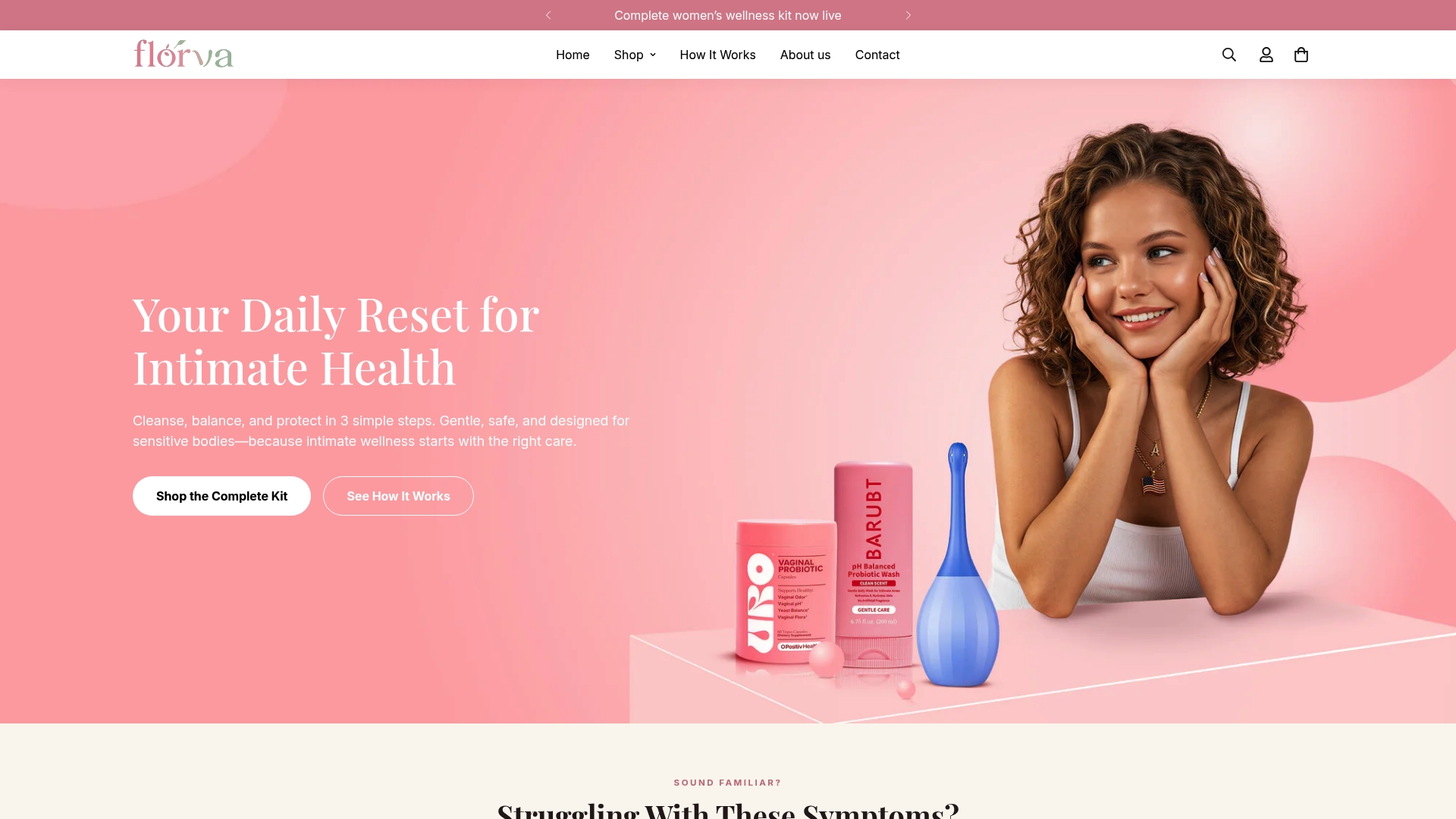
Florvahealth’s pH-balanced wash is formulated for external vulvar use, fragrance-free, with a pH range that aligns with the 4.2–5.5 guidance above and full ingredient transparency. Pair it with Florvahealth’s probiotic capsules for the inside-out approach this article describes: topical care on the outside, Lactobacillus support on the inside. Both products are built around the same evidence-first principles — no harsh surfactants, no fragrance, no vague “natural” claims without substance behind them.
If you prefer to speak with a clinician before starting any new product, that’s the right call. And when you’re ready to build a routine that works with your hormonal cycle rather than against it, explore Florvahealth’s full system as your starting point.
Useful sources and further reading
These are the primary sources behind the clinical claims in this article. None of them replace a medical evaluation for your specific situation.
- PMC: Role of Female Intimate Hygiene in Vulvovaginal Health — The core systematic review behind pH guidance, douching risks, lactic acid evidence, and ingredient recommendations throughout this article.
- Healthline: Gynecologist-Approved Vaginal Soaps and Washes — Clinician-reviewed editorial roundup supporting the warm-water-first recommendation and fragrance-free guidance.
- Nourished: Hormone-Healthy Nutrition and Cycle Tracking — Useful context on nutrition and cycle tracking as adjuncts to intimate and hormonal care.
A note on these sources: They provide background evidence and clinical context. This article is general health information, not medical advice. For symptoms, recurrent issues, or any concern specific to your health history, consult a qualified clinician or gynecologist.


