

Gut microbes and their metabolites regulate key gut hormones, including GLP-1, PYY, and gut-derived serotonin, that shape appetite, insulin sensitivity, and how the body handles estrogen and other sex hormones. Human trials now show that targeted probiotic and prebiotic strategies can shift some hormone-related outcomes, particularly in PCOS and perimenopause, though results depend heavily on strain and condition. For most people, the practical takeaway is that diet and consistent microbiome support can ease certain hormonal symptoms over weeks to months, alongside proper clinical evaluation.
TL;DR:
- Gut microbes influence hormone release through metabolites like short-chain fatty acids, bile acids, and tryptophan derivatives, affecting appetite and insulin sensitivity.
- Human studies show probiotic and prebiotic interventions modestly improve hormonal markers in PCOS and perimenopause, but effects depend heavily on strain and condition.
- Supporting gut health with diverse fiber, strain-specific probiotics, and stress management over 8 to 12 weeks is necessary to achieve meaningful hormonal shifts.
- Certain bacterial strains can either enhance or suppress GLP-1 and other hormones, making strain selection critical for targeted support.
- Medical consultation is advised for significant symptoms or medication use, while consistent routines and symptom tracking optimize potential microbiome-related hormone benefits.
Table of Contents
- What Are Enteroendocrine Cells and Why Do They Matter for Hormones?
- How Do Gut Microbes Change Hormone Release?
- Which Gut Hormones Matter Most for Hormonal Symptoms?
- What Does Human Research Actually Show About Gut Hormones and Hormonal Health?
- How Can You Support Your Gut Hormone Regulation Naturally?
- How Does the Gut Hormone Connection Show Up in PCOS, PMS, and Perimenopause?
- When Should You See a Clinician About Hormone Symptoms?
- Why FlorvaHealth Designs Products Around the Gut Hormone Connection
- Ready to Support Your Gut Hormone Balance?
- Sources
- FAQ
What Are Enteroendocrine Cells and Why Do They Matter for Hormones?
The gut is not just a digestive tube. It is one of the body’s largest endocrine glands, and the cells responsible for that are called enteroendocrine cells (EECs). These specialized cells sit scattered through the lining of the stomach and intestines, and although they make up a small fraction of total gut epithelium, they punch far above their weight. A comprehensive review on intestinal endocrine function notes that EECs secrete dozens of bioactive peptides that travel well beyond the digestive tract to influence the brain, pancreas, liver, and reproductive organs.
Each EEC subtype tends to specialize in a particular hormone, and each hormone does a distinct job:
- GLP-1 (glucagon-like peptide 1): slows stomach emptying, boosts insulin release, and signals fullness to the brain.
- PYY (peptide YY): works alongside GLP-1 to suppress appetite after eating.
- GIP (glucose-dependent insulinotropic polypeptide): helps regulate insulin secretion in response to food, particularly fat and carbohydrate.
- CCK (cholecystokinin): triggers gallbladder contraction and pancreatic enzyme release, and contributes to short-term satiety.
- Ghrelin: the main hunger hormone, produced mostly when the stomach is empty.
- Gut-derived serotonin (5-HT): made by enterochromaffin cells, it governs gut motility and also feeds into mood regulation through the gut-brain axis.
These hormones do not just diffuse randomly. They signal through three main routes: paracrine (acting on nearby cells), endocrine (traveling through the bloodstream to distant organs), and neural, largely via the vagus nerve, which carries gut signals directly to the brainstem in minutes. That speed is part of why a single meal, or a single shift in gut bacteria, can change how hungry, calm, or bloated you feel within hours. The hormonal effects on digestion and the reverse relationship, how digestion shapes hormone release, run in a constant feedback loop rather than a one-way street.
How Do Gut Microbes Change Hormone Release?
Microbes do not produce human hormones directly. Instead, they produce metabolites that act as chemical messengers, nudging enteroendocrine cells to release more or less of a given hormone. This is the molecular core of the gut hormone connection, and it runs through a handful of well-mapped pathways.
Short-chain fatty acids (SCFAs) are the best studied. When gut bacteria ferment fiber, they produce acetate, propionate, and butyrate. These SCFAs bind to receptors called FFAR2 and FFAR3 on the surface of L-cells, the EEC subtype responsible for GLP-1 and PYY. Activating those receptors triggers a cascade that increases GLP-1 and PYY secretion, which is one reason a high-fiber meal tends to curb appetite longer than a refined-carbohydrate meal of the same calorie count. A mechanistic review in PMC lays out this SCFA-to-receptor-to-hormone pathway as one of the clearest links between microbial metabolism and systemic hormone regulation.
Bile acids add a second layer. Gut bacteria convert primary bile acids into secondary bile acids, which then interact with two receptors: TGR5 and FXR. TGR5 activation on L-cells stimulates GLP-1 release, while FXR signaling tends to work in the opposite direction, dampening it. The balance between these two receptor pathways, not just the total quantity of bile acids, shapes how much GLP-1 actually reaches circulation. That same endocrine review identifies bile-acid signaling as a central regulator of metabolic hormone output, with direct relevance to how the intestine functions as a hormone-producing organ.
Indoles and tryptophan metabolites, produced when bacteria break down dietary protein, have more complicated, time-dependent effects. Acute exposure can stimulate GLP-1 secretion, while chronic, elevated indole exposure has been linked to blunted hormone signaling and low-grade inflammation. A review on gut-brain hormone cross-talk also connects tryptophan metabolism to enterochromaffin cell activity, since tryptophan is the direct precursor for serotonin synthesis. The enzyme TPH1 controls how much of that tryptophan actually becomes gut serotonin, and microbial signals appear to influence TPH1 expression.
Lipopolysaccharide (LPS), a component of gram-negative bacterial cell walls, works differently. When gut barrier integrity weakens, letting more LPS leak into circulation, it drives low-grade inflammation that can blunt normal hormone signaling and worsen insulin resistance. Not every bacterial shift points the same direction, either. Research on specific taxa, including Akkermansia and certain Clostridia species, shows some strains enhance GLP-1 signaling while others appear to suppress it, which is why blanket claims about “good bacteria” oversimplify a genuinely strain-specific system.
The feedback runs both ways. Gut hormones themselves influence motility, pH, and mucus production, all of which shape which bacteria thrive. A slower gut, driven by high GLP-1, gives certain fermenters more time to work; a faster gut favors different populations entirely.
Which Gut Hormones Matter Most for Hormonal Symptoms?
Different hormones map onto different symptom patterns, which is why “gut health” advice that treats every hormone the same tends to miss the point.
GLP-1 rises mainly in response to fiber, protein, and fat reaching the lower small intestine, and its main job is slowing digestion while improving insulin sensitivity. Microbial SCFA production is one of the largest modifiable levers on GLP-1 output, which is part of why fiber intake correlates so consistently with better metabolic markers.
PYY works in tandem with GLP-1 and responds strongly to the same SCFA signals. People with lower fiber intake tend to show blunted PYY responses after meals, which may partly explain persistent hunger on low-fiber, high-refined-carbohydrate diets.
Ghrelin moves in the opposite direction of most satiety hormones. It climbs during fasting and drops after eating, but chronic gut inflammation and certain microbial imbalances have been associated with dysregulated ghrelin patterns that do not follow the normal meal-driven rhythm, which can show up as unpredictable hunger or cravings unrelated to actual energy need.
Gut-derived serotonin deserves special attention because roughly 90% of the body’s serotonin is made in the gut, not the brain, largely by enterochromaffin cells under TPH1 control. This serotonin mainly regulates intestinal motility, but the same gut-brain review that details TPH1 regulation also connects disrupted gut serotonin signaling to mood changes, which helps explain why digestive symptoms and mood symptoms so often show up together rather than separately.
The estrobolome is a less familiar term worth learning. It refers to the collection of gut bacterial genes and enzymes, particularly beta-glucuronidase, that determine how estrogen gets reabsorbed versus excreted after the liver processes it. When estrobolome activity runs high, more estrogen gets deconjugated and reabsorbed into circulation instead of leaving the body, which can push estrogen levels upward. When it runs low, more estrogen is excreted, potentially contributing to lower circulating levels. This is one of the more direct mechanical links between gut microbiome and hormones, and it is central to understanding hormonal balance and gut health in relation to estrogen-driven symptoms like heavy periods or estrogen-dominant PMS patterns.
What Does Human Research Actually Show About Gut Hormones and Hormonal Health?
The strongest current evidence centers on two conditions: polycystic ovary syndrome and perimenopause, and the effect sizes are real but modest.
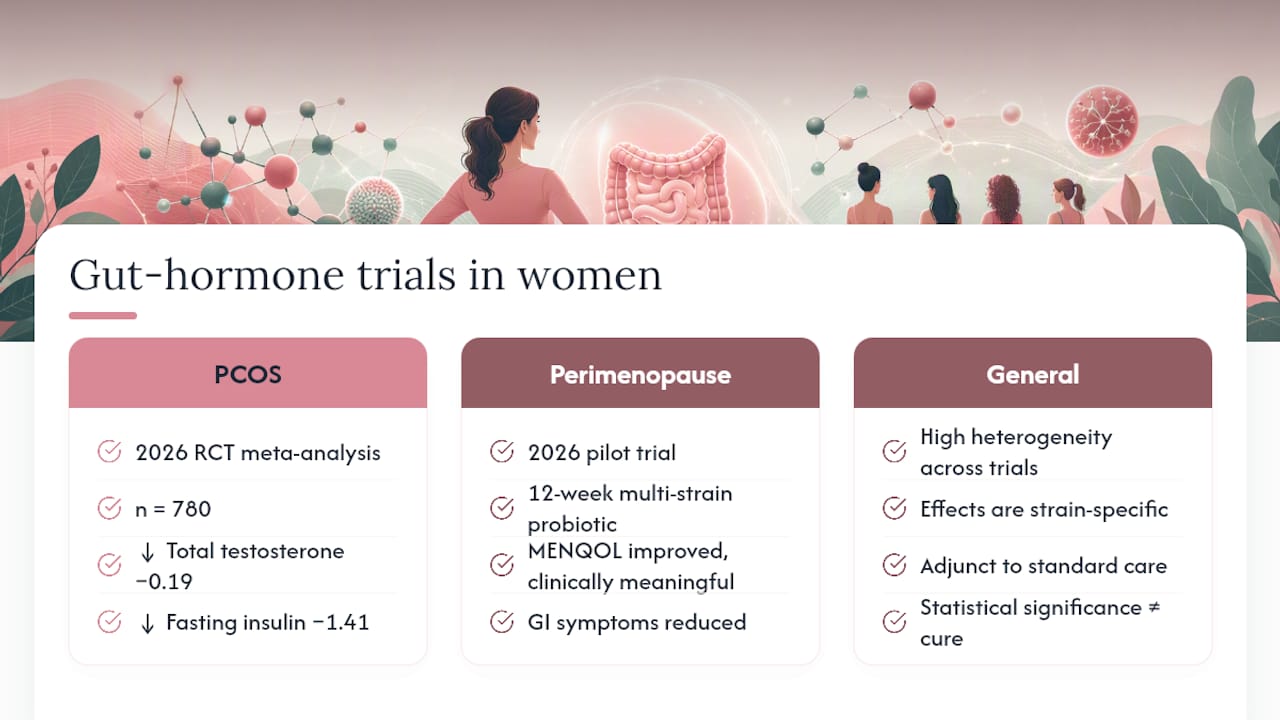
A 2026 meta-analysis pooling randomized controlled trials in women with PCOS found that probiotic and synbiotic supplementation significantly reduced total testosterone (mean difference of -0.19, 95% CI -0.25 to -0.12) and fasting insulin (mean difference of -1.41, 95% CI -2.76 to -0.05). The same analysis, covering 780 participants, found modest reductions in BMI and LDL cholesterol alongside a rise in HDL. These are statistically significant shifts, not dramatic transformations. A testosterone reduction in that range will not reverse severe PCOS on its own, but layered onto other treatment, it moves biomarkers in the right direction.
A separate 2026 pilot study followed perimenopausal women through 12 weeks of daily multi-strain probiotic supplementation. Menopause-specific quality of life scores (MENQOL) improved substantially, and gastrointestinal symptom burden dropped significantly, with most participants reaching a clinically meaningful MENQOL improvement. Pilot studies like this one are genuinely encouraging, but they typically involve smaller cohorts than a full randomized trial, so the findings need replication in larger, more diverse populations before anyone calls them settled science.
Across both bodies of research, the heterogeneity is the real story. Trials differ in bacterial strain, dose, trial duration, and which endpoint they measure, which is exactly why a systematic review in Genes & Nutrition concludes that probiotic effects on endocrine disorders are strain-specific and disease-specific rather than universal. A strain that helps testosterone in PCOS is not automatically the same strain that helps GI symptoms in perimenopause.
What does “statistically significant” mean for someone living with symptoms day to day? It means the intervention moved a measurable marker in a reliable, repeatable direction across a study population, more than chance would predict. It does not automatically mean every individual feels dramatically different, and it does not mean the underlying condition is cured. It means the mechanism is real, the direction is right, and the tool is worth trying alongside, not instead of, standard care.
How Can You Support Your Gut Hormone Regulation Naturally?
Diet remains the single most researched lever for gut hormone regulation, mainly because fermentable fiber is the raw material SCFA-producing bacteria need to do their job. Diverse plant foods, legumes, oats, and resistant starches feed a wider range of fermenters than any single fiber source, which tends to produce a broader SCFA profile than one fiber type alone.
Prebiotics and probiotics serve different purposes, and conflating them leads to disappointing results. Prebiotics are the fiber and plant compounds that feed the bacteria already living in your gut. Probiotics introduce specific live strains, and their effects are, again, strain-dependent rather than universal. A product studied for PCOS-related testosterone reduction is not necessarily the same formulation that will help perimenopausal GI symptoms.
Lifestyle factors round out the picture. Sleep deprivation and chronic stress both raise cortisol, which can worsen gut permeability and, by extension, increase LPS-driven inflammation that blunts normal hormone signaling. Regular movement supports gut motility and has its own independent effect on insulin sensitivity, which overlaps directly with GLP-1 function.
A few practical starting points, drawn from the research above:
- Add one new fiber-rich food (legumes, oats, berries, leafy greens) most days rather than overhauling your entire diet at once.
- Choose probiotic strains that have actual trial data behind the specific symptom you are targeting, not just generic “gut health” marketing claims.
- Prioritize consistent sleep and stress-management practices like breathwork, since HPA axis dysregulation directly affects gut barrier integrity.
- Track symptoms weekly rather than daily, since day-to-day hormone fluctuation is normal and can mask real trend lines.
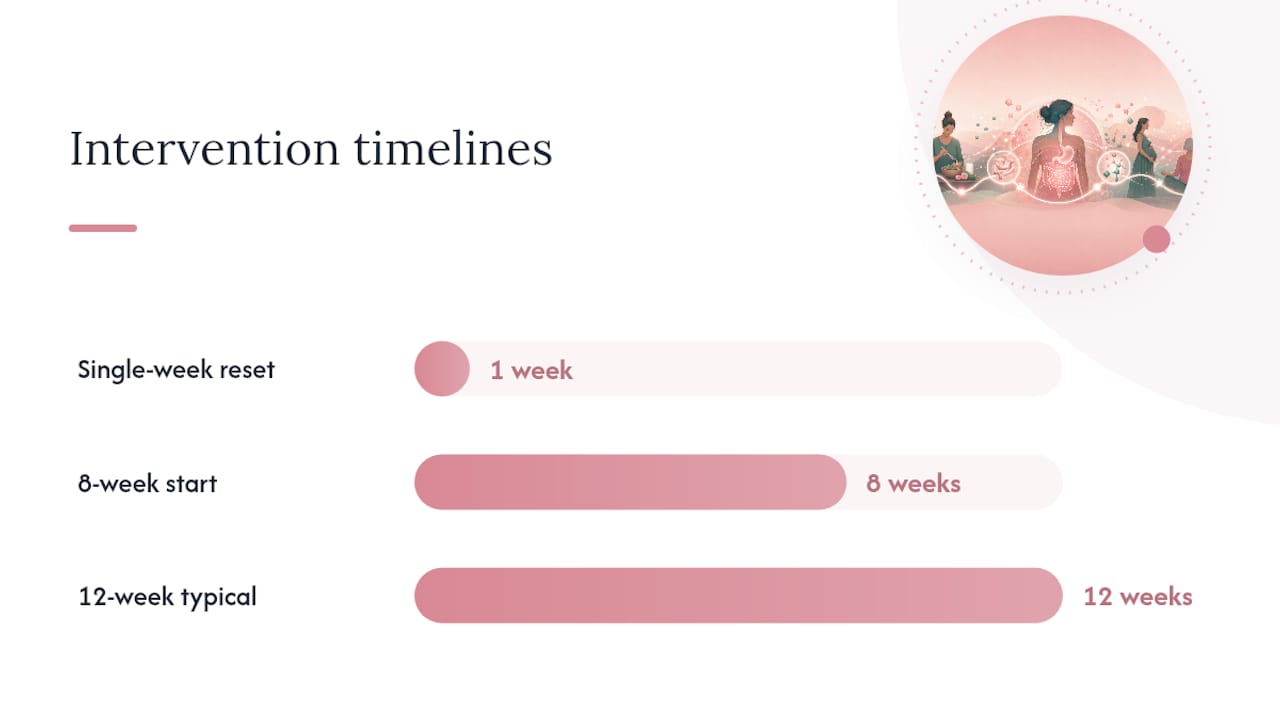
Timelines matter more than most people expect. Practitioner guidance consistently points to roughly 8 to 12 weeks of sustained, daily intervention before clinically meaningful shifts in hormone-related symptoms tend to appear. A single-week “gut reset” is unlikely to produce durable endocrine change, since the microbiome takes time to shift its composition and even more time for that shift to show up in hormone output. Consistency beats intensity here.
Pro Tip: Keep a simple symptom log, even just three lines a day (energy, bloating, mood), for the full 8 to 12 weeks before judging whether a new dietary or supplement routine is working. Week-to-week noise hides the real trend.
Anyone on hormonal medication, managing a diagnosed endocrine disorder, or pregnant should talk to a clinician before starting a new probiotic or major dietary shift, since interactions and dosing needs vary by individual health status.
How Does the Gut Hormone Connection Show Up in PCOS, PMS, and Perimenopause?
PCOS offers the clearest research signal so far. The PCOS meta-analysis referenced above showed real reductions in testosterone and fasting insulin from probiotic and synbiotic use, but realistic expectations matter: this is a supportive layer alongside standard PCOS-related acne care, not a replacement for it.
PMS and cycle-related bloating often trace back to a mix of gut motility changes (serotonin-linked), estrobolome activity affecting estrogen clearance, and SCFA-driven satiety hormone shifts across the cycle. Dietary strategies that stabilize fiber intake and blood sugar tend to reduce both the bloating and some of the mood volatility that show up in the luteal phase.
Perimenopause has the newest, though still early-stage, human data. The 12-week pilot trial showing improved quality of life during perimenopause and reduced GI symptoms is genuinely promising, but it is a pilot. Larger trials need to confirm those numbers before this becomes standard clinical advice rather than an encouraging early signal.
Hormonal acne has a plausible, if less thoroughly proven, mechanistic story: estrobolome activity affects circulating estrogen, gut-driven inflammation affects skin inflammation broadly, and both interact with sebum production. A combined approach, supporting gut microbiome balance internally while managing skin barrier health topically, reflects that dual mechanism better than either approach alone.
Across all of these, individualized care matters more than any single protocol. What works for testosterone reduction in PCOS is not the same lever as what eases perimenopausal GI symptoms, and a clinician who understands your specific hormone panel can help match the right strategy to the right condition.
When Should You See a Clinician About Hormone Symptoms?
Certain signs warrant prompt medical evaluation rather than a self-directed trial period: significant unexplained weight change, missed periods for three months or more, severe or worsening pelvic pain, signs of thyroid dysfunction like heart palpitations or unexplained fatigue, or any bleeding pattern that suddenly changes. If you notice these hormonal imbalance signs, get evaluated before starting a new supplement routine.
Your primary care provider is a reasonable first stop for general symptom triage. An endocrinologist specializes in hormone-producing organs broadly, including thyroid and adrenal function, while a reproductive endocrinologist focuses specifically on ovarian and menstrual-related hormone issues. A registered dietitian can help translate general fiber and prebiotic guidance into a plan that fits your actual eating patterns and any food sensitivities.
Common diagnostic tools include a basic metabolic panel, fasting insulin and glucose, a thyroid panel (TSH, and sometimes T3/T4), and sex hormone testing (estrogen, progesterone, testosterone) timed to your cycle. Coordinated care means these tests inform an actual diagnosis, targeted treatment where needed, and supplement or dietary strategies monitored over time rather than adopted blindly.
Why FlorvaHealth Designs Products Around the Gut Hormone Connection
The research on gut hormones keeps pointing to the same conclusion: consistency and strain-specific formulation matter more than any single “miracle” ingredient. That is the lens FlorvaHealth applies to product design, building supplements meant to support hormonal balance as one piece of a routine rather than a standalone fix, paired with topical care that addresses the skin-side effects of hormonal shifts.
Where the evidence is early, like perimenopause pilot data, we say so rather than overselling it. Where it is stronger, like PCOS-related metabolic markers, we build toward it. Self-care has real limits for diagnosed endocrine conditions, and no supplement routine replaces a clinician’s diagnosis or a prescribed treatment plan. What a well-designed routine can do is support the mechanisms already backed by research, consistently, over the timeline that research actually shows works.
— Zamanee
Ready to Support Your Gut Hormone Balance?
FlorvaHealth built its product lines around the same principle running through this entire article: hormone symptoms rarely have one cause, so a routine that only treats the surface rarely holds up. Instead of picking a single supplement and hoping, you get product lines matched to specific symptom patterns.
If bloating, irregular cycles, or PMS mood swings are your main concern, the PMS & Bloating Relief collection, including the PMS & Bloating Relief Kit, targets those cycle-linked GI and hormone shifts directly. For broader hormonal support tied to the mechanisms covered above, from insulin sensitivity to estrogen handling, the Hormone Balance Supplements collection is built around ingredients aligned with that research. And because hormonal shifts show up on skin as much as in mood or digestion, the Skincare for Hormonal Skin line, including the Electric Facial Cleanser, pairs the inside-out approach with topical care.
Give any routine the full 8 to 12 weeks the research points to, track your symptoms honestly, and loop in a clinician if you have a diagnosed endocrine condition or take medication that could interact. Start by browsing the full Florva system and picking the collection that matches your most persistent symptom first.
This article is general information, not a substitute for advice from a qualified doctor. Consult a qualified healthcare professional about your own circumstances before acting on anything here.
Sources
- Microecological modulators—new perspectives for treating sex hormone disorders (Frontiers, 2026)
- AB-Biotics probiotic blend may help ease menopause symptoms (NutraIngredients, 2026)
- Endocrine regulation of metabolic homeostasis via the intestine and gut microbiome (PMC review, 2023)
FAQ
How can you heal your gut to help balance hormones?
Focus on fermentable fiber from diverse plant foods, add strain-specific probiotics matched to your actual symptom, manage sleep and stress, and give it 8 to 12 weeks of consistent effort before judging results.
What are common signs of an unhealthy gut affecting hormones?
Persistent bloating, irregular bowel habits, unpredictable hunger or cravings, mood swings tied to digestion, skin breakouts, fatigue, and irregular cycles can all point to gut hormone disruption, though each also has other possible causes.
What is a “7 day gut reset,” and does it work for hormones?
Short resets can reduce bloating temporarily, but the microbiome shift needed to durably affect hormone output typically takes 8 to 12 weeks of sustained intervention, not one week.
What are common signs of hormonal imbalance in women?
Irregular or missed periods, unexplained weight changes, persistent fatigue, mood swings, hormonal acne, and disrupted sleep are frequent signs, and any combination lasting more than a cycle or two warrants a closer look.
Can probiotics really change hormone levels?
Human trials show measurable, strain-specific effects. A 2026 meta-analysis found probiotics reduced testosterone and fasting insulin in women with PCOS, though effect sizes are modest and vary by strain and condition.
Does FlorvaHealth offer products for gut and hormone support?
Yes. FlorvaHealth’s Hormone Balance Supplements and PMS & Bloating Relief collections are designed around gut-hormone mechanisms; current prices are available on the pricing page of the website.


