

For most people, ginger, small sips of clear fluids, peppermint, and a short course of an NSAID when cramps are the main trigger bring relief the fastest. Ginger tea or lozenges settle the stomach within 20 to 30 minutes for many, as explained in this morning sickness remedies guide. If you can’t keep fluids down, feel faint, or pain is severe, that’s a signal to call your doctor rather than wait it out.
TL;DR:
- Ginger, whether as tea, lozenges, or extract, is the most supported remedy for reducing menstrual nausea through its interference with prostaglandin pathways.
- Taking NSAIDs early in your period can prevent peak prostaglandin levels, effectively reducing both cramping and associated nausea.
- Maintaining steady blood sugar with small, frequent bland meals and avoiding fatty or strong-smelling foods can significantly lessen nausea triggers.
- If severe vomiting, dehydration, or pain persist beyond a few days, seeking medical evaluation is essential to rule out underlying conditions like endometriosis.
- Tracking symptoms and starting preventive measures a few days before your period can help you better manage nausea and reduce reliance on medications over time.
Table of Contents
- Why Do You Feel Nauseous During Your Period?
- What Can You Do the Moment Nausea Starts?
- Which Home Remedies Work Best Over the Long Run?
- When Should You See a Doctor About Period Nausea?
- How Do You Prevent Nausea Next Cycle?
- How Florvahealth Approaches Hormonal Symptom Support
- A Realistic Take on Managing Period Nausea
- A Natural Next Step for Managing Symptoms Cycle After Cycle
- Sources
- FAQ
Why Do You Feel Nauseous During Your Period?
The short answer: hormones tell your uterus to contract, and the chemical messengers behind those contractions also unsettle your gut and brain. Right before and during your period, your uterine lining releases prostaglandins, hormone-like compounds that trigger the muscle contractions responsible for cramps. When prostaglandin levels spike, they don’t stay confined to your uterus. They circulate through your bloodstream and can affect smooth muscle in your digestive tract and stimulate the parts of your brain that regulate nausea, which is exactly why period-related nausea often arrives alongside cramping rather than as a separate problem.
Several overlapping conditions explain why the intensity varies so much from person to person:
- Primary dysmenorrhea is garden-variety menstrual cramping driven by prostaglandin release, with no underlying pelvic disease.
- PMS and PMDD (premenstrual dysphoric disorder) involve broader hormonal swings that can produce nausea, fatigue, and mood changes in the days before your period starts, a pattern the government-run Office on Women’s Health documents in detail.
- Secondary causes, like endometriosis, involve tissue growth outside the uterus and tend to produce more severe, longer-lasting nausea and pain than typical cramps.
Pain itself makes nausea worse. Sharp cramping activates your nervous system’s stress response, which slows digestion and can trigger queasiness on its own. Add a blood sugar dip, common when cramps kill your appetite and you skip meals, and you get a stomach that feels unsettled from three directions at once: hormonal, neurological, and metabolic. Cleveland Clinic doctors sometimes call this cluster “period flu,” since the aches, fatigue, and stomach upset can mimic a mild viral illness even though nothing contagious is involved.
What Can You Do the Moment Nausea Starts?
Speed matters here. The goal is to interrupt the nausea signal before it builds, and a few low-risk techniques work within minutes for most people.
- Sip, don’t gulp. Take small sips of cool water, clear broth, or an electrolyte drink every few minutes. Large gulps can overwhelm a queasy stomach and backfire.
- Reach for ginger first. Ginger tea, crystallized ginger candy, or ginger lozenges are the fastest-acting option most people have on hand. Ginger ale only helps if it’s made with real ginger, since most commercial brands contain little to none.
- Try peppermint, cautiously. Peppermint tea or even inhaling peppermint essential oil can calm queasiness for many people. Skip it if you’re prone to acid reflux, since peppermint can relax the valve that keeps stomach acid down.
- Apply acupressure at the P6 point. Press firmly on the inside of your wrist, about three finger-widths below the crease, for one to two minutes. It’s a technique used for pregnancy and motion-sickness nausea, and while dedicated period-nausea trials are limited, the physiological mechanism (stimulating a nerve pathway tied to the vagus nerve) is the same regardless of the trigger.
- Get outside and breathe. Fresh air, a cool washcloth on the back of your neck, and slow diaphragmatic breathing (four seconds in, six seconds out) lower the stress response that’s compounding your nausea.
- Eat something bland. Crackers, plain toast, rice, or bananas, the classic BRAT approach, give your stomach something to work with without triggering more upset.
Pro Tip: Keep a small “period kit” in your bag or nightstand: ginger chews, a peppermint tea bag, and an electrolyte packet. Having it ready removes the ten minutes you’d otherwise spend hunting for relief while already feeling awful.
Which Home Remedies Work Best Over the Long Run?
The remedies with the strongest track record all share one target: prostaglandins. Reduce the chemical driver, and both the cramping and the nausea tend to ease together.
Ginger has the most direct clinical support. A randomized, double-blind, placebo-controlled trial found that a standardized ginger extract reduced menstrual pain and associated symptoms, including nausea, in women with primary dysmenorrhea. Ginger’s active compounds, gingerols and shogaols, appear to interfere with the same prostaglandin pathways NSAIDs target, according to NCCIH’s clinical summary. Splitting your dose across the day rather than taking one large amount tends to sit easier on the stomach. One caution: ginger can thin the blood slightly, so check with a clinician if you’re on anticoagulants.
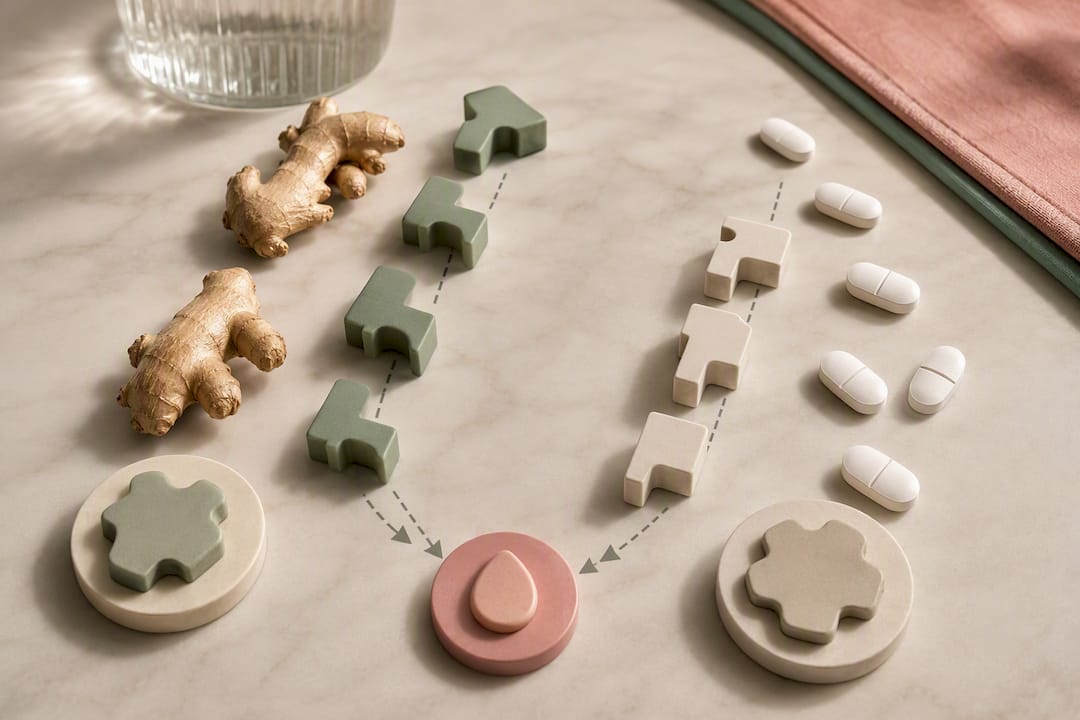
NSAIDs like ibuprofen or naproxen work by blocking the enzyme that produces prostaglandins in the first place, which is why they ease cramps and nausea simultaneously rather than treating them as separate problems. Cleveland Clinic’s guidance on dysmenorrhea notes that starting an NSAID right as bleeding begins, before prostaglandin levels peak, works better than waiting until pain is already severe.
Diet and timing matter more than most people expect. Small, frequent meals keep blood sugar steady, which prevents one of the three nausea triggers mentioned earlier. Skip greasy, fried, or strongly scented foods during your period; both fat content and smell are common nausea amplifiers. If you’re already queasy, bland BRAT foods are your safest bet, and smart snack timing can prevent the crash before it starts.
Other options worth trying:
- Peppermint or chamomile tea for mild, ongoing queasiness.
- Fennel tea, used traditionally for digestive cramping.
- Vitamin B6, sometimes recommended for PMS-related nausea and mood symptoms.
- A heating pad on your lower abdomen, which relaxes uterine muscle and can indirectly ease nausea by reducing pain.
- Targeted relief patches applied to the lower abdomen for localized warmth without pills.
One detail that gets buried in most advice columns: small, frequent meals aren’t just a comfort measure. Clinical nutrition commentary points to steady blood sugar as one of the more overlooked but effective levers for hormonal nausea, on par with anything you’d take in pill form.
When Should You See a Doctor About Period Nausea?
Most period nausea resolves within a day or two, once your prostaglandin levels drop and bleeding settles into its normal rhythm. A handful of signs mean it’s time to stop self-treating and get evaluated:
- You can’t keep fluids down for more than a few hours, or you’re vomiting repeatedly.
- You notice signs of dehydration: dizziness, dark urine, or a dry mouth that water isn’t fixing.
- You feel faint or actually pass out.
- Pain is severe enough that over-the-counter medication and heat aren’t touching it.
- Symptoms last well beyond your typical window or keep you from work, school, or normal activity for multiple days in a row.
Any of these warrant a call to your OB/GYN. Persistent or unusually severe symptoms can point to endometriosis or another pelvic condition that needs a proper workup, and if there’s any chance you could be pregnant, a pregnancy test rules out an entirely different cause of nausea before you assume it’s hormonal. Ongoing digestive symptoms that don’t track cleanly with your cycle deserve a GI evaluation, not another round of ginger tea.
How Do You Prevent Nausea Next Cycle?
Prevention starts with data. Track your symptoms for two to three cycles and patterns usually surface, showing you exactly which foods or triggers to avoid before they start.
- Keep a symptom diary. Log the timing of nausea onset, what you ate beforehand, any medication you took, and how severe it felt on a simple 1 to 10 scale.
- Start NSAIDs preemptively. If cramps are your main driver, beginning an NSAID at the first sign of flow, rather than after pain sets in, can blunt the prostaglandin surge before it peaks.
- Build a steady snack schedule. Plan small meals every three to four hours starting a few days before your period, so blood sugar never has room to crash.
- Set a hydration plan. Don’t wait until you’re nauseous to start drinking water; get ahead of it the day before your period typically begins.
- Talk to a provider about hormonal options. Hormonal contraception can reduce prostaglandin production for some people, and for PMDD specifically, some clinicians discuss SSRIs as an option. Neither is a self-directed decision; both require a conversation with your provider about your specific history.
- Protect your sleep and manage stress. Poor sleep and high cortisol both amplify prostaglandin sensitivity, so consistent sleep and basic stress reduction pull double duty across your whole cycle, not just the nauseous days.
How Florvahealth Approaches Hormonal Symptom Support
Florvahealth built its product lines around the same connection this article keeps circling back to: gut health, inflammation, and hormone regulation are linked, not separate systems. Its probiotic capsules and digestive-support supplements are designed to work alongside the tracking and lifestyle strategies described above, not replace them. Relief patches offer a nonmedicated option for the pain side of the equation, which, as the prostaglandin research shows, is often the same lever that eases nausea. None of this substitutes for a medical workup when your symptoms cross into red-flag territory.
Reviewed for clarity and accuracy by Zamanee.
A Realistic Take on Managing Period Nausea
Most people treat period nausea as something to just push through, and that’s the wrong instinct. It responds well to specific, targeted action, which means it’s worth testing one or two remedies deliberately instead of hoping this month is better than last. Track what works, escalate to a clinician when your body tells you to, and treat the pattern, not just the flare.
— Zamanee
A Natural Next Step for Managing Symptoms Cycle After Cycle
Florvahealth gives you an integrated option instead of a drawer full of separate fixes for cramps, bloating, and nausea. Rather than juggling a random ginger tea here and a heating pad there, the PMS and bloating relief collection and hormone balance supplements are built to work together across your cycle, addressing the gut and hormone connection this guide keeps pointing back to.
If you’re new to Florvahealth, start with a single product rather than the full routine. Introduce one item, track your symptoms for a cycle using the same diary approach outlined above, and adjust from there. If you’re pregnant or taking prescription medication, check with your doctor before adding any new supplement. Browse the full women’s wellness product range to find where to start.
Sources
For deeper reading: Medical News Today on period nausea, Cleveland Clinic on period flu, and the PMC review on prostaglandins.
This article is general information, not a substitute for advice from a qualified doctor. Consult a qualified healthcare professional about your own circumstances before acting on anything here.
FAQ
What relieves period nausea immediately?
Small sips of clear fluids, ginger in any form, and fresh air tend to work fastest. Peppermint tea helps many people too, unless you’re prone to acid reflux.
What can I take to relieve nausea during my period?
Ginger (tea, lozenges, or extract) has randomized trial support for reducing menstrual nausea, and an NSAID like ibuprofen can help when cramps are the main trigger since it blocks the prostaglandins driving both symptoms.
Why do I feel so nauseous during my period?
Prostaglandins released during menstruation trigger uterine contractions and also affect your digestive tract and the nausea centers in your brain, which is why cramps and queasiness so often show up together.
Can Zofran be used to treat period nausea?
Zofran (ondansetron) is a prescription antinausea medication typically reserved for severe cases, like chemotherapy-related or persistent vomiting, and it isn’t a standard first-line treatment for period nausea. Talk to your doctor if home remedies and NSAIDs aren’t controlling your symptoms.


