

A healthy vaginal pH sits between 3.8 and 4.5, roughly the acidity of tomato juice or black coffee. That acidity keeps protective lactobacilli in charge and discourages the bacteria and yeast that cause infection. Mild shifts happen around your period or after sex and usually correct themselves within a day or two. If odor, discharge changes, itching, or burning stick around longer than that, it’s time to see a clinician rather than guess.
TL;DR:
- Vaginal pH typically ranges from 3.8 to 4.5 during reproductive years, maintained by lactobacilli feeding on glycogen influenced by estrogen levels.
- Causes like menstrual blood, semen, antibiotics, douching, scented products, and hormonal shifts temporarily raise pH but are not dangerous if managed properly.
- Home pH tests provide screening information but cannot diagnose infections without additional clinical criteria; elevated pH often indicates a need for professional evaluation.
- Treating imbalance requires identifying the cause first, with antibiotics for bacterial vaginosis, antifungals for yeast, and specific care for other conditions, not home remedies.
- Supporting vaginal health involves habits such as external water cleaning, wearing breathable underwear, changing out of damp clothing promptly, and managing diet and stress to maintain a stable microbiome.
Table of Contents
- What Vaginal pH Actually Measures and Why Lactobacillus Runs the Show
- What Causes Vaginal pH to Rise or Fall?
- How Do I Tell If My pH Balance Is Off?
- How Do At-Home pH Tests Work, and What Can’t They Tell You?
- How to Fix an Imbalanced Vaginal pH Safely
- Daily Habits That Support Healthy Vaginal pH
- Myths That Keep Women From Balancing Vaginal pH Correctly
- Diet, Stress, and Sex: The Lifestyle Factors Nobody Mentions
- Vaginal Microbiome Health Goes Beyond a Single pH Number
- FlorvaHealth’s Take: Supporting Balance From the Inside Out
- A Simpler Way to Support Vaginal pH Every Day
- Sources
- FAQ
What Vaginal pH Actually Measures and Why Lactobacillus Runs the Show
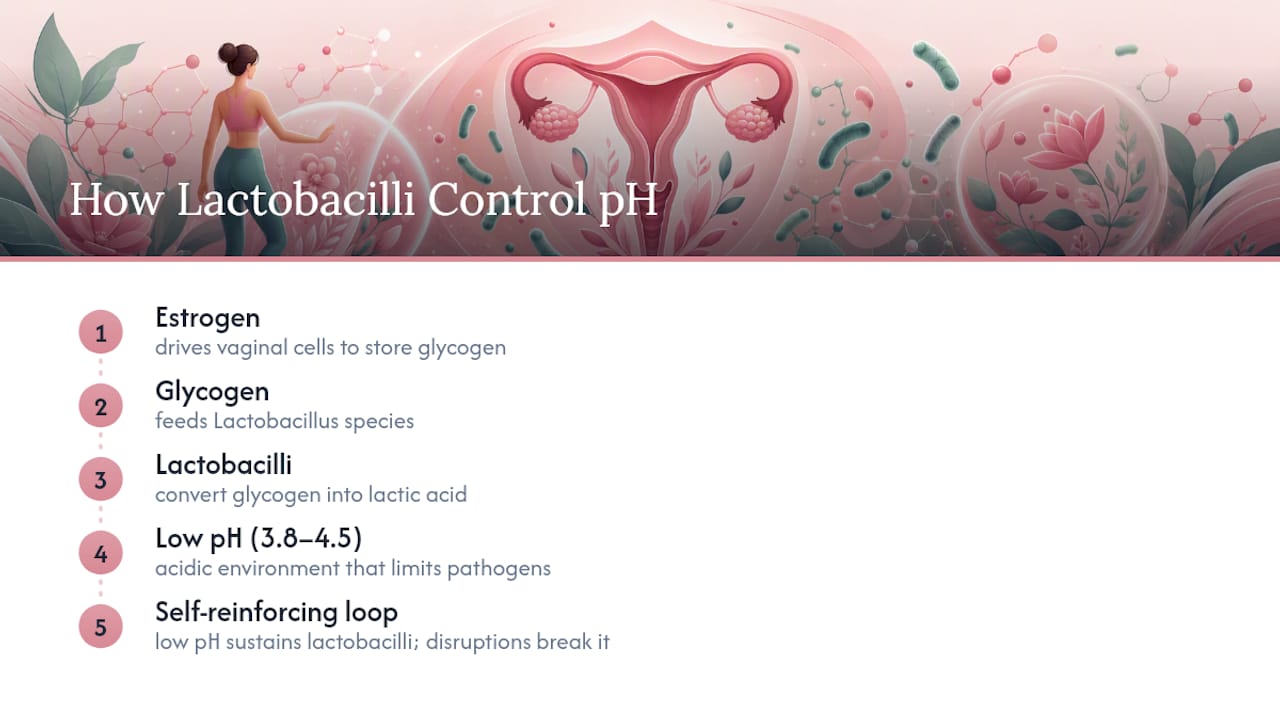
The pH scale runs from 0 to 14, with lower numbers meaning more acidic and higher numbers meaning more alkaline. A pH of 7 is neutral, which is roughly what plain water measures. Your vagina isn’t supposed to be neutral. During the reproductive years, a typical vaginal pH runs about 3.8 to 4.5, and that acidity isn’t accidental. It’s manufactured, continuously, by bacteria doing a very specific job.
Estrogen tells vaginal cells to store glycogen, a form of sugar. Lactobacillus species, the dominant bacteria in a healthy vaginal microbiome, feed on that glycogen and convert it into lactic acid. More estrogen generally means more glycogen, which means more food for lactobacilli, which means more acid. That’s why pH shifts predictably across life stages: it tends to run higher (less acidic) before puberty and after menopause, when estrogen is low, and lower (more acidic) during the reproductive years when estrogen is at its usual level.
The acid itself is the point. Most of the bacteria responsible for bacterial vaginosis, along with several other unwanted microbes, struggle to compete in a low pH environment. Lactobacilli essentially poison the well for their competition while thriving in it themselves. This is a self-reinforcing system: healthy lactobacilli populations keep pH low, and low pH keeps the lactobacilli population healthy. Disrupt one side of that loop, through antibiotics, hormonal shifts, or outside irritants, and the other side tends to follow.
This is also why “vaginal pH balance” isn’t really a fixed target you hit once and forget. It’s a living equilibrium, adjusted daily by hormones, bacteria, and whatever you introduce to the area. Understanding that mechanism matters more than memorizing a single number, because it explains why the same woman can test slightly different on different days and still be perfectly healthy.
What Causes Vaginal pH to Rise or Fall?
Vaginal pH moves for identifiable reasons, and most of them are temporary. The list below covers the causes you’re most likely to run into.
- Menstrual blood: Blood is slightly alkaline, so it raises vaginal pH for the duration of your period. This is normal, but it’s also why changing tampons every 4 to 8 hours matters — leaving a tampon in longer gives that elevated pH more time to favor bacterial overgrowth.
- Semen and sexual activity: Semen has a pH closer to 7.2 to 8, well above the vaginal baseline. A single encounter without a condom can push pH up temporarily; it usually normalizes within a day. Condoms limit this shift and are worth considering if you notice recurring irritation after unprotected sex.
- Antibiotics: Oral antibiotics don’t distinguish between the bacteria causing your sinus infection and the lactobacilli protecting your vagina. Wiping out the latter removes the acid production that keeps pH low, which is why yeast infections often follow a course of antibiotics.
- Douching and scented products: Douching flushes out protective bacteria along with whatever it’s supposedly cleaning, and scented soaps, sprays, and wipes introduce chemical irritants the vagina never evolved to handle. Both are common, preventable disruptors.
- Hormonal shifts: Pregnancy, perimenopause, menopause, and even the natural rise and fall of estrogen across a monthly cycle all move pH by changing glycogen supply.
- Prolonged dampness: Wet swimsuits, sweaty workout clothes, or damp underwear create a warm, moist environment that alters the local microbial balance if left unchanged for hours.
None of these causes are dangerous on their own. Problems tend to show up when a disruption is severe, repeated, or left uncorrected long enough for unwanted bacteria to take hold.
How Do I Tell If My pH Balance Is Off?
Not every symptom means the same thing, and matching the right symptom pattern to the right cause saves you time and unnecessary self-treatment. Here’s a practical way to sort through it.
- Fishy odor, especially after sex, paired with thin gray or white discharge: This combination is the classic presentation of bacterial vaginosis, which the CDC links to a vaginal pH above 4.5.
- Thick, white, cottage-cheese-like discharge with itching and burning but little to no odor: This pattern points toward a yeast infection, which frequently develops even when pH is completely normal.
- Frothy yellow-green discharge with a strong odor and irritation during urination: This combination is more typical of trichomoniasis, a sexually transmitted infection that requires prescription treatment for both partners.
- Burning, itching, or dryness with no unusual discharge: This can be non-infectious, tied to irritant products, allergic reactions, or the low-estrogen dryness common around menopause.
- Pain during sex or a burning sensation when urinating that doesn’t resolve in a few days: These symptoms deserve evaluation regardless of what else is or isn’t present, since they can signal several different conditions that look similar on the surface.
Left untreated, bacterial vaginosis and trichomoniasis raise your risk of pelvic inflammatory disease, make it easier to acquire other sexually transmitted infections, and complicate pregnancy outcomes. See a clinician promptly if you’re pregnant, running a fever, have recurring symptoms despite treatment, or simply aren’t sure what you’re dealing with. Guessing wrong and treating a yeast infection like BV, or the reverse, wastes time while the actual problem continues.
How Do At-Home pH Tests Work, and What Can’t They Tell You?
At-home pH test kits use a small strip you touch to the vaginal wall for a few seconds, then compare the resulting color against a printed chart. The technique matters more than people expect.
- Test at least a day away from your period, since menstrual blood will skew the reading toward alkaline regardless of your actual baseline.
- Wait at least a few hours after intercourse, since semen has the same alkalizing effect.
- Avoid testing right after using a vaginal wash or lubricant, both of which can coat the strip and distort the color.
- Hold the strip against the vaginal sidewall, not near the opening, for the most accurate reading.
- Compare against the chart within the timeframe printed on the package. Colors continue shifting after that window and will mislead you.
Pro Tip: Take the reading before you shower in the morning, not after. Water dilutes vaginal secretions and can pull the strip’s reading slightly off.
Here’s the limitation nobody puts on the box: pH strips tell you a number, not a diagnosis. Elevated pH above 4.5 is one of four Amsel criteria used to diagnose bacterial vaginosis clinically, but a clinician typically needs at least three of the four criteria present, alongside discharge characteristics and a microscopy-based whiff test, before confirming BV. A single elevated reading at home tells you something is worth checking. It does not tell you what. Clinical literature is consistent on this point: pH testing works well as a screening step but performs poorly as a standalone diagnostic, partly because conditions like yeast infections often occur at completely normal pH. If your strip reads high, or you have symptoms regardless of what the strip says, book an appointment rather than self-treat off one data point.
How to Fix an Imbalanced Vaginal pH Safely
Treatment depends entirely on what’s actually causing the imbalance, which is exactly why diagnosis has to come before treatment, not after.
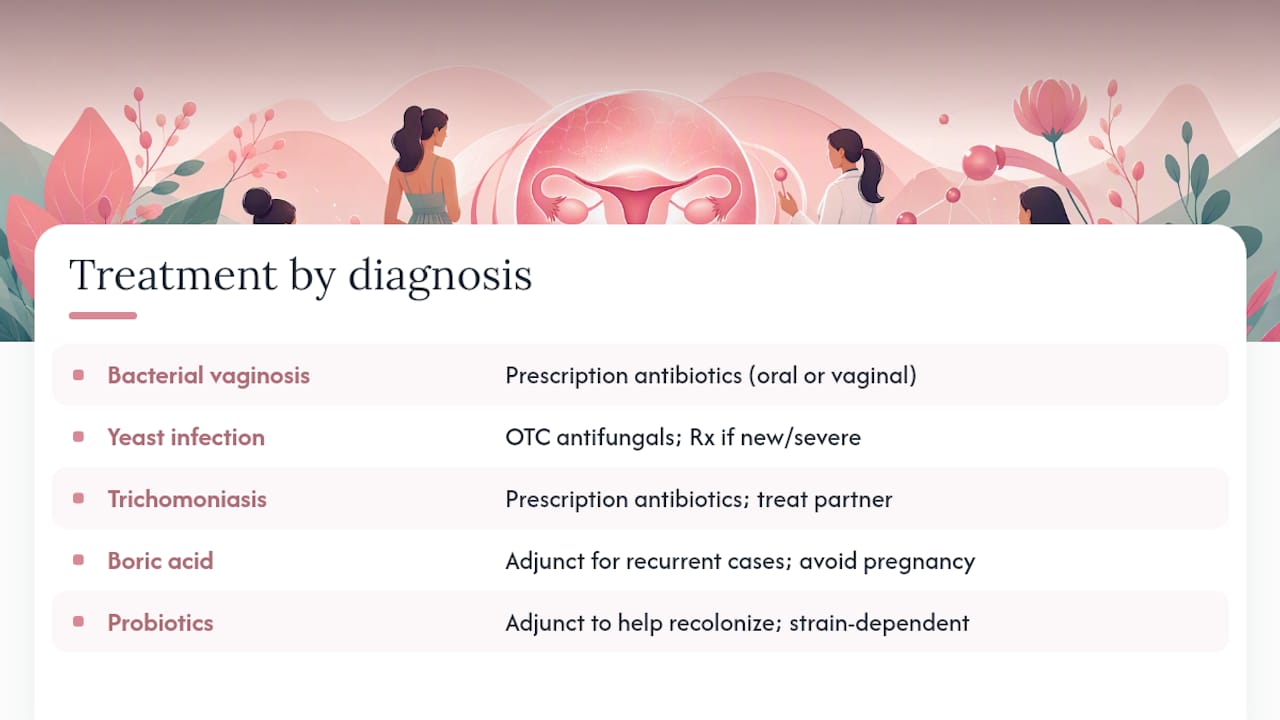
Clinical treatment comes first for confirmed infections. Bacterial vaginosis is typically treated with prescription antibiotics such as metronidazole or clindamycin, taken orally or applied vaginally. Yeast infections respond to antifungal medications, available both over the counter for mild, recurring cases you’ve had diagnosed before and by prescription for anything new or severe. Trichomoniasis requires prescription antibiotics for both the patient and her sexual partner, since reinfection is common if only one person is treated. None of these conditions resolve reliably with home remedies alone, and self-treating the wrong condition, such as using an antifungal for what’s actually BV, delays real treatment while symptoms continue.
Boric acid has a legitimate but narrow role. Vaginal boric acid suppositories are sometimes recommended, generally after a clinician-confirmed diagnosis, for recurrent yeast infections or as an adjunct to antibiotic treatment for stubborn BV. It is not a first-line treatment and it is not safe during pregnancy, since absorption has been linked to fetal harm in animal studies. Boric acid capsules are also toxic if swallowed and must be stored somewhere children and pets can’t reach them. Anyone considering it should discuss the decision with a clinician first, not order it online after a symptom search.
Probiotics are a reasonable adjunct, not a stand-alone cure. Certain Lactobacillus strains, taken orally or inserted vaginally, show promise for helping recolonize the vagina with protective bacteria after an infection or a course of antibiotics. The evidence is still developing and results vary by strain, so probiotics work best as support for recovery rather than a replacement for diagnosed treatment. An overview of probiotics and vaginal health walks through which strains show the most consistent research backing.
Manage expectations around recurrence. BV in particular has a frustratingly high recurrence rate even after successful treatment, because the underlying microbiome shift that allowed it to take hold in the first place doesn’t always reverse on its own. If symptoms return within a few weeks of finishing treatment, that’s worth a follow-up visit rather than a repeat of the same over-the-counter product that didn’t hold the line last time.
Daily Habits That Support Healthy Vaginal pH
Most pH disruption is preventable with a short list of habits that cost nothing and take no extra time once they’re routine.
- Wash externally with warm water only. The vulva can be cleaned gently with water or a mild, pH-balanced wash designed for external use; the vagina itself is self-cleaning and doesn’t need internal washing or douching to stay healthy.
- Choose breathable underwear. Cotton allows airflow and moisture to escape, while tight synthetic fabric traps heat and humidity against the skin, conditions that unwanted bacteria and yeast both prefer.
- Change out of wet clothing quickly. Swimsuits, sweaty leggings, and damp underwear left on for hours create exactly the environment described above. Prompt changes are one of the simplest, most underused prevention habits available.
- Use condoms when pH sensitivity is an issue. If you notice recurring irritation after unprotected sex, a condom limits the alkaline shift semen causes and gives your natural pH less work to do.
- Follow tampon and pad guidance. Change tampons every 4 to 8 hours and pads regularly during your period, per FDA guidance, since prolonged blood exposure raises pH and creates a breeding ground for bacteria.
- Watch sugar intake and consider fermented foods. Diets high in refined sugar have been associated with yeast overgrowth in some women, while fermented foods like yogurt with live cultures may offer modest support for a healthy microbiome. Neither is a guaranteed fix, but both are low-risk habits worth building in.
- Stay hydrated. Adequate water intake supports healthy mucous membrane function throughout the body, vaginal tissue included.
None of these habits require special products. They require consistency, which is a less exciting answer than most wellness content offers but a more honest one.
Myths That Keep Women From Balancing Vaginal pH Correctly
Bad advice about vaginal care spreads fast, and some of it actively works against the pH balance you’re trying to protect.
- “Douching cleans out infection.” It does the opposite. Douching removes protective lactobacilli along with everything else, which often makes an existing imbalance worse and has been linked to higher BV rates. A safer alternative to douching is simply not doing it.
- “Vaginal steaming resets your pH.” There’s no clinical evidence steaming does anything beneficial, and the heat and moisture involved can create the exact damp conditions that favor unwanted bacteria.
- “Scented washes and wipes keep things fresh.” Fragrance is one of the most common vaginal irritants. A gentle, pH-balanced wash for external use only does far more good than anything scented.
- “A normal pH means no infection.” Not true. Yeast infections routinely occur at a completely normal pH, so a clean at-home test result doesn’t rule out every possibility.
- “Any odor means BV.” Vaginal odor changes naturally with your cycle, diet, and sweat levels. A safe, non-douching approach to managing odor addresses the mild, normal cases; a sudden fishy odor with discharge changes is the pattern that actually warrants medical attention.
Diet, Stress, and Sex: The Lifestyle Factors Nobody Mentions
Diet, stress, and how often you’re sexually active all leave a fingerprint on vaginal pH, even though none of them get much airtime next to the usual advice about hygiene products.
Diets heavy in refined sugar and processed carbohydrates have been associated with yeast overgrowth, since sugar feeds Candida the same way glycogen feeds lactobacilli. That doesn’t mean cutting sugar cures recurring yeast infections, but it’s a reasonable lever to pull alongside proper treatment. Chronic stress works through a different pathway: sustained cortisol elevation can disrupt the hormonal signaling that keeps glycogen production, and by extension lactobacilli populations, running smoothly. Women managing high, ongoing stress sometimes notice more frequent minor imbalances, though the connection is harder to isolate than a straightforward dietary trigger.
Sexual activity frequency matters mostly through exposure, not through sex itself being harmful to pH. Each unprotected encounter introduces semen’s alkaline pH and, with new or multiple partners, a wider mix of external bacteria the vaginal microbiome has to adjust to. Frequent unprotected sex without adequate recovery time between encounters can keep pH elevated more often than it would be otherwise. This isn’t a case for abstinence; it’s a case for condoms and paying attention to whether irritation shows up as a pattern rather than a one-off.
Vaginal Microbiome Health Goes Beyond a Single pH Number
pH is a useful shorthand, but it’s a byproduct of the microbiome, not the whole story. Two women can register the same pH reading and have very different bacterial compositions underneath it.
A healthy vaginal microbiome is typically dominated by one or two Lactobacillus species, most often L. crispatus or L. iners, though the exact mix varies by individual and even by ethnicity, a finding that has reshaped how researchers think about what “normal” looks like. A microbiome low in diversity but high in the right lactobacilli tends to be more stable than one that’s more diverse but missing dominant protective species. This is part of why a single pH strip reading can miss real problems. Bacterial diversity, species dominance, and the presence of specific disruptive organisms all matter in ways a pH number alone can’t capture. Clinicians increasingly view pH as one input among several, alongside symptoms and, when needed, microscopy, rather than a complete health check on its own.
FlorvaHealth’s Take: Supporting Balance From the Inside Out
The evidence on Lactobacillus and vaginal health points in a consistent direction: acidity is the effect of a healthy bacterial population, not the cause of one. That’s the logic behind FlorvaHealth’s inside-out approach, pairing probiotic support with gentle, external, pH-balanced cleansing rather than chasing a number on a test strip.
Emerging research on strain-specific probiotics is genuinely promising, though it’s still early enough that no single strain should be marketed as a guaranteed fix for anyone’s individual microbiome. What the science does support is the broader principle: feeding and protecting your existing lactobacilli population, through diet, gentle external care, and avoiding disruptors like douching, tends to matter more than reacting to symptoms after they show up. That’s a maintenance mindset, not a rescue mindset, and it’s the one worth building around.
— Zamanee
A Simpler Way to Support Vaginal pH Every Day
You’ve read the causes, the warning signs, and the habits that actually move the needle. Some brands build products around exactly that list, so you’re not piecing together a routine from five different brands.
The lineup covers the categories that matter most for the maintenance habits above: probiotic capsules formulated to support a healthy internal balance, pH-balanced washes meant for gentle external use only, and targeted relief options for the symptoms that show up around hormonal shifts and cycle changes. Instead of guessing which over-the-counter product addresses which cause, you get a routine designed around the same inside-out logic covered in this article: protect the bacteria doing the real work, and skip the products that strip them out. If bloating and PMS tend to accompany your cycle-related symptoms, the PMS and bloating relief collection rounds out the internal support side. Start by browsing the full product lineup and picking one category that matches whatever’s bothering you most right now.
This article is general information, not a substitute for advice from a qualified doctor. Consult a qualified healthcare professional about your own circumstances before acting on anything here.
Sources
- Vaginal pH Value for Clinical Diagnosis and Treatment of Common Vaginitis — PMC
- Vaginal pH: Balance, Range & What Causes Fluctuations — Cleveland Clinic
- Bacterial vaginosis — CDC
- Facts about tampons and how to use them safely — FDA
FAQ
How can I tell if my pH balance is off?
Watch for a fishy odor, gray or white discharge, itching, or burning, since these often signal a pH shift toward the alkaline range. A normal reading doesn’t guarantee everything is fine, since yeast infections often occur at completely normal pH.
What can throw off a woman’s pH balance?
Menstrual blood, semen, antibiotics, douching, scented products, and hormonal changes from pregnancy, cycling, or menopause are the most common disruptors. Most of these cause only temporary shifts that resolve within a day or two on their own.
How do I balance my pH to get rid of a fishy smell?
A persistent fishy odor, especially after sex, usually points to bacterial vaginosis, which needs prescription antibiotics rather than a home remedy. Avoid douching or scented products in the meantime, since both tend to make the underlying imbalance worse.
What does it mean when a woman has a high pH?
A vaginal pH above 4.5 is one marker associated with bacterial vaginosis, but clinicians confirm BV using additional criteria like discharge appearance and a whiff test, not pH alone. A single elevated at-home reading is a reason to get tested, not a diagnosis by itself.
Can probiotics help restore vaginal pH naturally?
Certain Lactobacillus strains taken orally or vaginally show promise for supporting recolonization after antibiotics or infection, though the evidence is still developing and varies by strain. Florvahealth’s probiotic-focused products are built around this inside-out approach as a complement to, not a replacement for, medical treatment.


