

Use digestive enzymes when your symptoms show up right after eating a specific food, or when a doctor has confirmed a deficiency like lactose intolerance. Use probiotics when the goal is long-term microbiome balance, regularity, or recovery after antibiotics. Many women benefit from both at once. Johns Hopkins Medicine treats them as separate tools with separate jobs, and a supplement like lactase only helps if dairy is actually your trigger. See a clinician if bloating, pain, or irregular digestion sticks around longer than a few weeks.
TL;DR:
- Supplementing with digestive enzymes is only necessary if tests confirm a deficiency, as most adults produce enough naturally.
- Probiotics require consistent daily use over two to eight weeks to show benefits, especially after antibiotics or for chronic digestive issues.
- Enzymes work immediately to break down specific foods, while probiotics support gut health gradually over weeks through microbial balance.
- Proper testing, such as hydrogen breath or fecal elastase tests, is essential before starting supplements, particularly for severe or persistent symptoms.
- Combining enzymes and probiotics can target both immediate food-related issues and long-term microbiome health, with tailored strategies based on symptom patterns.
Table of Contents
- What Are Digestive Enzymes and How Do They Work?
- What Are Probiotics and How Do They Work?
- Enzymes vs Probiotics: The Quick Comparison
- When Should You Choose Enzymes, Probiotics, or Both?
- How and When to Take Each One
- Safety, Side Effects, and When to Call a Clinician
- Can You Take Enzymes and Probiotics Together?
- FlorvaHealth’s Take on Gut, Hormones, and Skin
- What Realistic Progress Actually Looks Like
- Simple Next Steps for Bloating and Hormone-Aware Gut Support
- Sources
- FAQ
What Are Digestive Enzymes and How Do They Work?
Digestive enzymes are proteins your pancreas, stomach, and small intestine produce to break whole foods into pieces small enough to absorb. Carbohydrates need amylase, protein needs protease, and fat needs lipase. Dairy sugar needs a fourth, more specialized enzyme: lactase, which is the one most people have actually heard of because lactose intolerance is so common.
Johns Hopkins Medicine notes that most healthy adults make enough of these enzymes on their own. Supplementation only makes sense when there’s a diagnosed gap, not as a default habit.
Signs that point toward an actual enzyme problem, rather than general digestive sensitivity, tend to cluster around meals:
- Bloating, gas, or cramping that starts within an hour of eating a specific food (dairy, fatty meals, large protein portions)
- Undigested food visible in stool, or greasy, floating stools
- Unexplained weight loss alongside digestive symptoms
- Chronic diarrhea tied to eating patterns rather than stress or illness
If those symptoms are frequent and severe, clinicians can confirm the cause with a hydrogen breath test for lactose intolerance or a fecal elastase test to check pancreatic enzyme output. Neither is something you can diagnose yourself with elimination diet alone, though tracking food and symptoms is a useful first step before that conversation.
What Are Probiotics and How Do They Work?
Probiotics are live microorganisms that, once established, help balance the trillions of bacteria already living in your gut. Where enzymes act on the food you just ate, probiotics act on the ecosystem itself. That distinction shapes everything about how you use them.
Not all strains behave the same way. Some are fragile and get destroyed by stomach acid before they reach the intestine; others are spore-formers built to survive the trip. Cleveland Clinic points out that survivability and strain choice matter more than the exact hour you take the capsule.
People typically reach for probiotics for:
- Restoring gut bacteria after a course of antibiotics
- Easing chronic bloating, irregular bowel movements, or IBS-type symptoms
- General regularity and digestive comfort over time
- Supporting the gut-hormone-skin connection many women notice around their cycle
Don’t expect overnight results. Peer-reviewed research on probiotics shows benefits usually take two to eight weeks of consistent daily use to show up, and skipping days resets the clock more than people expect. The NIH Office of Dietary Supplements is blunt about this too: effects are strain-specific and condition-specific, so a probiotic that works for a friend’s bloating might do nothing for yours.
Enzymes vs Probiotics: The Quick Comparison
Here’s how digestive enzymes and probiotics stack up across the factors that actually drive which one you should reach for.
| Factor | Digestive Enzymes | Probiotics |
|---|---|---|
| Primary function | Breaks down food into absorbable nutrients | Rebalances gut bacteria and supports the microbiome |
| Where they act | Stomach and small intestine | Small and large intestine, primarily the colon |
| Timing | Right before or during a meal | Same time daily, consistency over timing |
| Onset | Minutes to hours | Two to eight weeks |
| Best first choice for | Meal-triggered bloating, known dairy intolerance, pancreatic insufficiency | Chronic irregularity, post-antibiotic recovery, IBS-type symptoms |
| Mechanism | Chemical breakdown of macronutrients | Microbial colonization and competition |
Think of it this way: enzymes are food processors, probiotics are ecosystem managers, and Johns Hopkins Medicine’s framing makes that split easy to remember. If the problem shows up right after a meal, look at enzymes first. If it’s a background hum of irregularity that has nothing to do with what you just ate, probiotics are the more logical starting point.
When Should You Choose Enzymes, Probiotics, or Both?
Match your symptom pattern to the right category before you buy anything.
- Choose enzymes if symptoms are tightly linked to specific foods: bloating after dairy, discomfort after large or fatty meals, or a known pancreatic condition. Lactase for dairy is the clearest example, because it targets one job and does it well.
- Choose probiotics if the problem is more chronic and less food-specific: ongoing constipation or diarrhea, digestive disruption after antibiotics, or an IBS diagnosis where symptom management is the goal.
- Get tested before assuming either supplement is the fix, especially if symptoms are severe or unpredictable. A hydrogen breath test or fecal elastase check gives a clinician real data instead of guesswork.
- Seek urgent care for red flags: blood in stool, unexplained weight loss, persistent vomiting, or severe abdominal pain. No supplement replaces that evaluation.
Pro Tip: A general enzyme blend won’t help if it doesn’t contain the specific enzyme your trigger food needs. Check the label for lactase activity units if dairy is the issue, not just a vague “digestive enzyme complex” claim.
How and When to Take Each One
Timing is where most people get this wrong, and it’s simpler than the supplement aisle makes it look.
- Take enzymes immediately before or during the meal that causes trouble. Take them after the meal and they’re doing nothing.
- Take probiotics at the same time every day. Cleveland Clinic confirms there’s no single “best” hour. Consistency beats precision.
- On antibiotics, space your probiotic dose a few hours apart from the antibiotic and continue for one to two weeks after finishing the course.
- Example: lactase capsule right before pizza night; a broader enzyme blend before a heavy protein-and-fat dinner.
Safety, Side Effects, and When to Call a Clinician
Both categories are generally well tolerated, but neither is risk-free for everyone.
- Mild gas or bloating in the first few days of probiotic use is common and usually settles; symptoms that worsen instead of easing are a sign to stop and reassess.
- People who are immunocompromised, pregnant, or breastfeeding should talk to a clinician before starting probiotics, since live microorganisms carry a different risk profile for those groups.
- Check labels closely: CFU counts, named strains, and enzyme activity units matter far more than marketing language on the front of the bottle.
- If symptoms persist despite a proper trial of either supplement, that’s the signal for breath testing, stool testing, or a referral to a gastroenterologist rather than switching brands repeatedly.
Can You Take Enzymes and Probiotics Together?
Combining them often makes sense because they solve different problems at the same time: one processes the meal in front of you, the other rebuilds the environment behind the scenes. A practical trial plan:
- Pick one enzyme for your known trigger food and take it at every relevant meal for four to eight weeks.
- Add one probiotic strain, taken daily without skipping, for the same stretch.
- Keep a simple symptom log, since clinical guidance recommends judging a single strain over eight to twelve weeks before switching.
- Expect enzyme relief within days; expect probiotic changes to take weeks. No change after a full trial means it’s time to change strains or talk to a clinician.
FlorvaHealth’s Take on Gut, Hormones, and Skin
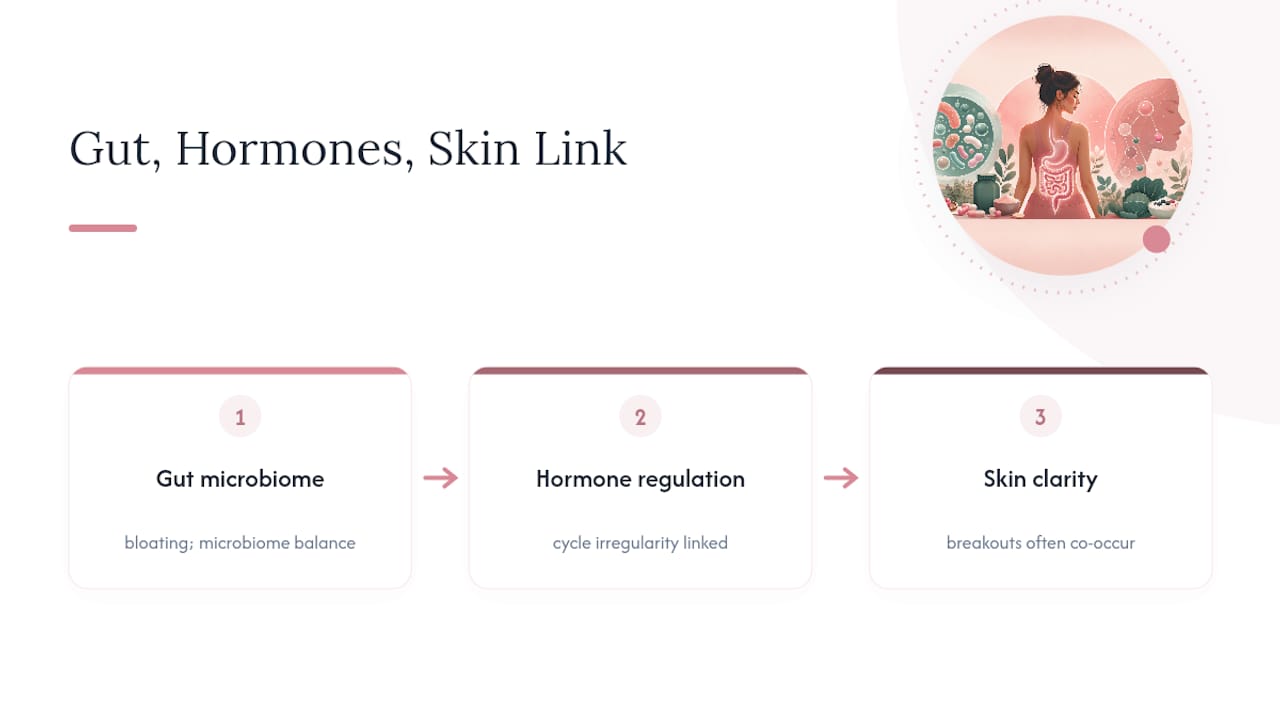
Gut balance doesn’t stay in the gut. Educational content often highlights the connection between microbiome health, hormone regulation, and skin clarity, which is why bloating, breakouts, and cycle irregularity can frequently show up together. For deeper reading, the Florva blog covers lactase timing for dairy-related bloating, probiotics and vaginal health, and a food-first plan to restore your microbiome over four to eight weeks.
What Realistic Progress Actually Looks Like
Supplements are tools, not cures; for practical guidance on resetting diet and routines, see regaining your health after the holidays. Enzymes can bring relief within days if you’ve matched the right one to the right food; probiotics take weeks, and that timeline doesn’t shorten no matter how consistent you are. A food-first approach paired with a short, tracked trial beats stacking five products at once. Log your symptoms, give it the full trial window, and bring a clinician in when something doesn’t resolve on its own.
— Zamanee
Simple Next Steps for Bloating and Hormone-Aware Gut Support
If your bloating tends to show up in the second half of your cycle, the luteal phase bloating guide explains why, but the practical fix usually starts with two things: what you’re eating and whether your gut bacteria are balanced. FlorvaHealth’s PMS & Bloating Relief collection is built around exactly that overlap, cycle-related bloating and digestive discomfort that don’t respond to diet changes alone.
For women dealing with irregular cycles, hormonal acne, or bloating that seems to track with hormone shifts rather than specific foods, the Hormone Balance Supplements line takes a broader approach, pairing gut support with the hormonal side of the equation instead of treating digestion as a separate issue. Reader with cycle-linked symptoms and no clear food trigger, that’s the more sensible starting point. A reasonable approach: adjust your diet for two to three weeks, add a targeted product trial, and keep a simple symptom log to see what actually moves the needle before adding anything else. Browse the full wellness collection to see which routine fits your symptoms.
This article is general information, not a substitute for advice from a qualified doctor. Consult a qualified healthcare professional about your own circumstances before acting on anything here.
Sources
- Digestive Enzymes and Digestive Enzyme Supplements | Johns Hopkins Medicine
- When Is the Best Time To Take Probiotics? | Cleveland Clinic Health Essentials
- Peer-reviewed review on probiotics (PMC5995450)
- Probiotics: In Depth | NIH Office of Dietary Supplements
FAQ
Who Should Avoid Digestive Enzymes?
People without a diagnosed deficiency generally don’t need them, since most healthy adults already produce enough enzymes. Anyone with unexplained severe symptoms should get tested before self-treating with enzyme supplements rather than guessing at the cause.
What Are the Signs That You Need Digestive Enzymes?
The clearest signs are symptoms tied directly to eating: bloating, gas, or cramping within an hour of a specific food, undigested food in stool, or greasy stools. If those patterns are frequent, a fecal elastase test or hydrogen breath test can confirm an actual deficiency.
Is It Better to Use Enzymes or Probiotics?
Neither is universally better; they solve different problems. Enzymes work faster for food-specific digestive trouble, while probiotics take longer but address broader microbiome balance, and many people benefit from using both together.
What Happens to Your Body When You Start Taking Digestive Enzymes?
Most people notice reduced bloating or discomfort within the same meal or within hours, since enzymes act directly on the food you just ate. If nothing changes after a few attempts with the right enzyme for your trigger food, the issue may not be an enzyme deficiency at all.
Does FlorvaHealth Offer Products for Bloating Related to Hormones?
Yes. FlorvaHealth’s PMS & Bloating Relief collection targets cycle-related bloating specifically, and current pricing is listed on the collection page itself.


