

The most effective approach starts with lifestyle changes (exercise, sleep, cutting caffeine and alcohol) and adds one or two supplements with real trial data behind them, like calcium or vitamin B6. Give any change two to three cycles before judging it. CBT and SSRIs come next for symptoms that disrupt work or relationships, and a clinician should weigh in if things feel severe. Supplement and topical routines fit into that same trial window as a practical add-on, not a replacement for medical care.
TL;DR:
- Supplementing with calcium at 1,000 to 1,200 mg daily for two to three cycles significantly reduces PMS symptoms, especially physical discomfort.
- Vitamin B6, at doses below 100 mg per day, may help alleviate psychological symptoms like irritability, but higher doses pose nerve damage risks.
- Lifestyle changes such as regular aerobic exercise, consistent sleep, blood sugar-friendly diet, and stress reduction can effectively lessen PMS mood swings when sustained over multiple cycles.
- Severe mood symptoms affecting daily life, with or without outside-the-window symptoms, require clinical assessment and may involve therapy, medication, or hormonal treatments.
- Tracking symptoms daily for at least two cycles helps determine pattern, effectiveness of interventions, and when professional help is needed.
Table of Contents
- Why PMS Mood Swings Happen and When to Expect Them
- Lifestyle and Self-Care Steps That Actually Move the Needle
- Evidence-Backed Supplements for PMS Mood, and the Doses That Were Actually Tested
- CBT, Antidepressants, and Hormonal Options: When Lifestyle Isn’t Enough
- Tracking Symptoms and Knowing When to See a Clinician
- FlorvaHealth’s Take on Evidence-Minded PMS Support
- Do Acupuncture and Other Herbal Remedies Beyond Chasteberry Help?
- Managing a Bad Mood Episode Right Now
- What I’d Try First, and Why
- Building a Starter Routine With Florvahealth
- Sources
- FAQ
Why PMS Mood Swings Happen and When to Expect Them
PMS mood swings track the luteal phase, the roughly two weeks between ovulation and your period. Progesterone rises sharply after ovulation, then both progesterone and estrogen drop fast right before menstruation starts. That drop affects serotonin and GABA activity in the brain, which is why irritability, tearfulness, and anxiety tend to spike right when hormone levels are falling, not when they’re at their highest.
Most women notice symptoms starting one to two weeks before their period and fading within a day or two of menses beginning. If mood symptoms show up outside that window, something else is likely going on.
A few timing patterns are worth flagging:
- Symptoms that start mid-cycle and last all month point away from PMS and toward another cause.
- Mood swings severe enough to affect work, relationships, or daily function may signal premenstrual dysphoric disorder (PMDD), a more intense variant of PMS.
- PMDD often includes suicidal thoughts or hopelessness, which standard PMS does not, and warrants prompt clinical attention.
- If symptoms never fully resolve after your period starts, that’s a red flag for a mood disorder layered on top of PMS rather than PMS alone.
Lifestyle and Self-Care Steps That Actually Move the Needle
Clinical guidance from Mayo Clinic consistently points to the same handful of levers: movement, sleep, food timing, and stress management. None of these require a prescription, and all of them are backed by more consistent evidence than most people expect.
Exercise is the closest thing to a universal recommendation here. Aim for 30 minutes of aerobic activity most days, brisk walking, cycling, swimming, whatever gets your heart rate up without feeling like punishment. If your schedule fights you, break it into two 15-minute walks instead of forcing one block.
Sleep matters more during the luteal phase than people assume, since falling progesterone can already disrupt sleep architecture on its own. A consistent bedtime, a dark room, and cutting screens an hour before bed give your brain less to fight against on top of the hormone shifts already happening.
Diet adjustments focus on blood sugar stability: complex carbs (oats, sweet potatoes, whole grains), smaller and more frequent meals, and dialing back caffeine, alcohol, and refined sugar in the two weeks before your period. A handful of almonds with a banana or hummus with whole-grain crackers works better as a luteal-phase snack than a candy bar that spikes and crashes blood sugar.
Stress reduction rounds out the list. A five-minute breathing exercise or a short progressive muscle relaxation session, tensing and releasing muscle groups from feet to head, gives you a concrete coping skill instead of just “try to relax.”
Here’s a practical order to try these in:
- Start with sleep and exercise together for one full cycle since they reinforce each other.
- Add the diet changes in cycle two once the first habits feel automatic.
- Layer in a daily stress-reduction practice by cycle three, timed to start about ten days before your expected period.
Pro Tip: Change one lifestyle habit and one supplement at a time, not five things at once. If you overhaul everything simultaneously, you’ll have no idea which change actually helped when symptoms improve.
Evidence-Backed Supplements for PMS Mood, and the Doses That Were Actually Tested
Supplement aisles are full of vague “hormone support” claims, but a small handful of options have real trial data behind them for PMS mood.
Calcium has the strongest track record. A multicenter randomized trial of 466 women found calcium supplementation produced a 48% reduction in total symptom scores by the third cycle, compared to 30% for placebo. The dose used was 1,000 to 1,200 mg of elemental calcium daily, typically split into two doses for better absorption. Give it two to three full cycles before deciding whether it’s working.
Vitamin B6 (pyridoxine) shows benefit specifically for psychological symptoms like irritability and low mood, at doses generally kept at or below 100 mg per day for a trial period. Chronic high doses above 200 mg daily carry a real risk of nerve damage (peripheral neuropathy), so more isn’t better here.
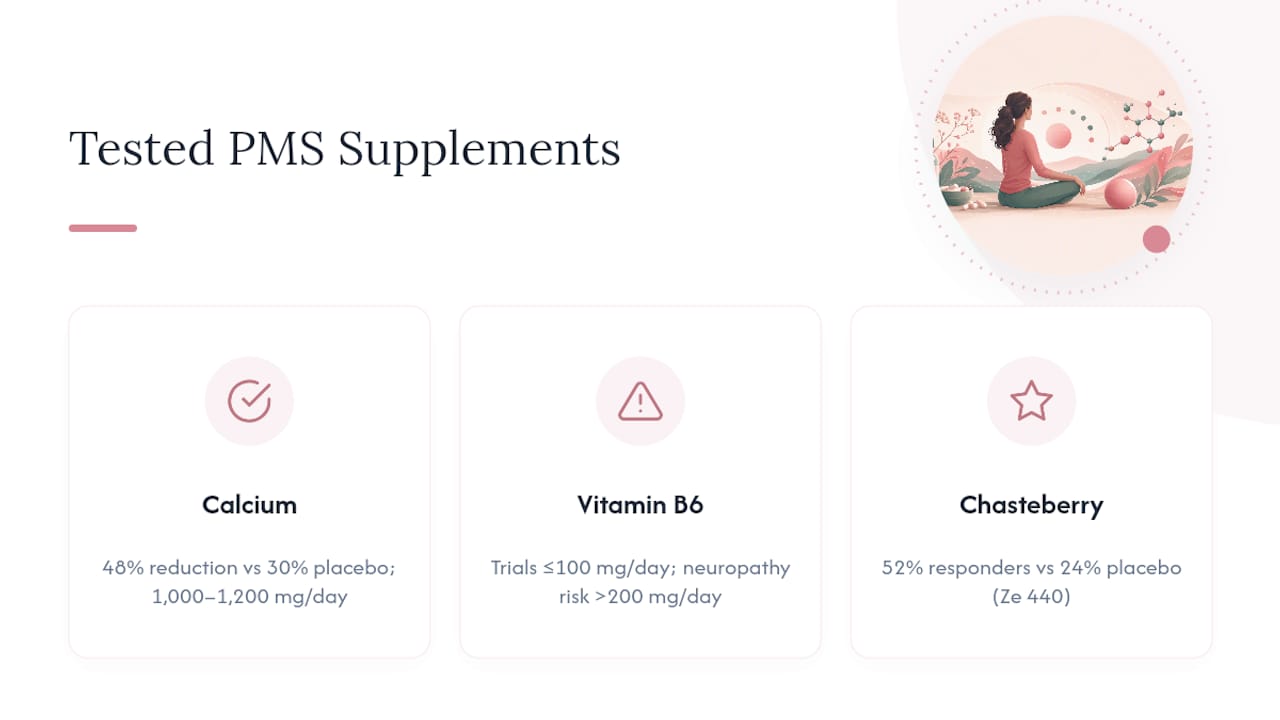
Chasteberry (Vitex agnus-castus) is the standout herbal option, but only in standardized extract form. A placebo-controlled BMJ trial using the Ze 440 extract found 52% of women responded versus 24% on placebo, with meaningful improvement in irritability, anger, and mood swings over three cycles. Generic store-brand “Vitex” capsules without standardization to Ze 440 or BNO 1095 extract levels weren’t what these trials tested, and results likely won’t match.
Magnesium alone shows mixed results, but combined with vitamin B6, it appears more consistent for easing premenstrual anxiety than either nutrient alone. Magnesium glycinate is generally gentler on digestion than other forms; anyone with reduced kidney function should check with a clinician before supplementing.
A broader review of complementary therapies found that while no single alternative treatment earns a universal recommendation, calcium and chasteberry are the two that keep showing up in the higher-quality trials. That’s a useful filter when everything on a supplement shelf claims to help.
Calcium at 1,000 to 1,200 mg daily cut total PMS symptom scores substantially in a large clinical trial, representing strong data behind a nonprescription PMS remedy.
One caution across the board: herbal products can interact with medications. St. John’s wort, for example, interferes with hormonal contraceptives and antidepressants. Run any new supplement by a pharmacist or clinician if you’re on other medications.
CBT, Antidepressants, and Hormonal Options: When Lifestyle Isn’t Enough
When mood symptoms are severe enough to disrupt work, relationships, or daily function, it’s time to look past lifestyle and supplements.
Cognitive-behavioral therapy (CBT) has solid evidence for reducing PMS and PMDD mood symptoms, according to treatment guidance from Harvard Health. A focused CBT plan typically targets catastrophic thinking patterns around symptoms and builds concrete coping skills for the luteal window, rather than open-ended talk therapy.
SSRIs (selective serotonin reuptake inhibitors) are considered first-line medication for severe PMS mood symptoms and PMDD. What’s notable is that they can be dosed two ways:
- Daily dosing throughout the entire cycle, the standard approach for depression.
- Intermittent dosing, taken only during the luteal phase (roughly the two weeks before your period), which works for many women with PMS-specific symptoms and limits medication exposure.
Common side effects include nausea, headache, and changes in sleep or libido; a prescribing clinician will monitor these early on.
Hormonal treatments are another route, particularly combined oral contraceptives, especially drospirenone-containing formulations, which some women find smooths out the hormone swings driving mood symptoms. GnRH agonists are reserved for refractory cases and require close clinician supervision due to their broader hormonal effects.
See a clinician if symptoms cause real functional impairment, if you have any suicidal thoughts, or if mood symptoms show up outside the luteal window. Any of those crosses from “manage it yourself” into “get evaluated.”
Tracking Symptoms and Knowing When to See a Clinician
A simple daily log beats guessing. Rate mood, bloating, and cramps on a 0 to 10 scale each day for at least two cycles, a practice MedlinePlus recommends for confirming a genuine PMS pattern before treating it.
- Log daily, same time each day, for a minimum of two cycles to establish your pattern.
- Test one change at a time, or one primary change paired with one secondary one, for two to three full cycles before deciding it worked or failed.
- Watch for red flags: severe disruption to work or relationships, suicidal thoughts, or symptoms that don’t resolve after your period starts.
- Bring your log to a clinician appointment, along with a list of medications and what you’ve already tried.
FlorvaHealth’s Take on Evidence-Minded PMS Support
An approach builds around pairing internal supplement support with external topical care, the idea being that gut health, hormone regulation, and skin clarity are connected rather than separate problems. That inside-out framing lines up with how the strongest PMS evidence actually works: nutrients like calcium and B6 acting from within, alongside symptom relief you can feel day to day.
A few practical notes for fitting this into your own trial plan:
- Treat any product the same way you’d treat a standalone supplement: give it two to three cycles before judging results.
- Pair one internal product with one lifestyle change rather than overhauling your routine overnight.
- Check with a clinician before combining new supplements with prescription medications, hormonal birth control, or if you’re pregnant or managing a hormone-sensitive condition.
Do Acupuncture and Other Herbal Remedies Beyond Chasteberry Help?
Acupuncture shows up often in PMS discussions, and some small trials suggest it may ease cramping and mood symptoms for certain women, though the evidence base is thinner and less consistent than what exists for calcium or standardized chasteberry. If you’re curious, it’s reasonable to try alongside, not instead of, the better-supported options.
Beyond Vitex, other herbal remedies circulate widely: evening primrose oil, ginkgo, saffron extract, and St. John’s wort all get mentioned for PMS mood symptoms. The honest picture is that most of these lack the kind of multicycle, placebo-controlled trial data that calcium and chasteberry have. A systematic review of complementary and alternative PMS therapies found evidence quality across this broader herbal category ranges from weak to inconsistent, which is a different tier of confidence than the RCT-backed options.
That doesn’t mean skip them entirely. It means treat them as a distant second choice, and be extra cautious about interactions. St. John’s wort in particular interferes with hormonal contraceptives and several antidepressants, a real risk if you’re combining herbal remedies with prescription medication without telling your clinician.
If you’re drawn to herbal treatments for PMS beyond chasteberry, standardization is still the deciding factor. A product without a specified, tested extract concentration is essentially a guess, no matter what the label promises.
Managing a Bad Mood Episode Right Now
Sometimes you don’t need a two-cycle plan, you need something that works in the next ten minutes. A few immediate techniques help take the edge off an acute mood spike:
Step outside, even for five minutes. Fresh air and a change of scenery interrupt the spiral faster than staying in the same room that triggered the frustration. Paced breathing works fast, too: inhale for four counts, hold for four, exhale for six, repeated five or six times. The longer exhale specifically signals your nervous system to downshift out of a stress response.

If irritability is boiling over in a conversation, a short pause before responding, even just naming it out loud (“I need a minute”) gives your nervous system time to catch up with your emotions. Cold water on your wrists or face triggers a similar calming reflex.
For dealing with PMS symptoms in the moment, movement beats stillness. A brisk ten-minute walk metabolizes stress hormones faster than sitting with the feeling. None of these replace the longer-term remedies above, but they buy you room to get through the next hour without saying or doing something you’ll regret later.
What I’d Try First, and Why
If you only have energy for two changes, pick exercise or sleep as your lifestyle anchor, then add calcium or B6 as your supplement anchor. Run both for two to three cycles before adding anything else. If exercise feels impossible some weeks, a ten-minute walk still counts. Log your symptoms daily so you can actually see whether it’s working instead of guessing.
If mood swings are wrecking your relationships or work, don’t wait through three more cycles hoping it resolves on its own. That’s the point to call a clinician.
— Zamanee
Building a Starter Routine With Florvahealth
An advantage isn’t a single miracle product, it’s a routine designed to work internally and externally at the same time, instead of treating supplements and skin symptoms as separate problems.
The Hormone Balance Supplements collection is built for exactly the kind of two-to-three-cycle trial this article recommends: pick one formula, take it consistently through a full luteal window, and track your symptom log alongside it. If bloating and physical discomfort are tangled up with your mood symptoms, the PMS & Bloating Relief line targets that overlap directly.
For anyone who’d rather not piece together separate products, the Florvia PMS & Bloating Relief Kit bundles complementary items into one simple regimen, timed to fit the same cycle-tracking approach outlined above. Start the kit at the beginning of a cycle, log your daily 0 to 10 symptom scores, and give it the full two to three cycles before deciding what’s working.
Sources
Key clinical references: the Mayo Clinic treatment overview, an NCBI clinical review of PMS, the calcium RCT on PubMed, Harvard Health on PMDD treatment, and the BMJ chasteberry trial.
This article is general information, not a substitute for advice from a qualified doctor. Consult a qualified healthcare professional about your own circumstances before acting on anything here.
- Calcium supplementation RCT (Thys-Jacobs et al.)
- Diagnosing and treating premenstrual dysphoric disorder — Harvard Health Publishing
- Treatment for the premenstrual syndrome with agnus castus fruit extract — BMJ
- Patient instructions: Managing PMS — MedlinePlus
FAQ
How Do I Deal With PMS Irritability?
Start with aerobic exercise, consistent sleep, and cutting caffeine and alcohol in the two weeks before your period, then consider adding calcium or vitamin B6 for two to three cycles. If irritability is severe or affecting relationships, CBT or SSRIs are effective next steps a clinician can guide you through.
Can Hormonal Changes Before My Period Cause Anger?
Yes. Falling progesterone and estrogen in the days before your period affect serotonin and GABA activity in the brain, which commonly triggers irritability and anger alongside other PMS mood symptoms. This typically resolves within a day or two after your period starts.
Is PMS an Excuse to Be Mean?
No. PMS mood swings come from real, measurable hormone shifts affecting brain chemistry, not a choice or a character flaw. That said, tracking symptoms and trying evidence-backed remedies like calcium or exercise can help you feel more in control of reactions during that window rather than blindsided by them.
What Are the Emotional Symptoms of PMDD?
PMDD involves more intense mood symptoms than standard PMS, including severe irritability, depression, anxiety, and sometimes hopelessness or suicidal thoughts in the week or two before menstruation. Any suicidal thoughts warrant prompt clinical evaluation rather than a wait-and-see approach.


