

A hormone is a chemical messenger produced by a gland, released into the bloodstream, and carried to target tissues where it changes how cells behave. That single sentence covers the whole concept. Everything else — mood swings, metabolism, puberty, stress response, sleep — is downstream of it.
Scientists have identified more than 50 hormones in the human body, and they govern virtually every system you can name. Here is the short version of what they do:
- Growth and development: regulate cell division, bone density, and organ maturation from fetal life through adulthood
- Metabolism and energy: control how fast you burn fuel, store fat, and regulate blood sugar
- Reproduction and sexual function: drive the menstrual cycle, fertility, libido, and pregnancy
- Stress and immune responses: mobilize energy in emergencies and modulate inflammation
- Sleep and mood: set circadian rhythms, influence neurotransmitter activity, and shape emotional tone
MedlinePlus, the Cleveland Clinic, and the National Institutes of Health are the primary authoritative sources used throughout this article. When in doubt about a specific symptom or test result, those are the right places to start.
Table of Contents
- How does a hormone actually work?
- Which glands produce which hormones?
- What are the chemical classes of hormones?
- How are hormone levels regulated?
- How do hormones affect your body and mind?
- What are common hormone disorders and their symptoms?
- How are hormone imbalances diagnosed and treated?
- What does research actually say about “balancing” hormones?
- Key Takeaways
- A clinician’s perspective on navigating hormone concerns
- Florvahealth: natural support for women’s hormonal symptoms
- Authoritative sources and further reading
How does a hormone actually work?
The signaling process starts before a hormone ever leaves its gland. Understanding the route it takes explains why some hormonal effects kick in within seconds and others take days.

Four types of hormonal signaling
Endocrine signaling is the classic model: a gland secretes a hormone into the bloodstream, and it travels to a distant target tissue. Insulin leaving the pancreas to act on muscle cells is a textbook example.
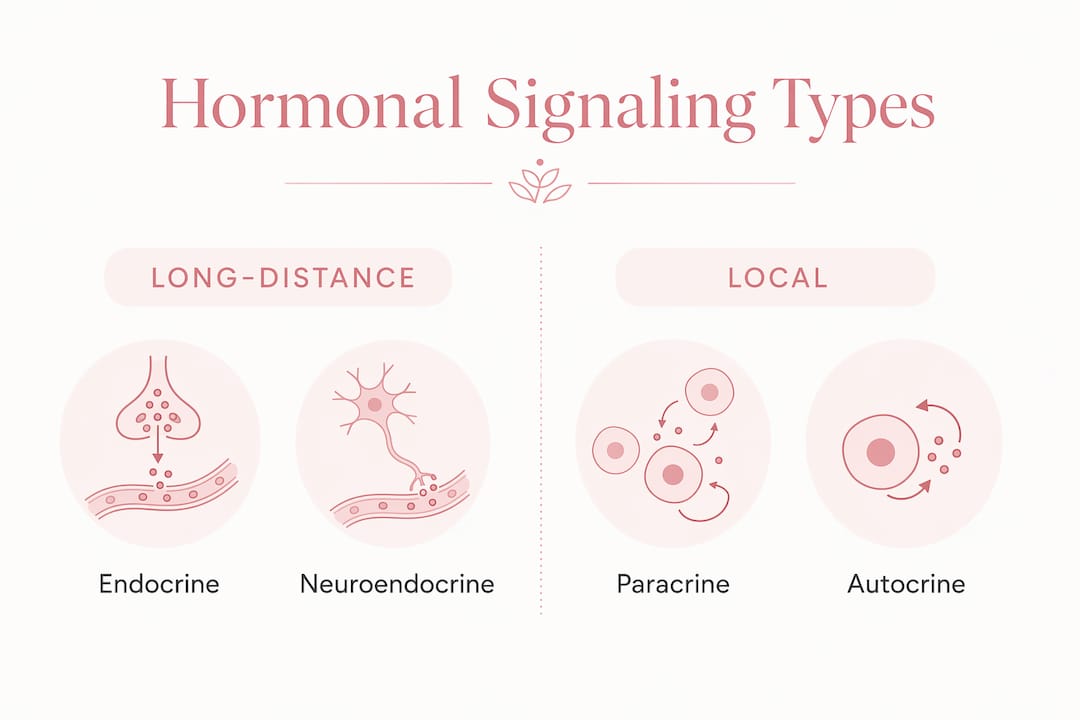
Paracrine signaling works locally. A cell releases a chemical that acts on neighboring cells without entering the bloodstream. Prostaglandins, which drive inflammation and uterine contractions, often work this way.
Autocrine signaling is even more local: a cell releases a messenger that acts on itself. Some immune cells use this to amplify their own activation.
Neuroendocrine (neurohormone) signaling bridges the nervous and endocrine systems. Neurons in the hypothalamus release hormones directly into a specialized blood vessel network, the hypothalamic-portal system, which carries them to the pituitary gland a few millimeters away.
Receptors, binding, and why chemistry matters
A hormone does nothing until it binds a receptor. Receptors are proteins shaped to accept one specific hormone, the way a lock accepts one key. Once bound, the receptor triggers a cascade of events inside the cell, called signal transduction, that changes gene expression, enzyme activity, or membrane permeability.
The hormone’s chemical class determines where its receptor sits. Peptide and protein hormones (insulin, growth hormone) are water-soluble and cannot cross the cell membrane, so their receptors sit on the cell surface. They act fast, often within minutes, but their effects fade quickly. Steroid hormones (cortisol, estrogen, testosterone) are fat-soluble and cross the membrane to bind receptors inside the cell or nucleus. They alter gene transcription directly, which means slower onset but effects that can last hours or days.
Half-life is the time it takes for half of a hormone’s concentration to clear from the blood. Epinephrine has a half-life of roughly two minutes. Thyroid hormone T4 has a half-life of about seven days. That difference explains why an adrenaline surge fades fast while thyroid medication takes weeks to reach a stable level.
Which glands produce which hormones?
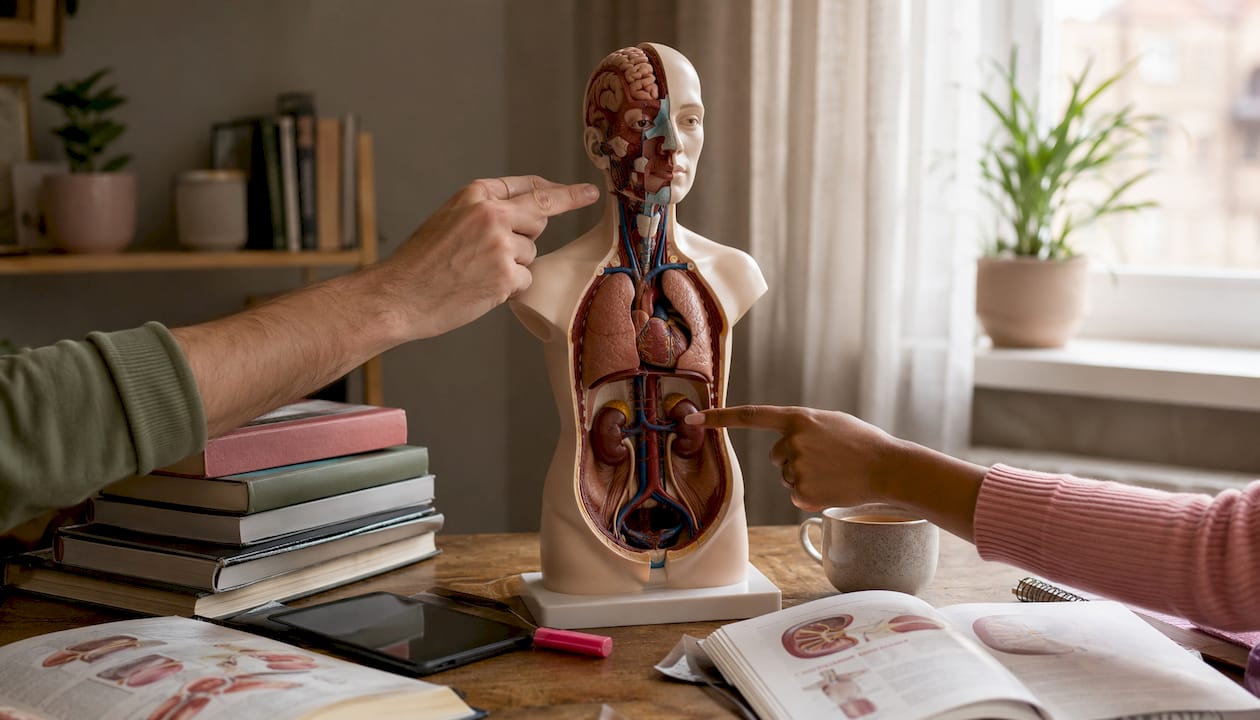
The endocrine system is a network of glands, each with a specific hormonal output. MedlinePlus identifies the major glands as the pituitary, pineal, thymus, thyroid, adrenal glands, and pancreas, plus the ovaries and testes.
| Gland | Key hormones | Primary function |
|---|---|---|
| Hypothalamus | GnRH, CRH, TRH, GHRH, somatostatin | Releases or inhibits pituitary hormones; master regulator |
| Anterior pituitary | GH, TSH, ACTH, FSH, LH, prolactin | Stimulates peripheral glands; controls growth and reproduction |
| Posterior pituitary | ADH (vasopressin), oxytocin | Water retention; uterine contractions and bonding |
| Thyroid | T4 (thyroxine), T3, calcitonin | Sets metabolic rate; bone calcium regulation |
| Parathyroid | PTH (parathyroid hormone) | Raises blood calcium; regulates bone resorption |
| Adrenal cortex | Cortisol, aldosterone, DHEA | Stress response, blood pressure, androgen precursor |
| Adrenal medulla | Epinephrine, norepinephrine | Fight-or-flight: heart rate, blood glucose, alertness |
| Pancreas | Insulin, glucagon | Lowers and raises blood glucose, respectively |
| Ovaries | Estrogen, progesterone, testosterone | Menstrual cycle, fertility, bone density, libido |
| Testes | Testosterone, inhibin | Sperm production, muscle mass, libido |
| Pineal gland | Melatonin | Circadian rhythm; sleep-wake cycle |
| Thymus | Thymosin | T-cell maturation; immune development |
A few one-line examples worth anchoring: insulin lowers blood glucose by driving it into cells; cortisol mobilizes glucose and fatty acids during stress; melatonin rises after dark to signal sleep onset; PTH pulls calcium from bone when blood levels drop.
The hypothalamus deserves special attention. It sits at the top of the hormonal hierarchy, receiving signals from the brain and translating them into hormonal commands for the pituitary. Every major endocrine axis, stress, reproduction, thyroid, growth, runs through it.
What are the chemical classes of hormones?
Hormones fall into four broad chemical families. The class determines how a hormone is made, how it travels, where it binds, and how long its effects last.
| Class | Examples | Receptor location | Onset | Duration |
|---|---|---|---|---|
| Peptides / proteins | Insulin, GH, FSH, LH, oxytocin | Cell surface | Minutes | Short (minutes to hours) |
| Steroids | Cortisol, estrogen, testosterone, aldosterone | Intracellular / nuclear | Hours | Long (hours to days) |
| Amines | Epinephrine, norepinephrine, thyroid hormones | Cell surface (catecholamines); nuclear (thyroid) | Seconds to hours | Variable |
| Eicosanoids | Prostaglandins, thromboxanes, leukotrienes | Cell surface (local) | Minutes | Very short (local, rapid) |
Peptide hormones are synthesized as larger precursor proteins, cleaved to active form, stored in vesicles, and released on demand. Because they are water-soluble, they circulate freely but cannot enter cells.
Steroid hormones are synthesized from cholesterol on demand, not stored. They travel bound to carrier proteins (like sex hormone-binding globulin) and diffuse into cells to bind nuclear receptors. The genomic effects, meaning changes in which genes get transcribed, are why a single dose of a corticosteroid can suppress inflammation for a full day.
Amines are a mixed group. Catecholamines (epinephrine, norepinephrine) are derived from the amino acid tyrosine and act on cell-surface receptors with rapid, short-lived effects. Thyroid hormones are also tyrosine-derived but behave more like steroids, entering the nucleus and producing long-lasting metabolic effects.
Eicosanoids are locally acting lipid mediators. Prostaglandins, for instance, drive the uterine contractions of menstruation and the fever response to infection. They are not classical hormones in the endocrine sense, but they fit the broader definition of chemical messengers that change target-cell behavior.
How are hormone levels regulated?
The endocrine system does not just produce hormones; it constantly monitors and adjusts them. The primary mechanism is the feedback loop, and the pituitary is the central monitor.
Negative feedback: the thermostat model
Most hormonal axes run on negative feedback. The hypothalamus releases a signal (say, TRH), which tells the pituitary to release TSH, which tells the thyroid to release T4 and T3. As thyroid hormone rises in the blood, it feeds back to both the hypothalamus and pituitary to reduce TRH and TSH output. The result is a self-correcting system that keeps thyroid hormone within a narrow range.
The pituitary acts as a central monitor, reading peripheral hormone levels and adjusting its tropic hormones (TSH, ACTH, FSH, LH) accordingly. This is why a blood test showing low TSH alongside low T4 points to a pituitary problem, while high TSH with low T4 points to the thyroid itself.
Positive feedback: the exception
Positive feedback amplifies a signal rather than dampening it. The LH surge before ovulation is the clearest example: rising estradiol, instead of suppressing LH, triggers a massive spike in LH that causes the follicle to rupture and release an egg. Once ovulation occurs, the system reverts to negative feedback.
HPA and HPG axes
The hypothalamic-pituitary-adrenal (HPA) axis governs the stress response. Perceived stress activates the hypothalamus to release CRH, which drives ACTH from the pituitary, which drives cortisol from the adrenal cortex. Chronic activation of this axis, as seen in prolonged psychological stress, keeps cortisol elevated and disrupts sleep, immune function, and metabolic regulation.
The hypothalamic-pituitary-gonadal (HPG) axis controls reproduction. GnRH pulses from the hypothalamus drive FSH and LH from the pituitary, which drive sex steroid production from the ovaries or testes. The menstrual cycle is essentially a monthly choreography of this axis.
Primary vs. secondary dysfunction
Distinguishing where in the axis a problem originates matters enormously for treatment. Primary dysfunction means the peripheral gland itself is failing (e.g., the thyroid is destroyed by autoimmune disease). Secondary dysfunction means the pituitary is not sending the right signal. A primary hypothyroid patient has high TSH; a secondary hypothyroid patient has low or normal TSH despite low thyroid hormone. Treating them identically would be a mistake.
How do hormones affect your body and mind?
Hormones do not operate in isolation. Multiple hormones work together for every major function, which is why a single imbalance can ripple across seemingly unrelated symptoms.
Here is a practical map of major hormones and their effects:
- Thyroid hormones (T3/T4): regulate basal metabolic rate, body temperature, heart rate, and cognitive speed. Even mild hypothyroidism can produce fatigue, weight gain, brain fog, and cold intolerance before lab values cross the clinical threshold.
- Insulin: manages blood glucose by driving it into cells. Chronically elevated insulin, as in insulin resistance, promotes fat storage, hunger, and eventually type 2 diabetes.
- Cortisol: sharpens alertness and mobilizes energy in the short term. Chronically elevated cortisol disrupts sleep architecture, redistributes fat to the abdomen, suppresses immune function, and impairs memory consolidation.
- Estrogen: supports bone density, cardiovascular health, skin collagen, and serotonin synthesis. Falling estrogen during perimenopause contributes to hot flashes, mood shifts, and sleep disruption.
- Progesterone: has a calming, mildly sedating effect via GABA-receptor activity. Low progesterone in the luteal phase is associated with anxiety, irritability, and poor sleep.
- Testosterone: influences libido, muscle mass, energy, and competitive drive in people of all sexes. Low testosterone in aging men is associated with fatigue and low mood.
- Melatonin: signals darkness and promotes sleep onset. Disrupted melatonin from late-night light exposure or shift work throws off the entire circadian rhythm.
The hormone-neurotransmitter connection
Estrogen directly upregulates serotonin receptors and promotes serotonin synthesis. This is why mood often shifts predictably across the menstrual cycle, and why the drop in estrogen at menopause can feel like a mood disorder even when it is not one. Cortisol, when chronically elevated, reduces hippocampal neurogenesis and blunts dopamine signaling, contributing to the flat, unmotivated feeling that accompanies burnout.
Research shows that hormone sensitivity varies considerably between individuals. Many mood or behavior changes during hormonal life stages reflect interacting biological and psychosocial factors rather than hormone levels alone. That is worth knowing before attributing every emotional shift to a single hormone.
For a deeper look at how these shifts play out day to day, Florvahealth’s guide on mood swing triggers covers the practical side of hormonal mood changes.
What are common hormone disorders and their symptoms?
Hormonal imbalance occurs when the body produces too much or too little of a hormone. Causes range from autoimmune disease and tumors to medications and life stages like pregnancy or menopause.
Common conditions at a glance
Hypothyroidism (underactive thyroid): fatigue, weight gain, constipation, cold sensitivity, dry skin, slow heart rate, depression. More common in women and in people over 60.
Hyperthyroidism (overactive thyroid): unintentional weight loss, rapid heartbeat, heat intolerance, anxiety, tremor, frequent bowel movements. Graves’ disease is the most common autoimmune cause.
Type 2 diabetes / insulin resistance: increased thirst and urination, fatigue, blurred vision, slow wound healing, frequent infections. Risk rises with age, excess weight, and family history.
PCOS (polycystic ovary syndrome): irregular or absent periods, excess androgen (acne, facial hair), ovarian cysts, difficulty conceiving. Affects people of reproductive age assigned female at birth (AFAB); strongly linked to insulin resistance.
Cushing’s syndrome: central weight gain, round face, purple stretch marks, easy bruising, high blood pressure, high blood sugar. Results from chronically elevated cortisol, often from a pituitary or adrenal tumor, or long-term corticosteroid use.
Addison’s disease: fatigue, weight loss, low blood pressure, salt craving, darkened skin patches. An autoimmune destruction of the adrenal cortex; rare but serious.
Menopause-related changes: hot flashes, night sweats, vaginal dryness, sleep disruption, mood changes, bone loss. Natural menopause most commonly occurs between ages 45 and 56, with a median age of 51 in the United States.
Life stages like puberty, pregnancy, and menopause produce predictable hormone shifts; aging patterns vary across hormones. Aging alters hormone production unevenly: some hormones decrease (growth hormone, DHEA), others increase (FSH, LH), and many show complex, tissue-specific changes.
Red-flag symptoms requiring urgent care
Seek immediate medical attention for any of these:
- Severe confusion or altered consciousness (possible adrenal crisis or severe hypoglycemia)
- Blood glucose below 70 mg/dL with symptoms, or above 300 mg/dL with nausea and vomiting
- Chest pain or rapid, irregular heartbeat (possible thyroid storm or pheochromocytoma)
- Severe dehydration with low blood pressure and salt craving (possible Addison’s crisis)
- Sudden, severe headache with vision changes (possible pituitary apoplexy)
How are hormone imbalances diagnosed and treated?
Clinicians do not run a single “hormone panel” that screens everything at once. There is no such test. Testing is targeted: providers select specific assays based on your symptoms, physical exam, and history.
Common lab tests and what they screen for
- TSH and free T4: first-line screen for thyroid dysfunction; TSH alone is sufficient for most initial evaluations
- Fasting glucose and HbA1c: screens for diabetes and insulin resistance; HbA1c reflects average blood sugar over roughly three months
- Morning cortisol and ACTH stimulation test: evaluates adrenal function; timing matters because cortisol peaks in the early morning
- Sex hormone panel (FSH, LH, estradiol, testosterone, SHBG): used for menstrual irregularities, PCOS, fertility concerns, and suspected hypogonadism
- Prolactin: elevated levels can suppress ovulation and cause galactorrhea; often ordered alongside FSH/LH
- PTH and serum calcium: screens for parathyroid disorders, which affect bone and kidney health
- DHEA-S: adrenal androgen marker; useful in PCOS workup and adrenal tumor evaluation
- Insulin and C-peptide: assess insulin secretion capacity, relevant in diabetes classification
For women navigating hormonal concerns, telehealth options have expanded access to these evaluations without requiring an in-person specialist visit.
Treatment approaches
Treatment depends entirely on the diagnosis. Replacement therapy (levothyroxine for hypothyroidism, insulin for type 1 diabetes) restores what the body cannot make. Suppression therapy (antithyroid drugs, corticosteroid-sparing agents) reduces overproduction. Surgery or radiation addresses hormone-secreting tumors. Hormone therapy for menopause, including estrogen alone or combined estrogen-progestin formulations, addresses vasomotor symptoms and bone loss; federal guidance recommends initiating systemic hormone therapy within 10 years of menopause onset or before age 60.
Lifestyle supports, including sleep, diet, and stress reduction, are genuine adjuncts. They are not replacements for structural or autoimmune endocrine disease treatment.
When to see an endocrinologist: if your primary care provider has confirmed an abnormal hormone test, if symptoms persist despite initial treatment, or if the diagnosis is complex (multiple glands involved, suspected tumor, or rare condition).
What does research actually say about “balancing” hormones?
The phrase “hormone balance” is everywhere, and it means almost nothing without clinical context. Here is what the evidence actually supports.
Lifestyle factors, including sleep quality, glycemic control, consistent exercise, and stress management, feed into endocrine feedback loops and can materially influence hormone-related symptoms over time. Experts advise viewing “balancing hormones” as proactive, long-term lifestyle support, not a quick fix. Medical treatments remain necessary for clinically diagnosed imbalances.
The distinction matters because many people experience normal hormonal fluctuations that cause real symptoms without crossing into clinical disease. Hormone sensitivity varies: only a subset of people are highly sensitive to normal fluctuations, and mood or behavior changes often reflect biopsychosocial interactions rather than hormone levels alone. Chasing a “perfect” hormone panel when levels are already within range rarely produces the relief people expect.
What lifestyle changes can realistically do: improve sleep regularity (which supports cortisol and melatonin rhythms), stabilize blood sugar (which reduces insulin spikes and hunger hormone swings), reduce chronic stress (which lowers HPA axis activation), and support a diet that provides the raw materials for hormone synthesis. Florvahealth’s guide on everyday foods for hormone balance covers the dietary side in practical terms.
What lifestyle changes cannot do: reverse autoimmune thyroid destruction, shrink a pituitary adenoma, or restore ovarian function after menopause. Expecting rapid normalization of hormone panels from short-term behavior change when structural disease exists sets people up for frustration and delayed treatment.
Pro Tip: Before requesting a hormone panel, spend two to four weeks tracking your symptoms with dates, menstrual cycle timing (if applicable), sleep hours, stress level, and any supplements or medications. That log gives a clinician far more diagnostic information than a single blood draw taken without context.
Omega-3 fatty acids have drawn research interest in perimenopause specifically; omega-3 support during perimenopause is one area where nutritional adjuncts show plausible mechanistic support, though they work alongside, not instead of, medical care.
Key Takeaways
Hormones are chemical messengers that govern every major body system, and understanding their source, class, and feedback regulation is the foundation for recognizing when something is genuinely off versus a normal fluctuation.
| Point | Details |
|---|---|
| Core definition | A hormone is a chemical messenger released by a gland that travels to target tissues and changes cellular activity. |
| More than 50 human hormones | Scientists have identified more than 50 hormones; each gland produces specific ones with distinct functions. |
| Feedback loops govern levels | The pituitary monitors peripheral glands via negative feedback; primary vs. secondary dysfunction changes both tests and treatment. |
| Lifestyle supports, not replaces, treatment | Sleep, diet, and stress management help regulate hormonal feedback loops but cannot fix structural or autoimmune endocrine disease. |
| Florvahealth for women’s hormonal symptoms | Florvahealth offers natural, inside-out support for PMS, bloating, hormonal acne, and cycle irregularities as a complement to healthy lifestyle habits. |
A clinician’s perspective on navigating hormone concerns
The most common mistake people make when they suspect a hormone problem is starting with the internet and ending with a supplement, skipping the step that actually matters: a focused clinical history.
A stepwise approach works better. Start with a detailed symptom history, including timing, cycle phase, sleep, stress, and medications. From that history, a clinician selects two or three targeted tests, not a broad panel. Results are interpreted in context, not against a generic “optimal” range from a wellness website. If a test is abnormal, a treatment trial begins, followed by repeat testing to confirm response. That loop, history to test to treatment to follow-up, is how endocrine problems actually get solved.
What patients consistently underestimate is how much timing affects results. Cortisol drawn at 3 PM looks nothing like cortisol drawn at 8 AM. FSH drawn mid-cycle tells a different story than FSH drawn on day three. A single out-of-range result without context is almost meaningless. Bring your symptom log, your current medications and supplements, and your menstrual cycle data (if applicable) to every appointment. Ask your clinician which specific hormone they are testing and why, what an abnormal result would mean, and what the next step would be if the result is normal but symptoms persist.
The other thing worth saying plainly: not every symptom that feels hormonal is hormonal. Fatigue, weight changes, mood shifts, and sleep problems have dozens of causes. A good clinician rules out the common ones first, which is why thyroid and glucose testing come before an extensive sex-hormone panel in most workups.
Florvahealth: natural support for women’s hormonal symptoms
Women dealing with PMS, bloating, hormonal acne, or irregular cycles often find that the gap between “your labs are normal” and “you feel fine” is real and frustrating. That is exactly the space Florvahealth was built for.

Florvahealth’s range combines probiotic capsules, a pH-balanced intimate wash and gentle skin care into an inside-out approach grounded in the gut-hormone link. The focus is on natural, non-medicated support, because normal lab values do not always mean normal quality of life. For bloating after meals, digestive enzyme capsules are a simple starting point. Browse the full range at Florvahealth.
Authoritative sources and further reading
- Hormones | MedlinePlus: Patient-facing overview of what hormones are, which glands produce them, and links to individual hormone tests. A reliable first stop for plain-language definitions.
- What Is a Hormone? | National Institute of General Medical Sciences: Foundational explainer from the NIH covering the definition, major glands, and the interdependence of hormonal systems.
- Hormonal Imbalance | Cleveland Clinic: Comprehensive clinical overview of causes, symptoms, diagnosis, and treatment of hormonal imbalance, including lifestyle and medical approaches.
- Hormones Overview | Cleveland Clinic: Covers feedback loops, the pituitary’s role, and how the endocrine system maintains homeostasis.
- Aging Changes in Hormone Production | MedlinePlus: Explains how hormone levels shift with age, which ones decline, which rise, and what that means clinically.
- Menopause | StatPearls / NCBI Bookshelf: Detailed clinical resource on menopause physiology, hormonal shifts, and treatment options including hormone therapy.
- Physiology, Menstrual Cycle | StatPearls / NCBI Bookshelf: In-depth explanation of the HPG axis, feedback loops, and cycle phases for readers who want the full mechanistic picture.
- Age-Related Hormonal Changes | PMC: Peer-reviewed review of how aging affects each major hormonal axis, with clinical translation for diagnosis and management.
- Florvahealth Blog: Practical, lifestyle-focused guides on supporting hormonal health day to day, written for women navigating real symptoms.


