

Cut sodium, drink more water (not less), add light cardio, and give magnesium two full cycles to work before judging it. Most cyclical bloating peaks right around the first day of your period and eases within a few days on its own. If swelling shows up in only one leg, comes with trouble breathing, or never lets up between cycles, that’s not typical PMS fluid retention, and it needs a clinician’s eyes.
TL;DR:
- Most women experience peak bloating on the first day of their period, with symptoms typically easing within two to three days.
- Reducing sodium intake, increasing potassium-rich foods, and drinking more water can significantly lessen cyclical fluid retention.
- Magnesium supplements at 200 mg daily are supported by research to reduce premenstrual water retention after two cycles.
- Severe or persistent swelling, especially if one-sided or accompanied by breathing difficulties, requires immediate medical evaluation.
- Tracking your symptoms and cycle patterns helps distinguish normal PMS bloating from signs of other health issues that need treatment.
Table of Contents
- What Causes Period-Related Water Retention?
- Practical Self-Care Steps to Reduce Bloating and Fluid Buildup
- Do Magnesium and Other Supplements Actually Help?
- When Should You Consider Medical Treatment?
- When Does Water Retention Usually Start and Stop?
- How Florvahealth Fits Into a Bloating Routine
- A Note From Florvahealth
- Find Support for PMS Bloating Without the Guesswork
- Sources
- FAQ
What Causes Period-Related Water Retention?
Your body isn’t just imagining the bloat. In the late luteal phase (the week or so before your period), shifting estrogen and progesterone levels disturb the hormones that control fluid balance, particularly aldosterone and renin. That combination tells your kidneys to hang onto more sodium and water than usual, and disrupted renin and aldosterone activity in the late luteal phase consistently shows up in women who report heavy premenstrual swelling.
This is why so many women feel puffier, tighter in the rings and waistbands, and just heavier in the days leading up to their period. A few things worth knowing:
- Cyclical retention is temporary and predictable. It tracks with your cycle, not random days.
- It usually resolves within the first days of bleeding, once hormone levels shift again.
- Worrying edema looks different: it’s often one-sided, doesn’t improve after your period starts, or comes with pain, redness, or shortness of breath.
That last category is rare, but it’s the line between “normal PMS” and “call a doctor.”
Practical Self-Care Steps to Reduce Bloating and Fluid Buildup
You don’t need a complicated plan. You need three or four things done consistently for about a week, starting roughly when your symptoms usually begin. Mayo Clinic’s PMS guidance points to diet and activity changes as the first line of defense, and they hold up well against a decade of patient reports.
- Cut sodium. Skip the deli meats, canned soups, and salty snacks for the week before your period. Less sodium means your kidneys don’t need to hold onto as much water to dilute it.
- Load up on potassium. Bananas, spinach, sweet potatoes, and beans help your body flush excess sodium naturally.
- Drop refined carbs and added sugar. Both spike insulin, which encourages your kidneys to retain sodium right alongside it.
- Drink more water, not less. It sounds backward, but staying well hydrated helps your body flush sodium instead of clinging to it out of a sense of scarcity.
- Move daily, even lightly. A 20 to 30 minute walk, swim, or bike ride gets circulation moving and helps push fluid out of tissue. Regular aerobic activity is linked to milder PMS symptoms, bloating included.
- Protect your sleep and manage stress. Cortisol spikes from poor sleep or chronic stress can worsen fluid retention. Ten minutes of stretching, breathing exercises, or a massage in the evening helps more than it sounds like it should.
A realistic window is 3 to 7 days: start when you typically notice bloating (many women feel it roughly a week before your period), and keep it up through the first day or two of your period.
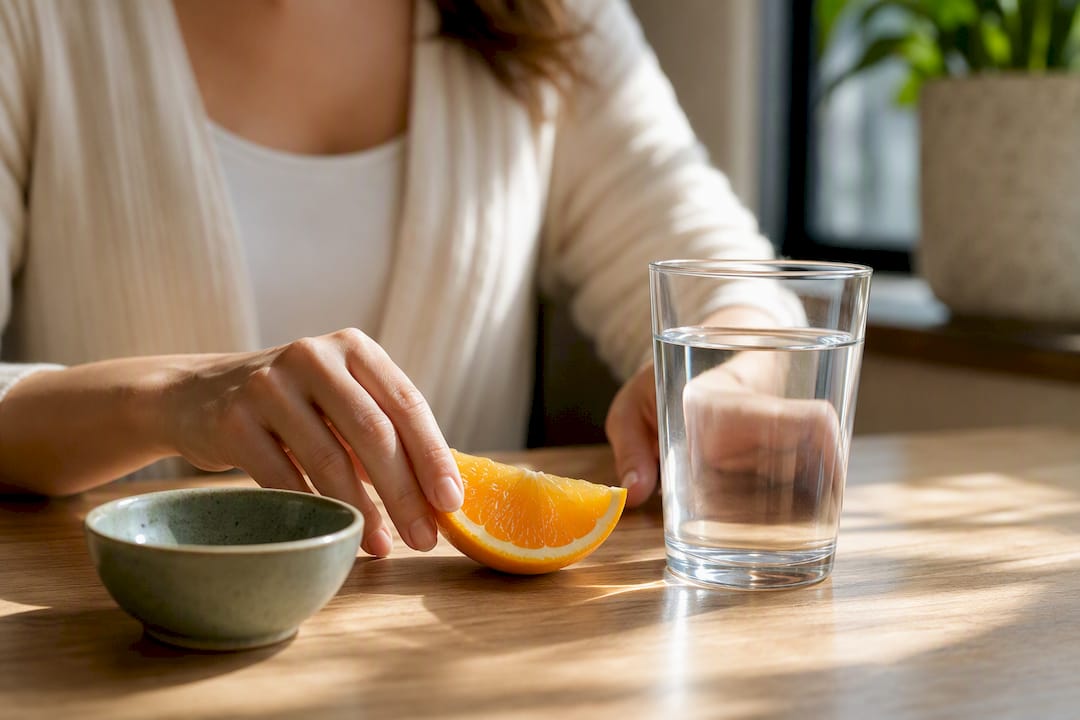
Pro Tip: Pair your morning glass of water with a piece of fruit instead of coffee and toast alone. The potassium and hydration combo works faster than either habit on its own.
Do Magnesium and Other Supplements Actually Help?
Magnesium has the strongest evidence of any supplement for this specific symptom; for more on magnesium dosing and safety, see magnesium and bone health research. A randomized, double-blind crossover trial found that 200 mg of magnesium daily reduced PMS-related fluid retention symptoms by the second cycle of use, not the first. That timing matters: if you try it for one cycle and quit because nothing changed, you’re quitting right before it usually starts working.
Other options are shakier ground:
- Vitamin B6 has mixed, inconsistent evidence for PMS symptoms generally, and fluid retention specifically hasn’t been well isolated in trials.
- Many herbal remedies marketed for PMS carry limited clinical evidence and aren’t regulated by the FDA the way medications are, so dosing and purity vary widely between brands.
- Diuretic supplements or teas should never be combined with NSAIDs like ibuprofen. That combination can strain kidney function even in otherwise healthy people.
The trial showing magnesium’s benefit used a daily dose of 200 mg, with effects appearing after the second cycle of use. Talk to a clinician before starting, especially if you take other medications or have kidney issues.
When Should You Consider Medical Treatment?
Lifestyle changes handle most cyclical bloating. But if fluid retention is severe enough to affect your daily life, or lifestyle steps aren’t moving the needle after a couple of cycles, it’s worth a clinician visit. Mayo Clinic notes that prescription options like the diuretic spironolactone or hormonal contraceptives are sometimes used when symptoms are disruptive enough to warrant it.
Get evaluated urgently, not eventually, if you notice:
- Swelling in only one leg (a possible clot warning sign)
- Sudden difficulty breathing
- A large, rapid weight gain that doesn’t match your usual cycle pattern
- Swelling that doesn’t ease up once your period starts and stays constant month to month
None of that is typical PMS. It’s a different problem wearing PMS’s clothes.
When Does Water Retention Usually Start and Stop?
Prospective diary data from women tracking their cycles for a full year show a clear pattern: fluid retention scores climb through the late luteal phase and peak on the first day of menstrual flow, then drop off quickly. Symptoms have usually eased substantially within 2 to 3 days of your period starting.
Tracking your own pattern for two or three cycles tells you more than any general timeline can:
- Log your weight each morning at the same time.
- Rate bloating on a simple 0 to 4 scale.
- Note diet slip ups (a salty dinner, a skipped workout) and any medications.
- Compare notes across cycles to see if your pattern is consistent.
That record is exactly what a clinician needs to tell cyclical bloating apart from something else, and it can save you from starting treatment you don’t actually need.
How Florvahealth Fits Into a Bloating Routine
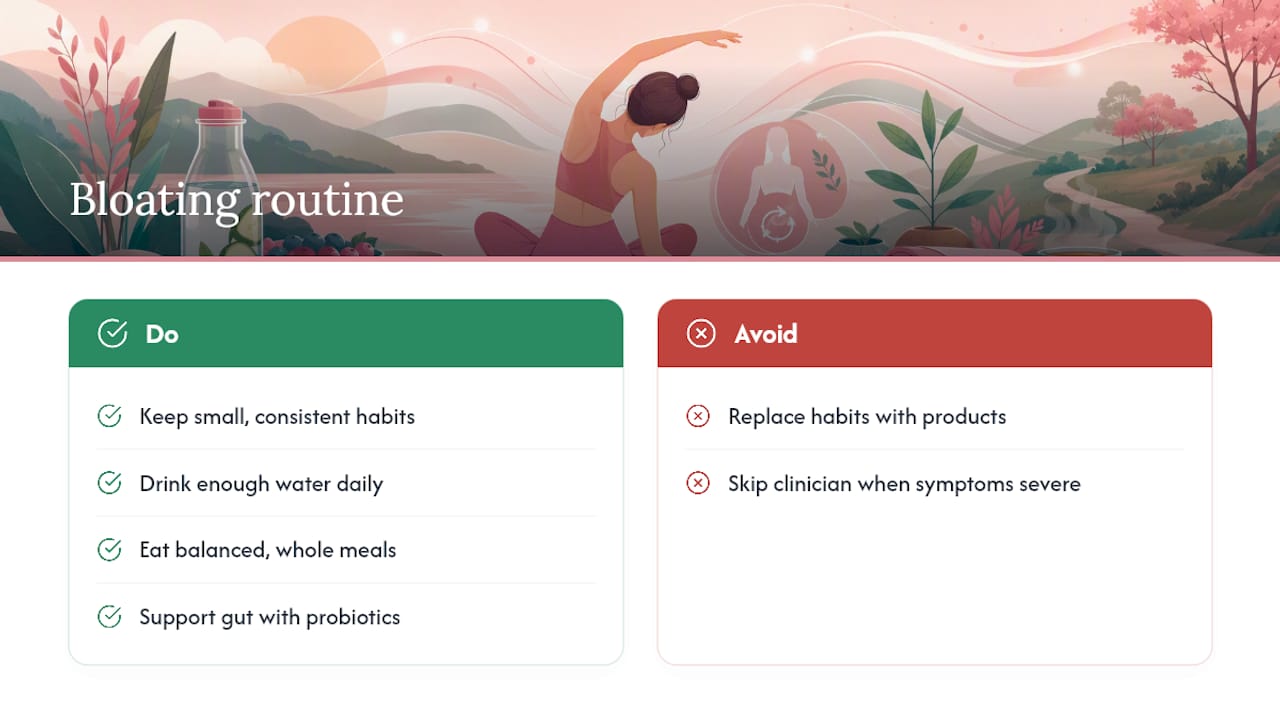
None of this requires medication for most women. Small, consistent habits, enough water, balanced meals, and gut support from probiotics work alongside topical comfort measures to round out a lifestyle-first plan. Florvahealth’s PMS & bloating relief options are built as non-medicated adjuncts, not replacements for the steps above or for a clinician’s advice when symptoms are severe. For a deeper look at what works and what doesn’t in herbal options, this breakdown of cycle-support supplements is worth a read before you buy anything.
A Note From Florvahealth
Period bloating is common enough to feel normal and frustrating enough that “normal” doesn’t make it easier. The evidence favors simple steps: less sodium, more water, daily movement, and magnesium given time to work. Track your patterns, and see a clinician if something feels off.
— Zamanee
Find Support for PMS Bloating Without the Guesswork
Florvahealth built its PMS & bloating relief collection around the same principle this article leans on: fluid retention responds best to consistent, non-medicated habits rather than a single fix. The lineup includes bloating relief kits, probiotic and digestive enzyme supplements that support gut and hormonal balance, and topical comfort patches for the days when cramping and swelling hit hardest.

These products work as adjuncts alongside the diet, hydration, and movement steps covered above, never as a replacement for medical care when symptoms are severe. If you’re also managing hormonal breakouts around your cycle, the skincare for hormonal skin line pairs well with a bloating routine since both track back to the same hormonal shifts. Browse the PMS & bloating relief collection and build a kit around what your last few cycles actually looked like.
This article is general information, not a substitute for advice from a qualified doctor. Consult a qualified healthcare professional about your own circumstances before acting on anything here.
Sources
- Magnesium Supplementation Alleviates Premenstrual Symptoms of Fluid Retention
- Fluid retention over the menstrual cycle: 1-year prospective data
- Water retention: Relieve this premenstrual symptom - Mayo Clinic
FAQ
What day of your period does water retention go away?
Most women see fluid retention peak on the first day of their period and drop off noticeably within 2 to 3 days after flow starts.
Do you bloat 9 days before your period?
Some women do start noticing mild bloating around a week to 10 days before their period, as hormonal shifts in the late luteal phase begin affecting fluid balance, though the pattern varies from person to person.
Why did I gain 3 pounds overnight on my period?
Rapid weight shifts around your period are almost always water, not fat, driven by a sudden hormonal shift that tells your kidneys to retain more sodium and fluid overnight.
Why am I retaining water on my period?
Falling estrogen and progesterone in the late luteal phase disturb the renin and aldosterone system that regulates sodium and fluid, causing your body to hold onto more water than usual until your period gets underway.


